James Dolan invited his friend Donald Trump to watch Game 3. In order to do that, they have to ban the organic, historically joyous parties happening outside MSG for fans who can't afford to be inside. Modern sports in a nutshell
This video is an invaluable piece of artistic footage extracted from the classic musical film "Stormy Weather" (1943), capturing the peak performance of jazz legend Cab Calloway alongside the unprecedented tap dance routine of the Nicholas Brothers.
Another icon has left us. Peabo Bryson touched a multitude of hearts during his time on this planet. He touched mine. From a true friendship, to studio recordings, to live performances together; we shared a lot. Sending prayers and condolences to his awesome family. RIP, my Bro!
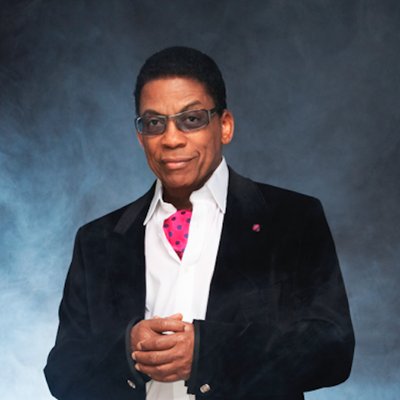
Thank you, @Princeton, for recognizing me with an honorary degree at yesterday’s commencement ceremony. 🎓
📷 Princeton University, Charles Sykes, Associated Press Images
It is with deep sorrow and profound love that we announce the passing of Sonny Rollins. The Saxophone Colossus died this afternoon at his home in Woodstock, NY at the age of 95. 1/2 https://t.co/6AGmFrB7x4
That water clarity is an engineering decision, and the math behind it is wilder than the video.
Roman aqueducts ran on gravity alone. No pumps, no pressure systems. Engineers carved channels with a gradient so shallow it borders on absurd. The Pont du Gard in southern France drops 2.5 centimeters over 275 meters. That's roughly the thickness of a coin over the length of three football fields. They surveyed that accuracy with plumb lines and wooden leveling instruments.
The clarity you're seeing is a direct product of flow velocity. Too steep and the water erodes the channel walls, picks up sediment, turns brown. Too flat and it stagnates. Roman engineers targeted a slope of about 20 centimeters per kilometer, which kept the water moving fast enough to stay fresh but slow enough to stay clear. Before the water reached the city, it passed through multi-chamber settling tanks where velocity dropped near zero. Suspended particles sank. Clean water flowed out the top into the next chamber. Repeat three or four times.
Pliny specified the minimum slope in writing. Vitruvius published the exact mortar ratio for hydraulic cement: one part lime to two parts volcanic ash for underwater work. The pozzolana from Pozzuoli reacted with water to form a calcium-aluminum-silicate compound that actually gets stronger the longer it sits submerged. Modern concrete degrades in water. Roman concrete bonds with it.
Scale the whole system and it gets harder to process. Eleven aqueducts fed Rome at its peak. Combined output: roughly 1 million cubic meters of water per day. That works out to about 250 gallons per person for a city of one million. Modern New York delivers about 125 gallons per person per day. Ancient Rome had access to double the per capita water supply of the largest city in the United States, running entirely on slope and stone.
The Trevi Fountain in Rome is still fed by one of them. Two thousand years, same source, same gravity, same water.
JACKIE McLEAN: I’m thinking about my friend & mentor Jackie McLean, who would have celebrated his birthday today. There’s so much I owe to Jackie, but one of the most impactful is my path as a university professor and jazz educator.
Happy birthday, Jackie.
📸: Francis Wolff
Tea, smiles, and two masters sharing a quiet moment between the notes. ☕😊 Ellis Marsalis and Makoto Ozone during their 2012 recording session at the Ellis Marsalis Center for Music — beautiful music often begins with beautiful moments.
September 11, 2001. 9:37 a.m.
Lt. Col. Marilyn Wills was in a Pentagon conference room when American Airlines Flight 77 struck.
The fireball threw her across the table. Her hair caught fire. The room went black with smoke.
Crawling, she felt a hand grab her belt.
"My name is Lois," a voice said. Lois Stevens, a civilian employee, injured and choking.
"Stay with me. Where I go, you go."
Wills pressed her Army sweater into Lois's hands. "Breathe through this." When Lois collapsed, her nylons melted to her legs, Wills lifted her onto her back and carried her.
Six others followed the sound of her voice through the wreckage.
They reached a sealed second-floor window. They broke it. Cool air rushed in. Wills stayed inside.
"I'll go last," she said, and helped lower every person out before she fell into rescuers' arms below.
Lois Stevens lived 23 more years because of that decision.
Wills received the Soldier's Medal and Purple Heart for her burns, smoke inhalation, and traumatic brain injury. Thirteen days later, she returned to the Pentagon. She later deployed to Afghanistan.
She never called herself a hero.
"We lost so many that day," she said quietly. "They were my friends."
Some leaders give orders. Others carry people through the fire.
God bless Lt. Col. Marilyn Wills — and all who served on 9/11.