The Bushfire and Natural Hazards CRC conducted partner-driven natural hazard research and has moved to Natural Hazards Research Australia @hazardsresearch.
The end of June marks the end of funding for the CRC, but it's not goodbye from us just yet.
Here's an update from @ceo_bnhcrc Dr Richard Thornton about the short term future of the CRC and the long-term future of the new #naturalhazards research centre: https://t.co/KPbXQ64Xht
If you want to keep track of all the great research and products from the CRC, don't forget to follow the Twitter account for Natural Hazards Research Australia @HazardsResearch - your new national centre for natural hazard resilience and risk reduction. See you over there!
@CruxConstellat1@SenKimCarr The work of the Bushfire and Natural Hazards CRC has been incorporated into a new national centre called Natural Hazards Research Australia, funded for 10 years by the government. Be sure to catch all the latest news and updates at our new Twitter account @hazardsresearch
Great to hear from @bnhcrc's Dr Kamaljit Sangha @RIELresearch@CDUni today at the @AFACnews webinar on economic costs of #naturalhazards in north Aus. Understanding $ losses better can inform new polices to help communities, esp remote Indigenous communities, & reduce costs.
Fire + climate science was the theme of a @dfat webinar b/w Australia, Mexico, Peru, Argentina, Bolivia, Chile, Columbia, Paraguay, Panama, Ecuador, Guatemala + Uruguay.
Our CEO @Dr_R_Thornton and @CSIRO presented Australian bushfire science to fire managers in Cent/Sth America.
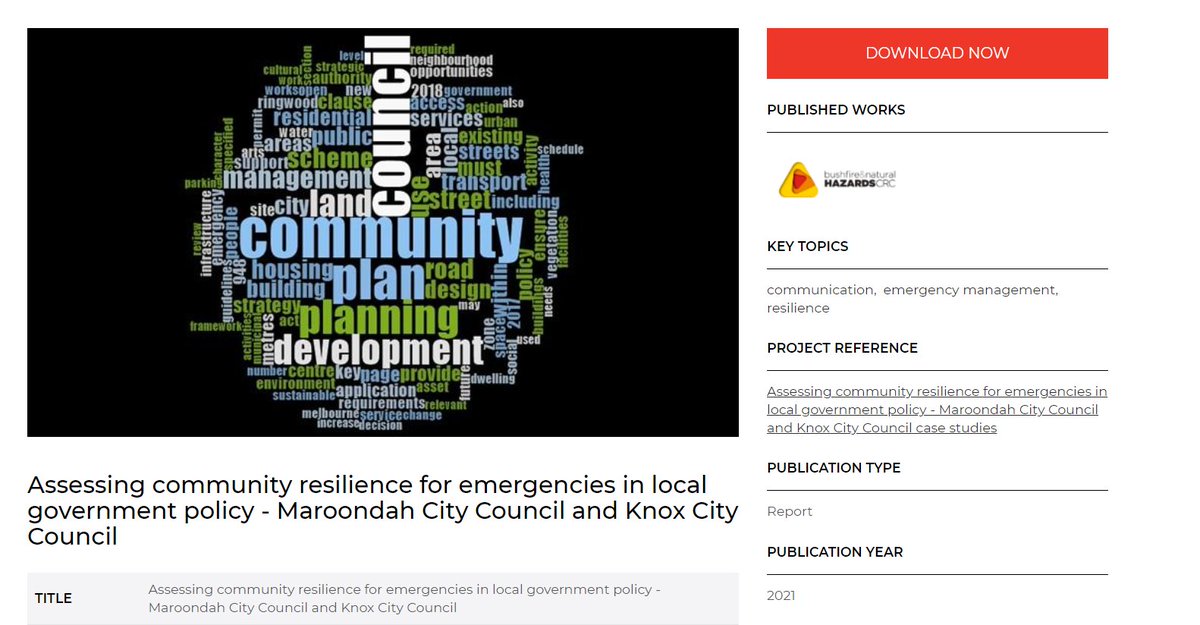
Multiple City Councils asked the @bnhcrc to evaluate their policies in terms of resilience. They were seeking answers to the question: To what extent do our council policies support resilience for emergencies or disasters? Report here: https://t.co/TL80uN3tj4
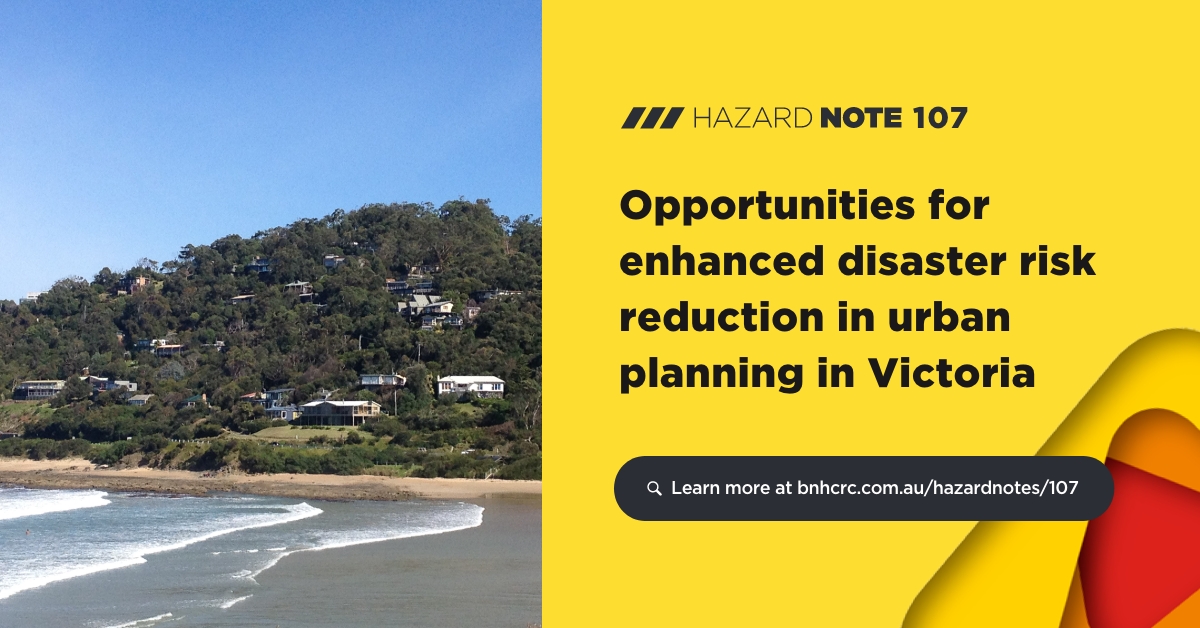
How comprehensive is urban planning in Victoria and can it be used to enhance #disaster risk reduction and #resilience?
New research with @UniMelb presents opportunities for improving the resilience of existing and future settlements in Victoria: https://t.co/AcJghxNyKN
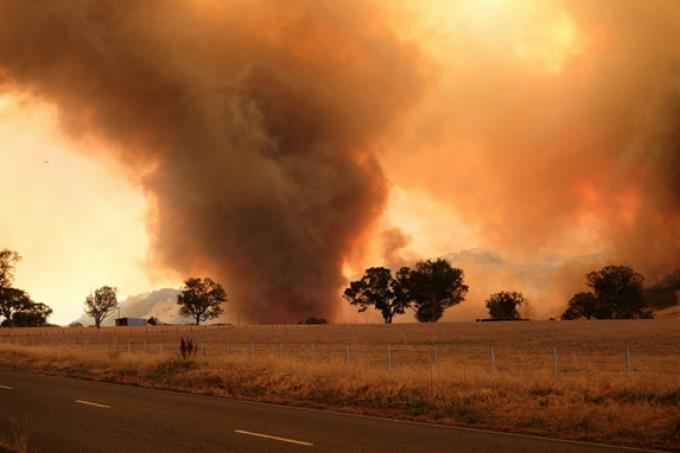
Why were the some of the 2019-20 #bushfires so extreme?
Our new research with @BOM_au led by Dr Mika Peace @BOM_SA combines fire and atmosphere modelling to help us understand why the fire behaviour was so dangerous: https://t.co/H2XfXe2QoZ
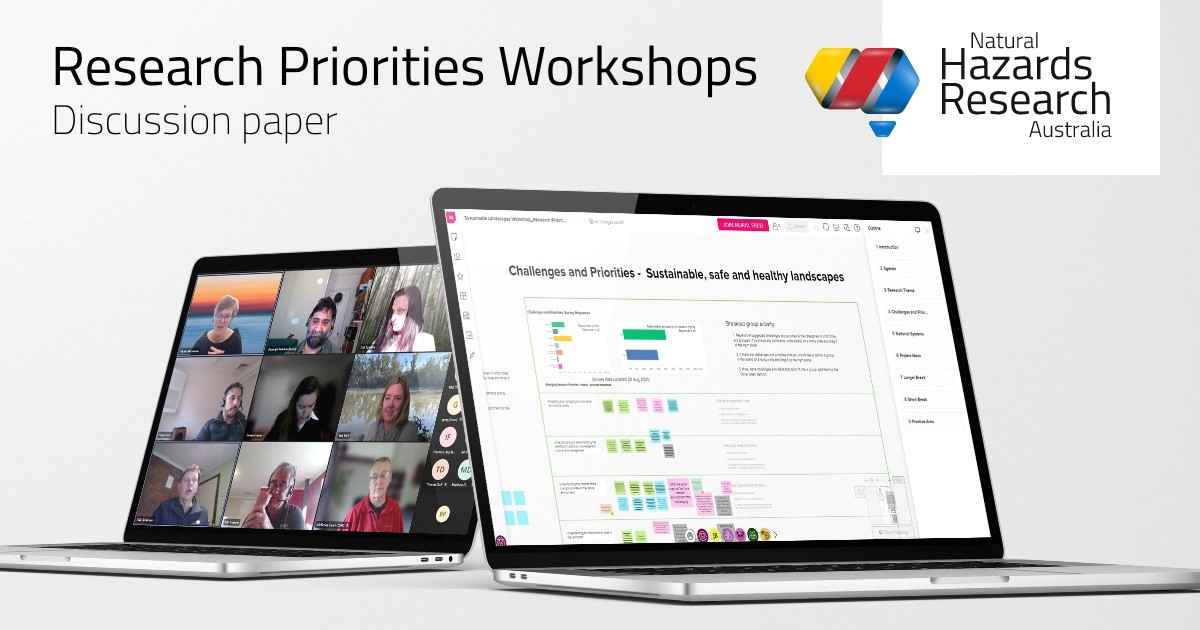
REMINDER: Your feedback on the research priorities of Natural Hazards Research Australia is due this Sunday 24 Oct at 11:59pm, via this link: https://t.co/VJbyKTABos.
This is a great opportunity to contribute to our new research program. Let us know if you have any questions!
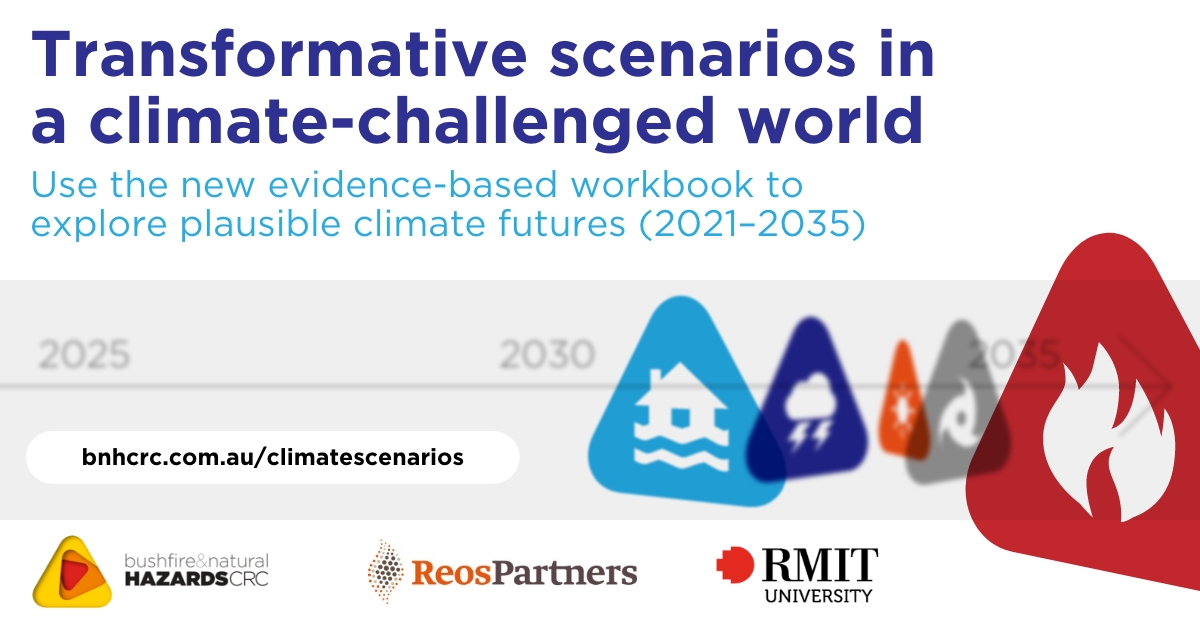
Will your organisation be ready for the impacts of natural hazards and climate change as they become more significant in the near future? This workbook shares what can you do to take #ClimateActionNow.
Don't forget to register for our @UNDRR International Day of Disaster Risk Reduction #DRRDay event with @ABCTV.
Community #resilience experts will unpack and answer Qs about bushfire risk reduction, preparation, mental health and recovery.
Register now: https://t.co/mJxCQlKMKM
Will your organisation be ready for future impacts of #naturalhazards + #climatechange? What can you do now to prepare?
We have released new resources with @reospartners@RMIT that help answer these questions using transformative scenarios. Find out more: https://t.co/dxU62eXxtn
We've released our research priorities that will shape #naturalhazards research in years to come and we want to know what you think!
We are seeking input from people and organisations across EM/research/beyond.
See our discussion paper + feedback form: https://t.co/VJbyKTABos.
Join us next Wed Oct 13 for our event with @ABCTV for @UNDRR International Day of Disaster Risk Reduction #DRRDay#OnlyTogether.
Featuring a panel of community #recovery experts, inc @Bradykate1, @BrionyTowers, Dr Josh Whittaker + Dr Rob Gordon. Register: https://t.co/mJxCQlKMKM
The workforce and capability sub stream at #AFAC21 Research Day features presentations from Celeste Young @ckyoung01, Rachel Treeby @vicsesnews and Dr Blythe McLennan @RMIT@bnhcrc.
Don't miss out! Register for the virtual conference today: https://t.co/oZorq0DN4I
A new booklet + posters amplify Indigenous peoples' perspectives on #culturalburning by sharing 6 personal stories of what burning means. With illustrations by Lani Balzan, the stories help fire agencies and land managers better understand cultural burning https://t.co/ABtGQU2uFF
Last chance to register for #AFAC21 next week!
The program includes plenty of friendly faces sharing the latest #naturalhazard research from CRC projects, including our own acting utilisation manager Dr Blythe McLennan @viajerabj, so don't miss it: https://t.co/4LYvL5LDpt.
With only one week to go until #AFAC21, now is the time to register to see lots of great CRC research being presented. See the full list of CRC experts on the program here: https://t.co/nnvT1Yq0Wu
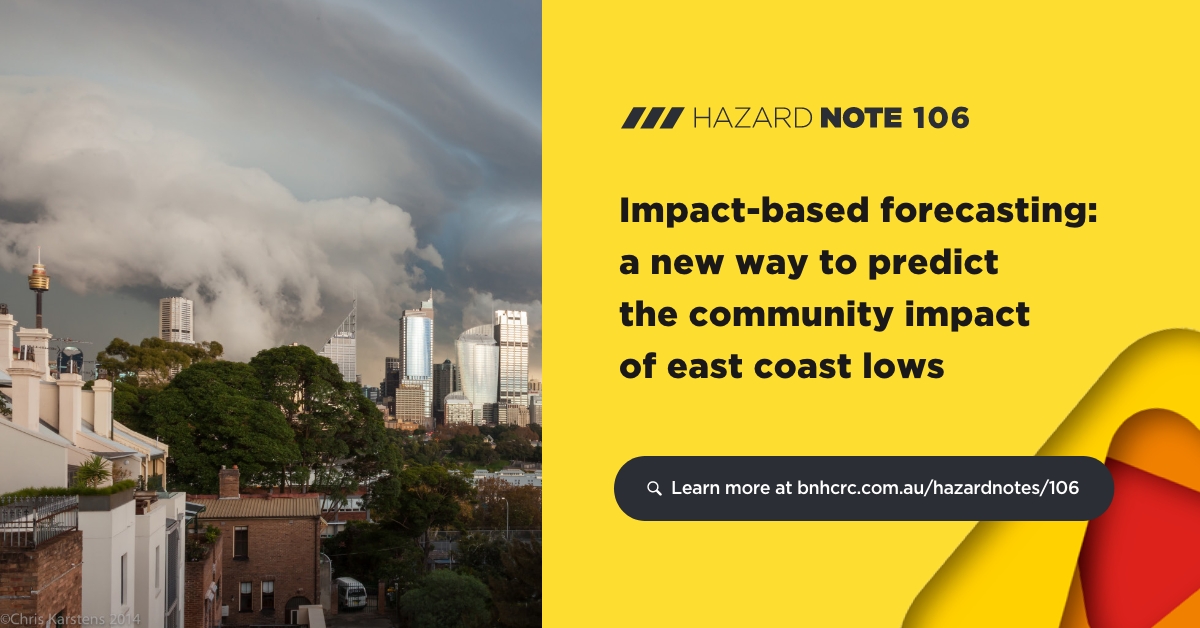
Our latest Hazard Note summarises research with @BOM_au and @GeoscienceAus that created a new way to predict the impact of east coast lows on residential housing. They used existing models and data to build a new capability to help mitigate impact: https://t.co/yBgK7i4GWZ
The pavlova can help explain why Australian #earthquakes behave the way they do, according to this article from @abcnews featuring CRC's Prof Michael Griffith @UniofAdelaide.