We’re pleased to announce and share with you all our newest @FIFAWorldCup shirt and scarf which we are officially taking pre-orders for! These items are being done in a very limited quantity, so head on over to our online store to place your orders today!
https://t.co/PnF3NwvHsC
Here we go! Join us Sunday, 5/31 at The Block Jax to cheer on the @USMNT as they take on Senegal in one of two send-off matches before the start of the @FIFAWorldCup! Kickoff is at 3:30 PM and, as always, all ages are welcome. See you there! #AOJax 🇺🇸
This one thing is what we wish someone had told us when we first started coaching.
When I first started coaching I was eager in the way that most new coaches are eager, full of enthusiasm I wanted to share, full of answers I was ready to give, genuinely convinced that the more I said the more my players would learn. A question would leave my mouth and before the player had drawn breath to answer it I was already moving, already gesturing, already giving them the very thing I had just asked them to find for themselves. I thought I was helping, I wasn't, I was just talking, and my players were learning very quickly that they did not need to think because I would always do it for them.
Silence felt uncomfortable in those early years in a way that is difficult to fully explain. It felt like nothing was happening, like the session was stalling, like the players were lost and it was my job to rescue them. What I did not understand then and what took years of coaching and a great deal of honest reflection to properly grasp was that the silence was not empty at all.
Something was happening inside it that I could not see and could not measure and could not rush. A player processing a question, turning it over, searching for an answer they had not been handed, arriving somewhere through their own thinking rather than through mine. That invisible journey is where the development lives, and every time I interrupted it I was taking something away from my players without realising it.
Patience is the part nobody talks about enough when they talk about questioning and guided discovery. We can learn the theory of it relatively quickly, ask open questions, probe rather than tell, create an environment where players feel safe to answer and then we stand in front of a group of children and ask a question and the silence stretches out and something in us twitches and we jump in, not because we planned to, not because we thought it was the right coaching decision, but because we simply could not wait.
Patience in that moment is a genuine skill, one that has to be developed just as deliberately as any other tool we carry, and one that most of us are not born with.
What I have come to understand over time is that silence sits alongside everything else in the coaching toolbox, the prompts, the probing questions, the carefully chosen moments where a direct answer is exactly what is needed and that knowing when to reach for it is as important as knowing how to use any of the others. It is not about being silent all the time or withholding information for the sake of a philosophy.
It is about having the patience to ask something meaningful and then trusting the player enough to wait, genuinely wait, for what comes back. That trust is not a passive thing. It is one of the most active and deliberate choices we make as coaches, and the players in front of us feel it even when they cannot name it.
The coach who learns to sit in the silence, who asks a question and holds the space and does not flinch is giving their players something that no amount of instruction ever could. They are telling them, without words, that their thinking matters, that the answer they find for themselves is worth more than the one they were given, that they are capable of working it out. Over time, quietly and without ceremony, that belief becomes part of how those players approach every challenge they face, on the pitch and long after they have stopped playing.
I wish someone had told me that at the beginning, it would have saved a lot of unnecessary noise.
Dennis Bergkamp, one of the most technically gifted players the game has ever produced, and someone who spent years developing young players at Ajax said "The only team that needs to win trophies is the first team. The youth teams don’t need to win, they just need to make their players better."
Read all five points, then ask yourself where does the balance actually sit in your coaching right now? 👇
1️⃣ Bergkamp isn't anti-winning, nobody who played at the level he did and worked within the Ajax system could be. What he's doing is being precise about purpose, the first team's job is to win. That's clear, and nobody disputes it and the youth team's job is to produce players capable of doing that, winning technically, tactically, physically, and mentally, ready for the demands of the level above them.
When those two purposes stay in their right place, everything works. The problems start when the result on a youth team's matchday becomes the only measure of whether the coaching is good, the player's success or level of potential.
2️⃣ It's also worth understanding that this doesn't mean youth football should be consequence-free. Competition matters, learning to win and lose with the right attitude also matters. The pressure of a tight game, the experience of coming from behind, the discipline of performing when it's difficult, these are all part of what development looks like.
Bergkamp isn't saying to remove the competition. He's saying don't let the trophy become the point, there's a significant difference between using competitive situations to develop players and restructuring everything around winning them.
3️⃣ The balance also shifts as players get older, at the foundational phase, development has to be the overwhelming priority. The research, the governing body guidelines, and the experience of coaches at every level all point in the same direction. Children at this age need fun, participation, technical development, and the freedom to make mistakes.
By the time players reach the youth development phase and beyond, the relationship between development and results becomes more nuanced. Winning starts to matter more as players approach the pathway to senior football. The skill is knowing where you are on that journey and adjusting accordingly.
4️⃣ What Bergkamp's quote really challenges is the coaching ego that attaches itself to results regardless of age group.
The under 9 coach who plays their strongest players all game because losing feels like a personal failure. The under 11 coach who abandons the development philosophy the moment a cup run becomes possible. The academy coach who selects for the fixture rather than the individual because the result matters for their reputation.
None of these decisions are always wrong, context always matters but when they become habits rather than considered choices, that's where development gets quietly sacrificed for something that benefits the adult more than the child.
5️⃣ Ajax built one of the most admired development systems in world football not by ignoring results but by being absolutely clear about what youth football was for.
Players developed within a consistent philosophy, a coherent style, and an environment where making them better was the daily measure of success. Some of those players won things along the way but that was a by-product of good development, not the purpose of it.
The question Bergkamp's quote leaves every youth coach with isn't whether winning matters, it does. It's whether the decisions you make on a Tuesday evening in training and on a Saturday morning in a game are genuinely driven by what makes the player better, or whether something else has quietly crept in?
@PeterMooreUSA@World_Cup_Guide Well said! Been to 6 other World Cups. This is the first one I feel that I have been a victim of bait and switch tactics as far as ticket allocations go. Game day transportation in the cities where games were being played were always free with a ticket but not this year!
It got me thinking…who is this World Cup actually for?
In 1994, I was able to take my family to matches here in the United States. It wasn’t a luxury decision, it was something that felt within reach, and that mattered because that’s how the game grows and that’s how memories are made. I was living in Boston working for Reebok at the time, and so we were able to go to so many games at Foxborough as well as in New York City. In full disclosure, my work also allowed me to travel to games on the West Coast, including the final. While that was not the best shop window for The Beautiful Game it was stunning to see the Rose Bowl fulled to the brim with 94,000 fans.
Now fast forward to 2026.
Imagine a young family here in America today. Mum, dad, two kids who love the game. They sit down and look at the cost of attending just one match…tickets, travel, maybe a night or two in a hotel…and they pause. Not because they don’t love the game enough, it’s because they simply can’t justify it.
in my 45 years living here in the US and being involved in the game at so many different levels, I’ve never seen its popularity spike like it is today. Gen Z has fully embraced the game, Welcome to Wrexham has laid bare the passion and the joy it can ignite in a previously beleaguered community,
and we are spoiled for the choice of just about every major game in the world brought to us by streaming channels fighting for their place in broadcasting live sports.
Or think about a supporter from abroad. Someone who has followed their national team their entire life. For many, this isn’t just a trip, it’s a once-in-a-lifetime pilgrimage.
Between ticket pricing, travel costs, and uncertainty around access, that dream starts to slip out of reach.
That’s the part that sits uneasily with me.
The World Cup has always been more than a tournament. It’s been a gathering of people, cultures, stories. A place where the game feels like it belongs to everyone.
If too many of those people are left watching from afar, we lose something that can’t be measured in revenue. It becomes a made-for-tv spectacle like the Super Bowl, and then we lose the soul of it…
And once that starts to go, it’s very hard to get back.
Blague. 😂
Récemment, j'ai été diagnostiqué D.A.D.A.: Déficit d'Attention Dû à l'Age.
Voilà comment cela se manifeste: Je décide de laver ma voiture. Alors que je vais vers le garage, je remarque qu'il y a du courrier sur la table de l'entrée.
Je décide de regarder le courrier avant de laver la voiture. Je pose mes clés de voiture sur la table, mets dans la corbeille à papiers, en dessous de la table, tout le courrier publicitaire et remarque que la corbeille est pleine !!
Alors, je décide de reposer les factures sur la table et de vider d'abord la corbeille.
Mais, alors, je me dis que puisque je vais être à côté de la boîte aux lettres quand je vais aller sortir la poubelle, autant préparer d'abord le règlement des factures.
Je prends mon carnet de chèques sur la table et je vois qu'il ne me reste plus qu'un seul chèque. Mon autre chéquier est dans mon bureau, donc j'y vais et je trouve sur le bureau la boîte de Coca que j'ai commencé de boire.
Je vais chercher mon chéquier, mais, avant tout, il faut que j'enlève ce Coca de là avant de le renverser accidentellement.
Je remarque qu'il commence à devenir tiède, je décide donc de le mettre au frigo pour le rafraîchir. Alors que je me dirige vers la cuisine avec le Coca, le vase sur le comptoir me saute aux yeux : les fleurs ont besoin d'eau !
Je pose le Coca sur le comptoir et découvre mes lunettes pour lire (que je cherchais depuis le matin). Je me dis que je ferais mieux de les remettre dans mon bureau, mais avant, je vais donner de l'eau aux fleurs.
Je repose les lunettes sur le comptoir, remplis un pichet d'eau et, soudain, j'aperçois la télécommande. Quelqu'un l'a laissée sur la table de la cuisine. Je me dis que, ce soir, quand on va vouloir regarder la télé, je vais la chercher partout et je ne me souviendrai plus qu'elle est dans la cuisine.
Je décide donc de la remettre dans le salon où est sa place, mais avant je vais donner de l'eau aux fleurs. Je donne de l'eau aux fleurs, mais j'en renverse la plus grande partie sur le sol.
Alors, je remets la télécommande sur la table, vais chercher un chiffon et je nettoie les dégâts. Ensuite, je reviens dans l'entrée en essayant de me souvenir de ce que je voulais faire.
A la fin de la journée :
-la voiture n'est pas lavée,
-les factures ne sont pas payées,
-il y a un Coca tiède sur le comptoir de la cuisine,
-les fleurs n'ont pas assez d'eau,
-je n'ai pas mon nouveau chéquier,
-je ne trouve pas la télécommande,
-je ne sais pas où sont mes lunettes
-et je n'arrive pas à me souvenir de ce que j'ai fait des clés de voiture.
Et puis, quand je me rends compte que rien n'a été fait aujourd'hui, je n'y comprends rien parce que je n'ai pas arrêté de la journée et que je suis complètement crevé !
Ne riez pas, si ce n'est pas encore votre cas, ça vous arrivera un jour !
RIRE DE SOI EST UNE THÉRAPIE !😝
Good luck to Brayden Sandoval as he heads to Guatemala City for U20 Guatemalan National Team training, February 15th–20th.
An important opportunity to train, compete, and continue his development in a high-level international environment. We’re proud of him and excited to follow the journey.
Go show what you’re capable of, Brayden.
#PlayerDriven #904JFC
Congratulations to Raphael Eccher on his commitment to the Massachusetts Institute of Technology.
Raphael has shown consistency, curiosity, and a strong standard for himself both on and off the field. We’re proud to see him continue his journey at one of the top academic institutions in the country while competing at the next level.
Well done, Raphael. We’re excited to follow what’s next.
#PlayerDriven #904JFC
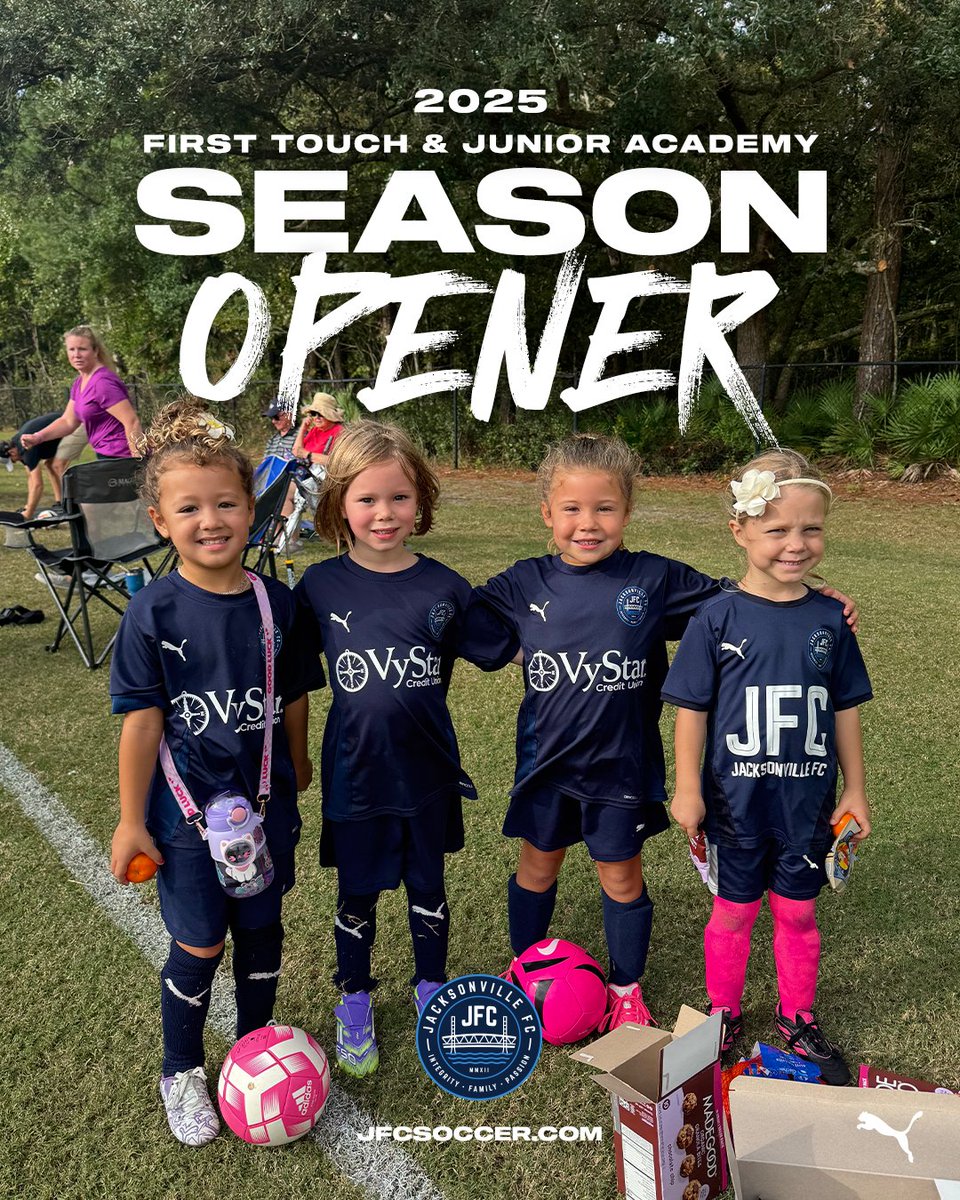
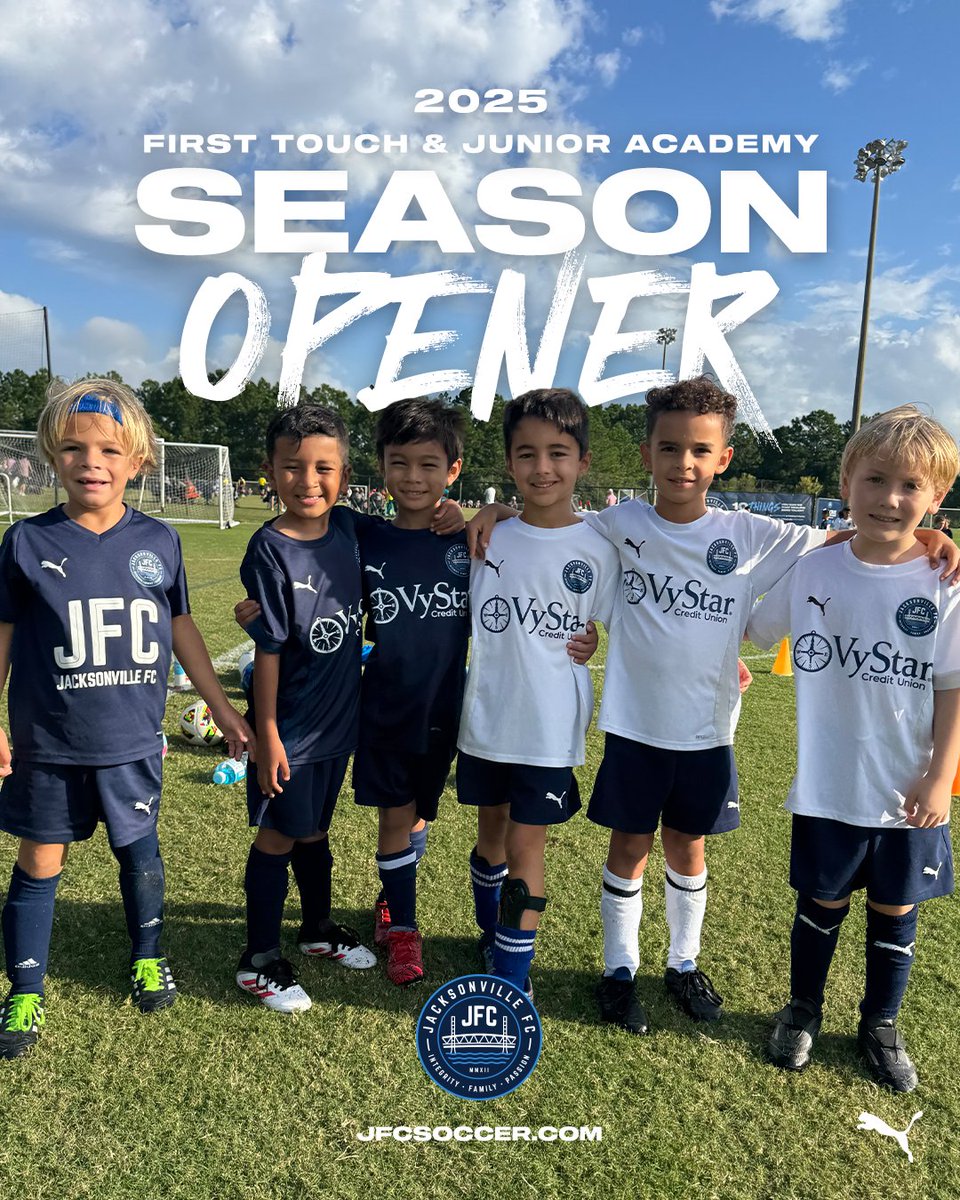
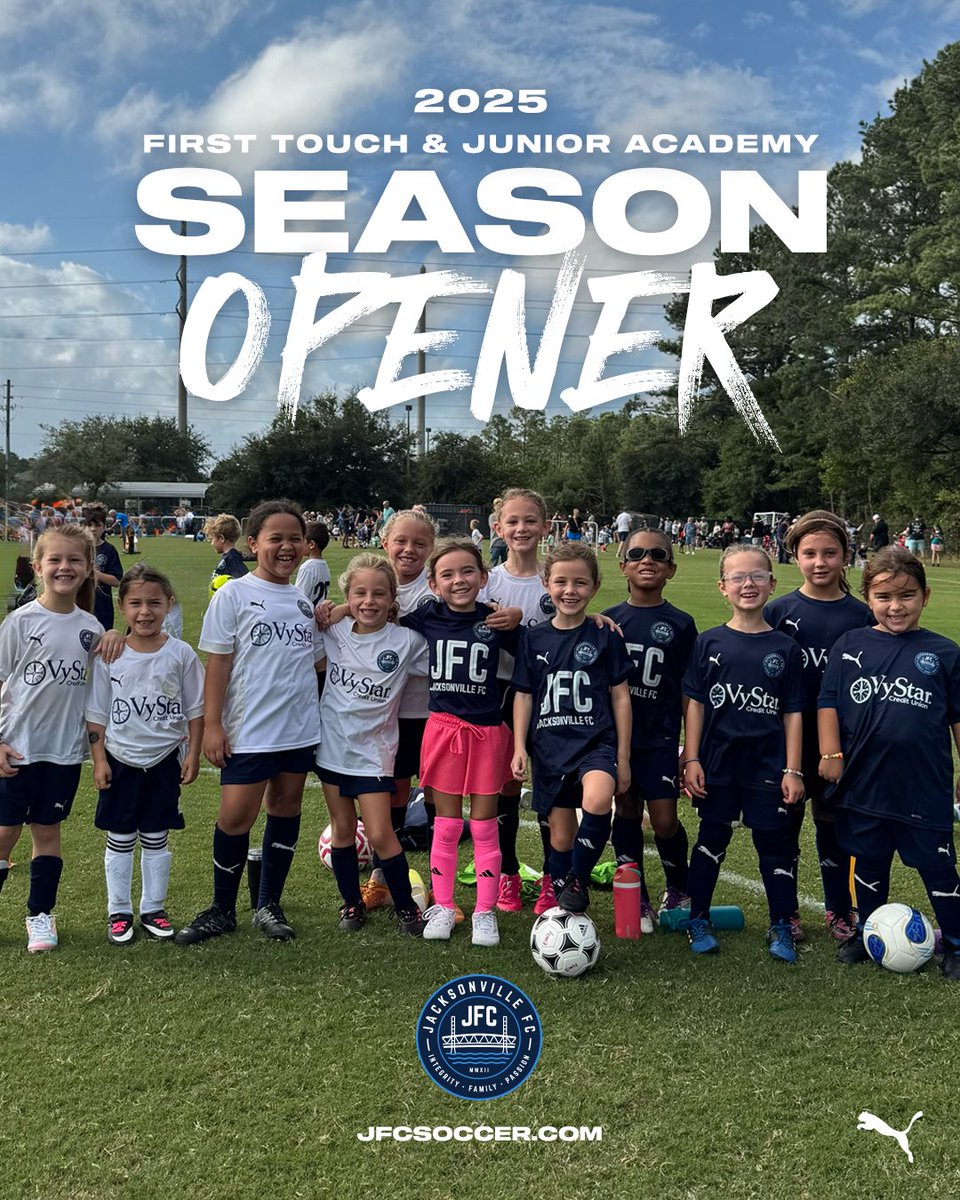
The 2025 season is off to a great start for our First Touch and Junior Academy players.
Today was full of excitement, smiles, and those unforgettable passes, defending, and first goals. It is so rewarding to see our youngest players learning, growing, and falling in love with the game while being surrounded by friends, teammates, and family.
We are looking forward to a season filled with fun, development, and new memories for these future stars.
#PlayerDriven #904JFC
Join us in celebrating Abby Kennedy on her commitment to play soccer at Vanderbilt University!
Your hard work and passion for the game will continue to inspire future JFC players.
#PlayerDriven#904JFC
We’re proud to share that Olivia Pia has committed to USC Aiken!
Your journey is just beginning, and we can’t wait to see what’s ahead for you both on and off the field.
#PlayerDriven#904JFC
Here in Novi, Michigan at the North American Soccer Expo. Peter Vermes on youth development: “Your sole responsibility as a coach is to develop players who can move to a better team, even if it hurts your team.”