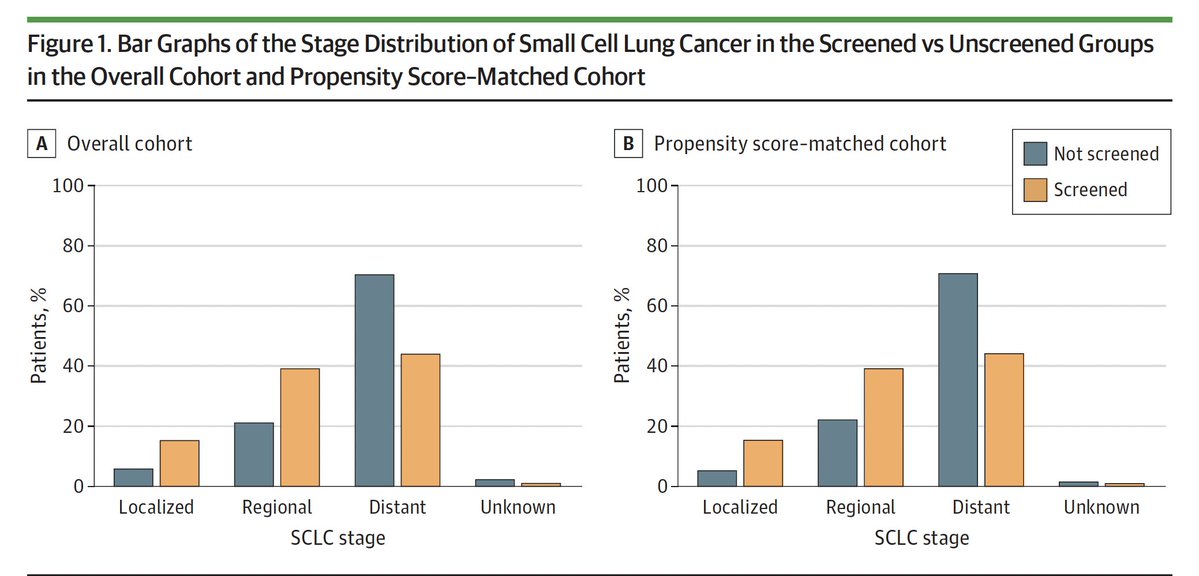
Alex Potter strikes again with another JAMA Oncology paper, this time demonstrating the value of lung cancer screening for SCLC. Her team's analyses demonstrate a survival benefit that no drug or device available today can match! #GetYourLungScreened https://t.co/dw8XnbPTZL
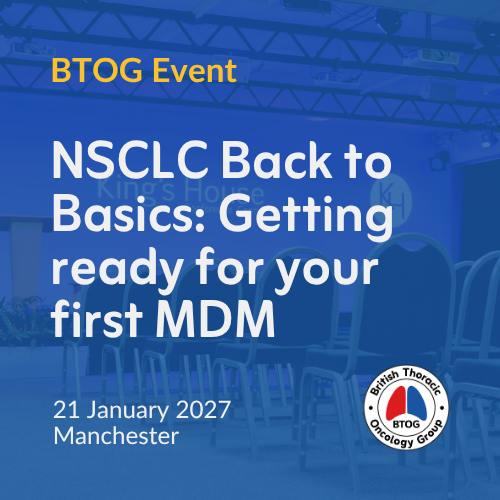
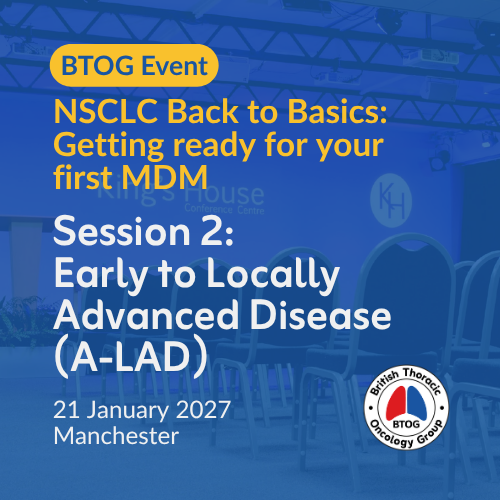
Lung cancer care is multidisciplinary – and so is NSCLC Back to Basics.
Across one day, specialists in respiratory medicine, pathology, surgery, radiotherapy, systemic therapy, nursing, clinical trials and more will explain their roles in the NSCLC pathway.
An opportunity for those earlier in their thoracic oncology careers to see how the pieces of the MDM fit together.
21 January 2027 | Manchester
Register:
https://t.co/0AQmpZ4QIP
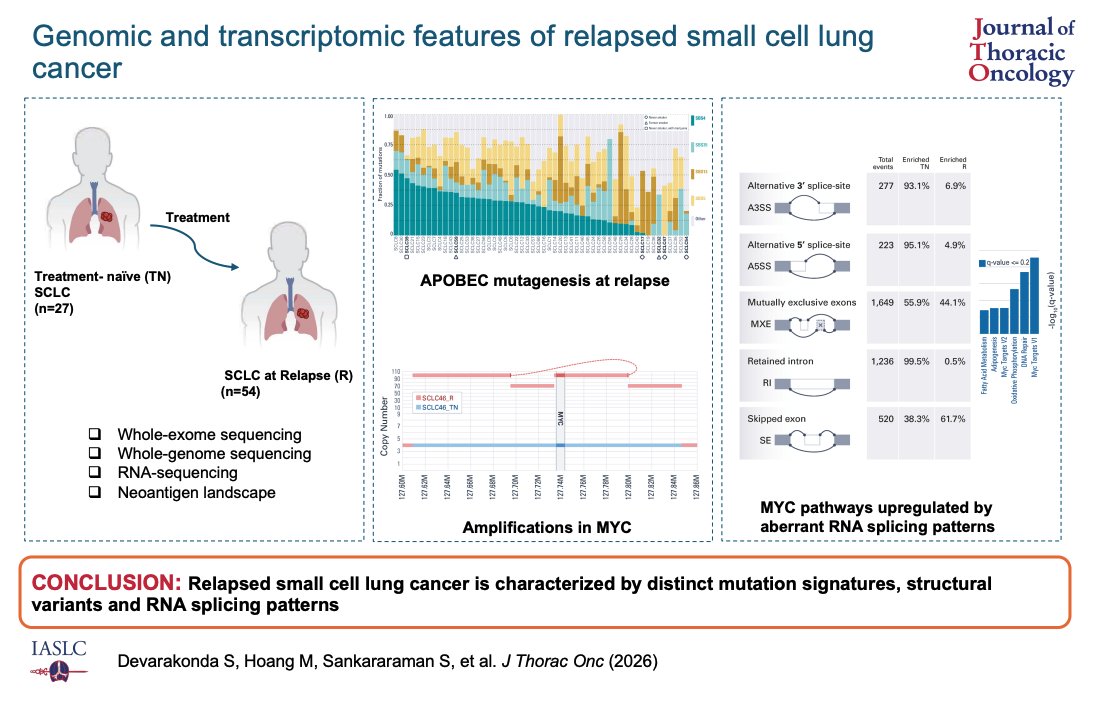
Devarakonda et al. set out to characterize genomic and transcriptomic alterations in relapsed SCLC with the goal of identifying potential pathways for functional validation and novel therapeutic options. Although additional studies are needed, they found that the samples in this study were characterized by genomic instability, WNT and MYC dysregulation, and splicing aberrations.
Read the full report: https://t.co/r5KG3A7LYK
#LungCancerResearch #JTO
Read now in #JCO!
Alectinib as Neoadjuvant Treatment in Potentially Resectable Stage III Anaplastic Lymphoma Kinase–Positive Non–Small Cell Lung Cancer: ALNEO Phase II Trial (GOIRC-01-2020-ML42316).
Read the article: https://t.co/zQhL96XdVe
The optimal timing for central nervous system radiotherapy for individuals with EGFR-mutant NSCLC and synchronous brain metastasis is still a complicated topic, but Zhu et al. made some recent observations to help narrow it down.
See what the findings reveal: https://t.co/bUpVWzCufM
#LungCancerResearch #LungCancer
Interesting research on the cover of Nature Cancer this month.
Basophils are a rare immune cell, the kind behind allergic reactions. Researchers in Lausanne found they appear to help stop cancer getting established in the lung, by holding another immune cell in check.
Early mostly lab work. But we welcome more understanding of how the body resists cancer spreading, and more questions being asked is progress for #LungCancer.
Open access: https://t.co/Ksl4DdWFv5 #LCSM
For decades, MYC, a protein that drives cancer growth, was seen as impossible to block with a drug.
Researchers in Barcelona have shown that an experimental MYC blocker, OMO-103, also helps the immune system attack non-small cell #LungCancer with a KRAS mutation, found in about 1 in 4 people with this type. When immune T cells were removed, the drug worked about half as well.
The next step is testing it alongside immunotherapy in patients.
https://t.co/Ni9l48Zp4W
Know a colleague making an impact in thoracic oncology?
Nominate them for the 2027 IASLC Lectureship or Distinguished Service Awards!
📅 Colleague nominations close Dec. 9.
Learn more: https://t.co/OmgC4ZY4Gk
What are the treatment options for early to locally advanced NSCLC – and where does each specialty fit?
Our NSCLC Back to Basics programme in just two months looks at the roles of respiratory medicine, surgery, radiotherapy and systemic anti-cancer therapy, followed by an expert panel discussion.
Join us in Manchester on 21 January 2027.
https://t.co/0AQmpZ4QIP
Among long-term #LungCancer survivors, chest #ComputedTomography beyond 5 years after diagnosis was associated with more lung cancer event detection, more surgical resection after detection, and lower all-cause mortality. https://t.co/2XhBT21hqF
ESMO's latest #LungCancer guideline update recommends 10 targeted medicines that were "FDA approved, not EMA approved" when it was written. They cover lung cancer driven by gene changes including EGFR, ALK, ROS1, HER2, NRG1 and MET. EU approval often comes after US approval, and decisions on access in each country can take longer still. For people in Europe, a recommendation becomes treatment only once that gap closes.
https://t.co/eyV5nmuBKq
ETOP Slide Deck of ESMO Congress 2026 now online.
Also, do not forget to register to our ETOP Live Webinar: Highlights of WCLC and ESMO 2026.
https://t.co/tjNrQ4NJry
Burning bridges to surgery or building bridges to cure?
What a fantastic debate in Rome 🇮🇹 between @tnewsomdavis and @BrendonStilesMD on stage IIIB NSCLC!
🫁 Same stage ≠ same disease ≠ same treatment!
Especially in T4 disease, heterogeneity matters. Resectability is dynamic, and surgery should remain an opportunity for carefully selected patients.
Are we ready to rethink stage IIIB?
#LungCancer #ThoracicSurgery #NSCLC #LCAM
Do cancers in different organs build the same support system? A 🆕 open access study in Nature mapped the cells surrounding tumours across 42 cancer types, using more than 15M human and mouse cells, and found strikingly similar patterns.
Authors suggest some of these shared support cells could be targeted with treatments that work across several cancers.
Non-small cell #LungCancer was one of the best represented, with 263 of 2,855 human samples. SCLC, which is rarely treated with surgery, contributed 5. Getting tissue for #SCLC research remains a real barrier.
https://t.co/tjb5GpMlMD #SCLC
Lovely analysis in Her2 mutated NSCLC demonstrating that in the absence of H2H data, on balance the TKI's have it. ADC activity maintained post TKI. TKI good in YVMA + active in non-TKD mutations. This is a very exciting space with lots happening. @IASLC https://t.co/dhqIGzzqly
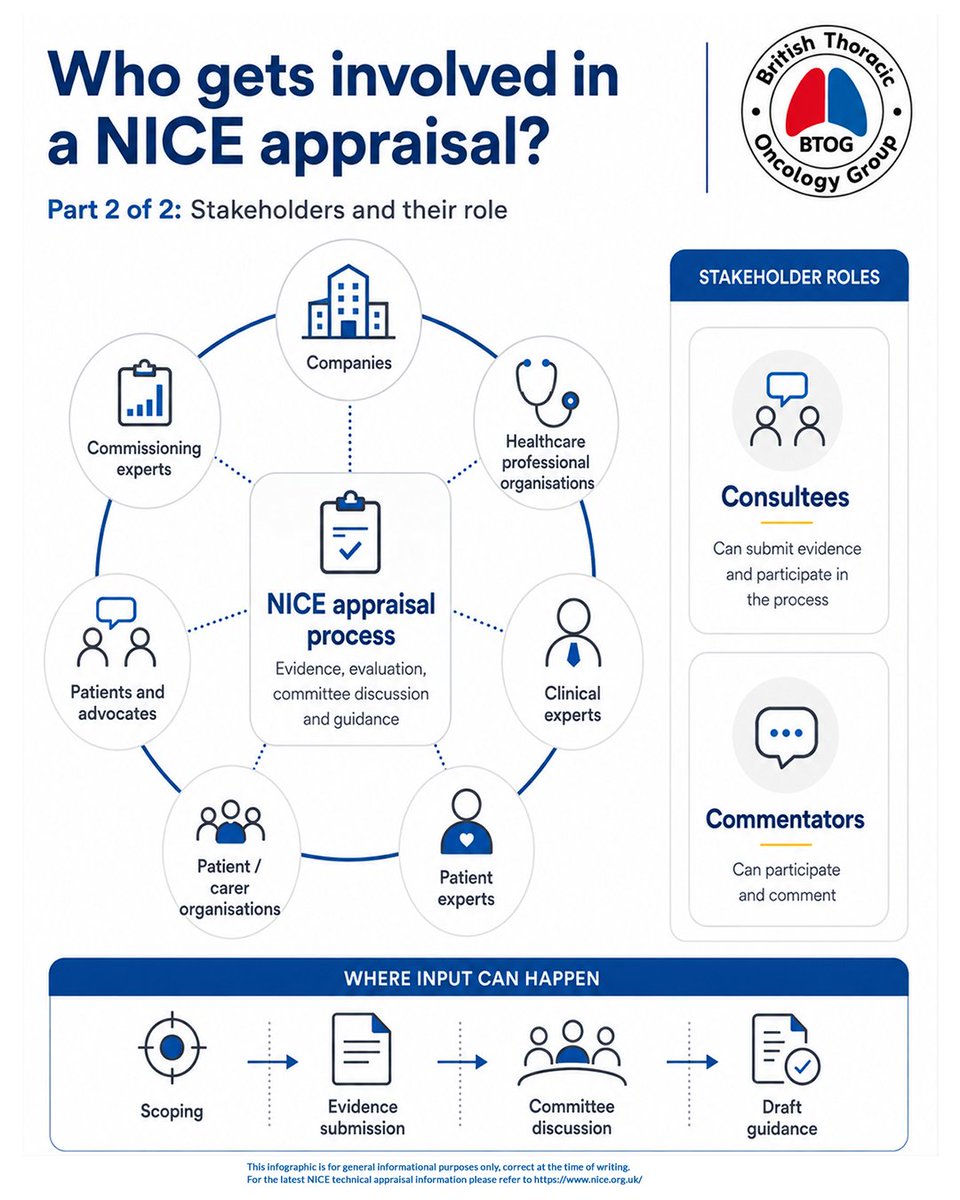
BTOG has produced 3 infographics about the NICE Appraisal process suitable for HCPs and patients – unless you are involved in NICE appraisals you may not be familiar with the full process. Learn more https://t.co/6Qejcw47Ou #LCSM#lungcancer
Could AI help read the cell samples used to diagnose #lungcancer?
A new @NatureCancer model was tested on pleural fluid and bronchial brushings. On one fluid dataset, it told cancerous from benign samples with 99.4% accuracy.
#LCSM https://t.co/jmCUrSE2OF