Know a colleague making an impact in thoracic oncology?
Nominate them for the 2027 IASLC Lectureship or Distinguished Service Awards!
📅 Colleague nominations close Dec. 9.
Learn more: https://t.co/OmgC4ZY4Gk
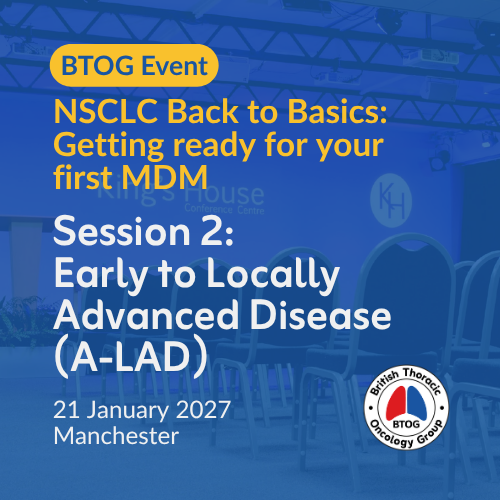
What are the treatment options for early to locally advanced NSCLC – and where does each specialty fit?
Our NSCLC Back to Basics programme in just two months looks at the roles of respiratory medicine, surgery, radiotherapy and systemic anti-cancer therapy, followed by an expert panel discussion.
Join us in Manchester on 21 January 2027.
https://t.co/0AQmpZ4QIP
Among long-term #LungCancer survivors, chest #ComputedTomography beyond 5 years after diagnosis was associated with more lung cancer event detection, more surgical resection after detection, and lower all-cause mortality. https://t.co/2XhBT21hqF
ESMO's latest #LungCancer guideline update recommends 10 targeted medicines that were "FDA approved, not EMA approved" when it was written. They cover lung cancer driven by gene changes including EGFR, ALK, ROS1, HER2, NRG1 and MET. EU approval often comes after US approval, and decisions on access in each country can take longer still. For people in Europe, a recommendation becomes treatment only once that gap closes.
https://t.co/eyV5nmuBKq
ETOP Slide Deck of ESMO Congress 2026 now online.
Also, do not forget to register to our ETOP Live Webinar: Highlights of WCLC and ESMO 2026.
https://t.co/tjNrQ4NJry
Burning bridges to surgery or building bridges to cure?
What a fantastic debate in Rome 🇮🇹 between @tnewsomdavis and @BrendonStilesMD on stage IIIB NSCLC!
🫁 Same stage ≠ same disease ≠ same treatment!
Especially in T4 disease, heterogeneity matters. Resectability is dynamic, and surgery should remain an opportunity for carefully selected patients.
Are we ready to rethink stage IIIB?
#LungCancer #ThoracicSurgery #NSCLC #LCAM
Do cancers in different organs build the same support system? A 🆕 open access study in Nature mapped the cells surrounding tumours across 42 cancer types, using more than 15M human and mouse cells, and found strikingly similar patterns.
Authors suggest some of these shared support cells could be targeted with treatments that work across several cancers.
Non-small cell #LungCancer was one of the best represented, with 263 of 2,855 human samples. SCLC, which is rarely treated with surgery, contributed 5. Getting tissue for #SCLC research remains a real barrier.
https://t.co/tjb5GpMlMD #SCLC
Lovely analysis in Her2 mutated NSCLC demonstrating that in the absence of H2H data, on balance the TKI's have it. ADC activity maintained post TKI. TKI good in YVMA + active in non-TKD mutations. This is a very exciting space with lots happening. @IASLC https://t.co/dhqIGzzqly
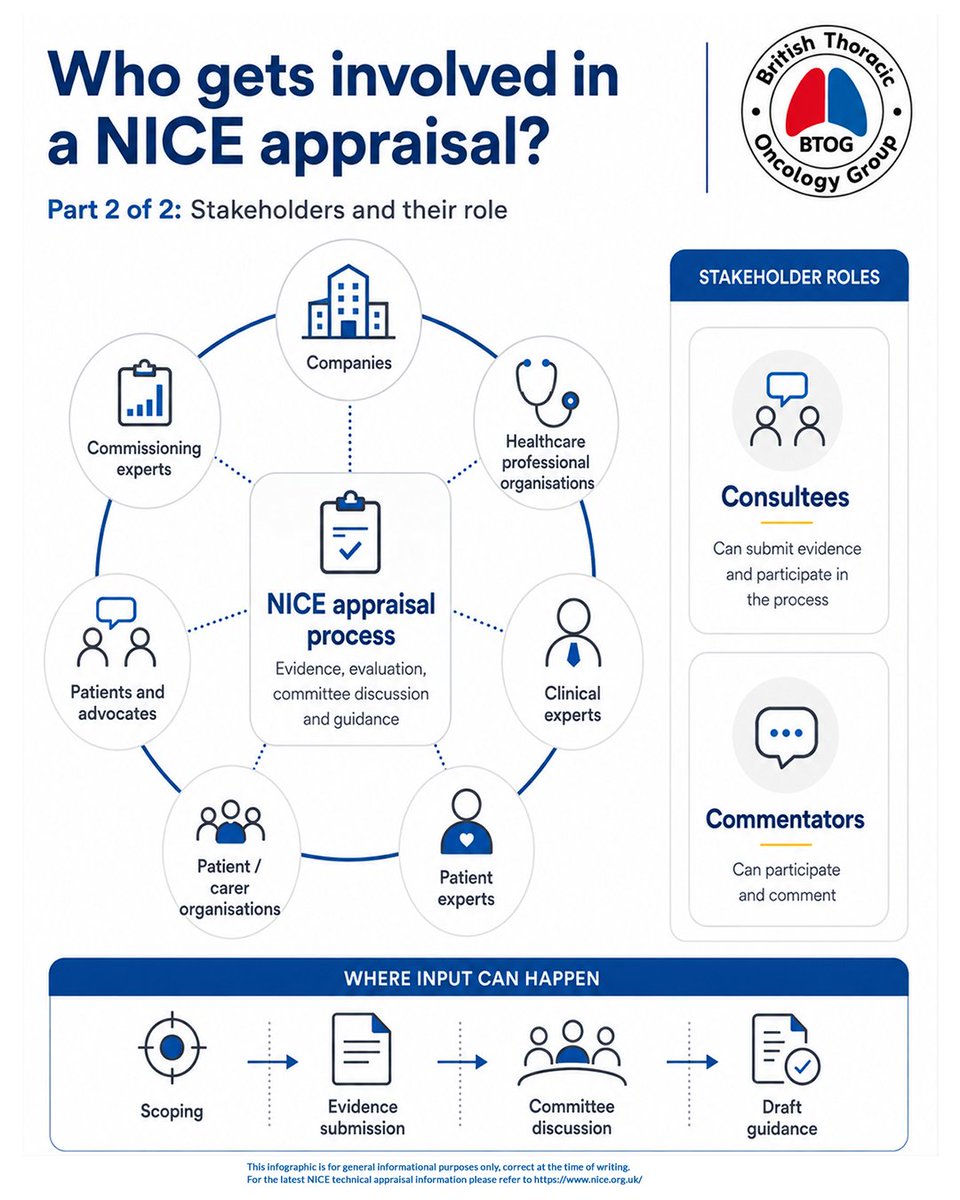
BTOG has produced 3 infographics about the NICE Appraisal process suitable for HCPs and patients – unless you are involved in NICE appraisals you may not be familiar with the full process. Learn more https://t.co/6Qejcw47Ou #LCSM#lungcancer
Could AI help read the cell samples used to diagnose #lungcancer?
A new @NatureCancer model was tested on pleural fluid and bronchial brushings. On one fluid dataset, it told cancerous from benign samples with 99.4% accuracy.
#LCSM https://t.co/jmCUrSE2OF
What if the type of biomarker test you're given could add months to your life? A new JNCCN study of 35,000+ people with advanced #lungcancer found that broad genomic testing before treatment was linked to significantly longer survival, 16 months versus 14.
That's exactly the kind of access we need to see for people affected by lung cancer. Full story: https://t.co/hqP21YDhVL
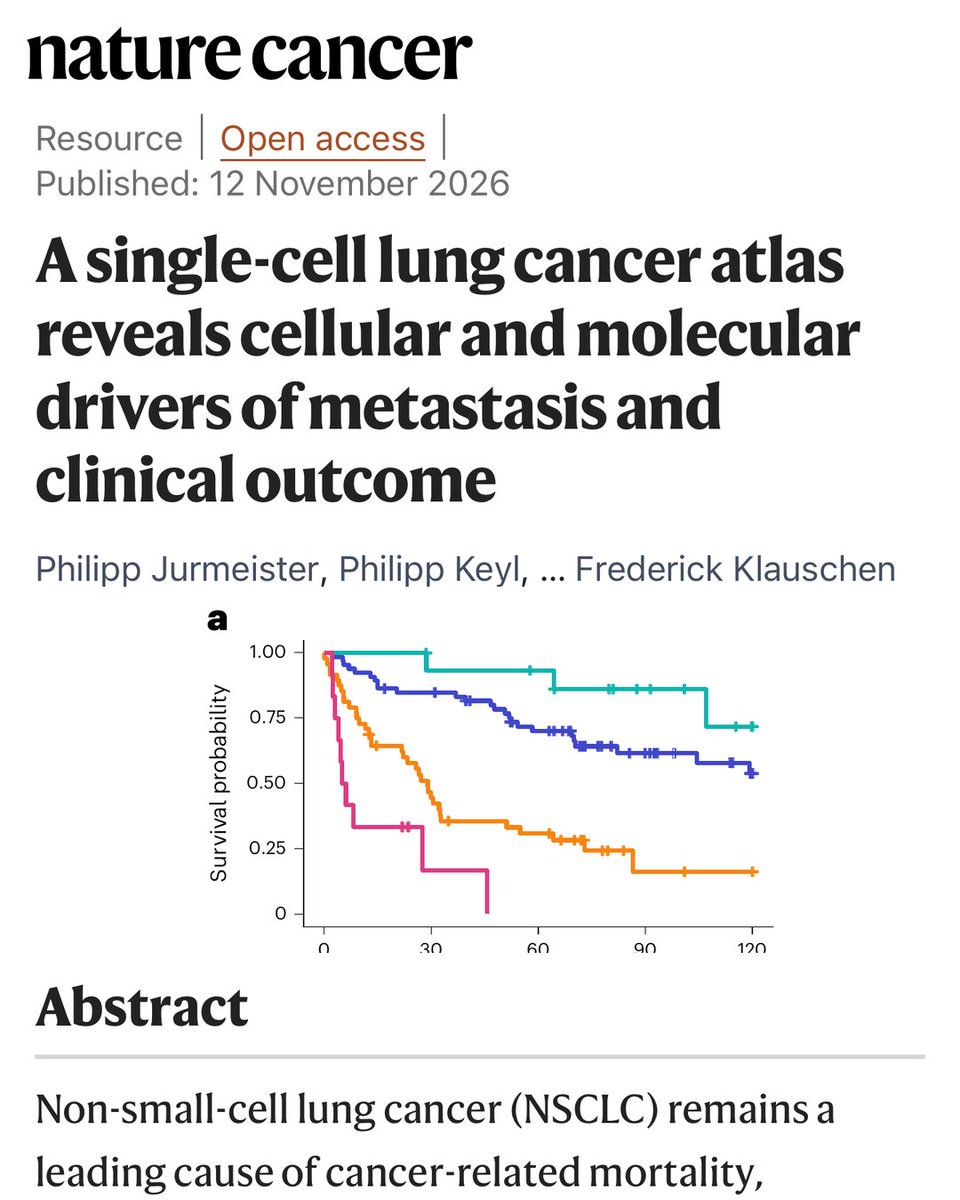
A new single-cell atlas of non-small-cell #LungCancer found that standard staging alone can get a patient's risk wrong, in both directions.
A quarter of people staged as stage I were actually high risk. A small group of stage IV patients had survival as good as early stage disease.
This is exactly the point Lung Cancer Europe has long made through its Get Checked! campaign: a stage label is not the whole picture.
Full story: https://t.co/buPgFDezfw
Staging. Pathology. Molecular characteristics.
Understanding each piece of the diagnostic picture is essential when discussing an NSCLC patient at MDM.
NSCLC Back to Basics will explore how these elements come together and inform the next steps in a patient’s care.
21 January 2027 | Manchester
Programme and registration:
https://t.co/0AQmpZ4QIP
New to lung cancer care? About to attend your first MDM? Or looking for a practical refresher on the NSCLC pathway?
NSCLC Back to Basics brings together experts from across the multidisciplinary team for a one-day introduction to diagnosis, staging and treatment.
Join BTOG in Manchester on 21 January 2027.
Find out more and register:
https://t.co/0AQmpZ4QIP
Therapy for Stage IV Non-Small Cell Lung Cancer With Driver Alterations: @ASCO Living Guideline, Version 2026.3.4.
Read the full article. https://t.co/8Pa66uGhvD
#NSCLC#lcsm