🚨 A Microsoft Exchange authentication bypass can be chained into SYSTEM-level code execution; CVE-2026-62911
PoC: https://t.co/Tc5mNT7wm7
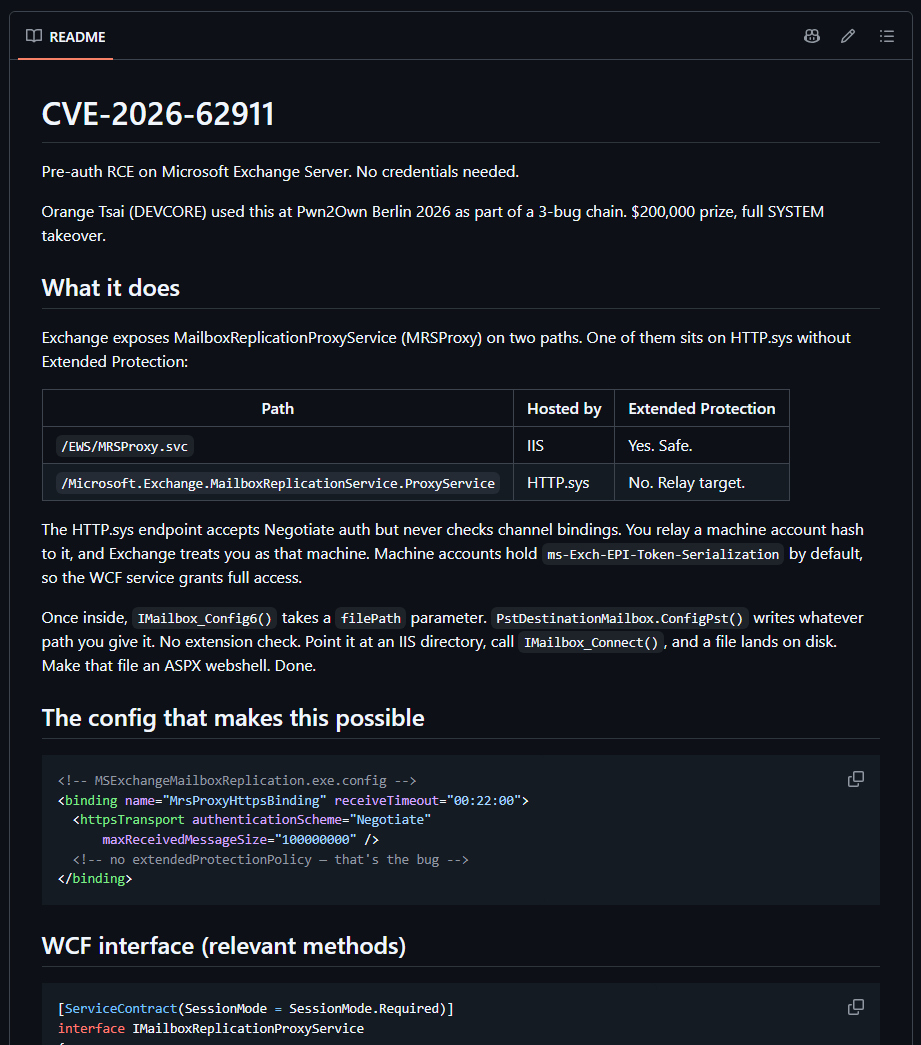
The flaw is an authentication bypass by capture-replay in Microsoft Exchange Server. Public exploit code chains NTLM relay against the MRSProxy service and can ultimately write a webshell to disk, leading to code execution as SYSTEM.
Microsoft Exchange Server | Authentication Bypass / RCE Chain:
• CVSS: 8.0 High
• Attack: Network-based
• Impact: Privilege escalation and potential SYSTEM-level code execution
• Affected: Exchange Server 2016 CU23, Exchange Server 2019 CU14/CU15, and Exchange Server Subscription Edition RTM below patched builds
• Fixed: August 2026 security updates
The PoC demonstrates the relay chain against Exchange MRSProxy and shows how the flaw can be combined with other primitives to achieve full server compromise.
🚨 A Next.js middleware flaw can let unauthenticated attackers bypass authorization checks; CVE-2025-29927
PoC: https://t.co/ui6L3jzXkM
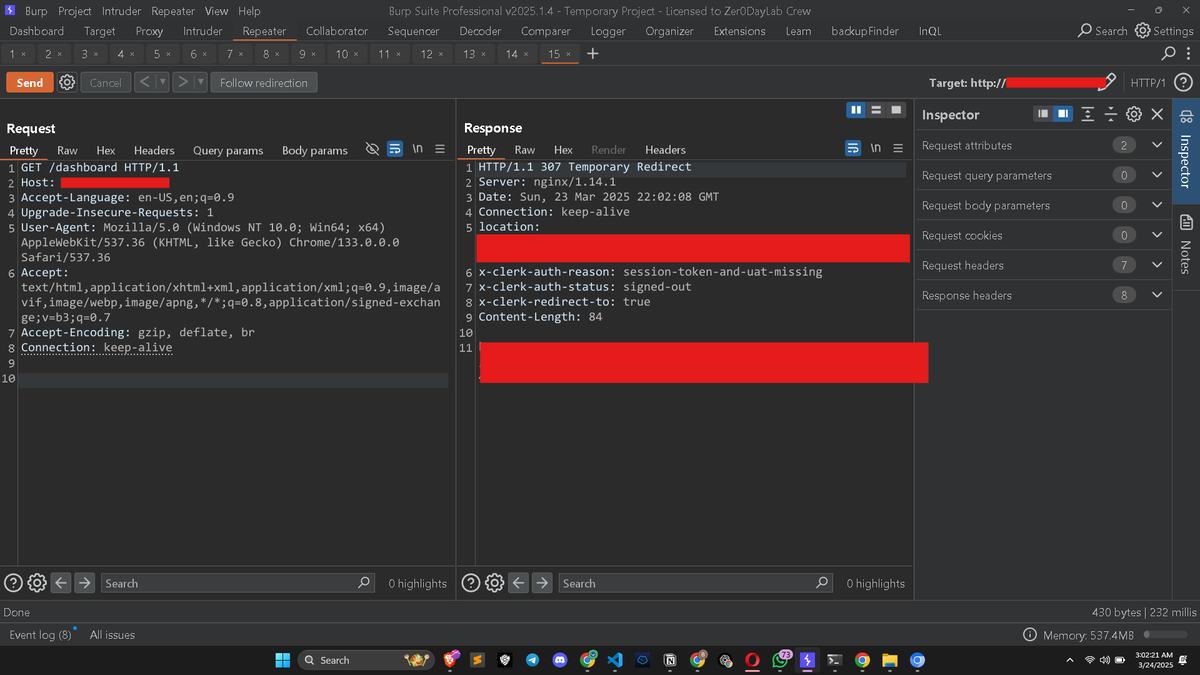
The vulnerability affects applications that rely on Next.js middleware for access control. By abusing the x-middleware-subrequest header, an attacker can cause middleware checks to be skipped and potentially reach protected routes without authentication.
Next.js Middleware | Authorization Bypass:
• CVSS: 9.1 Critical
• Attack: Remote, unauthenticated
• Affected: Next.js 11.1.4–12.3.4, 13.x < 13.5.9, 14.x < 14.2.25, 15.x < 15.2.3
• Fixed: 12.3.5, 13.5.9, 14.2.25, 15.2.3
• Impact: Bypass of middleware-based authorization controls
The repository demonstrates the header-based bypass against a protected route.
🇪🇺 Europa: alerta por ciberseguridad
Europa enfrenta una urgencia en ciberseguridad debido al aumento de amenazas y ataques recientes, evidenciando que no puede seguir siendo ingenua ante estos riesgos
https://t.co/vw6LuIa5u4