@TexasEd911@FBIDirectorKash Working on a story about the dangers of SROs in school being under the command of a superintendent. I'll take all documented tips.
🪶 STUDENTS ARE NOT INVENTORY: WHEN A SCHOOL DISTRICT IS RUN LIKE A CORPORATION 🪶
By Buddy Falcon Media, LLC
When a school district pursues a six-figure outside student-recruitment item while eliminating campus positions—including AVID program, Special Education and intervention positions—that serve students inside, it stops looking like a public service centered on children.
It starts looking like a corporation centered on revenue.
Texas school finance ties substantial funding to Average Daily Attendance (ADA). Every additional student who enrolls and attends may increase the district’s formula funding. But that child also needs a qualified teacher, classroom space, transportation, instructional materials, supervision, and academic support. Some students will need Special Education services, dyslexia intervention, bilingual support, counseling, nursing care, or intensive academic intervention.
Children are not interchangeable funding units used to balance a spreadsheet. They are not inventory to be acquired, counted, and managed.
🪶 THE SUPERINTENDENT AS CHIEF EXECUTIVE
To address a projected deficit, PfISD’s “optimization” response has included the approved closure of four neighborhood schools—Dessau, Parmer Lane, Pflugerville, and Windermere—beginning in 2027–2028. PfISD reported finalizing more than 130 campus surplus placements.
During the same period, the Board entered into a contract extending Superintendent Dr. Quintin Shepherd’s employment through January 2031.
Meanwhile, under his 2026 contract, Superintendent Dr. Quintin Shepherd’s annual compensation package has an estimated annualized contractual value of approximately $421,000. That includes a $303,000 base salary, an estimated $26,967 in TRS and TRS-Care salary supplements, $29,400 in additional salary or salary-deferral benefits, and approximately $61,900 in district-funded supplemental retirement contributions.
The estimate excludes health, dental and vision benefits, ordinary employer retirement costs, reimbursed professional expenses and any payment for unused vacation days. Payroll and contribution records are still required to confirm the exact amount paid or contributed.
The issue is the stark contrast in financial security.
The superintendent has a multi-year contract containing compensation and retirement protections. Campus positions, student programs, and neighborhood schools remain subject to annual enrollment projections, staffing formulas, and budget reductions. The people closest to students are repeatedly asked to bear much of that uncertainty.
🪶 THE ALARMING HUMAN COST OF “OPTIMIZATION”
District records also presented a $386,750 General Fund item for Caissa Public Strategy recruitment services. Caissa’s public promotional materials advertise political-campaign-style tactics, “actual results,” “Guaranteed ROI,” and strategies designed to “put students in seats.”
Against that backdrop, the question is unavoidable: What is PfISD asking the people already inside its schools to sacrifice?
In a corporate setting, comparable reductions might be described as cutting labor costs or improving operating margins. In a school district, they are called staffing alignment, surplus placement, and position optimization.
The language sounds clinical. The consequences are human. PfISD did not merely reduce generic staffing positions. Its own Human Resources report says the surplus process included eliminating AVID program positions, Special Education positions and intervention positions across district campuses, alongside other campus-level reductions required by enrollment and staffing guidelines.
These positions serve different groups of students:
AVID program positions support organization, study skills, tutorials, rigorous coursework and college readiness, particularly for students in the academic middle.
Special Education positions: The district report does not identify which Special Education job titles were eliminated. Special Education employees collectively provide individualized instruction, accommodations, progress monitoring and other services documented in students’ Individualized Education Programs.
Intervention positions: Under PfISD’s academic-intervention model, interventionists may provide targeted small-group instruction and progress monitoring for students who need additional support.
"Eliminating positions” may look like a staffing adjustment on paper, but the students’ needs do not disappear with the job title. The district must explain how responsibilities associated with the eliminated positions will be covered and how it will ensure that students continue receiving all legally required services and adequate educational support.
When the district reduces campus positions, the potential consequences can ripple through the rest of the system:
Teachers and staff may inherit duties previously assigned to eliminated positions: Planning periods intended for grading and preparation may be used for staffing coverage when vacancies or absences cannot otherwise be filled. If staffing reductions increase caseloads or coverage duties, counselors, nurses and front-office employees may have less time for student support, family communication and urgent needs.
Parents may wait longer for help if staffing reductions increase employee workloads or caseloads: Families may face delays involving evaluations, intervention plans, schedule corrections, and responses to bullying concerns. When needs aren’t met, trust deteriorates.
Receiving campuses will absorb reassigned enrollment beginning in 2027–2028: Consolidating students creates an obligation to show that receiving schools actually have the teacher allocations and intervention capacity to serve them without larger classes, heavier caseloads or reduced program access.
🪶 CUSTOMER ACQUISITION VERSUS EDUCATIONAL QUALITY
In business, customer-acquisition cost is the amount spent to attract a new customer. Caissa’s public materials describe competition for students as inevitable, encouraging districts to knock on doors, make automated calls, and use grassroots recruitment.
Its promotional language includes: “Put students in seats,” “Recruit, retain and reclaim,” “Guaranteed ROI,” and “Actual results.”
PfISD should release its complete agreement and disclose how a payable “result” is defined. Does a result mean a completed application? A newly enrolled student? A family who remains for an entire school year? Or a student who would have enrolled without the contractor?
The apparent financial premise is that additional attendance funding could exceed the recruitment cost and create a positive return for the district. But public education cannot judge success through enrollment alone.
A recruited student is not a successful conversion simply because the child appears on an enrollment report. PfISD should disclose whether recruited students attended, remained enrolled, entered adequately staffed classrooms and received the services promised or required.
Marketing may persuade a family to walk through the door. It cannot provide the educational experience waiting on the other side.
🪶 WHY ARE FAMILIES AND EMPLOYEES LEAVING?
PfISD cannot solve declining enrollment with recruitment alone. Before pursuing substantial outside recruitment intended to offset enrollment losses, the district must publicly examine the reported reasons some families and employees lose confidence in the system.
Buddy Falcon Media has received or reported concerns involving:
Bullying complaints and disputed administrative responses
Student-safety concerns
Inconsistent discipline and accountability
Special Education and Section 504 services
Staffing instability and employee turnover
Reduced academic programs and course options
Poor or delayed communication
Complaint and grievance processes that families believed failed to resolve the original problem
Employee concerns about workload, support, and reported fear of retaliation for speaking up
The district cannot assume that declining enrollment is merely a marketing problem. It may also reflect a trust and retention problem.
Political-campaign-style messaging can tell a stronger story, but that does not automatically make the underlying system stronger.
🪶 WHEN ENROLLMENT BECOMES INSTITUTIONAL SECURITY
Additional attendance funding may support district operations, programs, facilities, and payroll. That creates an institutional incentive to maintain enrollment.
This can create institutional pressure to prioritize attracting another student whose attendance may increase district funding over confronting why some existing families and employees are leaving. The institutional focus can shift from determining why a family left to replacing the enrollment and attendance revenue associated with that student.
That approach may stabilize enrollment figures and support administrative structures, but it does not necessarily improve the education of the children already sitting in PfISD classrooms.
Students should not be recruited to preserve the system. The system should earn their enrollment by protecting them, educating them, supporting their teachers, and giving families a reason to remain.
🪶 THE ILLUSION OF SPREADSHEET EFFICIENCY
On a budget spreadsheet, eliminating a funded position may produce an immediate and measurable projected saving. But the student’s need does not disappear.
A budget spreadsheet does not measure the workload that may be transferred to remaining employees, the intervention time students may lose, courses that may be reduced or pressure that may contribute to employee turnover.
The district must publish an itemized accounting of central-office and departmental reductions so the public can compare them directly with the reductions affecting campuses.
THE BOTTOM LINE
A school district is not a corporation. Students are not customers to acquire. Teachers are not merely labor costs to optimize. Neighborhood schools are not simply underperforming real-estate assets.
Children should never be treated as a means of preserving payroll, buildings, or administrative structures. The adults, departments, contracts, and facilities exist to serve the children—not the other way around.
The budget must serve the classroom. The administration must serve the campuses. The Board must serve the public.
Trustee Jean Mayer and Board President Chevonne Lorigo-Johst:
Before approving four school closures—and while PfISD reported eliminating AVID program, Special Education and intervention positions—what specific reductions, if any, were made to executive compensation, central-office staffing, departmental budgets and outside contracts, and exactly how much did each category save?
Will you publicly compare the complete annual fiscal cost of the superintendent’s contract—including compensation, retirement supplements, and any vacation-day payments, if made—with the district’s approved, proposed, and actual outside recruitment spending and the campus positions—including AVID program, Special Education and intervention positions—that were eliminated?
— Buddy Falcon Media, LLC
Keeping Watch. Always. 🪶
🗣️ PARENTS & TEACHERS: We want to hear from you.
How are these "optimizations" playing out on your campus? Have you seen larger class sizes, heavier caseloads, or delayed support? Drop a comment below—your voice matters. Please indicate whether your account is firsthand, and do not identify individual students or disclose confidential student information.
📢 If you believe public school budgets should serve the classroom before the central office, please SHARE this post to help us hold PfISD accountable.
This report is public-interest commentary based on publicly available district and state records and reports received by Buddy Falcon Media. Assertions not established by official findings are identified as opinion, reported concerns or matters requiring additional documentation. Corrections supported by reliable records are welcomed.
Buddy Falcon Media LLC
Keeping Watch Always 🪶
#PfISD #PflugervilleISD #StudentsAreNotInventory #PublicEducation #StudentFirst #SchoolClosures #AVID #SpecialEducation #TaxpayerAccountability #Transparency #BuddyFalconMedia
@TexasEd911@TPPF@teainfo@TexasScorecard@TrueTexasTea@GregAbbott_TX
🪶 JEAN MAYER SAID PFISD DIDN’T HAVE A MARKETING BUDGET. SO THE DISTRICT WENT OUT AND GOT ONE—A BIG ONE. 🪶
By Buddy Falcon Media, LLC
In March 2023, Pflugerville ISD Trustee Jean Mayer identified charter-school marketing as a major reason families were choosing charter schools.
When State Representative Harold Dutton asked why families were turning to charter schools, Mayer said PfISD lacked the marketing resources available to its competitors:
“We don’t have that budget… We don’t have a marketing budget to market to students.”
She also accused charter schools of “preying upon” Black and brown students and families through their marketing.
Less than two years later, PfISD publicly approved an outside student-recruitment purchase.
On December 12, 2024, Mayer joined a unanimous 7–0 Board vote approving the consent agenda, which included a purchase exceeding $50,000 for CaissaK12 to recruit students who had left PfISD for charter schools or surrounding districts.
Then, in February 2026, PfISD administration records presented another student-recruitment item—this time listing a specific price:
$386,750 FROM THE GENERAL FUND
The record identifies Caissa Public Strategy as the vendor and describes the purpose as reengaging families and encouraging students to return from charter schools and surrounding districts.
The available records do not yet establish whether the $386,750 item was a renewal, an expansion of the 2024 arrangement or a separate purchase. They also do not establish how much was ultimately paid.
But the documented timeline is clear. Mayer said PfISD did not have a marketing budget. She later voted for a consent agenda containing a CaissaK12 recruitment purchase exceeding $50,000. District records then presented a $386,750 General Fund recruitment item identifying Caissa Public Strategy.
🪶 WHAT CAISSA ACTUALLY DOES
Caissa Public Strategy is not hired to investigate student-safety complaints, improve classroom instruction or repair broken relationships between families and district leadership.
Caissa recruits.
In an October 2020 article titled “Political Campaigns are Influencing How Students are Recruited,” the company encouraged school systems to use political-campaign-style tactics such as door knocking, live telephone calls, robocalls, grassroots recruitment teams, competitor monitoring and direct contact with prospective families.
Caissa helps school districts develop their message, promote their programs and persuade families to enroll.
In plain language, Caissa helps PfISD sell PfISD.
Caissa’s promotional materials describe the services it offers generally. They do not establish which specific tactics PfISD purchased or proposed to purchase. That is why the district must release the complete contracts, amendments, scopes of work, scripts, invoices and performance requirements.
🪶 PAYING TO BRING STUDENTS IN WHILE CUTTING WHAT SERVES THEM
During the same general period, PfISD finalized more than 130 campus surplus placements and reported eliminating AVID program positions, Special Education positions and intervention positions across its campuses.
PfISD approved and proposed spending to bring students through the front door while reducing some of the employees and programs available to serve students inside its schools.
A recruitment firm can persuade a family to choose PfISD. It cannot replace an AVID teacher helping a student prepare for advanced coursework and college. It cannot replace an intervention teacher helping a struggling student catch up. It cannot replace Special Education staff responsible for delivering required services. It cannot compensate for fewer campus employees serving students who are already enrolled—or those PfISD is seeking to recruit back.
Marketing may persuade families to enter. Campus programs, teachers and trust determine whether they stay.
A recruitment firm also cannot rebuild trust when families believe their concerns were ignored, contained or redirected to the administrators whose conduct or handling of the matter they questioned.
🪶 $386,750 FOR RECRUITMENT—ABOUT SIX TIMES THE DISCLOSED AVID COST
PfISD reported a General Fund cost of $61,396 to continue AVID programming at nine middle and high schools. A later district report listed the AVID membership and subscription expense at $65,000.
That disclosed figure covered AVID membership, curricular access and related vendor services. It did not include the complete cost of teachers, tutors, training, stipends or travel.
Even with that distinction, the contrast is striking.
PfISD disclosed approximately $61,396 to $65,000 for AVID vendor services across nine campuses, while district records presented $386,750 for an outside student-recruitment item.
The Caissa figure was approximately six times the disclosed annual AVID vendor cost.
At the same time, PfISD reported eliminating AVID program positions.
Caissa can recruit a student. It cannot teach that student, provide the AVID elective, conduct an intervention lesson, deliver Special Education services or mentor a student preparing to become the first person in the family to attend college.
PfISD was pursuing hundreds of thousands of dollars to attract additional students while cutting some of the people and programs needed to educate, support and retain them.
🪶 CLOSING SCHOOLS WHILE RECRUITING STUDENTS
PfISD also approved the closure of Dessau, Parmer Lane, Pflugerville and Windermere elementary schools after the 2026–2027 school year.
Families are being told that declining enrollment and severe financial pressure require school closures, campus consolidation and staffing reductions.
At the same time, PfISD approved outside student recruitment and later presented a $386,750 General Fund Caissa item intended to persuade students to return.
The district found schools to close. It found AVID positions to eliminate. It found Special Education and intervention positions to reduce. It finalized more than 130 campus surplus placements.
And after Jean Mayer said PfISD did not have a marketing budget, the Board found money for outside student recruitment.
THE BOTTOM LINE
Jean Mayer said PfISD did not have a marketing budget.
Less than two years later, she participated in a unanimous vote approving a CaissaK12 purchase exceeding $50,000 to recruit students who had left PfISD. District records later presented another Caissa recruitment item for $386,750 from the General Fund—approximately six times PfISD’s disclosed annual AVID vendor cost across nine campuses.
During the same general period, PfISD eliminated AVID, Special Education and intervention positions, finalized more than 130 campus surplus placements and approved four neighborhood-school closures.
PfISD pursued spending to bring students back while cutting some of the people, programs and schools needed to serve them once they returned.
Marketing can sell PfISD.
It cannot replace what PfISD is cutting.
Buddy Falcon Media has formally requested the complete Caissa contracts, amendments, scopes of work, purchase orders, invoices, payments, performance requirements, verified enrollment results and resulting attendance revenue.
Trustee Jean Mayer is a member of the PfISD Concerns group, and Board President Chevonne Lorigo-Johst has been invited to join. Both will receive questions submitted by group members, and their responses will be reported accurately and in context.
Trustee Mayer, what changed between your March 2023 statement that PfISD lacked a marketing budget and your December 2024 vote approving outside student-recruitment services?
Trustee Mayer and Board President Lorigo-Johst, will you release the complete Caissa records and explain why PfISD pursued hundreds of thousands of dollars in recruitment while eliminating AVID, Special Education and intervention positions and closing four neighborhood schools?
— Buddy Falcon Media, LLC
Keeping Watch. Always. 🪶
#PfISD #PflugervilleISD #JeanMayer #ChevonneLorigoJohst #CaissaK12 #StudentRecruitment #AVID #SpecialEducation #TaxpayerAccountability #SchoolClosures #Transparency
🪶 “WHY DOES THERE NEED TO BE MORE TRANSPARENCY?” — PFISD BOARD TRUSTEE JEAN MAYER’S OWN WORDS WHILE OPPOSING A BILL THAT WOULD HAVE FORCED PFISD TO SHOW ITS WORK 🪶
By Buddy Falcon Media LLC
As parents await transfer decisions, let's reflect.
On April 25, 2023, Pflugerville ISD Trustee Jean Mayer testified against House Bill 4148 on behalf of the district. The bill would not have forced overcrowded schools to take more students. Among other reforms, it would have required districts to calculate and publish campus capacity, report transfer applications, approvals, denials and reasons for denial, and face random TEA audits examining their capacity determinations and approved and denied applications.
When Representative Harold Dutton pressed Mayer on the need for greater transparency, she replied:
“We are very transparent with our parents through the process. There’s already policies in place for that. Why does there need to be more transparency?”
Dutton immediately asked, “Is that an answer to my question?”
Mayer shot back: “It is your answer right now.”
🪶 Defending a Process She Could Not Explain
Throughout the hearing, Mayer contradicted herself while fighting to protect PfISD’s broad local discretion over student transfers:
* She couldn’t identify the provision: Mayer called the bill “well-written,” but when Dutton asked her to name the first part she opposed, she admitted: “I don’t have the bill in front of me right now.”
* She relied on overcrowding, then admitted PfISD had capacity elsewhere: Mayer argued that crowded campuses required local discretion. When lawmakers confronted her with PfISD’s declining enrollment and possible school closures, she acknowledged available capacity on the west side: “There is absolutely 100 percent, yes.”
* The exchange became tense: After Mayer said she did not have the bill in front of her, Dutton questioned her about transparency. Mayer replied, “We are very transparent with our parents through the process. There’s already policies in place for that. Why does there need to be more transparency?” Dutton asked, “Is that an answer to my question?” Mayer responded, “It is your answer right now.” The discussion then became personal, with Mayer saying Dutton already appeared to view her as a “crappy board member.” Dutton ended the exchange by saying, “But you are what you answer to, so thank you.”
🪶 The 2026 Reality
Three years later, the transparency problem is no longer theoretical.
As of July 30, 2026, PfISD’s transfer portal now shows a stark difference in access. If you live outside PfISD, you can currently apply for a 2026–2027 transfer. But if you live inside PfISD and want to switch campuses, the portal locks you out: “The transfer window is currently closed.”
Why the difference? How many resident transfer requests were denied, and at which campuses? How many out-of-district applications are now being considered, and for which campuses? Those campus-level figures are not displayed in the transfer portal. Mayer testified against HB 4148, which would have required districts to report capacity determinations, applications, approvals, denials, and reasons for denial.
The bill was ultimately left pending in committee.
Now, Jean Mayer has announced her Place 6 reelection campaign for this November.
Mayer opposed legislation that would have made PfISD’s transfer decisions measurable, reviewable and independently auditable. She insisted PfISD was already transparent, then asked, “Why does there need to be more transparency?” Now that resident and nonresident families face dramatically different transfer windows, PfISD should publish the campus-level numbers needed to show exactly how that local discretion is being used.
— Buddy Falcon Media, LLC
Keeping Watch. Always. 🪶
#PfISD #PflugervilleISD #JeanMayer #StudentTransfers #Transparency #SchoolBoardElection
@pfisd@Chevonne4PFISD@TexasEd911@TPPF@teainfo@TrueTexasTea@TexasScorecard@GregAbbott_TX
*(Note: Review the publicly available video of Mayer’s testimony and questioning regarding HB 4148 here:
*Transcript in the comments.
https://t.co/LrlT1yHOBc
🪶 “PEOPLE LIKE THE SHINY NEW PENNY”: PFISD TRUSTEE JEAN MAYER’S REMARKS ABOUT BLACK AND HISPANIC PARENTS DESERVE ANOTHER LOOK🪶
By Buddy Falcon Media LLC
On March 29, 2023, the Texas Public Policy Foundation published an article by Brian Phillips titled, “Pflugerville ISD board member attacks parents for choosing charter schools.”
The article accused Mayer of speaking about Black and Hispanic parents in a condescending manner and suggested her testimony implied that those parents could not independently evaluate whether a charter school offered their children a better education.
More than three years later, the testimony remains relevant as PfISD continues to face declining enrollment, financial pressure and questions about how well it is serving students.
When Chairman Harold Dutton asked why families were choosing charter schools over PfISD, Mayer blamed marketing.
“People like the shiny new penny.”
Mayer insisted charter schools were targeting particular families:
“These charters are marketing to brown and black students and families.”
“They are preying upon them.”
She then said:
“If you don’t know anything about how people market to families that are of Spanish denomination, they are very trusting to the experts. And they lean into the experts.”
What is a “Spanish denomination”?
That is not a recognized racial, ethnic or language classification. “Denomination” normally refers to a branch of religion or a category of currency.
Mayer did not use the exact phrase “easily manipulated.” However, she repeatedly argued that Black and Hispanic families were being “preyed upon,” were “very trusting to the experts” and were failing to evaluate their local school districts because of charter-school marketing.
She said:
“They’re not even evaluating their local ISDs because they’re being so heavily marketed to.”
That is an extraordinary characterization of parents making serious educational decisions for their children.
Mayer also claimed:
“They are not serving their students the way we are. Our schools are by far superior.”
Dutton immediately challenged her:
“Well, the students must not think that because they’re choosing the charter school.”
PfISD’s own reports show that families may have reasons to consider more than marketing.
In a Fall 2022 survey of secondary ESL students, 31% reported that their language and culture were not respected at school, although 81% reported feeling respected within the ESL classroom.
District reports have also documented Emergent Bilingual and immigrant families declining Newcomer Academy participation because of concerns involving inclusion, campus safety and transportation.
Those are not marketing problems.
They are district responsibilities.
The hearing grew especially tense when Dutton moved from marketing to academic performance.
“Which subgroup is at the bottom educationally?”
Rather than directly addressing the academic subgroup being discussed, Mayer broadened the exchange to “all of our marginalized groups” and attempted to include LGBTQ students.
LGBTQ students’ experiences are relevant to discussions of safety, discrimination and belonging. But LGBTQ status is not a racial or ethnic academic subgroup used to answer Dutton’s specific question about academic performance.
The shift appeared to avoid his central point: Black and Hispanic families may be choosing charter schools because their children are among the students being underserved academically.
Dutton tried again:
“And who are the students at the charter school?”
Mayer returned to her argument that the system was “predatorial.”
Dutton stopped her:
“That’s not my question. Please answer my question. Who are the students at the charter school? What is their racial breakdown?”
Mayer finally answered:
“They are mainly black and brown students.”
The exchange ended with Dutton visibly frustrated after Mayer again accused him of excluding other marginalized groups. It should be noted that Mayer herself did not include the LGBTQ community initially in her remarks and the issue was not them leaving PfISD.
The March 2023 article described the testimony as an attack on parents and argued that Mayer’s comments carried racial overtones. That criticism has been publicly available for years.
Yet PfISD families still deserve to know whether Mayer stands by her language today.
What did she mean by “Spanish denomination”?
What evidence showed that these parents were not evaluating their local schools?
Why did she focus on marketing instead of directly addressing PfISD’s academic outcomes?
Buddy Falcon Media invites Trustee Jean Mayer to respond fully. Jean Mayer has my number and my email, as we have corresponded many times.
No challenger has publicly announced for her seat at this time, and unless Mayer announces otherwise, many may assume she intends to seek another term.
Any substantive response from Mayer will be published with this reporting.
Parents are capable of examining academic results, listening to their children and deciding which school best serves them.
PfISD should investigate why families leave—not dismiss their decisions as attraction to a “shiny new penny.”
By Buddy Falcon Media
Keeping Watch Always 🪶
#PfISD #Pflugerville #AustinNews #CentralTexas #TexasEducation #SchoolChoice #TxLege #Election2026 #Accountability
@TPPF@TexasEd911@TexasScorecard@TrueTexasTea@teainfo
https://t.co/NLVuRy2ANU
🪶 PFISD TEACHER INCENTIVE ALLOTMENT OPEN RECORDS UPDATE: WHY WAS AN UNCERTIFIED TEACHER FACILITATOR LISTED FOR AN $8,951.40 STIPEND? 🪶
Certified teachers have an active state credential—and everything invested in earning and protecting it—at risk. An employee without that active credential may face employment and legal consequences, but does not have the same teaching certificate to lose.
That creates a fair question for PfISD: When substantial performance stipends are awarded, does the district give any consideration to the additional professional investment and credential-based risk carried by certified teachers?
After multiple requests that I look into the Teacher Incentive Allotment payments in PFISD, I did an open records request. After receiving my first batch of documents, I’ve started digging in. Right away, I have serious questions about PfISD’s standards and documentation.
The 2024–2025 spreadsheet contains three entries with correction or employment-status notes. This is Part One of my review, beginning with Telesa Hester.
PfISD lists her as a Teacher Facilitator II–Intervention Math employee at Dessau Middle School. “Teacher Facilitator” is a local PfISD employment classification, not an SBEC-issued teaching certificate. PfISD’s DOI plan permits the district, under specified circumstances, to place uncertified employees in teaching assignments while requiring them to complete certification within a district-established period.
According to the public SBEC record I reviewed on July 28, 2026, she holds an Exemplary TIA designation—a high-tier benchmark aligned with a statewide performance benchmark associated with approximately the top 20% of Texas teachers. That designation can generate substantial annual taxpayer-funded compensation when the applicable employment and stipend requirements are met.
But when you look at her credentials on the SBEC public portal, something is missing. The public SBEC record I reviewed on July 28, 2026, displayed no active classroom-teaching certificate.
* Her intern certificates expired in August 2021.
* Her Educational Aide III certificate expired in March 2022.
I want to be very clear: I am not attacking this employee. Effective September 1, 2021, House Bill 1525 removed the word “certified” from the TIA statute, allowing districts to designate a classroom teacher regardless of certification status. The change did not automatically qualify every uncertified employee; the employee still had to satisfy the district’s approved performance and eligibility requirements.
PfISD may rely on a District of Innovation exemption, permit, waiver, Teacher Facilitator pathway, or another form of employment authority. The records produced do not identify which authority applied here. PfISD’s own eligibility page says certain Teacher Facilitators working toward certification may participate, but it does not explain whether that pathway applied to this employee or how long someone may remain in it. That also raises the question: how long is an employee allowed to be "working toward certification"? If years pass and the public SBEC record continues to show no active standard teaching certificate, should that concern the district—particularly when PfISD’s DOI plan says an uncertified employee must complete certification requirements within a specified time?
Nothing in the records I reviewed establishes that Hester misrepresented her credentials, controlled the designation process, or violated any rule. PfISD—not the employee—must explain the employment authority and designation evidence it relied upon.
🪶 How did she qualify as Exemplary, and how did her performance data compare with fully certified teachers in the same eligible teaching category and designation cohort?
Under TEA’s current published performance standards, Exemplary generally corresponds to an average score of at least 3.9 across T-TESS Domains II and III and at least 60% of students meeting or exceeding expected growth. PfISD should identify the exact thresholds that applied during this employee’s data-capture year.
PfISD should publish aggregated or properly de-identified comparison data showing how many eligible certified and non-certified employees met each designation threshold, without disclosing confidential individual evaluations. How many fully certified PfISD teachers produced comparable or better observation and student-growth results? How many received the same Exemplary designation, and how many did not? Certified teachers deserve to see whether the standards were applied consistently.
Furthermore, the district’s July 29, 2025 update regarding this employee states:
"Resigned due to non-certification — July 29th Update: being processed for rehire with no lapse in service."
Why does the district’s record say she resigned due to non-certification, and why was she then being processed for rehire with no lapse in service? What certification requirement had not been met, and what specific legal or district authority permitted the proposed rehire? Was she then returned to the same classroom assignment?
Most importantly, which exception or employment authority, if any, did PfISD rely upon—its District of Innovation exemption, a school-district teaching permit, an emergency permit, a waiver, or the Teacher Facilitator pathway?
PfISD’s DOI plan may allow certain employees to teach on non-certified contracts, but the records produced in response to this request do not identify which exception or employment authority applied to this employee. Nor do the records explain why a resignation due to non-certification was followed by a plan to rehire her with no lapse in service.
Did “no lapse in service” preserve her TIA payment, benefits, salary status, leave, service credit, or some other employment advantage? PfISD should produce the records and explain exactly what occurred.
We know the amounts at stake are significant. The $8,951.40 figure is the gross stipend listed on the spreadsheet entry. Separate ledger entries appear to reflect later payment adjustments that still require reconciliation.
Several teachers have asked me to look into this, and they have every right to be concerned about how their district distributes these funds.
🪶 We need answers from PfISD:
* If PfISD relied on its Teacher Facilitator pathway, was this employee actively working toward certification as that pathway describes? What documented progress occurred between the expiration of her intern certificates in August 2021 and the district’s July 29, 2025 notation that she resigned due to non-certification?
* How did her locally generated scores compare with fully certified teachers in the same or similar category?
* What specific employment authority did PfISD use, what certification deadline applied, was that deadline extended or missed, and did maintaining “no lapse in service” affect her eligibility for the listed stipend?
I am continuing to go through these records. If anyone inside the district understands how this specific "rehire" process works, what authority is used for these roles, or how this impacts certified teachers, drop a comment below or send me a message.
Again, this is not an attack on this particular teacher. I am sure she works hard—but so do her certified colleagues who earned degrees, passed state exams, paid certification fees, completed continuing education, and keep their professional credentials in good standing. So what gives? What standards did PfISD apply, and why was an employee whose public SBEC record showed no active standard teaching certificate listed for an $8,951.40 Exemplary TIA stipend?
Let's get to the bottom of this. 👇
Buddy Falcon Media LLC
Keeping Watch Always 🪶
@PfISDHR@pfisd@Chevonne4PFISD@TrueTexasTea@TexasScorecard@TexasEd911@teainfo@GregAbbott_TX
🪶 PFISD reportedly reassigned an educational assistant after allegations involving nonverbal autistic students.
According to a confidential source, one child was allegedly thrown across a classroom. Another was allegedly forced into a face-down physical position. The employee reportedly returned to student-facing duties after investigations.
His Texas educator certification record also shows he is under investigation.
Parents deserve answers.
Buddy Falcon Media LLC
Keeping Watch Always 🪶
@PfISDHR@pfisd@Chevonne4PFISD@TexasScorecard@TexasEd911@teainfo@GregAbbott_TX
#PfISD #SpecialEducation #StudentSafety #TexasEd #Accountability #BuddyFalconMedia
🪶 CLOSING SCHOOLS AND SELLING BOOKS: THE LUCRATIVE PRIVATE PLATFORM OF PFISD'S SUPERINTENDENT 🪶
PfISD is closing four neighborhood elementary schools. Families are being told to embrace "unavoidable sacrifice." Teachers are competing for a sliver of $10k in classroom grants from a district gala that grossed $222,000.
Meanwhile, Superintendent Dr. Quintin Shepherd is cashing in on his title.
For a $345,225 base salary, taxpayers get an executive who is actively building a massive private enterprise. While the district drains its savings to hand staff a meager 2% raise and braces for an $18 million deficit, Shepherd has:
📚 Maintained a 3-book catalog—including a new $100 textbook on "school board leadership."
✍️ Published roughly one article every three weeks since taking office.
🎙️ Billed himself on national podcasts as a visionary storyteller and executive coach.
There is nothing wrong with a side hustle. But his public position is the exact currency lending authority and marketability to his private platform. When a taxpayer-funded office generates private professional value, the public deserves to know where the district’s time and money end, and the superintendent’s private business begins.
Who is editing and scheduling these articles?
Is PfISD paying for his travel to promote these books?
Is district staff time being used to build his brand?
It is time to open the books and pull the receipts. If his private platform is completely divorced from district resources, the public records will prove it.
The community does not need another leadership metaphor. We need the receipts. 🪶
#PfISD #TxEd #Accountability #PublicEducation #BuddyFalconMedia
PfISD Parents Confront Superintendent Over Transparency
This local broadcast highlights the active community frustration and lack of clear answers surrounding the exact school closures you are investigating.
🪶 INVESTIGATIVE UPDATE: PFISD PRIORITIZES TEACHER DEMOGRAPHICS WHILE EXPERIENCE GAPS WIDEN 🪶
By Buddy Falcon Media LLC
The federal Every Student Succeeds Act (ESSA) has a specific educator-equity requirement designed to protect vulnerable students.
It requires school districts receiving Title I funds to address disparities when low-income and minority students are taught at higher rates than other students by inexperienced, out-of-field, or ineffective teachers.
That is the requirement. It asks a fundamental question:
Do disadvantaged students have equitable access to experienced, properly assigned, and effective educators?
PfISD’s 2025–26 District Improvement Plan initially explains that requirement correctly. It states that the district’s ESSA Talent Plan—formerly called its ESSA Equity Plan—is intended to reduce gaps involving low-income and minority students being taught by inexperienced, out-of-field, and ineffective teachers.
PfISD renamed its “ESSA Equity Plan” the “ESSA Talent Plan” in spring 2025, stating that the change was made “due to federal elimination of DEI.” The district changed the label, but its published plan continued the same ESSA experience-gap analysis and retained a separate racial-demographic staffing scorecard.
But PfISD’s data then show that the actual ESSA experience problem has worsened.
The gap involving experienced teachers at high-poverty campuses increased from 2% in 2022–23 to 7% in 2023–24. PfISD identified Dessau, Northwest, Ruth Barron, Delco, Spring Hill, River Oaks, and Copperfield elementary schools as the campuses in the highest quartile for that gap.
The experience gap at high-minority campuses increased from 4% to 10%. The campuses identified in the highest quartile were Dessau Elementary, Dessau Middle School, Westview Middle School, Connally High School, Ruth Barron Elementary, Delco Elementary, and Copperfield Elementary.
That is what ESSA requires PfISD to address: disparities that result in low-income and minority students being taught at higher rates by inexperienced, out-of-field, or ineffective teachers.
But on the very next page, PfISD adds a different measurement.
The district introduces a separate section titled “Teacher Demographics and Representation of Students.” It compares teacher racial demographics directly with student racial demographics, reports that approximately 60% of teachers are White while approximately 22% of students are White, and describes White teachers as “significantly overrepresented.” The district then states that a “representative educator workforce” supports student engagement, belonging, and academic success.
Representation may be a legitimate subject for community discussion, but racial matching is not the federal ESSA educator-equity requirement.
ESSA examines whether vulnerable students are disproportionately taught by inexperienced, out-of-field, or ineffective teachers.
PfISD separately measures whether the racial composition of its workforce resembles the racial composition of its students.
Those are not the same question. And adding a demographic scorecard does not reduce the documented experience gaps at the campuses PfISD itself identified.
🪶THE PROBLEMS PFISD’S OWN CAMPUS PLANS ACTUALLY IDENTIFY
The distinction matters because PfISD’s own campus plans identify specific and measurable problems that have nothing to do with whether teachers racially mirror their students.
At Weiss High School, the Board-approved plan reports a D rating in Academic Growth, a chronic-absenteeism rate of 22.6%, and only 64% positive staff responses concerning School Safety and Order. The plan attributes the safety-and-order result in part to inconsistent enforcement of student rules and inconsistent application of discipline by the administration.
Only 53% of Weiss teachers responded positively regarding Work/Life Balance. The plan identifies insufficient staff and resources to assist with lessons and materials as the root cause. It also states that Weiss would no longer receive campus Title I funds and identifies an unsuccessful system for getting all eligible families enrolled in free- and reduced-lunch services as the root cause.
Cele Middle School earned an overall A rating and reported strong performance in several areas. Its plan states that 14 of 16 achievement targets were met or exceeded and that all eight Reading Language Arts growth targets were met.
But the plan also acknowledges that Cele’s Asian student accountability group missed its interim math-growth target for the third consecutive year. It also states that community, parent, and student surveys were not provided or administered during 2024–25, leaving the campus without data to assess those groups’ perceptions.
These are specific academic, staffing, safety, attendance, and administrative issues that deserve direct attention.
ESSA directs districts to examine whether vulnerable students have equitable access to experienced, effective, and properly assigned teachers. It does not require districts to replace—or supplement—that analysis with a racial-demographic scorecard.
🪶THE REAL STAFFING PROBLEM
PfISD’s plan acknowledges that the district struggles to hire and retain certified, experienced teachers. It states that the certified-teacher pool is shrinking while teacher separations and retirements are increasing.
The district reports hiring approximately 250 to 350 teachers annually, many of whom enter through alternative or university certification programs that do not require ESL credentials. PfISD also acknowledges that many educators enter through alternative pathways or incomplete certification programs.
During 2024–25, PfISD filed 71 ESL waivers and 13 bilingual exceptions for teachers serving Emergent Bilingual students who lacked the appropriate teaching certifications. The district’s plan also states that teachers’ average total experience and average tenure within PfISD had both fallen 1.2 years below the corresponding state figures.
Those facts point to a clear need:
Hire qualified teachers.
Hire properly certified teachers.
Place experienced teachers at campuses where students have the greatest needs.
Create working conditions that persuade those teachers to stay.
That is directly aligned with ESSA’s educator-equity purpose. Comparing employee racial percentages with student racial percentages is a separate policy choice.
🪶DRIVING EXPERIENCED RETIREES AWAY
While PfISD reports widening gaps in access to experienced teachers at high-poverty and high-minority campuses, written public testimony from a PfISD rehired-retiree teacher states that the district plans to make rehired retirees absorb state return-to-work surcharges beginning in 2026–27.
The teacher reported that 46 PfISD rehired retirees would be affected. According to her calculation, a teacher at the top of the salary schedule with a master’s degree and subject to both charges could have approximately $1,568.34 deducted each month—including a 16.5% pension surcharge and a $535 monthly TRS-Care surcharge.
State law now allows districts to pass the surcharges to employed retirees; it does not require districts to do so. The TRS-Care surcharge also does not apply to every rehired retiree because exemptions exist.
The contradiction is difficult to ignore because PfISD’s own legislative priorities call for eliminating TRS return-to-work surcharges and penalties that deter experienced retirees from returning to classrooms.
PfISD cannot advocate removing a financial barrier to rehiring experienced teachers while reportedly preparing to place that barrier directly onto its own retired educators.
🪶THE CONTRAST AT THE TOP
Superintendent Dr. Quintin Shepherd’s contract handles retirement-related expenses very differently.
His contract provides a $303,000 annual base salary. Section 5.8 requires PfISD to supplement his salary by an amount equal to 100% of his regular TRS retirement and TRS-Care member contributions. Based on the published 2025–26 combined member rate of 8.90%, that supplement is estimated at approximately $26,967 annually, subject to the district’s actual payroll calculation and any future changes in salary or contribution rates.
The contract also establishes separate employer-funded supplemental retirement and salary-deferral benefits. The contribution schedules begin at 60% of the applicable maximum allowable contributions in 2026, increase to 75% in 2027, and reach 80% beginning in 2028.
Beginning January 31, 2027, Shepherd may also elect to cash out up to 15 accrued but unused vacation days. At his current salary and 226-day work year, the maximum potential payment would be approximately $20,111 if all 15 days are available.
These are not the same TRS charges reportedly being shifted to retirees. The superintendent receives a contractual salary supplement covering his regular member contributions, while rehired retirees could face separate return-to-work surcharges.
But the difference in treatment remains significant.
PfISD contractually offsets the superintendent’s regular TRS contributions and funds additional retirement benefits for him.
According to public testimony, the district is preparing to make experienced retired teachers absorb thousands of dollars in separate retirement-related charges themselves.
🪶QUESTIONS PFISD MUST ANSWER
Why did PfISD place a racial-demographic staffing comparison immediately beside a plan intended to address access to experienced, in-field, and effective teachers?
What evidence shows that racial alignment between staff and students addresses the experience and certification gaps identified under ESSA?
What written, race-neutral standards ensure that hiring committees evaluate applicants on certification, experience, effectiveness, and individual merit?
Why is PfISD reportedly shifting return-to-work surcharges onto veteran educators while its own plan shows widening gaps in student access to experienced teachers?
Why does the district contractually supplement retirement compensation at the superintendent level while potentially making continued classroom employment unaffordable for some retirees?
ESSA is intended to protect students from being disproportionately assigned to inexperienced, out-of-field, or ineffective teachers.
PfISD’s records show that those experience and certification gaps remain.
The district should explain why it added a separate racial-demographic staffing scorecard to that analysis—and why it may be making it more difficult to retain the experienced teachers its students need.
We welcome comments and corrections from the district.
— Buddy Falcon Media, LLC
Keeping Watch. Always. 🪶
@PfISDHR@pfisd@GregAbbott_TX@Chevonne4PFISD
[1]: https://t.co/majcaxiFqV... "Every Student Succeeds Act State Plan"
[2]: https://t.co/R0s9NXm9oh... "CIP for Board Approval"
[3]: https://t.co/ZNvvJfe14k... "CIP for Board Approval"
[4]: https://t.co/oogrhHaoxY... "CIP for Board Approval"
[5]: https://t.co/AjeCDW1JJB... "The cost of the Employed Retiree Teacher Reimbursement ..."
[6]: https://t.co/NWCvFcKTjL... "Legislative Priorities" See less
BUDDY FALCON MEDIA | ROBERT CHODY AND JAVIER AMBLER CASE UPDATE🪶
🪶Javier Ambler’s Law Is Still in Effect — Do Not Be Discouraged by the Latest News
By Buddy Falcon Media LLC
We are taking a brief break from our reporting on public education for an important message about accountability, courage, and what can happen when ordinary people refuse to remain silent.
This story is deeply personal to Buddy Falcon Media. Before I began reporting on public education, Buddy Falcon started in Williamson County as a place where insiders and citizens could bring records, complaints, videos, and information they were afraid to release under their own names.
I provided records, background information, and source connections to journalist Tony Plohetski during his broader reporting on Robert Chody’s administration, Live PD, and the culture surrounding the Williamson County Sheriff’s Office. Along with a team of "helpers", I requested records, received information from insiders, verified what I could, connected documents and sources, published information, and protected people who feared retaliation.
Plohetski’s Javier Ambler investigation later received the 2021 Hillman Prize for Broadcast Journalism for “Lights. Camera. Violence.,” his reporting on Javier Ambler and Williamson County’s Live PD practices. Reporters, investigators, employees, attorneys, families, witnesses, and ordinary citizens each carried part of the truth.
That is why the latest development should not be viewed as proof that speaking up accomplished nothing.
The criminal prosecution of former Williamson County Sheriff Robert Chody and Assistant Williamson County Attorney Jason Nassour appears to be ending without a jury ever hearing the State’s full case. But do not mistake the likely end of a criminal prosecution for the failure of everyone who spoke up. Javier Ambler’s Law remains in effect. Texas law-enforcement agencies may not authorize reality-television crews to accompany and film officers acting in the line of duty for entertainment programs such as *Live PD*. That change happened because people refused to remain silent.
🪶The Current Legal Status
The prosecution appears to be ending due to an evidentiary and appellate roadblock—not because a jury heard the complete case and rejected it, nor because a jury accepted it.
* May 14, 2026: The Texas Court of Criminal Appeals declined to review a lower court's evidentiary decision that excluded evidence prosecutors considered essential to proving their case.
* July 1, 2026: The Travis County District Attorney’s Office announced its intent to dismiss the felony evidence-tampering cases against Chody and Nassour.
* July 2–7, 2026: Defense attorneys objected to the State’s motion, and the trial court denied the original motion to dismiss.
* July 10, 2026: Prosecutors refiled their motion to dismiss the charges.
* July 16, 2026: As of this writing, prosecutors are again seeking dismissal, but the Travis County District Attorney’s Office has not announced a final dismissal order.
Legal Context: No jury has acquitted Chody or Nassour of these specific charges, nor has a jury found the allegations to be false. Both men have consistently denied wrongdoing, neither has been convicted, and both remain fully entitled to the presumption of innocence.
🪶 Remember What Happened to Javier Ambler
On March 28, 2019, Williamson County deputies attempted to stop Javier Ambler II, a 40-year-old father of two, for allegedly failing to dim his headlights. That attempted stop escalated into a 22-minute pursuit ending when Ambler crashed in North Austin.
Deputies used Tasers and forcibly restrained Ambler as he repeatedly told them he could not breathe, was not resisting, and suffered from congestive heart failure. He pleaded for them to save him before becoming unresponsive and passing away. The medical examiner ruled his death a homicide, citing his medical conditions and forcible restraint as contributing factors. (Former deputies J.J. Johnson and Zach Camden were later charged with manslaughter and acquitted by a Travis County jury on March 7, 2024.)
Ambler’s final encounter was recorded both by law-enforcement body cameras and by a Live PD production crew embedded with the deputies. The unaired Live PD footage was later destroyed.
Serious questions remain regarding who controlled that recording, what steps were taken to preserve it, and why footage of an in-custody death was allowed to be destroyed before investigators or the public could obtain it. Prosecutors accused Chody and Nassour of actions connected to the failure to preserve that footage. Both men denied the allegations, and their cases are now likely to conclude without a verdict.
No matter what ultimately happens to the criminal charges or how the civil cases were resolved, the center of this story remains a profound human tragedy. Javier Ambler II was a father, a son, a brother, and a friend who did not return home. People connected to Buddy Falcon met with members of the Ambler family in early 2020, while the family was still seeking answers about what happened to him. Buddy Falcon Media extends its deepest sympathies to the Ambler family, whose lives were permanently altered that night.
🪶 The Civil Toll: At Least $7.825 Million
Ambler was not the only individual whose law-enforcement encounter was tied to Live PD. Civil lawsuits filed during and after the Chody administration alleged that deputies delayed, relocated, staged, or escalated encounters to produce more dramatic television.
At the heart of these cases was an even more disturbing concern: that during some encounters, enforcing the law and protecting the public had become secondary to creating entertainment for Live PD. In the Scott Lewis litigation, federal court records recounted allegations that Chody established a culture encouraging officers to use force to create “good TV.” The court also referenced a Williamson County employee’s social-media posts stating, “Glad we could make some good TV for the boss man” and, “Gonna try to get some stuff stirred up for y’all tonight.” Those allegations were not ultimately established by a jury, but the words captured exactly what employees, residents, and civil plaintiffs said had gone wrong: traffic stops, pursuits, warrants, and arrests were allegedly being treated as television content instead of solely as public-safety decisions. When officers begin thinking about ratings, drama, or pleasing “the boss man,” the public is placed at risk. Javier Ambler’s Law was enacted to prevent Texas law-enforcement agencies from entering that kind of reality-television arrangement again.
Williamson County’s publicly reported Live PD-related settlements include:
• Javier Ambler’s family — $5 million settlement approved in December 2021 for wrongful-death claims.
• Gary Watsky — $2.5 million settlement approved in October 2024 involving the Cedar Park SWAT raid.
• Ramsey Mitchell — $325,000 settlement approved in November 2021 involving injuries alleged during a traffic stop.
Combined total: $7,825,000.
Note on Liability: These figures represent only publicly reported settlements tied directly to the reality television program. All settlements were reached as compromises. The county and individual defendants made no admissions of liability, and these represent allegations resolved in civil litigation, not facts established by a jury verdict.
These figures do not include outside attorneys, years of litigation, insurance expenses, or the Scott Lewis litigation (which was dismissed). Furthermore, Williamson County commissioners ultimately sued their own sheriff, alleging Chody signed another agreement with *Live PD* producer Big Fish Entertainment without notifying or receiving authorization from the Commissioners Court, thereby exposing taxpayers to additional liability.
🪶Speaking Up Matters — Even When You Are Afraid
Imagine the profound courage it took for employees, investigators, witnesses, families, and ordinary citizens to challenge the most powerful law-enforcement office in Williamson County.
They were not confronting an ordinary supervisor. They were challenging an elected sheriff with command over an armed agency, internal investigators, public records, and a massive media platform. Speaking out meant risking careers, reputations, relationships, and personal safety.
I saw that fear firsthand.
Buddy Falcon became a drop point because people had information but did not believe they could safely release it themselves. Someone still spoke. Because people spoke, the public eventually learned Javier Ambler’s name and saw evidence documenting the final moments of his life.
🪶 The Same Lesson Applies to Public Education
Holding powerful people accountable inside a school district can be just as difficult. Education employees and administrators accused of misconduct are heavily insulated by confidential personnel processes, internal "self-investigations," grievance labyrinths, and school boards that routinely defer to the administration.
The power may be quieter than a sheriff’s badge, but it is just as real. Employees fear retaliation or losing their careers. Parents fear their children will be targeted. Students fear adults will not believe them. Witnesses fear losing their professional relationships or standing in the community. People are routinely told that the administration already investigated itself, or that speaking publicly will only make things worse.
If you find yourself in that position, remember the lessons of Williamson County:
* Speak anyway.
* Document what happened. Preserve emails, messages, photographs, recordings, dates, and names.
* File reports through every available official channel.
* Request the public records.
* Support the whistleblowers who take the risk of telling the truth, especially when they stand alone against an institution that controls the official narrative.
One criminal prosecution may end without the result some had hoped for. But that does not erase what the whistleblowers accomplished. Speaking up helped expose a dangerous relationship with a television program. It led to lawsuits and millions in settlements. It contributed to changed leadership. And most importantly, it resulted in a statewide prohibition written into Texas law—and that prohibition remains in effect.
Accountability does not always arrive as a criminal conviction. Sometimes it arrives as public exposure, civil liability, changed leadership, permanent records, and a new law designed to prevent the same type of reality-television arrangement from happening again.
Do not be discouraged. Javier Ambler’s Law proves that speaking up matters—even when you are afraid.
NOTE: This is not an endorsement of any politician or political party, including those who sponsored or signed the bill. It is simply recognition that Javier Ambler’s Law was the right thing to do.
— Buddy Falcon Media, LLC
Keeping Watch Always 🪶
*Sources: Travis County District Attorney’s Office; Texas Legislature Online; Hillman Foundation; Online Journalism Awards; Williamson County settlement records; KUT; KVUE; FOX 7 Austin; Spectrum News; NBC Texas; CBS Austin; U.S. District Court records, Lewis v. Williamson County.
@Justice4_Javi@tplohetski@OfficialLivePD@WCSOTXSheriff@ShawnDickForDA
🪶 BUDDY FALCON MEDIA | PFISD ELECTION WATCH
☕️ COFFEE WITH CHEVONNE? WHY DID THE BOARD EXTEND SHEPHERD THROUGH 2031 WITHOUT PUBLICLY DOCUMENTING WHAT HE DID AFTER STUDENT-SAFETY WARNINGS?
PfISD Board elections are approaching, and Board President Chevonne Lorigo-Johst is asking for your vote.
Her campaign event promises:
“Conversations. Ideas. Solutions.”
Good. Let’s have a conversation.
*NOTE TO READERS: This report distinguishes documented notice from allegations that remain under investigation. No court or state agency finding is implied unless specifically identified.
Earlier this year, the Board Chevonne leads gave Superintendent Dr. Quintin Shepherd a contract extending through January 2031.
Based on district contract records, Buddy Falcon Media calculates Shepherd’s 2026 compensation package—a $303,000 base salary, plus retirement contributions, additional compensation and reimbursement of his TRS contributions—to be worth approximately $421,000.
That calculation does not include insurance, travel, professional memberships or other reimbursed expenses. Beginning in 2027, Shepherd may also receive payment for as many as 15 unused vacation days annually while his supplemental-retirement percentages increase.
The Board approved this compensation package while PfISD remained rated C by the state, faced structural budget problems and prepared to close four elementary schools.
But the money is not the entire issue.
The trade-off is.
A contract like this represents the Board declaring, publicly and with taxpayer money:
This superintendent is doing the job.
The question for a Board president seeking another term is whether the records show that Shepherd fulfilled one of his most important responsibilities:
Ensuring appropriate action when someone reports that a child may be unsafe.
Here is what the records reviewed by Buddy Falcon Media show Shepherd was told—and what those records do not show he did.
AUGUST 12, 2024: WARNED IN PERSON, ON TAPE
Less than three months into his tenure, Shepherd participated in a recorded meeting and was warned directly about serious problems at Weiss High School.
The recording establishes that he was told:
* Weiss was fractured and racially divided;
* employees and students feared administrators;
* existing campus leadership could not effectively handle the problems;
* a severe student drug-impairment incident and alleged medical-response failure had been mishandled;
* concerns existed involving administrators Tran, Oduwole and the SRO operation; and
* employee fear could prevent additional reports.
When Shepherd asked whether the existing Weiss administration could handle the necessary conversations, Ballard answered:
“Absolutely not.”
Shepherd was also warned that he might not receive additional complaints because employees were afraid to come forward. He acknowledged that concern.
Records retained by Buddy Falcon Media indicate Shepherd later received additional notice concerning a March 28, 2024 incident involving an armed, off-duty DPS trooper and a 15-year-old student with a Section 504 plan.
What the records reviewed do not show
The records reviewed do not show:
* an independent investigation ordered outside the Weiss chain of command;
* confidential interviews of campus employees;
* removal of the inquiry from administrators identified in the complaints;
* written findings;
* a corrective-action plan; or
* documentation showing what Shepherd reported to the Board.
Discipline followed eight days later
Eight days after the meeting, Ballard received a formal reprimand—the first formal disciplinary write-up of her career.
Timing alone does not establish that Shepherd ordered or caused the discipline.
However, the records reviewed do not show that Shepherd examined whether the disciplinary action was connected to the report made directly to him or instituted protections for the reporting employee.
FALL 2024: MULTIPLE LINKEDIN ATTEMPTS TO REPORT NAZARIO
According to LinkedIn records retained by Ballard, she attempted multiple times to contact Shepherd about allegations that Behavior Educational Assistant Ramon Nazario was engaging in inappropriate physical contact or boundary violations with female students.
These were not casual social-media messages.
Ballard was attempting to report a student-safety and educator-conduct concern directly to the superintendent after she believed campus-level reporting had failed.
The available LinkedIn records indicate that Shepherd later blocked Ballard’s account.
The evidence establishes that the account was blocked. It does not, by itself, establish Shepherd’s reason for blocking it.
The relevant accountability question is what investigation or protective action followed the reports she had attempted to make.
DECEMBER 2024: THE NAZARIO NOTICE, IN WRITING
Shepherd and the Board received written notice that multiple employees had raised concerns about a behavior educational assistant’s physical boundaries with female students.
The notice alleged that the district had failed to adequately investigate the matter and warned that employees feared retaliation for reporting student-safety concerns.
Once allegations involving possible educator boundary violations reached the superintendent and Board, the district was responsible for determining:
* whether a formal investigation was required;
* whether Title IX or other student-safety procedures applied;
* whether an external report was legally required;
* what evidence needed to be preserved; and
* what protections were needed for students, reporters and witnesses.
The records reviewed by Buddy Falcon Media do not establish that Shepherd personally completed or ensured completion of those steps.
Nazario remained assigned to Weiss during the period reviewed. Buddy Falcon Media has located records involving later TEA review but has not located a completed PfISD investigation resolving the reported boundary concerns.
PfISD is invited to produce any investigation, findings or external reports that Buddy Falcon Media has not received.
JULY 28, 2025: WRITTEN NOTICE OF RACIAL HOSTILITY AND AN ALLEGEDLY MISHANDLED SEXUAL-ASSAULT REPORT
Shepherd was copied on a detailed written report concerning racial hostility at Weiss and the alleged mishandling of a student’s sexual-assault report.
The email reminded district officials that concerns had previously been raised without a documented response or follow-up.
It also described the reported sexual assault and raised serious questions about the district’s handling of the original disclosure.
The records reviewed contain no written response from Shepherd and no documented findings identifying what corrective action, if any, he ordered.
That does not prove no action occurred.
It means PfISD has not produced documentation of that action in the records reviewed by Buddy Falcon Media.
FALL 2025: THE WEISS BASEBALL “FIGHT CULTURE”
Videos showed physical fights involving Weiss baseball players. Parents publicly raised concerns about bullying, adult supervision, a reported “fight culture” and the disciplinary treatment of a student who reported the conduct.
The district publicly acknowledged that the administration and Board were aware of the matter.
Records provided to Buddy Falcon Media indicate that a student also emailed Shepherd and Board members directly, providing video evidence of the fights and raising additional concerns about the baseball program and possible UIL violations.
The records reviewed contain no personal response from Shepherd. The documented response came from Chief of Staff Brandy Baker, and the matter was referred through district and athletics channels.
The available records do not show that Shepherd ordered an independent investigation outside the administrative structure accused of mishandling the reporting student.
PfISD is invited to produce any independent investigation or written findings that exist.
MARCH 5, 2026: 228 STUDENTS’ CONFIDENTIAL RECORDS
Shepherd and PfISD General Counsel Jacob Woolston received direct written notice of a serious student-data vulnerability.
A Weiss Google Drive directory allegedly contained confidential diagnoses, Section 504 accommodations and personal information involving approximately 228 students with Section 504 plans across 104 teacher-named folders.
The directory had “anyone with the link” sharing enabled and included accounts outside the PfISD domain.
The written notice requested:
* immediate containment;
* preservation of historical access and download logs;
* identification of everyone who accessed the records; and
* a formal assessment of the exposure and whether families required notification.
The records reviewed do not establish that Shepherd:
* acknowledged the report;
* ordered preservation of all historical logs;
* determined who viewed or downloaded the records;
* completed a formal exposure assessment;
* determined whether family notification was legally required;
* notified affected families when appropriate; or
* imposed corrective action.
The available folder history indicated a potential exposure period of approximately 31 months.
PfISD may possess additional documentation. The district is invited to release it.
If your child has a Section 504 plan at Weiss High School, read that section again.
THE PATTERN—AND THE PAYCHECK
Repeated notice across nineteen months.
A recorded whistleblower meeting.
Multiple attempts to report alleged physical-boundary violations involving female students.
A written report concerning an allegedly mishandled sexual-assault disclosure.
A publicly acknowledged baseball “fight culture.”
A data exposure involving approximately 228 students with Section 504 plans.
The records raise serious questions about the district’s reporting, investigative and accountability systems.
No required state educator-misconduct report has been identified or produced in the records reviewed by Buddy Falcon Media.
That does not establish that no report exists.
It means Shepherd and PfISD should disclose:
* whether reports were filed;
* when they were filed;
* which agencies received them; and
* what findings or corrective actions followed.
Listening is not an investigation.
Blocking a direct communication channel does not explain how the underlying allegations were handled.
Routing a complaint through the same administrative structure identified in the complaint does not demonstrate independence.
Equal discipline does not answer whether bullying, prior reporting and adult supervision were properly investigated.
Extending Shepherd’s contract through 2031 does not demonstrate oversight unless the Board first required proof that he acted appropriately after receiving these warnings.
That decision belongs to the trustees.
The Board president is now asking voters to renew her authority to make decisions like it.
QUESTIONS FOR CHEVONNE
1. What independent investigation did Shepherd order after the August 12, 2024 warning that Weiss employees were afraid and campus leadership could not safely handle the reported problems—and where is it documented?
2. Did Shepherd or PfISD make every legally required external report concerning the alleged sexual assault and the Nazario boundary allegations? Provide the dates, receiving agencies and report numbers.
3. What investigation followed Ballard’s repeated attempts to report the Nazario concerns through LinkedIn, and why was her account later blocked?
4. What specific steps did Shepherd take to address the Weiss baseball fight allegations and protect students who reported bullying or misconduct?
5. What containment, investigation and family-notification decisions followed the March 2026 notice that approximately 228 students’ Section 504 records were accessible outside the PfISD domain?
6. Before extending Shepherd’s contract through 2031 at a calculated package exceeding $421,000, did the Board receive documentation showing that he completed these responsibilities? If so, produce it. If not, why was the contract approved?
These are not rhetorical questions.
Buddy Falcon Media is requesting answers and supporting records from Board President Lorigo-Johst, Dr. Shepherd and PfISD.
If Trustee Jean Mayer or another incumbent seeks reelection, the same questions apply.
Campaign slogans are easy.
Coffee is easy.
Leadership is measured by what happens after someone reports that a child may be unsafe—and by whether the Board demands proof of action before signing the check.
Voters have the right to demand that proof now.
Buddy Falcon Media, LLC
Keeping Watch. Always. 🪶
STATEMENT ON SOURCING AND RECORDS: This report is based on district records, contracts, correspondence and recordings reviewed or previously published by Buddy Falcon Media, and on Buddy Falcon Media’s compensation calculations from district contract records. Statements that records “do not show” or “do not establish” an action describe the specific records reviewed. PfISD may possess additional records and is publicly invited to produce them. Allegations described in this report have not been legally adjudicated unless expressly stated. Readers should not contact, confront or harass any individual discussed.
@PfISD_AD@PfISDAthletics@pfisd_police@PfISDHR@Chevonne4PFISD@pfisd@TPPF@TexasScorecard@TrueTexasTea@teainfo@TexasEd911
🪶 DO YOU REALLY KNOW WHO IS TEACHING OR COACHING YOUR CHILD? 🪶
Texas parents, take a few minutes and look up every teacher and coach your child had last year.
Check this year’s teachers and coaches too, if you already know their names.
Do not assume the district website automatically gives you enough information to identify the correct person.
TEA’s certificate search requires a first and last name, and the name must match the name contained in the state database. A different surname, missing middle name, initial, nickname or hyphenated name could make the correct record difficult to locate.
🪶 CHECK THE OFFICIAL CERTIFICATE RECORD
Texas Educator Certificate Lookup:
https://t.co/SCAP8FM50K
Ask yourself:
— Am I certain this is the right person?
— Does the name match the district website?
— Are there several educators with similar names?
— Is the certificate current, expired, inactive or revoked?
— Does the certificate cover the subject and grade level being taught?
— Does an administrator hold the proper administrative certification?
— Is there an investigation or disciplinary notation on the record?
— Can I locate the teacher or coach at all?
TEA’s official record displays current, expired and inactive certificates and available certificate history.
Not finding a certificate does not automatically mean the assignment is illegal. The employee might be working through a District of Innovation exemption, permit or other authorization.
But parents should not have to guess.
Ask the district, in writing, for the exact legal authorization supporting the person’s assignment.
🪶CHECK THE DO NOT HIRE REGISTRY
Texas Do Not Hire Registry:
https://t.co/GgQU7M2k7r](https://t.co/GgQU7M2k7r
Search the same employee there.
The registry identifies people who have been determined ineligible for employment in Texas public schools. It also displays certain employees who are currently under investigation. Check both the certificate record and the Do Not Hire Registry because the two systems serve different purposes.
🪶 ARE YOU SURE YOU FOUND THE RIGHT PERSON?
Did the district use the same name as TEA?
Was a middle name or former surname omitted?
Could you be looking at another educator with a similar name?
Is the employee teaching a subject outside the certification shown?
Is the person working uncertified without a clear public explanation?
Parents should not need detective skills to verify the adults teaching, coaching, administering or supervising their children.
That is why we are asking Texas to:
— Assign every educator a permanent public identification number
— Include certified, uncertified and temporarily authorized employees
— Connect all verified professional names to the same number
— Add certification, authorization and Texas school-employment history
— Require every district website to display the educator’s number
— Place a direct link to the educator’s official SBEC record beside the employee’s name on the district website
Check your child’s teachers and coaches.
Then come back, sign the petition and share it with every Texas parent you know.
One educator. One number. One verifiable record.
- Buddy Falcon Media, LLC
Keeping Watch. Always🪶
[1]: https://t.co/GgQU7M2k7r "Do Not Hire Registry | Texas Education Agency"
[2]: https://t.co/VqQSHjoJjo "Certificate Lookup | Texas Education Agency"
@followers@TPPF@teainfo@TexasEd911@TrueTexasTea @texasscore @TrueTexasTea@GregAbbott
Revamp the Texas SBEC System: One Educator, One Permanent Number, One Public Record - Sign the Petition! https://t.co/eMIxTXGB3W via @Change
🪶 STATE REVIEW, PRIVATE TEAMS AND A “FIGHT CULTURE”: WHAT IS PfISD NOT EXPLAINING ABOUT WEISS BASEBALL? 🪶
Brian Christopher Boerner is a Weiss High School Special Education teacher and assistant baseball coach whose Texas educator certificate is marked “under review by the TEA Educator Investigations Division.”
A separate TEA public-record release lists Boerner among PfISD educators with open cases.
That is not a finding of misconduct. But it is enough to require answers—especially when the same educator has been named in complaints involving student fights, supervision failures, retaliation and a private-team relationship with the family of the administrator handling those complaints.
🪶 THE CLASSROOM FIGHT VIDEO
Buddy Falcon Media reviewed a classroom video showing two baseball players fighting while Boerner stood near the doorway.
The video does not prove Boerner organized or encouraged the fight. It does raise questions PfISD has never publicly answered:
When did he intervene?
Was the incident formally reported?
What action did the district take after reviewing the video?
And why did parents have to discover the state review through an educator-certification search?
🪶 ALLEGED SUPERVISION GAPS
Families and former players allege that during the 2023–24 season, Boerner left campus on multiple occasions to attend varsity games while JV and freshman players remained in baseball facilities without direct coaching supervision.
According to those accounts, students organized “slap box tournaments” and other physical contests inside locker rooms and batting cages during those periods.
Buddy Falcon Media has not located a final district finding establishing how frequently those alleged supervision gaps occurred.
PfISD could settle the issue by releasing the coaching assignments, class schedules, travel records and any investigation completed after the complaints were submitted.
🪶 THE “NO SNITCHING” COMPLAINT
A family also alleges that after a Section 504 student’s expensive baseball bat was stolen, the theft was reported to Boerner.
The family claims Boerner confronted the accused player in a way that exposed the identity of the student who reported him. Threatening messages accusing the student of “snitching” allegedly followed.
That allegation has not been established as a final finding.
But in a baseball program already facing allegations involving fighting and intimidation, exposing the identity of a reporting student would be a serious failure of judgment.
🪶 THE PRIVATE-TEAM CONNECTION
Roster materials indicate Boerner coached Assistant Principal and Section 504 Coordinator Leslie Oduwole’s son on a private THZ baseball team.
Oduwole later handled bullying, disciplinary and disability-related matters involving the Weiss baseball program.
The family says the private-team relationship was not disclosed before Oduwole handled the case.
After reviewing Perfect Game and GameChanger records, the family submitted roster materials identifying Oduwole’s son on the THZ team and listing Boerner as a coach or team staff member.
The campus later labeled the conflict allegation “unsubstantiated.”
Records reviewed by Buddy Falcon Media indicate that decision relied on verbal denials from Boerner and Oduwole. The written decision did not explain how the submitted roster evidence was evaluated or disproved.
The district later upheld the result on appeal—again without publicly explaining why verbal denials outweighed documentary roster evidence.
The roster does not automatically prove financial wrongdoing, a UIL violation or improper conduct.
But it documents a relationship that should have triggered disclosure and serious consideration of recusal.
Why was Oduwole permitted to continue handling a case involving a coach connected to her child’s private baseball team?
Why was the investigation not reassigned to someone without that connection?
And why did PfISD call the relationship “unsubstantiated” without producing a written analysis explaining what was wrong with the roster evidence?
🪶 NO INDEPENDENT INVESTIGATION
The family specifically requested that the matter be investigated outside the Weiss campus chain because of concerns about neutrality and retaliation.
PfISD did not appoint an independent investigator.
Instead, the matter remained within a process involving the same campus leadership whose actions were being challenged.
That was not the neutral review the family requested.
🪶 TWO STATE REVIEWS, TWO DIFFERENT RESULTS
DFPS investigated allegations involving Boerner’s supervision and classified the allegations it reviewed as “Ruled Out.”
That means DFPS did not substantiate abuse or neglect in that particular case.
But the separate TEA matter remains open. Boerner’s educator certificate is still marked “under review,” and TEA records list him among PfISD educators with open cases.
The DFPS result does not reveal what TEA is reviewing. It also does not explain what PfISD concluded about the classroom fight video, alleged supervision gaps, reported retaliation or private-team relationship.
🪶 SO WHERE DID PfISD PUT HIM?
Buddy Falcon Media has received unconfirmed information that Boerner may now have duties involving Adapted Physical Education or Special Olympics programming.
PfISD has not publicly confirmed his current assignment.
If Boerner is working in those programs, the district should explain why that assignment was made and what safeguards are in place while his educator certificate remains under review.
This is not a claim that Boerner has harmed students in those programs.
It is a demand for transparency about an employee who:
— Appears in a classroom fight video
— Has been named in supervision complaints
— Was connected through a private baseball team to the administrator handling program-related complaints
— Was involved in a relationship the district called “unsubstantiated” despite submitted roster evidence
— Is listed in TEA records as having an open case
— Has an educator certificate marked “under review”
Parents should not have to piece this together through videos, grievances, private-team rosters and state records.
PfISD should identify Boerner’s current assignment, explain what it concluded after reviewing the evidence and disclose what safeguards are in place.
Because when the district refuses to explain who is supervising vulnerable students, the silence becomes part of the story.
-Buddy Falcon Media, LLC
Keeping Watch. Always🪶
An educator-certificate notation stating “under review” is not a finding of misconduct. Allegations remain disputed unless identified as an official agency or district finding. DFPS classified the allegations it reviewed as “Ruled Out.” Buddy Falcon Media welcomes documented responses, corrections and material updates from Brian Boerner and Pflugerville ISD.
@PfISD_AD@PfISDAthletics@pfisd_police@PfISDHR@TPPF@pfisd@TexasEd911@TrueTexasTea@teainfo
🪶 THE EWELL–DEMPSEY FILE: A Middle Schooler Threatened, a High Schooler Left on the Floor, and the District That Covered for It All 🪶
Brian Ewell’s documented history inside Pflugerville ISD began before he was placed in charge of In-School Suspension at Weiss High School.
In 2022, while working as a guest educator at Westview Middle School, Ewell was investigated after a student reported that he used a homophobic slur. HR records state that Ewell later confronted the reporting student, told the child to keep his name out of his mouth, warned that someone could hurt him, and threatened legal action if the allegations continued.
The HR record also reportedly states that Ewell provided a “not true statement” when he claimed he approached the student only to determine whether the child was okay.
PfISD removed Ewell from Westview, but it did not remove him from the district’s guest-educator system. He was reportedly informed that he could continue working at other PfISD campuses. The district therefore responded to documented student intimidation by blocking him from one school while preserving his access to students elsewhere.
PfISD later used a similar campus-only response with substitute Daron Eugene. After Eugene was reported for telling students that he did not want to meet “a white woman,” HR blocked him from returning to Weiss for the remainder of that school year. However, no student instructional days remained, meaning the restriction prevented no additional student contact at Weiss that year. He reportedly remained eligible to substitute at other PfISD campuses.
Different employee. Similar solution.
Instead of making a districtwide determination about whether the employee should continue working around students, PfISD limited the consequence to the campus where the complaint arose.
Ewell later surfaced at Weiss High School and was placed in charge of ISS, where he supervised students facing disciplinary, behavioral, and academic difficulties.
🪶 THE STUDENT REPORTEDLY EXPERIENCING MEDICAL DISTRESS
In early 2024, district materials described a student in the Weiss ISS room who appeared severely impaired and expressed fear that she might die.
The available records state that the ISS educational associate did not report her condition to the nurse or an administrator. A witness alleged that the student was allowed to remain on the ISS floor rather than receiving an immediate medical assessment.
A witness also reported hearing Ewell discussing and laughing about the student’s condition with other students.
🪶 WAS THE COMPLAINT REPACKAGED AS AN INVESTIGATION?
Buddy Falcon Media later obtained a document labeled “WHS Investigation – Summer 2024 – Brian Ewell.”
The document appeared to repeat the formatting, wording, and bullet points of the original complaint written by a former Weiss administrator.
That raises a serious records question. An actual investigation should include the complaint, witness interviews, records reviewed, conflicting accounts, conclusions, and corrective action. Simply placing the original complaint into a file does not establish that an independent investigation occurred.
The produced materials did not clearly contain a complete set of nurse records, parent-contact documentation, Skyward audit results, student interviews, or findings addressing why medical assistance was not immediately obtained.
PfISD should either produce the actual investigative work or stop presenting the complaint itself as though it were the completed investigation.
🪶 DEMPSEY’S GLOWING DEFENSE
When an Anonymous Alert later raised concerns that students were using ISS as a hangout, football players were entering without formal assignments, students caught with vapes were being quietly placed there, and a student helper was stationed inside the room, Dempsey responded with a broad defense of Ewell.
Dempsey wrote:
“Mr. Ewell is an excellent ISS teacher. He does a great job for us and wants what’s best for our students, staff, and community.”
He also described Ewell as a strong addition to the campus and said he felt confident that students were properly assigned and that ISS procedures were being followed.
The response appears to have relied primarily on Ewell’s own explanation and documentation.
Meanwhile, other district records described complaints that unassigned students entered ISS, returned after being removed, and used the room to avoid class. One complaint described ISS as a “hangout space.”
The district did not substantiate the allegation that Ewell gave students Credit Recovery answers, and that limitation should be stated clearly. But the broader record still contained enough concern to recommend closer monitoring and clearer procedures.
Dempsey’s endorsement therefore was not a casual compliment. It became the official administrative defense of the employee overseeing a program already generating repeated complaints.
🪶 RACIAL STATEMENTS AND CONFLICTING ACCOUNTS
Separate reports alleged that Ewell told students not to trust White educators and said, in substance, that they could trust Oduwole instead.
Those allegations have not been adjudicated as final findings. They are nevertheless relevant because Ewell later filed a grievance claiming Ballard was targeting him because of race.
Ewell also reportedly provided conflicting accounts of the March 28, 2024, bus-loop confrontation involving an off-duty DPS trooper and a student. In a written statement to PfISD, Ewell reportedly said the trooper did not physically touch any student. During a later DPS Office of Inspector General interview, he reportedly acknowledged seeing the trooper push the student and said staff members had to pull the trooper back.
PfISD should have reconciled those statements, particularly given the earlier HR record stating that Ewell had provided a “not true statement” during the Westview investigation.
🪶 THE FINAL PIECE
The most revealing part of the Ewell–Dempsey record may be how the district treated Ballard after she reported these concerns.
On September 18, 2024, PfISD received an Anonymous Alert questioning how ISS was being operated. Allegedly they believed Ballard was behind this and other Anonymous Alerts.
The following day, Ewell filed a grievance accusing Ballard of racial targeting.
PfISD records show that the district subsequently issued Ballard a stay-away directive restricting her contact with Ewell.
Dempsey had already provided Ewell with a glowing administrative defense. He also supplied a separate written statement against Ballard following a parent conference about a student’s grade.
PfISD relied on Dempsey’s statement as part of the disciplinary record concerning Ballard.
Ballard preserved an audio recording of the parent conference. According to Ballard, the recording captures repeated interruptions while she attempted to explain the grading record. Prior to the meeting, the student was allegedly heard saying, “Miss O is going to fix my grade.”
That quotation establishes only what the student said. It does not establish that any administrator promised or intended to change the grade, and Buddy Falcon Media is not claiming that such a promise was made.
The sequence is difficult to ignore.
Ewell’s ISS program was questioned.
Dempsey defended Ewell.
Ewell accused Ballard of racial targeting.
Dempsey supplied a separate adverse statement against Ballard.
PfISD then restricted Ballard’s contact with Ewell.
That is the Ewell–Dempsey connection.
One employee ran the questioned program. The administrator overseeing it defended him. The person reporting the concerns received the stay-away directive.
PfISD should now explain who approved Ewell’s placement at Weiss after the Westview findings, what independent investigation followed the early 2024 medical incident, and what evidence Dempsey reviewed before declaring that ISS procedures were being followed.
The district should also explain why Ewell’s grievance became part of the basis for restricting Ballard, and whether the full parent-conference recording was reviewed before Dempsey’s statement was used for discipline.
Dempsey wrote that Ewell was an excellent ISS teacher. The district’s own records tell a far more complicated story.
Why was Ewell allowed to move from one campus to another after threatening a reporting student?
Why did PfISD later use a similar campus-only response with Eugene when no instructional days remained?
And why did Ballard—not Ewell—receive the stay-away directive?
— Buddy Falcon Media, LLC
Keeping Watch. Always. 🪶
This report describes district records, witness accounts, recorded statements, formal complaints, and unresolved allegations. Not every allegation was substantiated. PfISD did not substantiate the allegation that Ewell provided Credit Recovery answers. References to the Westview matter reflect language attributed to district HR records. The description of the parent conference reflects Ballard’s account and the recording she preserved. The quoted student statement does not establish that any administrator promised to change a grade. Readers should not contact, confront, or harass anyone discussed in this report.
@PfISDAthletics@PfISDHR@pfisd@TPPF@TexasScorecard@TexasEd911@GregAbbott_TX@teainfo@TrueTexasTea


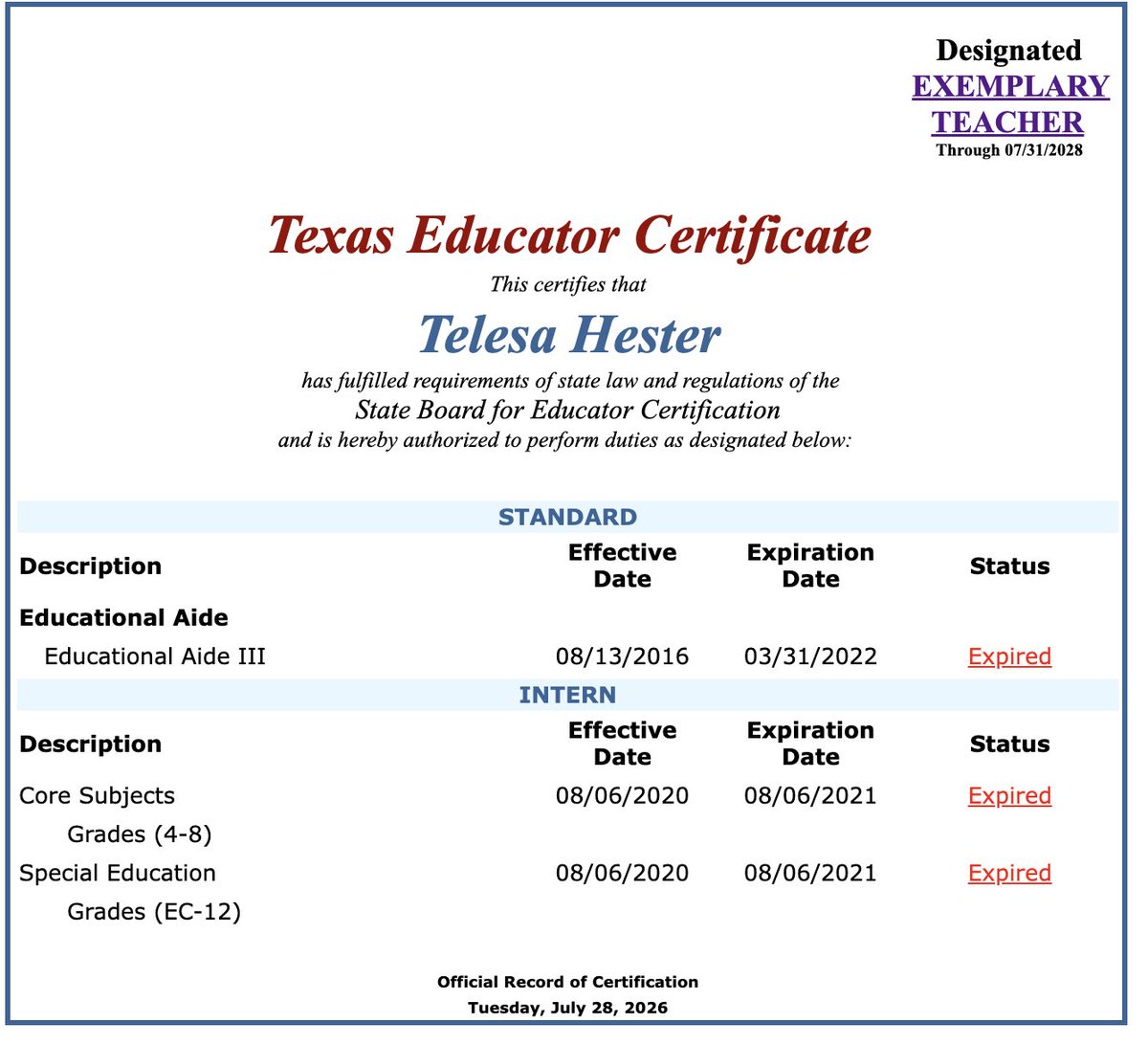








![buddy_falcon's tweet photo. 🪶 INVESTIGATIVE UPDATE: PFISD PRIORITIZES TEACHER DEMOGRAPHICS WHILE EXPERIENCE GAPS WIDEN 🪶
By Buddy Falcon Media LLC
The federal Every Student Succeeds Act (ESSA) has a specific educator-equity requirement designed to protect vulnerable students.
It requires school districts receiving Title I funds to address disparities when low-income and minority students are taught at higher rates than other students by inexperienced, out-of-field, or ineffective teachers.
That is the requirement. It asks a fundamental question:
Do disadvantaged students have equitable access to experienced, properly assigned, and effective educators?
PfISD’s 2025–26 District Improvement Plan initially explains that requirement correctly. It states that the district’s ESSA Talent Plan—formerly called its ESSA Equity Plan—is intended to reduce gaps involving low-income and minority students being taught by inexperienced, out-of-field, and ineffective teachers.
PfISD renamed its “ESSA Equity Plan” the “ESSA Talent Plan” in spring 2025, stating that the change was made “due to federal elimination of DEI.” The district changed the label, but its published plan continued the same ESSA experience-gap analysis and retained a separate racial-demographic staffing scorecard.
But PfISD’s data then show that the actual ESSA experience problem has worsened.
The gap involving experienced teachers at high-poverty campuses increased from 2% in 2022–23 to 7% in 2023–24. PfISD identified Dessau, Northwest, Ruth Barron, Delco, Spring Hill, River Oaks, and Copperfield elementary schools as the campuses in the highest quartile for that gap.
The experience gap at high-minority campuses increased from 4% to 10%. The campuses identified in the highest quartile were Dessau Elementary, Dessau Middle School, Westview Middle School, Connally High School, Ruth Barron Elementary, Delco Elementary, and Copperfield Elementary.
That is what ESSA requires PfISD to address: disparities that result in low-income and minority students being taught at higher rates by inexperienced, out-of-field, or ineffective teachers.
But on the very next page, PfISD adds a different measurement.
The district introduces a separate section titled “Teacher Demographics and Representation of Students.” It compares teacher racial demographics directly with student racial demographics, reports that approximately 60% of teachers are White while approximately 22% of students are White, and describes White teachers as “significantly overrepresented.” The district then states that a “representative educator workforce” supports student engagement, belonging, and academic success.
Representation may be a legitimate subject for community discussion, but racial matching is not the federal ESSA educator-equity requirement.
ESSA examines whether vulnerable students are disproportionately taught by inexperienced, out-of-field, or ineffective teachers.
PfISD separately measures whether the racial composition of its workforce resembles the racial composition of its students.
Those are not the same question. And adding a demographic scorecard does not reduce the documented experience gaps at the campuses PfISD itself identified.
🪶THE PROBLEMS PFISD’S OWN CAMPUS PLANS ACTUALLY IDENTIFY
The distinction matters because PfISD’s own campus plans identify specific and measurable problems that have nothing to do with whether teachers racially mirror their students.
At Weiss High School, the Board-approved plan reports a D rating in Academic Growth, a chronic-absenteeism rate of 22.6%, and only 64% positive staff responses concerning School Safety and Order. The plan attributes the safety-and-order result in part to inconsistent enforcement of student rules and inconsistent application of discipline by the administration.
Only 53% of Weiss teachers responded positively regarding Work/Life Balance. The plan identifies insufficient staff and resources to assist with lessons and materials as the root cause. It also states that Weiss would no longer receive campus Title I funds and identifies an unsuccessful system for getting all eligible families enrolled in free- and reduced-lunch services as the root cause.
Cele Middle School earned an overall A rating and reported strong performance in several areas. Its plan states that 14 of 16 achievement targets were met or exceeded and that all eight Reading Language Arts growth targets were met.
But the plan also acknowledges that Cele’s Asian student accountability group missed its interim math-growth target for the third consecutive year. It also states that community, parent, and student surveys were not provided or administered during 2024–25, leaving the campus without data to assess those groups’ perceptions.
These are specific academic, staffing, safety, attendance, and administrative issues that deserve direct attention.
ESSA directs districts to examine whether vulnerable students have equitable access to experienced, effective, and properly assigned teachers. It does not require districts to replace—or supplement—that analysis with a racial-demographic scorecard.
🪶THE REAL STAFFING PROBLEM
PfISD’s plan acknowledges that the district struggles to hire and retain certified, experienced teachers. It states that the certified-teacher pool is shrinking while teacher separations and retirements are increasing.
The district reports hiring approximately 250 to 350 teachers annually, many of whom enter through alternative or university certification programs that do not require ESL credentials. PfISD also acknowledges that many educators enter through alternative pathways or incomplete certification programs.
During 2024–25, PfISD filed 71 ESL waivers and 13 bilingual exceptions for teachers serving Emergent Bilingual students who lacked the appropriate teaching certifications. The district’s plan also states that teachers’ average total experience and average tenure within PfISD had both fallen 1.2 years below the corresponding state figures.
Those facts point to a clear need:
Hire qualified teachers.
Hire properly certified teachers.
Place experienced teachers at campuses where students have the greatest needs.
Create working conditions that persuade those teachers to stay.
That is directly aligned with ESSA’s educator-equity purpose. Comparing employee racial percentages with student racial percentages is a separate policy choice.
🪶DRIVING EXPERIENCED RETIREES AWAY
While PfISD reports widening gaps in access to experienced teachers at high-poverty and high-minority campuses, written public testimony from a PfISD rehired-retiree teacher states that the district plans to make rehired retirees absorb state return-to-work surcharges beginning in 2026–27.
The teacher reported that 46 PfISD rehired retirees would be affected. According to her calculation, a teacher at the top of the salary schedule with a master’s degree and subject to both charges could have approximately $1,568.34 deducted each month—including a 16.5% pension surcharge and a $535 monthly TRS-Care surcharge.
State law now allows districts to pass the surcharges to employed retirees; it does not require districts to do so. The TRS-Care surcharge also does not apply to every rehired retiree because exemptions exist.
The contradiction is difficult to ignore because PfISD’s own legislative priorities call for eliminating TRS return-to-work surcharges and penalties that deter experienced retirees from returning to classrooms.
PfISD cannot advocate removing a financial barrier to rehiring experienced teachers while reportedly preparing to place that barrier directly onto its own retired educators.
🪶THE CONTRAST AT THE TOP
Superintendent Dr. Quintin Shepherd’s contract handles retirement-related expenses very differently.
His contract provides a $303,000 annual base salary. Section 5.8 requires PfISD to supplement his salary by an amount equal to 100% of his regular TRS retirement and TRS-Care member contributions. Based on the published 2025–26 combined member rate of 8.90%, that supplement is estimated at approximately $26,967 annually, subject to the district’s actual payroll calculation and any future changes in salary or contribution rates.
The contract also establishes separate employer-funded supplemental retirement and salary-deferral benefits. The contribution schedules begin at 60% of the applicable maximum allowable contributions in 2026, increase to 75% in 2027, and reach 80% beginning in 2028.
Beginning January 31, 2027, Shepherd may also elect to cash out up to 15 accrued but unused vacation days. At his current salary and 226-day work year, the maximum potential payment would be approximately $20,111 if all 15 days are available.
These are not the same TRS charges reportedly being shifted to retirees. The superintendent receives a contractual salary supplement covering his regular member contributions, while rehired retirees could face separate return-to-work surcharges.
But the difference in treatment remains significant.
PfISD contractually offsets the superintendent’s regular TRS contributions and funds additional retirement benefits for him.
According to public testimony, the district is preparing to make experienced retired teachers absorb thousands of dollars in separate retirement-related charges themselves.
🪶QUESTIONS PFISD MUST ANSWER
Why did PfISD place a racial-demographic staffing comparison immediately beside a plan intended to address access to experienced, in-field, and effective teachers?
What evidence shows that racial alignment between staff and students addresses the experience and certification gaps identified under ESSA?
What written, race-neutral standards ensure that hiring committees evaluate applicants on certification, experience, effectiveness, and individual merit?
Why is PfISD reportedly shifting return-to-work surcharges onto veteran educators while its own plan shows widening gaps in student access to experienced teachers?
Why does the district contractually supplement retirement compensation at the superintendent level while potentially making continued classroom employment unaffordable for some retirees?
ESSA is intended to protect students from being disproportionately assigned to inexperienced, out-of-field, or ineffective teachers.
PfISD’s records show that those experience and certification gaps remain.
The district should explain why it added a separate racial-demographic staffing scorecard to that analysis—and why it may be making it more difficult to retain the experienced teachers its students need.
We welcome comments and corrections from the district.
— Buddy Falcon Media, LLC
Keeping Watch. Always. 🪶
@PfISDHR @pfisd @GregAbbott_TX @Chevonne4PFISD
[1]: https://t.co/majcaxiFqV... "Every Student Succeeds Act State Plan"
[2]: https://t.co/R0s9NXm9oh... "CIP for Board Approval"
[3]: https://t.co/ZNvvJfe14k... "CIP for Board Approval"
[4]: https://t.co/oogrhHaoxY... "CIP for Board Approval"
[5]: https://t.co/AjeCDW1JJB... "The cost of the Employed Retiree Teacher Reimbursement ..."
[6]: https://t.co/NWCvFcKTjL... "Legislative Priorities" See less](https://pbs.twimg.com/media/HNnCxhTXkAAGpDT.png)