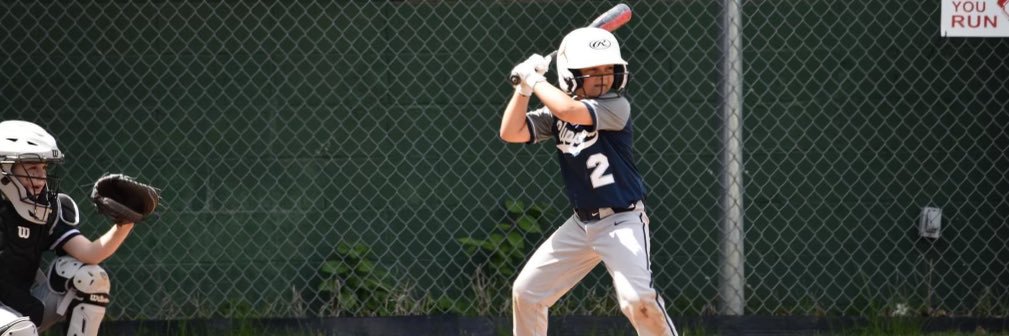
STOP trying to get 1% better every day.
And stop thinking the answer is always taking more reps.
Hear me out.
I hear athletes talk about getting 1% better every day.
But here's my question:
How do you know you actually got 1% better?
And just because you took 100 swings today, does that mean you got better?
Not necessarily.
Here's something I want more young hitters to start doing.
Stop counting reps. Start WINNING reps.
Let's say you're working on hitting line drives up the middle.
Instead of mindlessly taking 50 swings, give yourself 5 swings with one specific goal: hit a hard line drive up the middle.
Let's say you execute 3 out of 5.
That's your score.
Next time, try to get 4 out of 5.
Then 5 out of 5.
And once you can consistently execute 5 out of 5, make the drill harder. Move from the tee to front toss, then eventually to BP.
Now you're not just swinging to swing.
You're practicing with a purpose, measuring your execution, and challenging yourself to improve.
And the best part is that you can apply this to almost anything in baseball.
Hitting. Fielding. Throwing. Pitch recognition.
Define the win. Win the rep. Beat your score.
That's how I want athletes approaching practice.
Because taking more reps doesn't automatically make you better.
Learning how to win more of them gives you something meaningful to build on.
In practice, win the rep. In games, win the pitch.
Keep swinging,
Jermaine Curtis
P.S. - If you enjoyed this, share it.
(Tjhis tells me you want more content like this)
In a late night edition of the @carolina_pod, Director of Athletics Bubba Cunningham and Executive Associate AD Steve Newmark discuss the leadership change and future of @UNC_Basketball
Watch: https://t.co/NVRXZhlQ2t
Listen: https://t.co/QLUrrJOPU4
Coach John Calipari is absolutely spot on here.
Why would a coach recruit and develop an American high school kid for 4 years when the system now rewards grabbing ready-made pros from overseas, the G League, or the NBA pipeline?
If we don’t fix this, we’re killing the entire purpose of college sports.
The campus where LEGENDS are made.
SLAM Presents UNC is a special edition magazine that celebrates the University of North Carolina Tar Heels mens basketball program. From coach Dean Smith to Michael Jordan and beyond, this magazine tells the story of Chapel Hill. https://t.co/dXjFR7V3B5
@UNC_Basketball@GoHeels
10 Tips for Parents of Athletes:
1. Control your emotions. Be a consistent example of mental stability. Show them how to properly respond when things don't our way. They will be able to get the most out of their skills when they are mentally in control.
2. Support them away from their team. All players should practice their sport on their own time. They will always have more time away from their team to get better than they will while with them. Help them develop this great habit. Help them learn to take their development into their own hands.
3. Be realistic. Put them in a position to thrive. We want them to get better but just because we want them to be ready for a certain level doesn't always mean they are ready for that level. Just because that's where their friends are doesn't mean it's the right place for them at that moment.
4. Don't allow excuses and blaming. The longer they do this the longer they will stunt their own growth. Teach them the difference between the controllable's and the un-controllable's. Their attitude, effort, energy and focus.
5. Think twice about your conversations. What are you allowing? What are you participating in? What are you instigating? The tone, the message, the impact. Know this too, sometimes the best thing we can say is nothing at all. Silence is okay!
6. Sports are hard. If you played while you were younger, keep perspective on how hard it was. If you never did, I suggest you go out there and practice with them. Try doing everything they are trying to do.
7. Slow down!! It's a process. They all grow at different rates. Support them, encourage them, motivate them and help them be their best but be careful of comparing them to their peers. The process and journey is different for all. Some are early bloomers while many are late bloomers. The most important years for an athletes performance don't even happen until after puberity kicks in and again, that even hits at different ages.
8. Look for leaders. Place them in front of those who are great people. People who will help instill the same values you are trying to tech them at home. Raising children is hard. Never underestimate the power of outside voices.
9. Youth sports has a way of becoming a toxic environment. From gossip about other players to coach bashing to berating and belittling officials. Don't be a part of it. Don't get sucked into the emotions of it. If you want these years to be as enjoyable as possible, beware of the nonsense and stay away from it.
10. Please don't ever let sports come between you are your child(ren). Don't let your attitude about their performance cause strain in your relationship. This game is a temporary phase in their life and meant to be enjoyable. Your relationship is forever. Nurture it now to have for life.