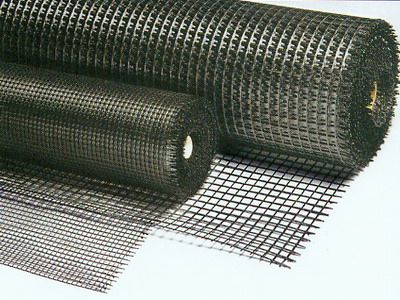
"Glass grids fail."
:
I have heard that sentence on several occasions.
So I started asking a simple question.
"Where is the glass grid now?"
Answer: Still inside the pavement. Still doing what it was designed to do.
That is the thing about glass grids. They do not compensate for poor surface preparation.
They do not hide shortcuts. They do not cover up a bonding layer that was applied without proper control. They simply reflect the quality of the process they are given.
This reminded me of certain people I have worked with. The honest ones.
Give them a good system and they perform well. Give them a poor system and the problems become visible very quickly.
Many materials give us a second chance. Glass grids rarely do.
That is their strength. And sometimes, their reputation problem.
Most of the glass grid failures I have encountered were not material failures. They were process failures.
I would be interested to hear what others have experienced with glass grids in the field.
"Glass grids fail."
:
I have heard that sentence on several occasions.
So I started asking a simple question.
"Where is the glass grid now?"
Answer: Still inside the pavement. Still doing what it was designed to do.
That is the thing about glass grids. They do not compensate for poor surface preparation.
They do not hide shortcuts. They do not cover up a bonding layer that was applied without proper control. They simply reflect the quality of the process they are given.
This reminded me of certain people I have worked with. The honest ones.
Give them a good system and they perform well. Give them a poor system and the problems become visible very quickly.
Many materials give us a second chance. Glass grids rarely do.
That is their strength. And sometimes, their reputation problem.
Most of the glass grid failures I have encountered were not material failures. They were process failures.
I would be interested to hear what others have experienced with glass grids in the field.
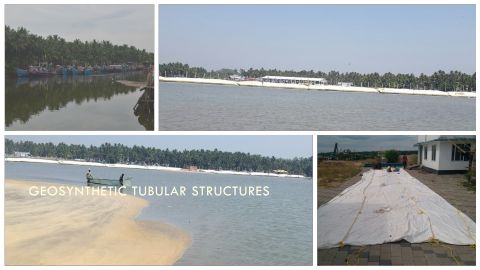
Stood at a river mouth watching dredged sediment being carried away as waste.
That same material in a geosynthetic tube is exactly what protects a coastline.
We were throwing away the answer.
Full carousel on LinkedIn. Link in bio.
@BVPRGJ Nearly a decade later, still serving the community.Some engineering solutions are designed to keep working long after the project team has left the site.Geosynthetic tubular structures in action.
Stood at a river mouth watching dredged sediment being carried away as waste.
That same material in a geosynthetic tube is exactly what protects a coastline.
We were throwing away the answer.
Full carousel on LinkedIn. Link in bio.
Did you know what the young sensation Vaibhav Suryavanshi does before a match to stay calm and focused? He watches his favourite Chhota Bheem cartoons on his phone! 😊
So happy to know that he is holding on to his childhood.
A 24-year-old Polish tennis player arrived in Paris last week ranked 114th in the world, with no sponsors, no guaranteed income, and no certainty she could even pay for her hotel room.
She had to win three qualifying matches just to enter the French Open main draw. Prize money is only paid at the end of the tournament, so a Polish sports drink brand quietly stepped in and covered her hotel bill.
Her name is Maja Chwalinska. And today, she plays in the French Open final.
Before this tournament, she had won exactly one Grand Slam main draw match in her entire career. She had battled depression so severe that in 2021 she couldn't get out of bed. She underwent knee surgery in 2022. She spent years grinding through small tournaments across Europe just to stay afloat.
Then she arrived in Paris, won three qualifiers, and kept winning. Zheng Qinwen. Elise Mertens. Maria Sakkari. Diana Shnaider. Nine straight matches. One set dropped.
She is now the first qualifier in French Open history to reach the final. The last time a qualifier reached a Grand Slam final, it was Emma Raducanu at the 2021 US Open. Raducanu won.
By simply making the final, Chwalinska has earned more prize money than her entire career combined. The runner-up cheque alone is $1.6 million. If she wins today, she takes home $3.25 million.
One week ago she couldn't pay for her hotel room.
You are planning to start on Ozempic. Which of these scenario makes it absolutely ineligible for therapy.
A. Mother had thyroid cancer
B. Father had pancreatic cancer
C. Sister had colon cancer
D. Aunt had breast cancer
A few years ago my nephew looked at me very seriously and said:
"Uncle, life is basically unfair."
He delivered it like the final report of a committee. Matter closed.😁😁
He is not entirely wrong.
But I have noticed something about people who say life is unfair.
They are usually still making plans.
Still laughing. Still debating topics they have no power to influence, with great passion. Still going ahead,moving fwd
Life may not be fair,true
But it is rarely boring. 😄
Thank you. Have a great weekend.
A few years ago my nephew looked at me very seriously and said:
"Uncle, life is basically unfair."
He delivered it like the final report of a committee. Matter closed.😁😁
He is not entirely wrong.
But I have noticed something about people who say life is unfair.
They are usually still making plans.
Still laughing. Still debating topics they have no power to influence, with great passion. Still going ahead,moving fwd
Life may not be fair,true
But it is rarely boring. 😄
Thank you. Have a great weekend.
⛔ Funded ≠ Stable
⛔ Busy ≠ Growing
⛔ Scaling ≠ Success
Some of the most expensive lessons in business begin when we confuse one for the other.
Still learning. 😅
I can still remember the taste of wheat upma served on a small round steel plate in a government school in Kerala.
The surprising part is that this was more than fifty years ago.
Around 1975, the midday meal was a real part of the school day. .... Wheat upma and water from the school well.
Nobody used words like nutrition and all that...
We just knew it tasted good and we looked forward to it almost as much as we looked forward to the school bell.
I wonder sometimes how many people from my generation still carry that memory.
A steel plate, a school floor in Kerala, the same faces every day, and that particular childhood feeling that tomorrow would look very much like today.
Some of the simplest things turn out to be the ones that last the longest.
I entered a gym for the first time only after crossing 55.
Before that, fitness mostly lived in my mind and in postponed plans called “later.”
For many years, work came first.
Health adjusted around meetings, travel, deadlines, and responsibility.
Funny thing is, I started giving more time to myself only after becoming independent in 2012 when I started on my own.
That is when many old interests slowly returned.
Walking more regularly. Playing badminton and table tennis again. Eventually, strength training too.
Growing up, I never really had the opportunity to pursue many of these things properly.
So in some ways, I started late.
But honestly, starting late still feels far better than not starting at all.
In 1992 we needed police protection to fix a pothole in Cochin, and I want to be clear that nothing about what we were doing was illegal or even remotely controversial, at least not in any way we had anticipated.
We were introducing Fastigrout in Kerala, a construction chemical that could repair a pothole, cure completely, and reopen a busy road in a matter of hours, and we had arranged a live demonstration with everything in place, the product, the road, the team, and what we thought was a reasonably good plan.
What we had not planned for was the resistance that walked in that day.
The product performed flawlessly, and that was precisely the problem, because a pothole fixed properly the first time meant fewer repeat jobs, and fewer repeat jobs meant less work for the people whose entire livelihood had been quietly built around that cycle of things not getting fixed.
The pushback was not about whether the product worked, because everyone standing there could see very clearly that it did, the pushback was entirely about what a working product would take away from people who had learned to depend on things staying broken.
I was a young man standing there watching all of this unfold, not entirely sure what I was seeing but knowing it was something my product training had absolutely not prepared me for.
We finished the demonstration, the police made sure of that, and I travelled back from Cochin that day carrying a lesson that has never left me.
A better solution does not automatically find a welcome, and sometimes the better it works, the harder the room pushes back.
I travelled that same stretch recently, and the potholes are still there. The toughest surface we repaired in Cochin that day was not the road. 😄
I can still remember the taste of wheat upma served on a small round steel plate in a government school in Kerala.
The surprising part is that this was more than fifty years ago.
Around 1975, the midday meal was a real part of the school day. .... Wheat upma and water from the school well.
Nobody used words like nutrition and all that...
We just knew it tasted good and we looked forward to it almost as much as we looked forward to the school bell.
I wonder sometimes how many people from my generation still carry that memory.
A steel plate, a school floor in Kerala, the same faces every day, and that particular childhood feeling that tomorrow would look very much like today.
Some of the simplest things turn out to be the ones that last the longest.