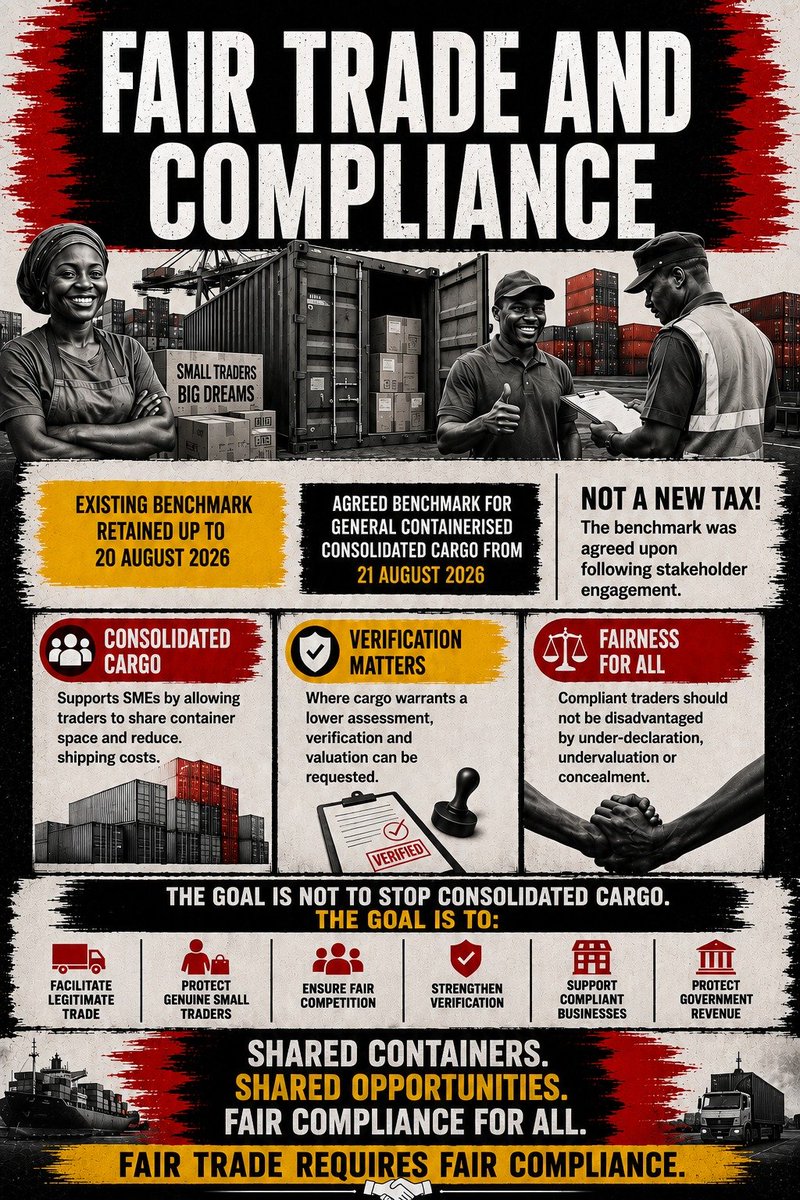
@KRACorporate After consultations at KRA offices, higher rates were dropped, 3.2m agreed and locked for two years, and verification retained. That is the factual outcome. #ConsolidatedCargoFacts
Fair compliance protects the traders who already declare correctly and pay what is due. It prevents them from being undercut by incomplete declarations. @KRACorporate#ConsolidatedCargoFacts
@KRACorporate The core principle remains unchanged: facilitate legitimate shared-container trade, verify where necessary, and ensure the same rules apply to everyone. #ConsolidatedCargoFacts
KIFWA and KNCCI publicly reported constructive July engagements with KRA that produced the agreed transition. Claiming no consultation occurred ignores the public record of those talks. #ConsolidatedCargoFacts
Risks in mixed consignments include under-declaration, misdescription and concealment. Addressing these protects honest traders from being undercut and reduces revenue leakage. #ConsolidatedCargoFacts
Consolidated cargo lets SMEs share one container to cut costs. It’s legitimate & vital for small traders. The issue isn’t sharing space it’s ensuring goods are correctly declared, valued & taxed fairly under the same rules. @KRACorporate#ConsolidatedCargoFacts
Consolidated cargo supports small traders. After engagement at KRA offices, higher rates were dropped and 3.2m agreed for two years. Facilitate trade, verify risks, ensure fair compliance for all. @KRACorporate#ConsolidatedCargoFacts
From 21 Aug 2026 the customs minimum benchmark for general containerised consolidated cargo is KSh3.2m (up from 2.5m). That’s a 28% adjustment to the benchmark, not a new 30% tax. Actual duties still depend on goods, value & tariffs. #ConsolidatedCargoFacts
Stakeholder consultations happened at KRA offices in July 2026 with KIFWA, KNCCI & others. Higher proposed rates were suspended. A compromise was reached: 2.5m until 20 Aug, then 3.2m locked for two years for predictability. #ConsolidatedCargoFacts@KRACorporate
Importers who believe their cargo warrants a lower assessment can request verification & valuation. Homogeneous & non-consolidated cargo continue under normal customs valuation methods. Fair process remains available. #ConsolidatedCargoFacts@KRACorporate
This debate is not new. Concerns date back to 2019. In 2020-21 the National Cargo Deconsolidation Centre at Boma Line was set up specifically to help SMEs clear consolidated cargo more easily. #ConsolidatedCargoFacts@KRACorporate
A mixed container can hold household goods next to electronics or smartphones. If high-value items are misdescribed or undervalued, correct taxes are missed. Verification checks declaration against reality. #ConsolidatedCargoFacts
Consolidated cargo is not being targeted. Sharing a container should reduce logistics costs, not create different compliance standards. The goal is accurate declaration of the actual goods inside. #ConsolidatedCargoFacts@KRACorporate
Compliant consolidators & genuine small traders should not be undercut by those who under-declare or conceal high-value items. Fair customs rules protect honest businesses & level the playing field for everyone. @KRACorporate#ConsolidatedCargoFacts
Verification is important because one container can hold goods of very different values, quantities, types & tariff treatments. Comparing declaration to actual contents settles disagreements fairly. #ConsolidatedCargoFacts
Not every consolidator is non-compliant. Many operate legitimately within the law. Interventions should target identified risks without painting the entire industry with one brush. Balance matters. #ConsolidatedCargoFacts
Under-declaration, inaccurate descriptions & concealment in mixed consignments lead to revenue leakage. Compliance measures aim to ensure consolidated goods meet the same tax obligations as other imports. #ConsolidatedCargoFacts