@injective Tokenization creates the assets.
Markets give those assets a place to trade and be used.
AI agents can interact with those markets through software.
The main point is that @injective is making finance more programmable, from creating assets to trading them. $INJ
.@injective is trying to solve a simple problem:
What if financial assets could not only exist onchain, but also be created, traded, and used by software?
It is focusing on three areas:
•Tokenization.
•Perpetual markets.
•Agentic finance.
Here is the breakdown 🧵
@injective@injective is also giving AI agents access to financial tools.
An agent can use these tools to interact with markets, execute trades, and handle financial actions.
With onchain identity and fee attribution, these agents can be tracked as users, not just anonymous bots.
@injective@injective Institutional Services is now an SEC-registered transfer agent, helping with official securities ownership records.
Together, these developments show Injective working on tokenization, financial systems, and regulated ownership records.
$INJ
Injective is working more with real world finance.
POSCO International and LG CNS tested blockchain and AI for global trade finance using real transaction data.
Making financial processes easier and reduce problems that come from old systems.@injective
Here's why it matters🧵
@injective AI was also tested with the blockchain.
It helped check Letters of Credit and other trade documents for missing information or errors.
Finding these problems early can reduce manual work and help prevent delays in international payments.
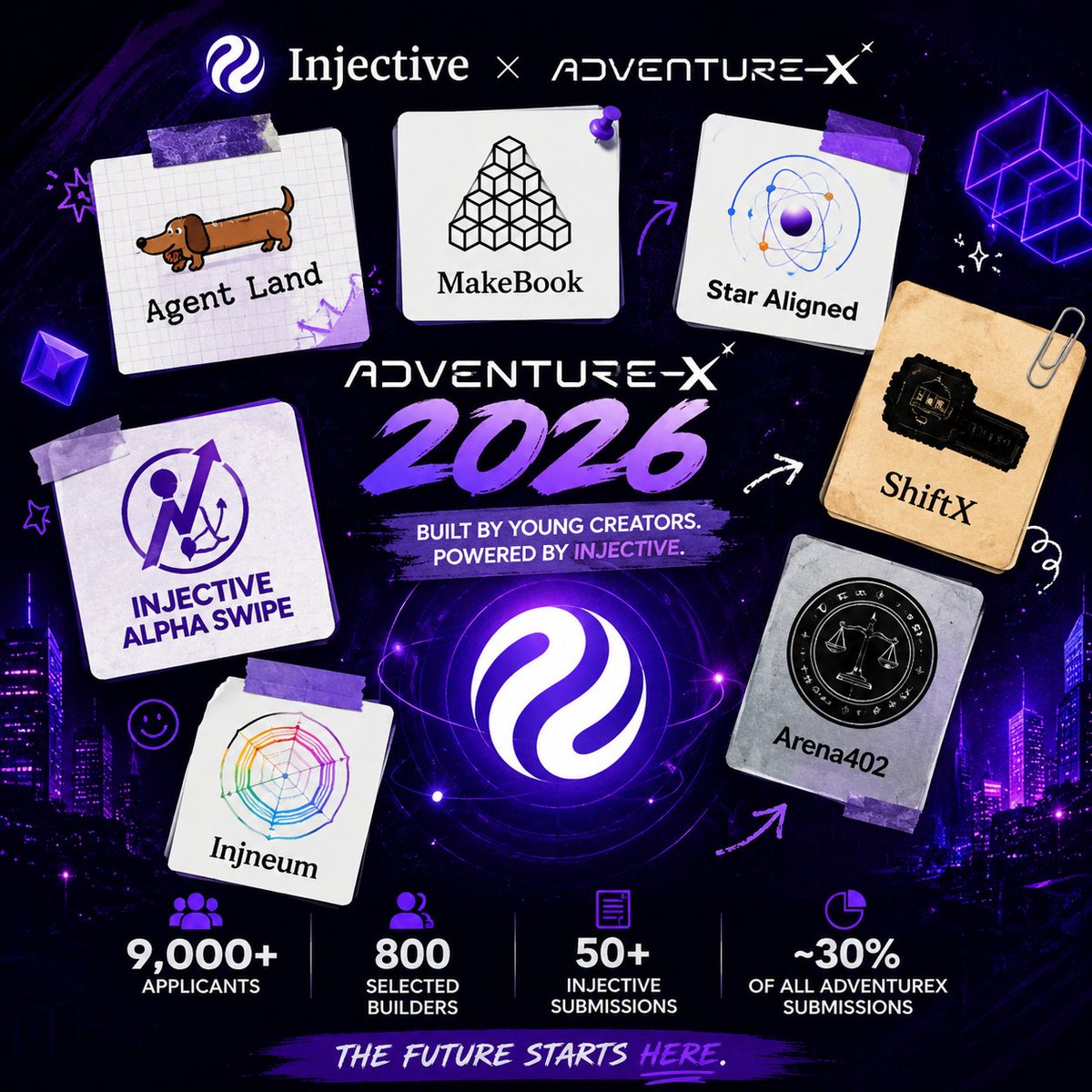
AdventureX 2026 just wrapped up it event ft @injective on stage,they young builders showed up BIG
averaging just 21 years old, came together to build the future across AI, agents, onchain markets, gaming, robotics and more
The energy was so so unreal
Let’s see what they built🧵
@injective Tokenization is more than creating a token.
You also need issuance, compliance, ownership records, transfers, settlement, and ways to use the asset.
@injective is building these pieces together so tokenized assets can become more useful in real financial markets.
🥷
. @injective has added an important piece of traditional finance.
Its affiliate, Injective Institutional Services, is now an SEC-registered transfer agent.
It helps keep official records of who owns securities, which can support onchain finance.🧵
@injective This adds to Injective's tokenization tools.
Injective Mint handles asset creation and compliance controls.
The transfer-agent role adds ownership records and transfer support.
Together, these tools can help tokenized assets work more closely with real financial markets.
@injective The main point isn't one Injective feature
It's how the pieces work together:
Exchange Module for markets Oracle Module for data,Token Factory for assets,and RWA infrastructure for tokenization
Developers can build on this financial infrastructure instead of starting from zero.
Most blockchains give developers basic infrastructure, then they build the financial tools themselves.
@injective already has finance specific modules at the protocol level.
So developers can use existing market infrastructure instead of building everything from zero.🧵
@injective Tokenization becomes more useful when assets can actually do something.
Injective's RWA infrastructure lets tokenized assets connect with markets.
Its iAssets research takes this further by treating RWAs as usable financial building blocks, not just tokens.