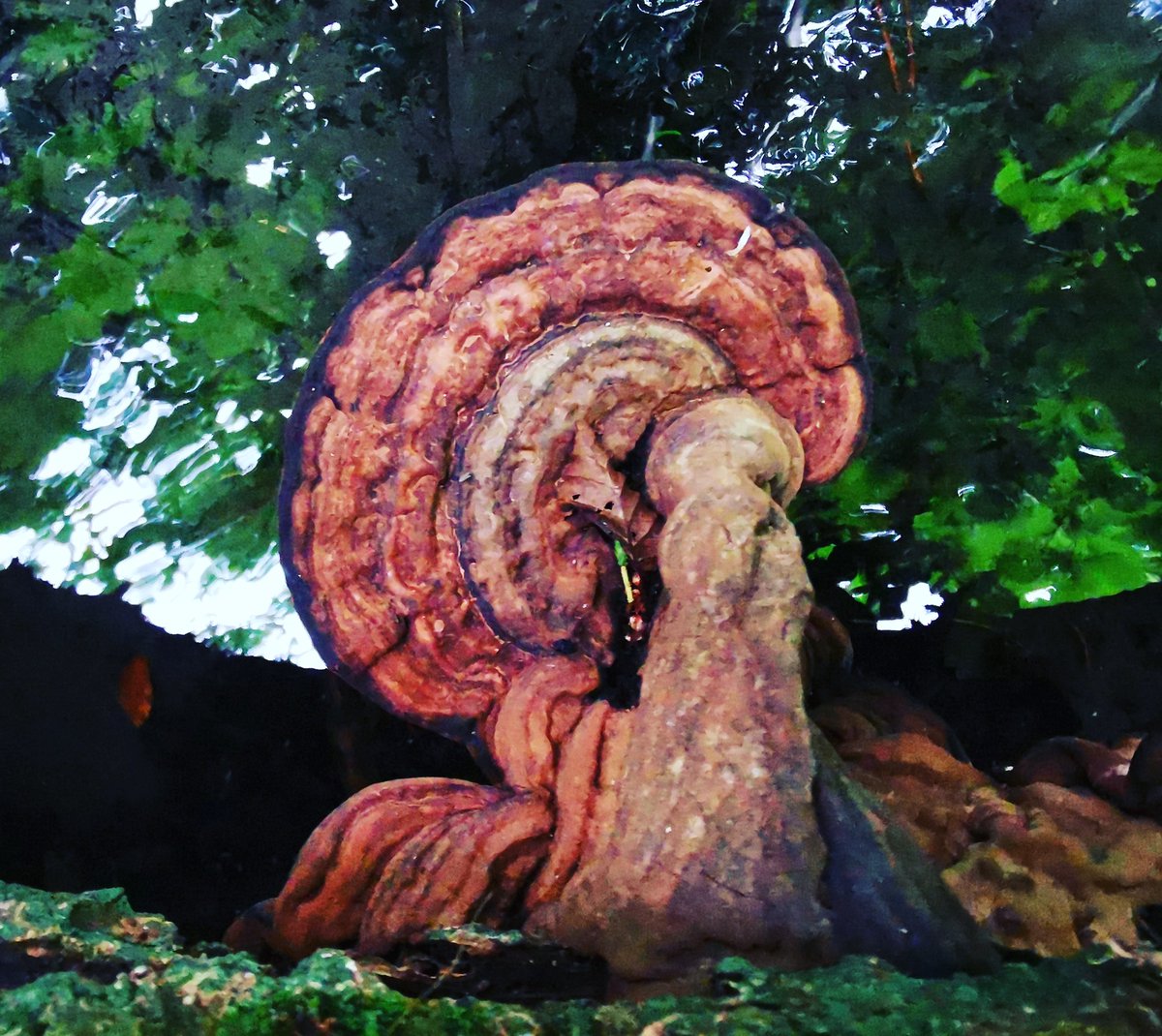
Artist's Bracket, a mushroom very closely related to the famous Reishi used in Traditional Chinese Medicine. Reishi has been used for thousands of years in China as a decoction to treat a range of ailments from infections to ageing.
#mushrooms#fungi#wildcrafting#foraging
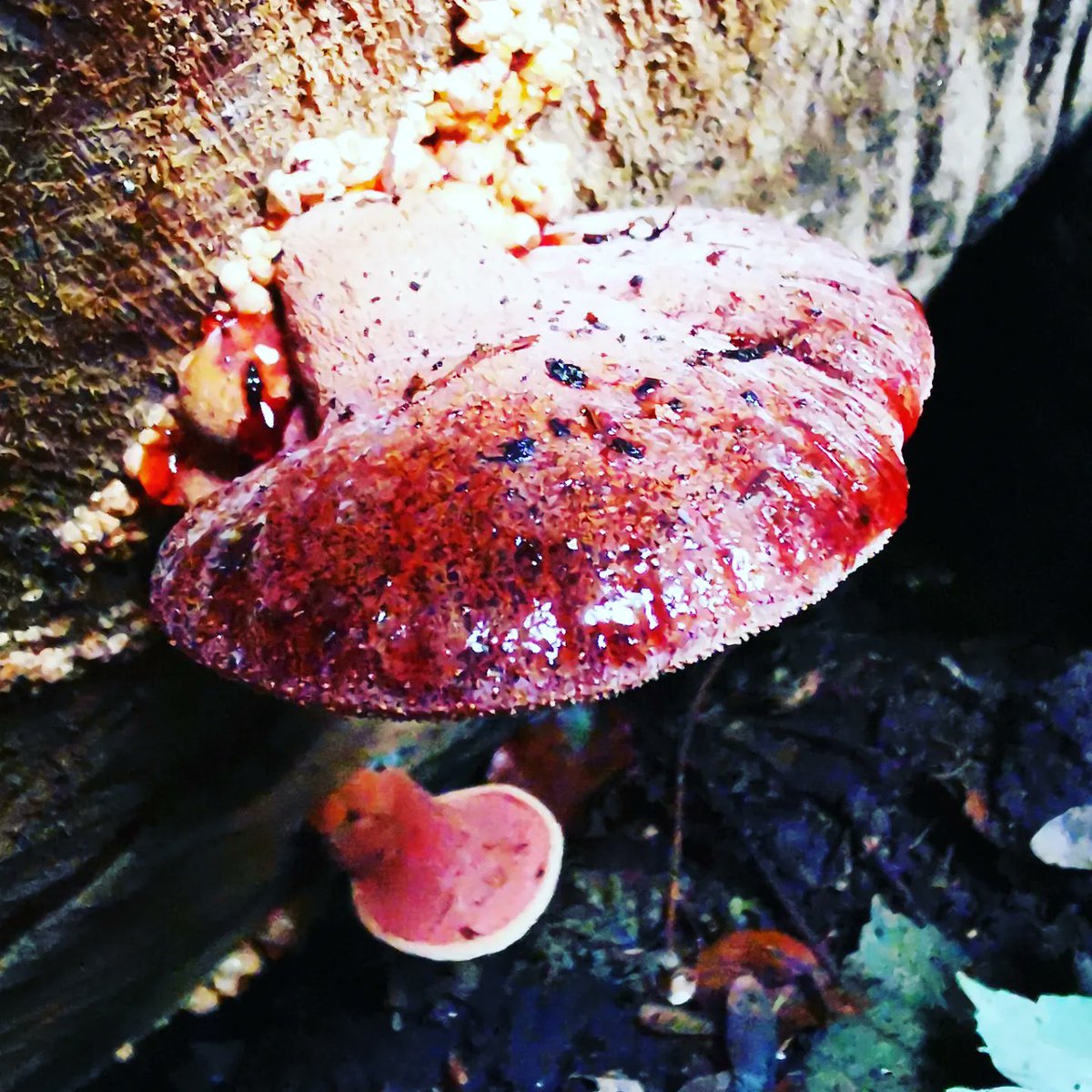
Beefsteak Fungus is more common in the South of England but a rarer find in Ireland. It gets its name from its resemblance to a steak and it even has "blood" oozing out of it.
It is edible but opinions do differ to how worthwhile it is.
#fungi#wildfood
Fleabane is a common but transient wildflower usually appearing for a few weeks only. In fact the rains today might have already seen this lot off.
These were often dried and smudged or hung in homes to keep fleas and mosquitoes at bay, hence the name.
#wildflowers#wildlife
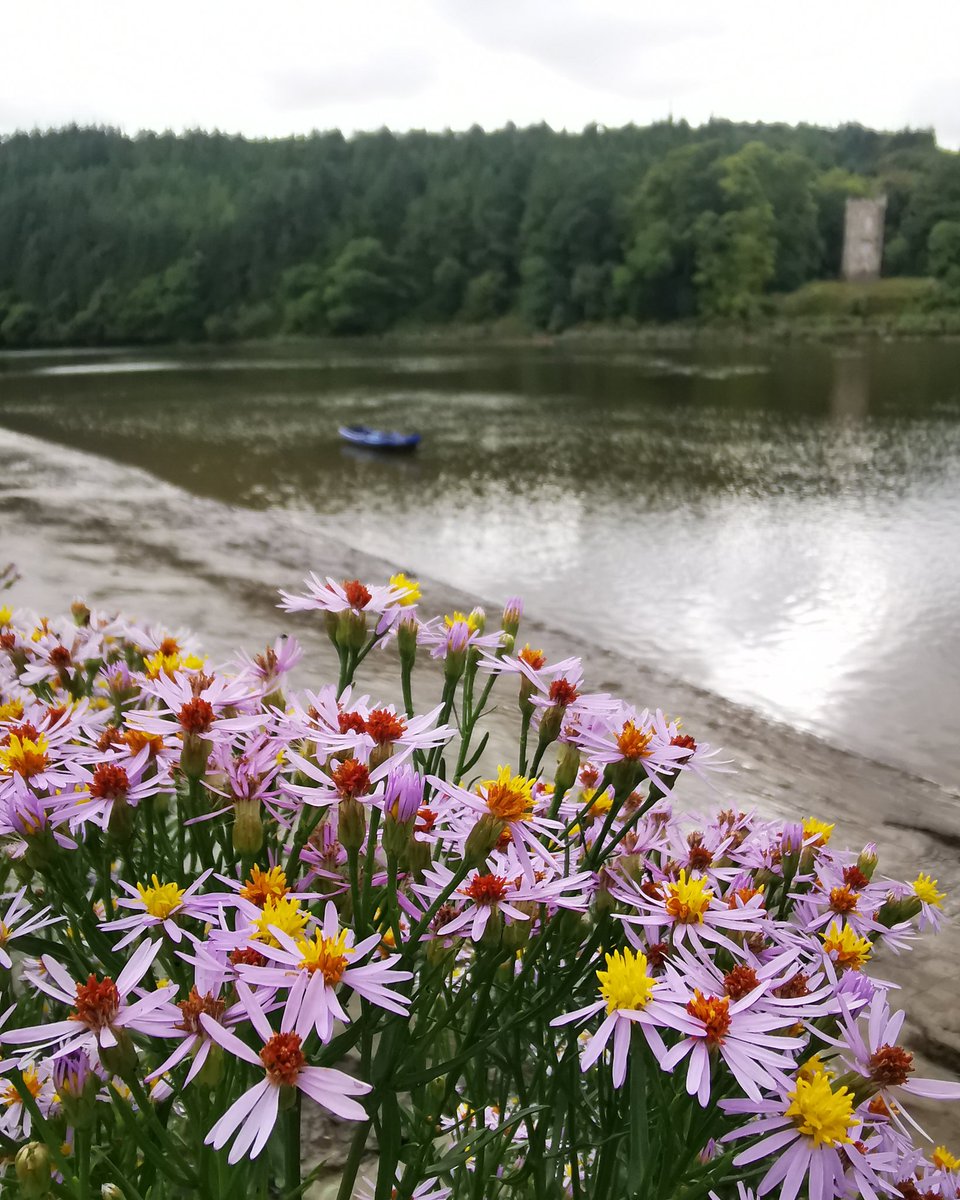
Sea Aster is currently gracing our coastlines and is quite happy to spend much of its life drenched in salt water. "Aster" is from the Latin for star, which would give rise to an alternate name: Star of the Sea. Find Sea Aster along rivers, up to the tidal limits.
#wildflowers
Cinnabar Moth Caterpillar: the colouration advertises their toxicity.
After gorging on ragwort, they cocoon just below ground, emerging as a stunning Cinnabar Moth (this time brandishing red-black colourarion as a warning sign).
#cinnabar#ragwort#wildlife#biodiversity
Corn Sow Thistle is not just for sows. Our ancestors used to eat these, before the bitter in our diet began to fade away. All parts of the plant are edible. The Maori have traditionally grown this plant as a food crop in New Zealand.
#wildflowers#wildfood
Borage, also known as starflower due to its shape. Bees love this flower and are known to be attracted to the higher vibration colours such as blues and violets.
The leaves and flowers are edible. It is best to gather young leaves as they become coarser with age.
#borage#bees
This is a Monkey Flower and we always find them next to flowing water.
Irish naturalist, Nathaniel Colgan, wrote that it was "introduced into the Upper Dodder Valley" from Alaska in the 1800s, being" frequent in the walls of the Rathmines Waterworks".
#wildflowers#wildlife
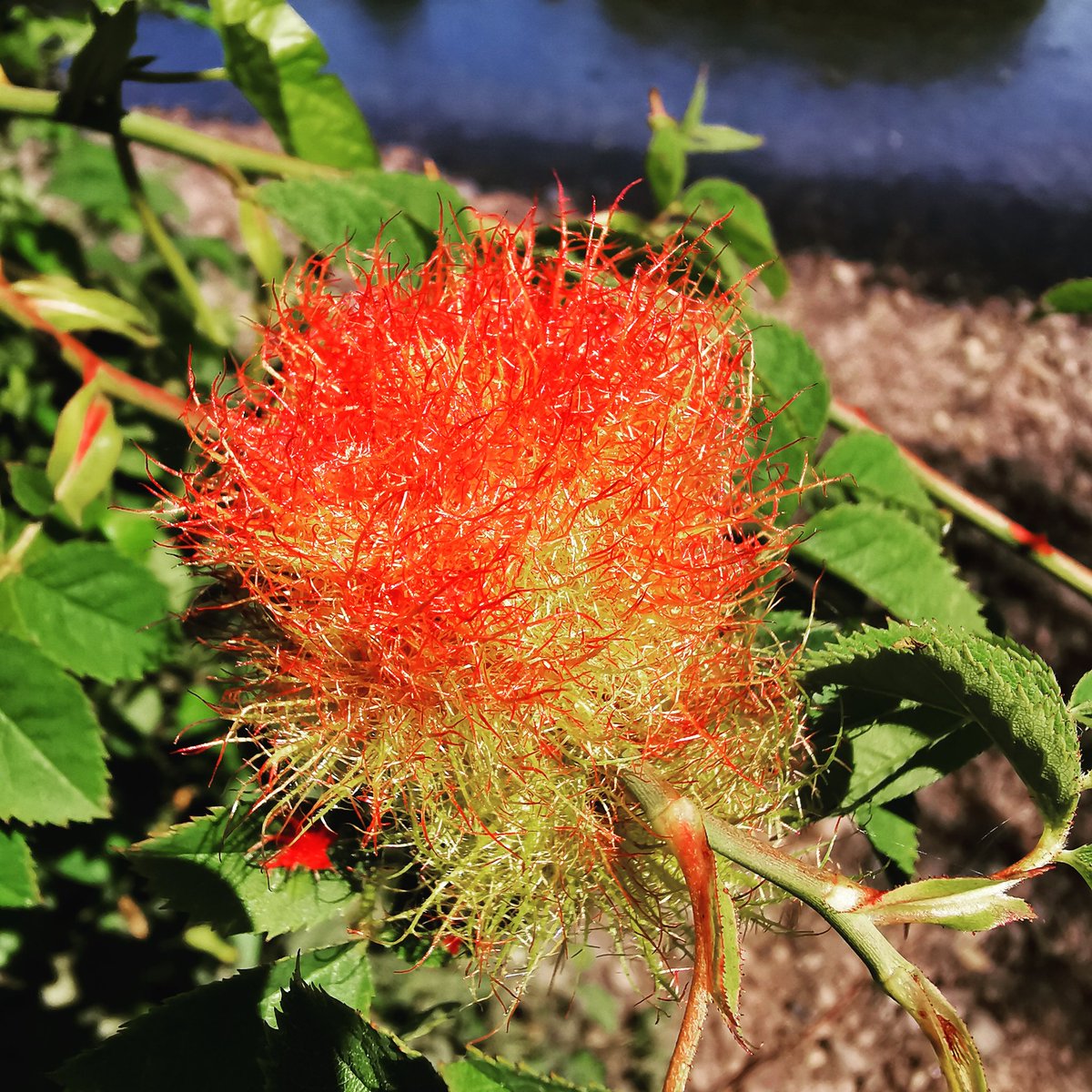
Robin's Pin Cushion is not actually a wildflower at all, but rather a gall; a response by the Wild Rose to a tiny gall wasp injecting larvae eggs into the stems or buds.
They are not known to harm the plant and provide shelter and food for the wasps.
#rose#gall#wasp#wildlife
A rare and delicious trailside treat in this part of the world, we were delighted to find these wild raspberries on a woodland walk at the weekend.
Out of fruiting season, the plant is often overlooked as the far more common blackberry.
#wildcrafting#wildflowers
The Charcoal Burner is one of our favourite edibles, though this one has already been discovered by slugs and possibly the Red Squirrel nearby. We could do with a good soak to get mushroom season going. 🍄
📍 Co Cork
#mushrooms#fungi#foraging
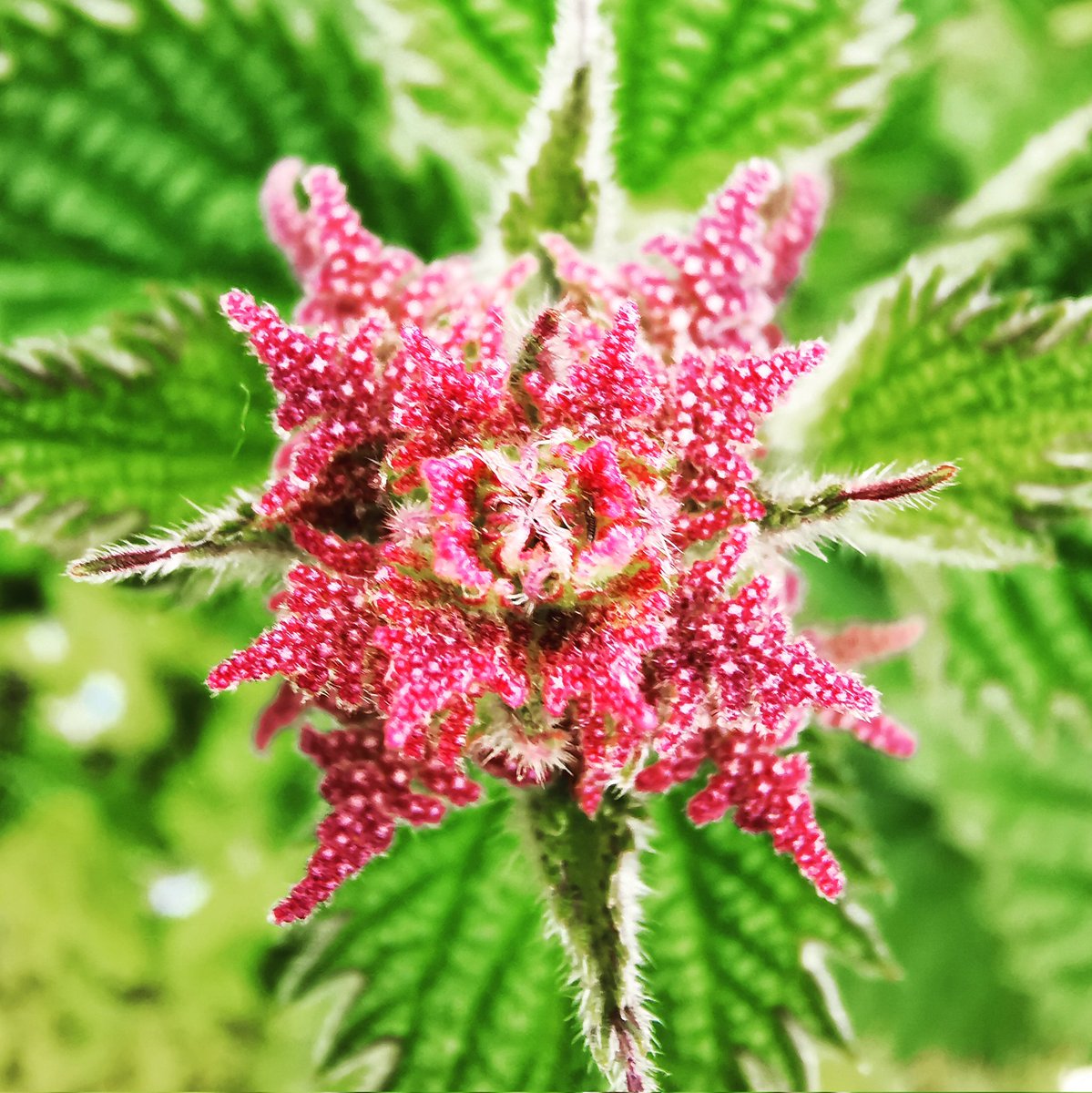
Nettle has its own quiet beauty to behold. Humans are now beginning to remember what a great ally this plant has always been to us.
Nature-lover, St Kevin, was said to have jumped into a bed of beetles every morning in Glendalough, Wicklow.
#wildflowers#nettle#plants#herbs
Cottongrass (aka Bog Cotton) is native to Ireland's boglands.
Before the days of motorways, wayfareres would look out for thick patches of this plant and avoid walking through the area, as they might not emerge on the other side.
#wildflowers#nature#naturelovers#biodiversity
Red Valerian is not a native plant, but was introduced from the Mediterranean by keen gardeners. They are long since naturalised in Ireland and love to grow on top of stone walls.
It is also known in some parts as Kiss-Me-Quick!
#wildflowers#biodiversity#nature
As you may have noticed, we have a bit of a soft spot for ladybirds. They may look cute, but they are ferocious predators, gorging on greenfly whenever the opportunity arises.
A friend to gardeners everywhere, our native 7-spot ladybird.
#ladybird#wildlife#insects