I am happy to share that our preprint on benchmarking structure-based 3D molecular generative models is online: https://t.co/sFON1OqWoH. Thanking my co-authors @AndreasBenderUK , @mccabe_p_ and @JasonColeCCDC 1/10
#GenBench3D: A game-changer for #drugdiscovery! 💊
Assess AI-designed molecules' true potential with this tool. TargetDiff and Pocket2Mol lead in Vina, Glide, and Gold PLP scores using valid relaxed molecules.
Quick read: https://t.co/pj7yBjzvvN
#bioinformatics#AI#sciencenews
💥 Introducing PINDER & PLINDER
With existing evals saturating without clear advances in real life downstream tasks, current progress in AI x Bio is primarily rate-limited by better datasets & evals.
In two back-to-back preprints, we address this via fantastic academic-industry collaborations by @vant_ai @NVIDIA & the group at @TorstenSchwede that co-organizes CASP, @MIT:
Read the release blog posts at:
https://t.co/iMJFERu7Oy & https://t.co/rHdZdOlpZX - 🧵(1/6)
Notre premier objectif (500 signatures !) a été atteint seulement deux jours après le lancement de notre appel.
Nous en sommes très fiers ! ✊
Très bientôt, on vous dévoile le projet pour la suite.
En attendant : https://t.co/BbVjsUaVZL
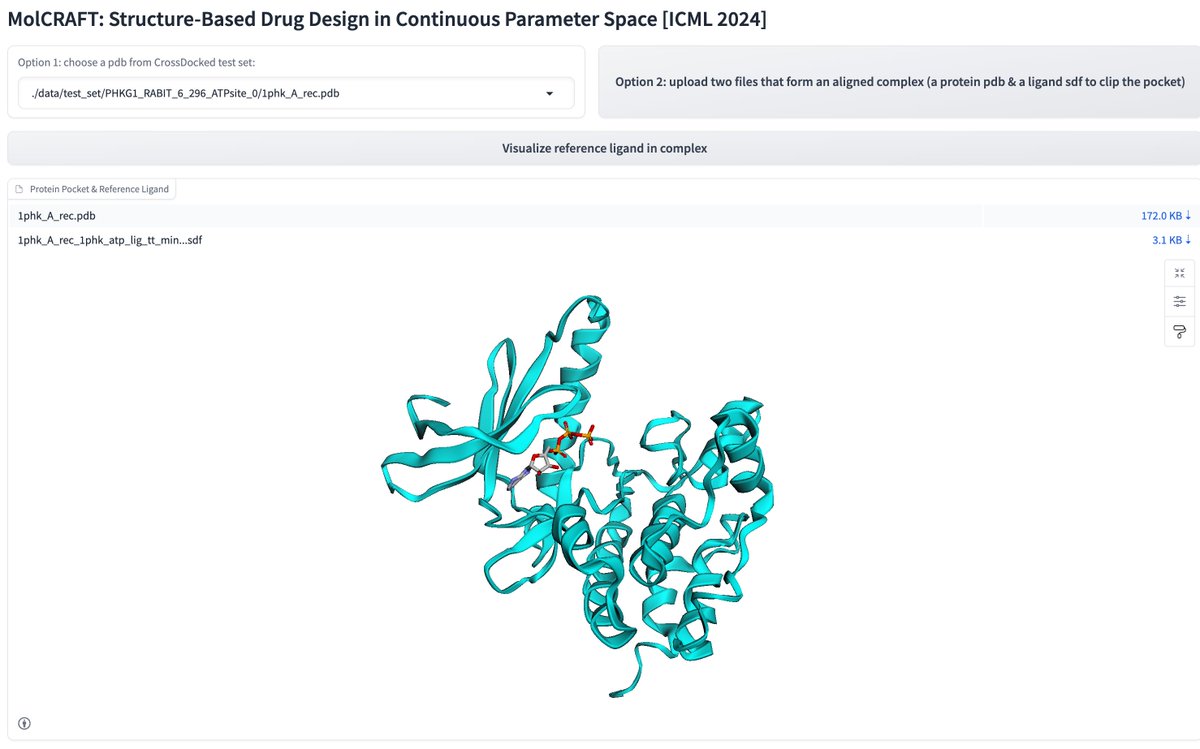
Interested in 3D Molecule Generation and Structure-Based Drug Design? Check out the demo of our Molcraft paper at #ICML2024 to generate, visualize, and evaluate ligands for different pockets! The demo is available at https://t.co/N1v4vy76xY
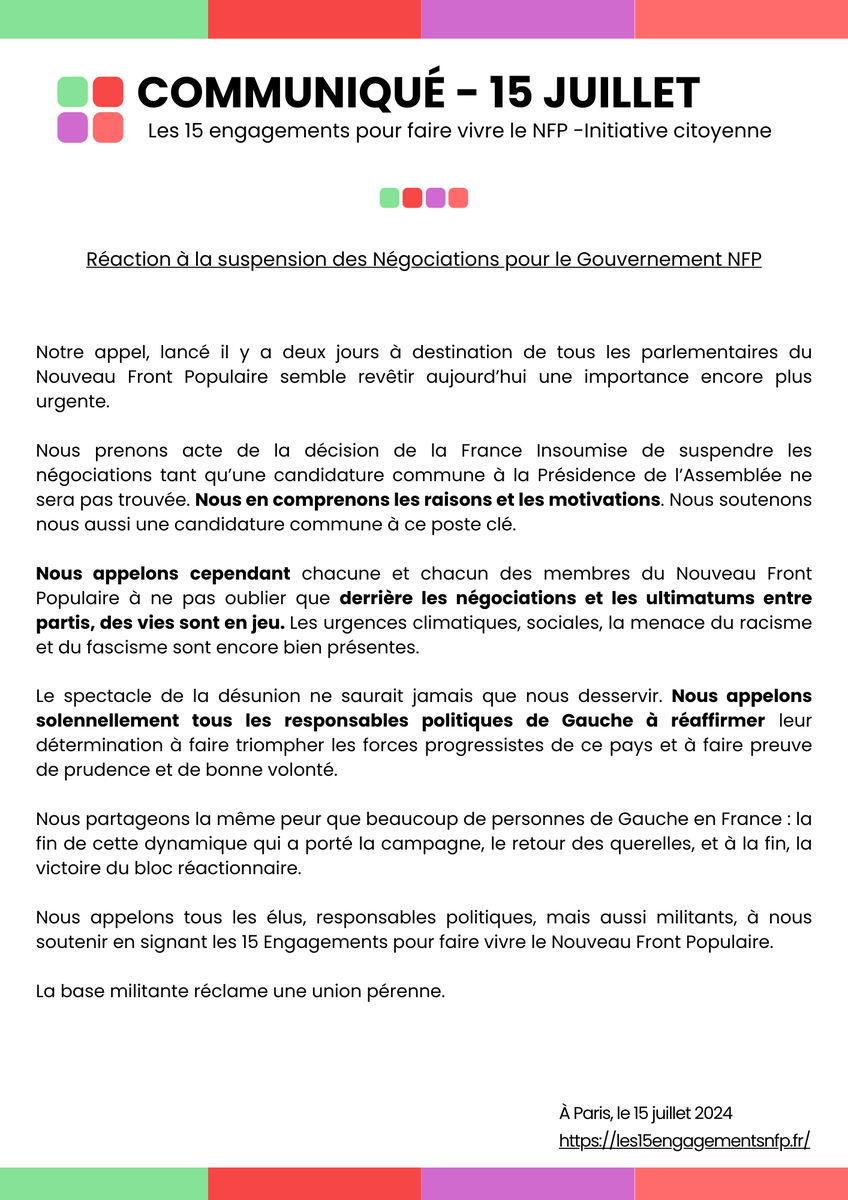
🔴LFI suspend sa participation aux négociations NFP Notre communiqué ⬇️
Nous partageons la peur que beaucoup de personnes de gauche : la fin de la dynamique qui a porté la campagne, le retour des querelles, et à la fin, la victoire du bloc réactionnaire.
https://t.co/BbVjsUbtPj
3D generative models producing molecules directly inside the binding pocket have the potential to find new binders by exploiting the pocket information with deep learning (see https://t.co/IgnyDDPpXj for a short review on the topic). 3/10
We recommend to perform local minimization of the generated molecules in the binding pocket before structure-based assessment, and to use at least two scoring functions if you have access to (e.g. Glide or Gold PLP). 10/10
I am happy to share that our preprint on benchmarking structure-based 3D molecular generative models is online: https://t.co/sFON1OqWoH. Thanking my co-authors @AndreasBenderUK , @mccabe_p_ and @JasonColeCCDC 1/10
@wpwalters The preprint and code are coming soon! I presented an earlier version of this research at the Cambridge Cheminformatics meeting: https://t.co/8q2MsUVEcd and in a poster: https://t.co/tqWo8Z9Uas
@wpwalters I focused on defining how likely ("valid") the conformations of generated molecules are, I came up with a solution to look-up bond length and angles distributions in the CSD.