The Gerolamo proposal is almost at 40% with way less participation than what pebble had
With 9 days left it is still possible for it to pass
Having Gerolamo means that you can access your dapps no matter what, it should be an absurd value added for any user in web3
In order to implement a light node we first need to implement a full node.
That said, it will not be our priority to push it as "main node", at most we will suggest to use it as "secondary relay".
We will be there in case things go south but we should also not be the primary backup
Haskell is so costly that competition is very badly needed.
That's why I think pursuing 4 nodes at this stage right now makes sense.
Stiff competition will bring down costs, improve quality of delivery and expand scope.
We can settle for fewer winners later.
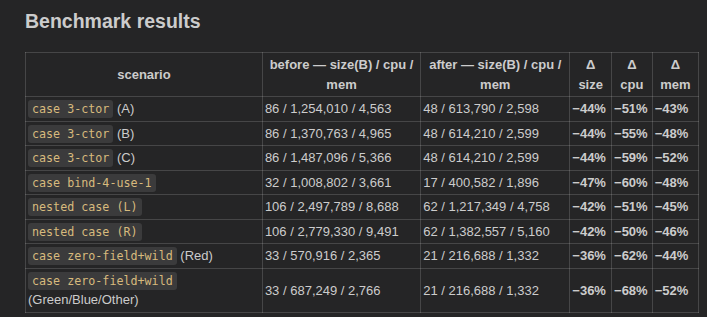
Some even juicier optimizations coming up with @pebble_lang targeting plutus v4
Pebble is not only easy to write and read, but it's probably the best choice if you care about efficiency
Make sure you vote YES for it
As a DRep, I decided to vote YES for the proposal: The first node in the browser; a Cardano USP.
My rationale:
This proposal concerns Gerolamo, a TypeScript implementation of a Cardano node, scoped specifically to the browser-extension light-node use case. The goal is to deliver a production-ready Cardano light node that can run in the browser and expose a messaging API to dApps and wallets. This would allow applications to obtain locally verified chain data instead of relying entirely on trusted external servers.
The main reason I support this proposal is that Gerolamo could help move Cardano wallets and dApps toward a more trust-minimized model. Today, many applications depend heavily on backend providers, indexers, APIs, or other server-side infrastructure.
This is convenient, but it also creates dependency on external services. A browser-based validating node could allow users and developers to interact with Cardano with stronger local verification guarantees.
This does not only matter for users who explicitly demand maximum sovereignty. Most users probably do not think in terms of “full validation” or “trust minimization.”
However, they can still benefit from applications that are more reliable, more responsive, and less dependent on centralized infrastructure. If delivered successfully, Gerolamo could make stronger security assumptions available through ordinary browser-based applications.
I also see value in Gerolamo from the perspective of client diversity.
Cardano should not rely forever on a single dominant node implementation or one main codebase at the networking and validation layer. Gerolamo is not funded here as a block-producing node, and server-side relay roles are explicitly out of scope under this proposal.
However, a successful TypeScript implementation of ledger validation, networking, and browser-based node architecture could become an important foundation for future alternative node work.
That said, my YES vote is not without concerns.
I also note that Gerolamo has received previous funding, and based on the public project status, the final milestone from that earlier funding appears to remain paused or unfinished.
I do not consider this, by itself, a reason to reject the current proposal, especially because the new proposal has a clearer scope and a stronger milestone-based structure. However, I would still like HLabs to provide a clear retrospective on the previous funding.
Second, the proposal still carries high execution risk. A browser-based Cardano node is technically plausible, but difficult. The hardest part is not simply making something sync in a browser. The hard part is the correct and robust implementation of ledger rules, chain selection, rollback handling, Plutus validation, protocol parameter changes, storage behavior, and conformance with the reference implementation.
The author's clarification was useful, especially regarding the proxy architecture, Mithril, browser runtime assumptions, and the distinction between technical feasibility and production readiness. However, it also confirms that conformance is not currently a milestone-gated requirement, even though a significant part of the Haskell node conformance tests has reportedly been ported, and more work is ongoing.
Third, I recognize that demand for this kind of infrastructure is not always easy to prove in advance. Users do not usually ask directly for client diversity, local validation, or reduced RPC dependency, but they can benefit from these properties indirectly through more resilient and trust-minimized applications.
For this reason, I do not consider the absence of a fully proven demand to be a reason to reject the proposal.
However, adoption remains an important factor to watch. I would welcome clear communication from HLabs during delivery about potential wallet or dApp integrations, proxy operator interest, and usage indicators that show whether Gerolamo is moving from technical capability toward practical ecosystem adoption.
In conclusion, I am voting YES because I believe Gerolamo addresses an important long-term infrastructure need for Cardano: more trust-minimized dApps and wallets, reduced dependency on centralized backend services, stronger client diversity, and a potentially distinctive browser-based validation model.
At the same time, I recognize that this is an ambitious infrastructure proposal with meaningful technical and adoption risks.
My YES vote reflects support for the direction, the potential ecosystem benefits, and the team’s continued work, while also recognizing that delivery should be followed closely by the community. In particular, I will be looking for transparent reporting on progress, conformance work, benchmarks, adoption signals, and how the team builds on lessons from the previous Gerolamo funding.
If you'd like to support my work, consider delegating to the MANDA pool and backing me as a DRep. Your support is the only way I can get time for governance.
MANDA Pool ID:
pool1c3fjkls7d2aujud8y5xy5e0azu0ueatwn34u7jy3ql85ze3xya8
My DRep ID:
drep1y2m0g4r66pyaw3p7u454wc0p4f0ygm8ueaev0mgd3tvwm7sskqwqp
We appreciate @Cardano_CF voting yes on the Pebble & Tooling maintenance proposal
We hope the other DReps who showed support previously will still choose to support us once again so that we can get started working on it 🙏
At HLabs we might build a tool just for your use-case in matters of a couple hours
That's how easy HLabs tools are to use
The pebble proposal guarantees those tools keep working