Malaysia’s leading crypto quant trading firm specializing in CTA & market making for $BTC & $ETH. Join Free Algo Trading Campus (ATC) via the link below!👇🏻
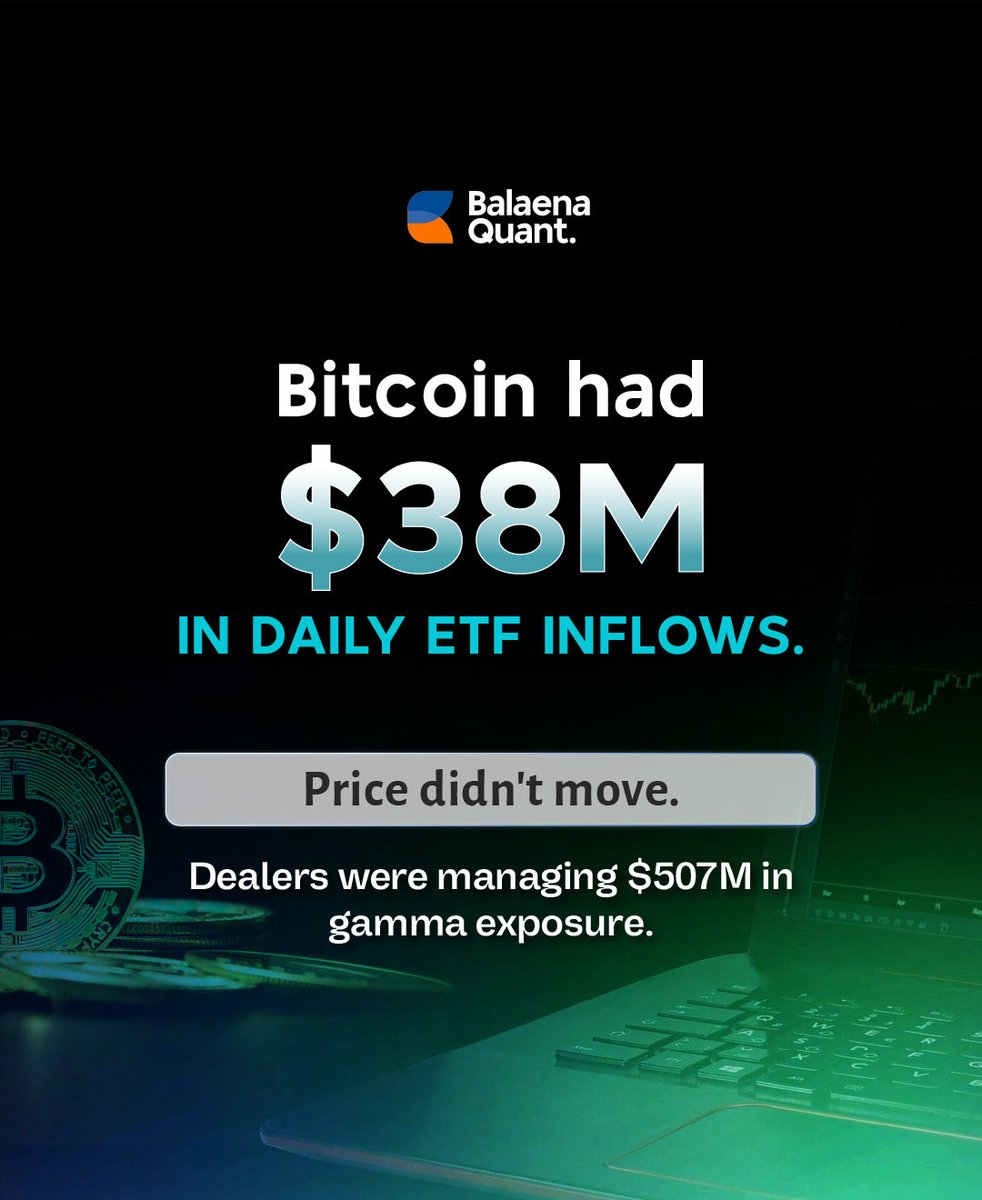
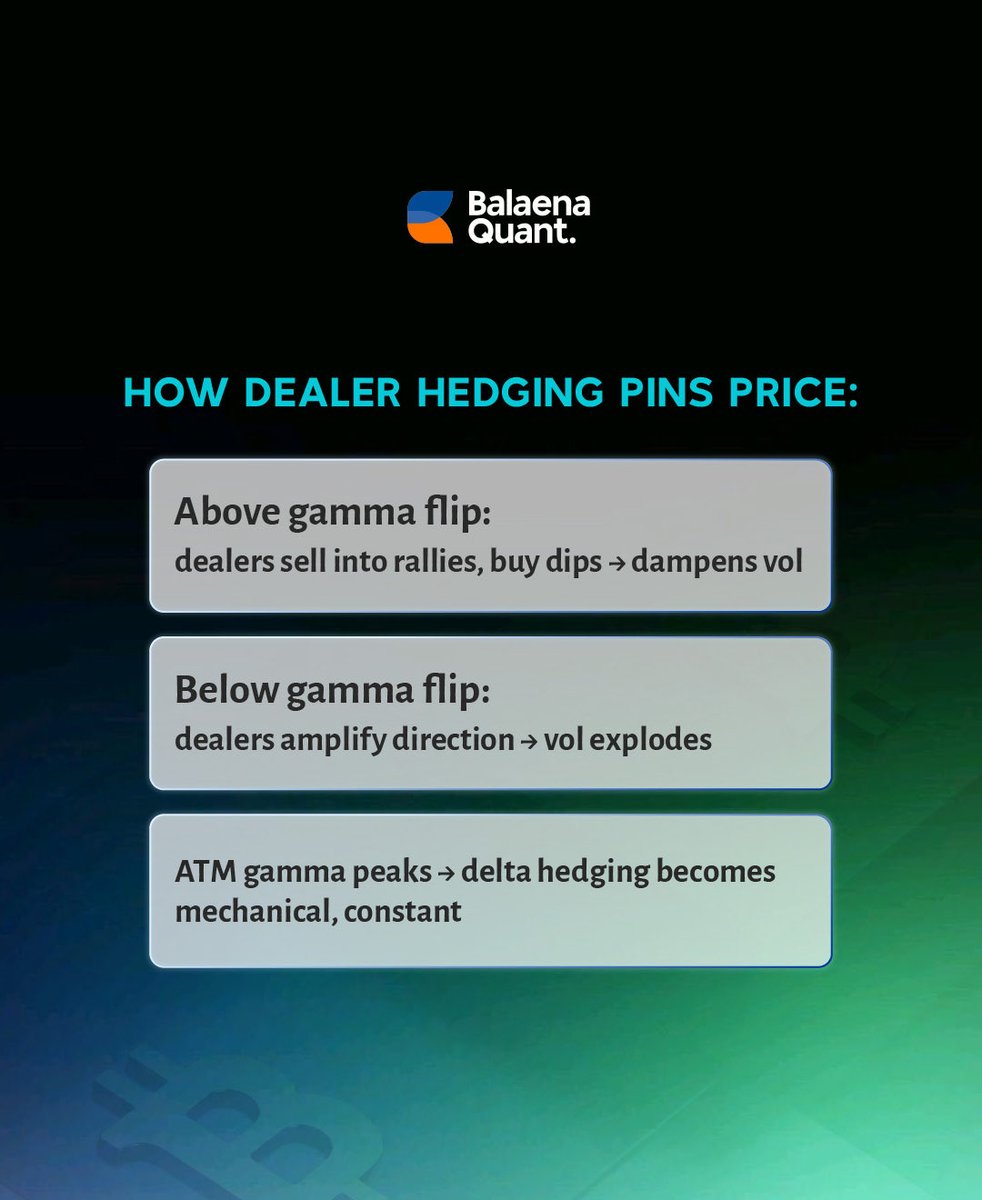
Retail watched ETF inflows. Quants watched dealer gamma. Bitcoin was pinned between $85k and $90k for weeks — not because buyers disappeared, but because $507M in dealer gamma exposure was mechanically suppressing every breakout attempt.
The quants winning in 2026 aren't generating more signals. They're running better elimination systems. 📌 Save this if you run a research pipeline.
📊 Follow @balaena_quant to build systems that reject noise at scale.
The firms that won weren't running smarter models. They were running tighter systems.
📊 Follow @balaena_quant to build research infrastructure that actually holds.
Most traders asked: can AI beat the market? Quants asked: can AI survive production?
The answer in 2025 was clear — AI's biggest contribution wasn't alpha generation.
It was compression. Compression of time, friction, and cognitive load.
The biggest gap in quant trading isn’t strategy design. It’s strategy transition.
A model can survive backtests and still collapse the moment it meets: – real execution – regime change – capacity limits
That’s because research environments are controlled.
Most strategies don’t fail because the idea is wrong. They fail because execution reality wasn’t modeled.
Slippage. Liquidity. Latency. Impact.
These aren’t details — they’re where alpha goes to die.
Most traders optimise strategies. Quants optimise pipelines.
Because a bad pipeline can make anything look good. And a good pipeline can make weak ideas die early.
Real edge comes from: – rejecting noise – validating across regimes – enforcing discipline
Most traders collect metrics. Quants compress them into one idea.
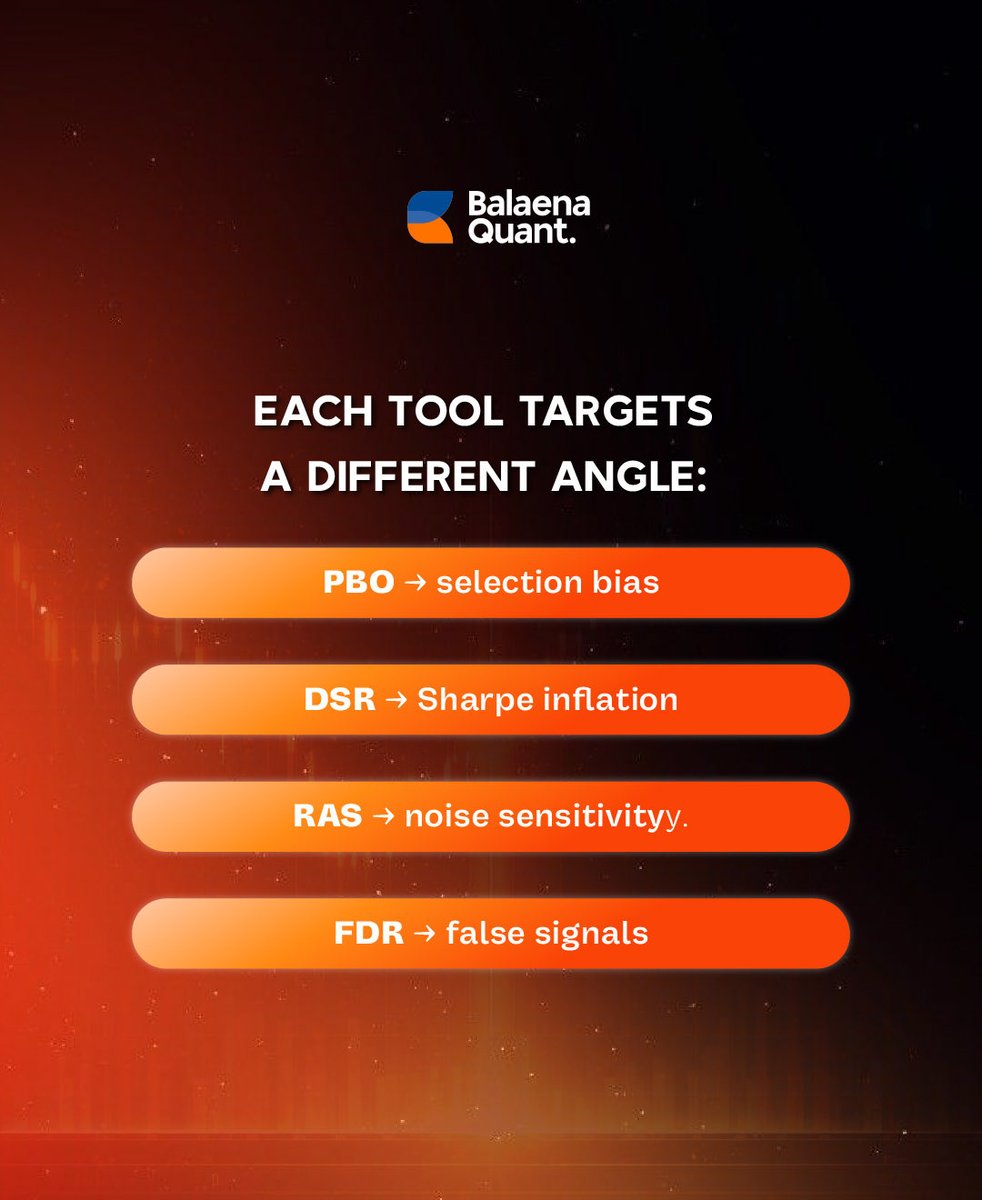
PBO, DSR, RAS, FDR… They’re not different tools — they’re different ways of asking the same question:
“Is this edge real, or just luck?”
Most traders collect metrics. Quants compress them into one idea.
PBO, DSR, RAS, FDR… They’re not different tools — they’re different ways of asking the same question:
“Is this edge real, or just luck?”
Signal-weighting expresses conviction.
The edge isn’t just what you trade. It’s how much you allocate.
📌 Save this if you’re building multi-signal systems. 📊 Follow @balaena_quant to think like a portfolio constructor.
Most traders focus on signals. Quants focus on capital allocation.
Because the same alpha, weighted differently, can produce wildly different Sharpe, drawdowns, and survival profiles.
Equal weight is simple. Vol scaling controls risk. Risk parity balances exposures.
When you test 100 signals, you don’t get 100 truths. You get noise — dressed as insight.
False Discovery Rate (FDR) forces humility into signal selection. It controls how many of your “top performers” are actually false positives.
Spreads widen. Depth vanishes. Slippage explodes.
If your backtest ignores impact-adjusted sizing, your live PnL will correct the mistake.
📌 Save this if you deploy capital systematically. 📊 Follow @balaena_quant to build strategies that survive execution reality.
Liquidity is the most misunderstood variable in crypto.
Traders look at volume. Quants look at impact.
The real question isn’t: “How much is trading?”
It’s: “How much can I trade without shifting price?”
Liquidity collapses during stress.
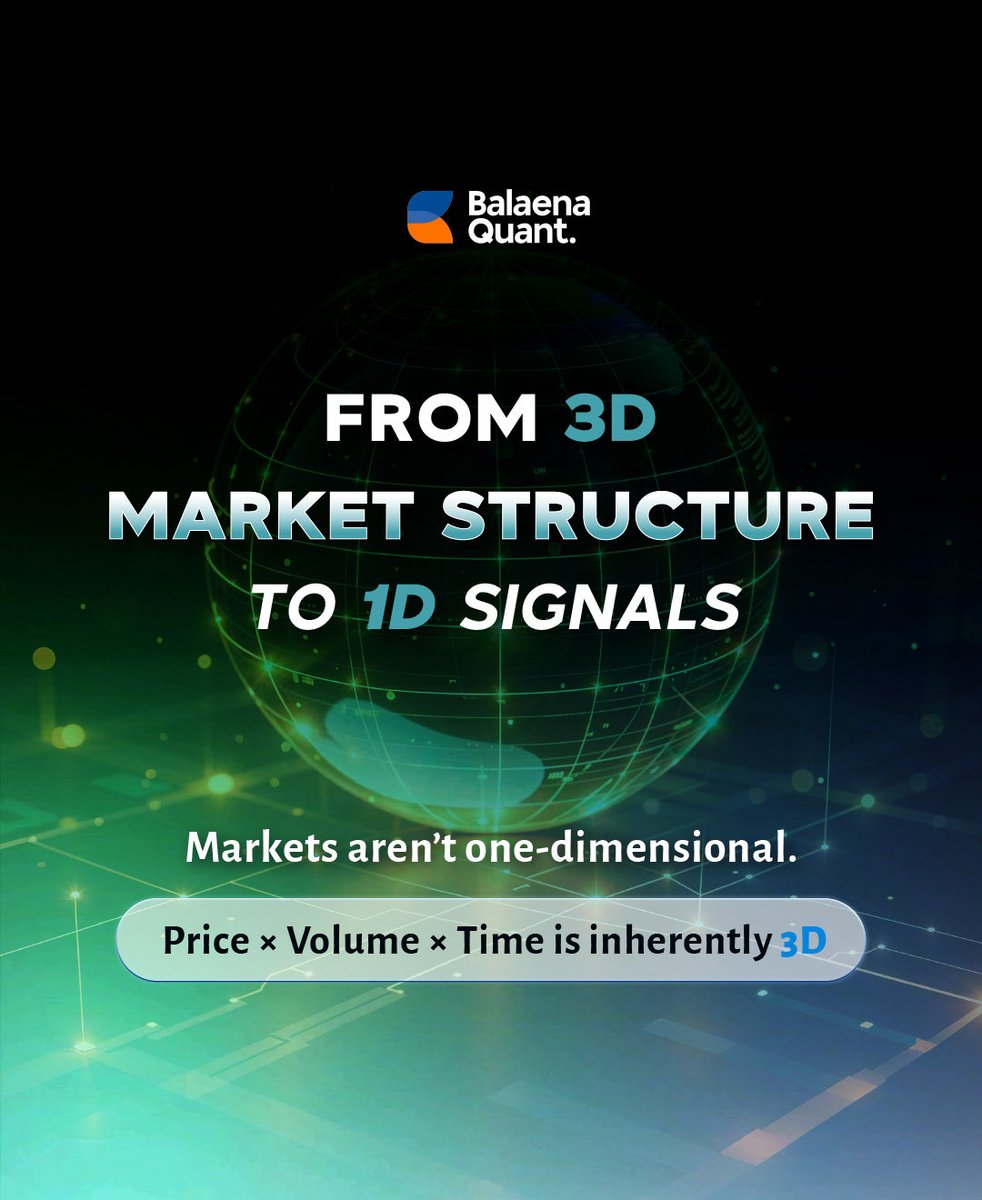
Markets live in high dimensions. Strategies don’t.
Order books, liquidity buckets, and price snapshots are 3D objects — but CTAs require clean, 1D signals. The mistake most traders make is flattening too aggressively and losing the very structure that creates edge.
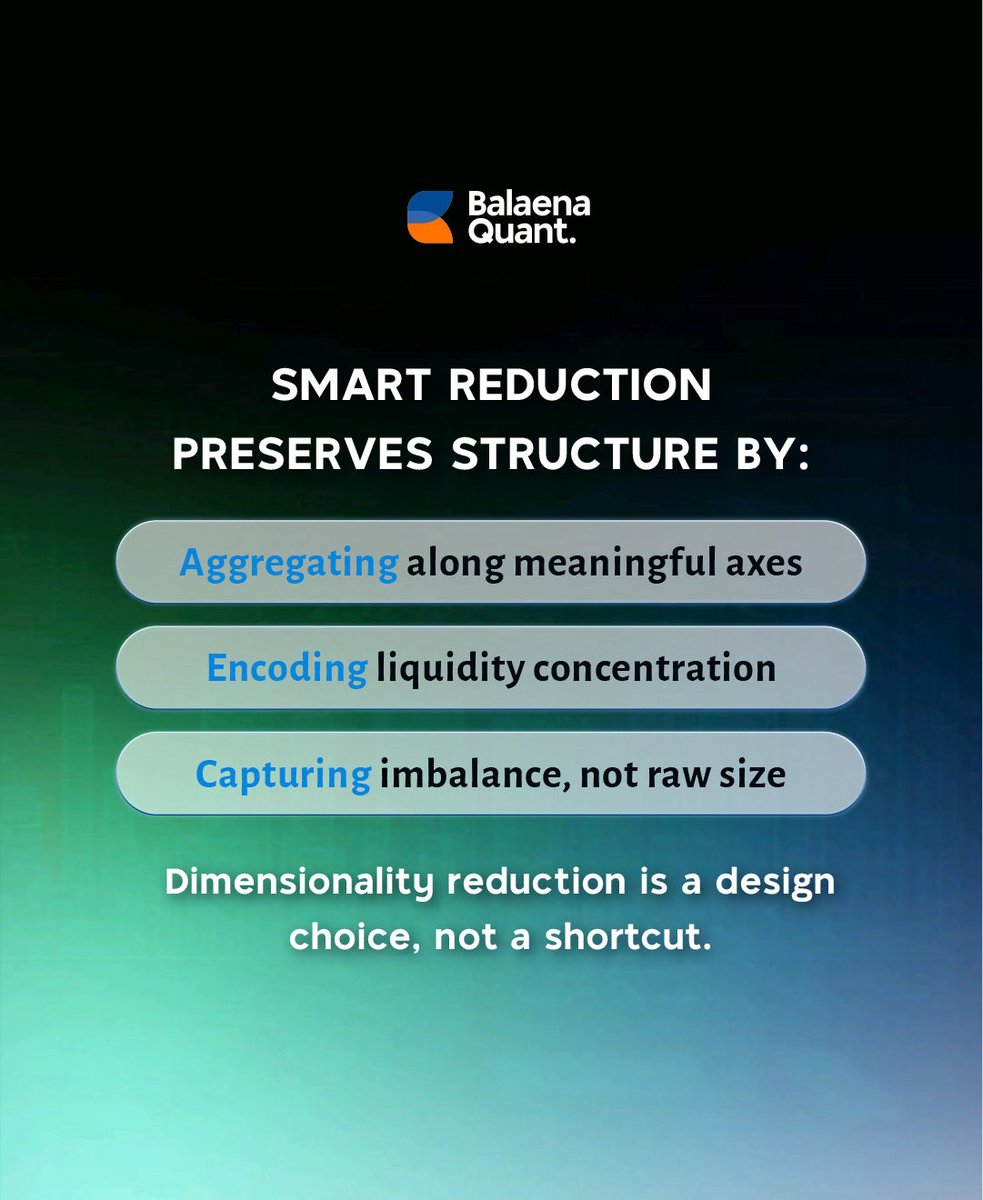
The real work happens in how you compress information: • What axis matters? • What gets preserved? • What gets discarded?
Dimensionality reduction isn’t about simplification. It’s about encoding structure without killing signal.