The year is 1854. Cholera is killing thousands in London. John Snow traces an outbreak to a contaminated water pump. Everyone blames bad air. Eventually cities separate sewage from drinking water. Clean water and sanitation will save more lives than almost anything medicine invents.
The year is 1867. Surgery is often more dangerous than the disease it treats. Joseph Lister starts cleaning instruments and wounds with antiseptic. Other surgeons ridicule him. Infections plummet.
The year is 1890. Your daughter has diphtheria. A thick membrane is forming in her throat, slowly suffocating her. The doctor injects a new antitoxin. She survives. A disease that killed tens of thousands of children will become almost unheard of in America.
The year is 1922. Your 14-year-old son has diabetes. He is starving to death no matter how much he eats. The only treatment is a starvation diet. The doctor injects insulin. His blood sugar falls. Children who would have died within months will grow up and have children.
The year is 1943. Your daughter has pneumonia. Before antibiotics, doctors could do little but hope. Now they give her penicillin. The fever breaks. Infections that routinely killed healthy adults become treatable.
The year is 1955. Parents are terrified of polio. Swimming pools close. Children become paralyzed. Some spend their lives in iron lungs. Jonas Salk develops a vaccine, tested in more than a million children. Within decades, polio disappears from America.
The year is 1960. Your wife is giving birth, and something goes wrong. A century earlier, she might have died. Now there are blood transfusions, antibiotics, safer cesarean sections, and anesthesia. Maternal mortality has fallen dramatically. Millions of women survive childbirth who otherwise wouldn’t have.
The year is 1978. Your blood pressure is 180 over 110. You feel fine. The doctor prescribes a pill. Clinical trials show that treating hypertension prevents strokes, heart failure, and death. You take it every morning. Nothing happens. That’s the point.
The year is 1980. The WHO declares smallpox eradicated. A disease that killed hundreds of millions in the twentieth century has disappeared from nature. Not treated. Not managed. Eliminated.
The year is 1996. Your brother has HIV. A decade earlier, the diagnosis was effectively a death sentence. Now doctors combine antiretroviral drugs. People who had months to live begin living for decades. Many will have near-normal life expectancies.
The year is 2014. Your father has hepatitis C. For decades, the infection has meant liver failure and cancer. Now he takes pills for twelve weeks. The virus disappears. A lifelong infection becomes curable in more than 95% of patients.
The year is 2019. Your daughter has cystic fibrosis. Her lungs are slowly failing. For decades, treatment meant managing infections and delaying the inevitable. Now doctors have a drug that corrects the underlying protein defect. Her breathing improves. Hospitalizations plummet. Predicted median survival rises from roughly 40 to more than 60 years.
The year is 2026. Your doctor has ten minutes and a screen. Your blood pressure is high, so the tablet is for life. Your cholesterol is high, so another tablet is for life. Your weight is high, so she offers an injection. The drugs have side effects. Not everyone needs them. But clinical trials show that appropriate treatment prevents heart attacks, strokes, kidney disease, and death.
None of these treatments is perfect. None needs to be.
For most of human history, parents buried their children, infections killed healthy adults, and childbirth killed young women.
Today, global life expectancy has more than doubled since 1900. Child mortality has collapsed.
Medicine has made terrible mistakes. We should remember them.
We should also remember the hundreds of millions of people alive because somebody got it right.
Elon Musk is spending nearly $450 million to influence our elections. One billionaire. Nearly half a billion dollars.
Our democracy belongs to the American people, not the highest bidder.
If we don’t get big money out of politics, we risk losing our democracy altogether.
Churchill could have shortened WW2 by years if he had just “done a deal” with Hitler. George Washington could have done a deal to end the American Revolution. Zelenskyy is in good company.
Researchers went into twenty suburban yards in Maryland, raked half the plots and left the other half alone. The raked plots produced 45% fewer moths and butterflies.
Overall emergence dropped 17%. Beetles fell 24%. Spiders fell by as much as 67%. Moth and butterfly diversity dropped about 40%, and the species that vanished were the ones that overwinter as larvae or inside fallen leaves.
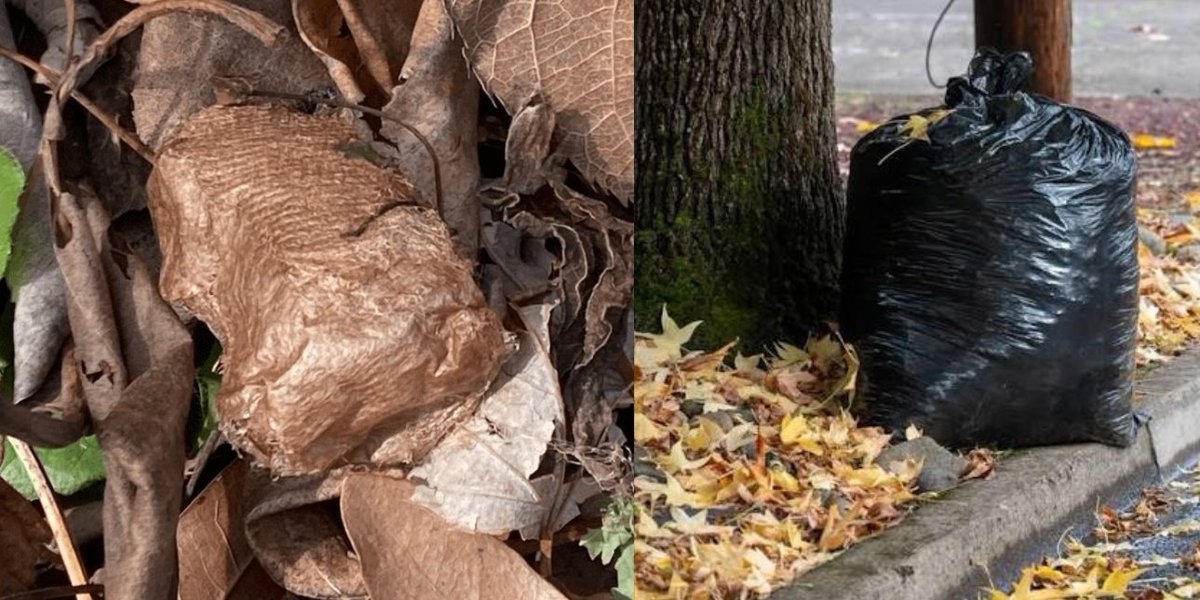
Fireflies, moths, bees, and beetles spend the winter in the leaf layer as eggs, larvae, pupae or adults. Bag it up and you've sent them to the dump, and probably to their deaths.
Shredding isn't the compromise people think it is. The same lab tested mulch-mowing against leaving leaves intact, and mulching cut emerging moths almost in half. A mower turns leaves into mulch and everything inside them into paste.
Rake the leaves off the lawn if you need to, then dump them under the trees and in the beds. That's where they'd have blown anyway.
Paths and edges can stay clean. The middle is where the work happens.
🇺🇦 Zelenskyy delivers a blunt message to the United States:
“Just give us Starlink back. If you refuse, Ukraine will survive. We will continue defending ourselves with or without it.
But why would you restrict a country fighting for its survival? Why make it harder for us to defend our people?
I simply cannot understand the reasoning behind this decision. It is a mistake.”
Ukraine isn’t asking America to fight its war. It’s asking America not to stand in the way of its defense.
In one study, most chickadees without a bird feeder present didn’t make it to spring. Most with one did.
A Wisconsin study followed hundreds of marked chickadees over three winters. 69% of the birds with feeders readily available survived. Only 37% survived without.
A chickadee lives on the edge in winter. Every day, it eats about 10% of its body weight, then burns all of it shivering through the night. Every morning, it starts near empty.
About half of what it eats in winter is insects: eggs and pupae tucked into bark and twigs, waiting out the cold.
Those insects come from native trees. An oak feeds hundreds of kinds of caterpillars. A Bradford pear or a crape myrtle feeds almost none.
Now picture the average subdivision. Lawn, a Bradford pear out front, a row of boxwoods. A chickadee working that yard in January is picking through a nearly empty pantry.
Don't beat yourself up. Most of us didn’t choose those plants. The builder did. Here's what you can do:
Stock a feeder with black oil sunflower or put up a plain suet feeder.
Plant one native tree. Fall is the best time to do it. Oaks are the gold standard, with native cherries and willows close behind. The National Wildlife Federation’s Native Plant Finder shows which plants feed the most caterpillars where you live.
And leave the leaves under it. A lot of moths spend the winter as pupae in leaf litter, and those make next spring’s caterpillars.
You don’t need a perfect yard. Researchers point out that a neighborhood where lots of people plant some natives does more than one person going all-native.
Just do what you can, the chickadees will appreciate it.
Peace never comes through weakness. Today, representatives of the U.S. Congress were in Kyiv – a bipartisan delegation – and I am grateful to them for visiting Ukraine at such a difficult time. They asked: what is needed to end the war? The answer must be strong. There must be sanctions under the Lindsey Graham bill, there must be support for Ukraine in protecting lives, and there must be pressure on Russia for its war. And today, there was a conversation between the leaders of America and Russia. A conversation that leads to something different.
Recently, there was a European decision to lift sanctions on Russian oligarchs. Since then, Russian strikes and the torment of people have only increased. This past week alone, there was a brutal Russian missile strike on a residential building in Pryluky, aerial bombs were dropped on Kramatorsk – on ordinary city buses – and there have been constant attacks on Kyiv’s energy infrastructure and on the life-sustaining infrastructure in Dnipro, Kharkiv, Odesa, and our other cities. Dozens of people have been killed and hundreds wounded.
The Russians are compensating for their inability to achieve their objectives on the battlefield with this kind of terror. This year, Russia is weaker on the battlefield than at any other point in the war. That is why Putin is relying on terror. That is why he is relying on attempts to strike backroom deals to secure some form of pressure relief for Russia, in order to buy more time and more opportunities for war.
Any easing of sanctions against Russia without a clear and lasting de-escalation agreement with Russia is an obvious weakness. It plays into Russia’s hands – allowing it to kill more, wage war for longer, have even less respect for America, and inflict even greater losses and damage on the world.
Ukraine is ready to take symmetrical de-escalatory steps, and the American team knows our position. Our strikes on Russian oil refineries and other oil facilities are a response to Russia’s years-long campaign of terror against Ukraine’s energy sector. Ukraine will not set Russian oil refineries on fire if Russia does not destroy our energy infrastructure. This is the kind of agreement we are proposing to America, and we believe the United States has enough power to achieve such a compromise.
Gifts to Putin will not bring peace or any benefit to the civilized world. Russia will “repay” the diesel with further terror and perfidy. Allowing Russia to sell petroleum products is an investment in a war that must be ended, not prolonged. What is needed is real de-escalation with Russia on a reciprocal basis.
We count on America’s fair support for our defense of life, for our defense of people in Ukraine – and on the United States having a correspondingly strong conversation with Russia. A strong one, not a weak one.
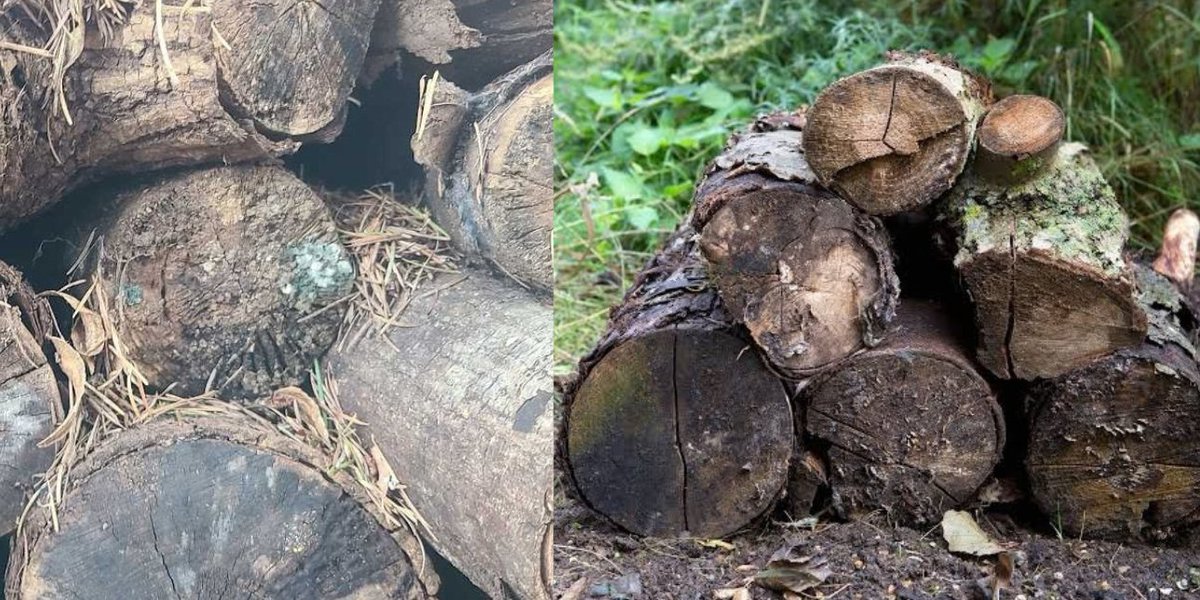
Don't haul away those logs and branches this fall. Pile them in a shady corner and you will have created some of the best suburban habitat around.
Within months, a log pile fills up. Fungi and wood-boring insects move in first, then pill bugs and beetle grubs.
Then come the animals that eat them: spiders, toads, frogs, salamanders and birds. A lot of them spend the winter right there, tucked into the damp gaps at the bottom, while the wood slowly rots into your soil.
Stack the logs loosely, bark on if you can, and bury the bottom layer a few inches so it stays damp. Shade keeps it wet for fungi and amphibians. Put it in the sun instead and you'll get basking lizards and solitary bees.
Want to go further? Dig a hole about a foot and a half deep, fill it with logs and rocks with plenty of gaps, and cover it with soil. That's a hibernaculum: a winter shelter for toads and snakes that's much less likely to freeze.
No watering, no feeding, no maintenance. Just keep it away from the house.
Win an Olivia Miles Rookie Debut!
Following a historic rookie season, her Moments now carry the Rookie of the Year badge after she swept ALL 74 votes to become just the 6th unanimous winner in WNBA history.
📣 Repost and comment your TS to win
@NBATopShot Master Thread Part 3:
Now that we have learned @hellodapper's story and what NBA Top Shot represents as a platform, we'll now look at the value proposition.
This breaks down to physical and digital #NFT sports collectibles.
You ready?
https://t.co/DYIQXvQZmD
Dapper collectibles revolve around the cube.
I get it. I'm a card guy but I get it.
So why not lean into the cube?
Introducing Metacube: pick 6 for a playlist and they display in a rotating cube frame with an info box underneath to keep it clean.
Raking leaves cut the spring emergence of moths and butterflies by 45% in one field experiment. Every leaf bag at the curb is sending moths to the dump.
Moths, butterflies, beetles and other arthropods spend winter in fallen leaves as eggs, larvae, pupae or adults. Firefly larvae also live in the damp layer below. To us it looks dead. To them it is the nursery and the blanket.
Researchers who compared raked and unraked plots found 17% fewer emerging arthropods overall after leaf removal. Moth and butterfly diversity fell about 40%, and their abundance fell 45%. Beetles fell 24%; spiders fell by as much as 67%.
Mowing the leaves isn't any better, really. Shredding them with a mower can kill what was sheltering inside. Then spring arrives with fewer insects for birds to eat and fewer pollinators waking up in the yard.
Move whole leaves under trees or into garden beds instead. Keep them off hard surfaces and storm drains, but leave the habitat on the property.
On September 4th, Trump signed an executive order aimed at stripping federal protection from gray wolves nationwide.
A wolf named BEY03F just proved why that protection matters, the first wolf to walk into Sequoia National Park in over a century, entirely on her own, alive today because of that protection.
Wolves hold entire ecosystems together. When wolves returned to Yellowstone, elk stopped overgrazing the land, trees came back, rivers changed course, whole species of birds and beavers returned.
There's a bill already moving through Congress to make this permanent, H.R. 845. It already passed the House. It's in the Senate right now.
Tell your senators to vote no. Link below.👇
#DemsUnited
https://t.co/mEqc4JlOeu
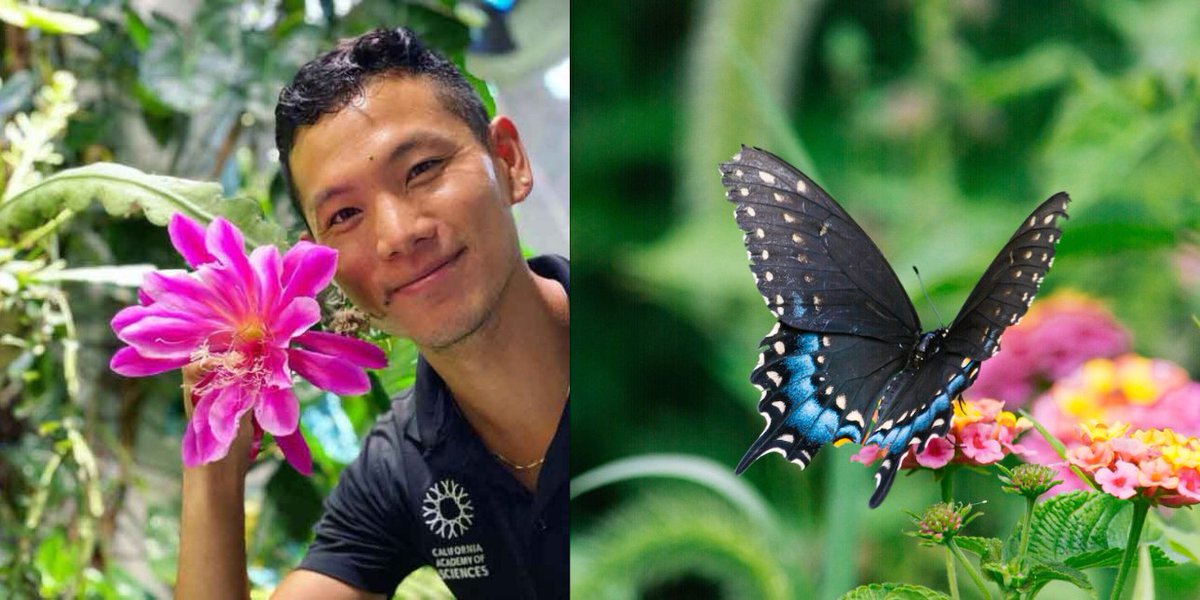
One man noticed a butterfly had nearly disappeared from San Francisco, figured out exactly why, and started their comeback in his own backyard.
Tim Wong is an aquarium biologist at the California Academy of Sciences. The California pipevine swallowtail vanished from the city for the same reason a lot of butterflies vanish: habitat loss.
The caterpillars eat exactly one plant: California pipevine, Aristolochia californica, and nothing else. As the city grew, the vine mostly went with it, and the butterfly had nowhere to lay eggs.
Wong found one of the last pipevines in San Francisco growing in the botanical garden in Golden Gate Park. He got permission to take cuttings. Then he built a screened enclosure in his backyard, big enough to let the butterflies fly and court normally.
He started with 20 caterpillars gathered from outside the city. He's been raising and releasing them back into the botanical garden ever since, and the population there has grown enough that people now see them flying in the park.
All it took was one guy deciding to give a shit about a butterfly most people hadn't ever met.
286 million birds take off tonight.
The biggest wave is over Minnesota and Wisconsin. Duluth, Minneapolis, Green Bay, Madison, Milwaukee, the whole UP.
Songbirds, most of them, flying in the dark on a light northwest wind behind today's front. Clear skies up there tonight.
Last night 51 million crossed Minnesota alone, peaking around 10:40 PM.
If that's you, turn off the outside lights tonight, dusk to dawn. Lights pull them off course.
Step outside late. You might hear them.
Map: BirdCast, Cornell Lab of Ornithology.
Why am I so passionate about @nbatopshot? It’s because this is the only collectible that really captures NBA history. Topshot started in 2020 and went in both directions, capturing history as it happens, while also reaching back thru the TV era to mint the greatest players & plays that came before it. IMO, I don’t believe the NBA will want another platform to start over & duplicate what has already been “minted”. This is it.
A future NBA digital partner may happen, one that is steeped in collectible greatness, but they will build on top of what already exists. And IMO, the future is not stale images, but videos cataloging everything that has happened. The real play. I am not taking anything away from any other platform. We can all succeed. But one day, demand for these pieces of NBA history will overwhelm the supply that was minted years earlier. Cute
This is repulsive. The government is gloating about sending people to a country run by gangs, where it can be hard to get even basic necessities. These Haitians were here legally until 30 seconds ago, and they were helping our economy in significant ways. It's all so sadistic.