Hiberno-Pole living in the ruins of Christendom.
Catholic Monarchist and Integralist
Right-Wing Social Justice Warrior
Enemy of Racism and Ultranationalism
Roman pagans found the veneration of saints and relics repulsive, and is one of the reasons they hated Catholicism - or at least found it very odd
The irony is that Protestants have picked up the same criticisms of the church that the pagans used
Pope Benedict XVI: "The devil wants to destroy Spain... he knows the services Spain has rendered to the Church of Christ, he knows Spain's mission, the evangelization of America by Spain, Spain's role during the Counter-Reformation, the religious persecution of the 1930s... The devil will not destroy Spain" (17/6/2015)
Source: La Razón
@mattforney@JoshuaDone I never seem that, I have had friend shill for the IRGC like Tucker because DAH JOOS! Literally had a buddy say the Israelis needed to rounded up and sent to Europe.
Syrian Christians are still being shot in cold blood and kidnapped by jihadists connected to the Syrian regime’s security forces.
The latest victim is 21-year-old Eliah Simon Tekla (on the left), a Syrian Christian who was shot in cold blood while sitting in his car in front of his home. Jihadists drove by, noticed a rosary in his car, killed him in cold blood, and fled the scene. Last 2 photos are of a memorial for him. Rest in peace.
Also, another victim is Bashar Elias (on the right), a Syrian Christian who was recently kidnapped in front of his family by jihadists associated with the Syrian regime. We pray he is returned home safely.
The U.S. government allowing an Al-Qaeda/ISIS regime to take over in Syria was the wrong move and continues to get Christians killed. Pray for Syrian Christians. 🙏🏼✝️ @realDonaldTrump@POTUS@WhiteHouse@JDVance@SecRubio@StateDept
When I left sedevacantism I originally included in my post that I was not going to attack them. Because I had been friends with many of them for 4 years, I thought that we could maintain our friendships even though I have returned to the Catholic Church. But immediately, almost all of them unfollowed me, cut off all contact, and started posting lies, insults and calumnies against me. Some being that I did it "for a girl", which is untrue and spreading this lie is mortally sinful. They claimed Israel paid me to do it. Many of them legitimately have called and still call me possessed by demons. They say I was "never a true Catholic". And I'm a Hell-bound apostate. I sat by for months without saying anything but when they wouldnt stop talking about me (and many still do), I came out against the position. Sedevacantism is incompatible with Catholic doctrine. It is a cult. These people act more cult like than flat Earthers. If you give them solid arguments such as Universal Peaceful Acceptance, the dogma of the visibility of the Church, the impossibility of the entire Church falling into apostasy for years before sedevacantism was invented, the necessity of jurisdiction and a host of other Catholic arguments, they reply with copy pasted phrases their cult leaders tell them. I genuinely hope that they can see the light, leave their cult and come back to the Church, but their position needs to be condemned for the non-Catholic cult that it is.
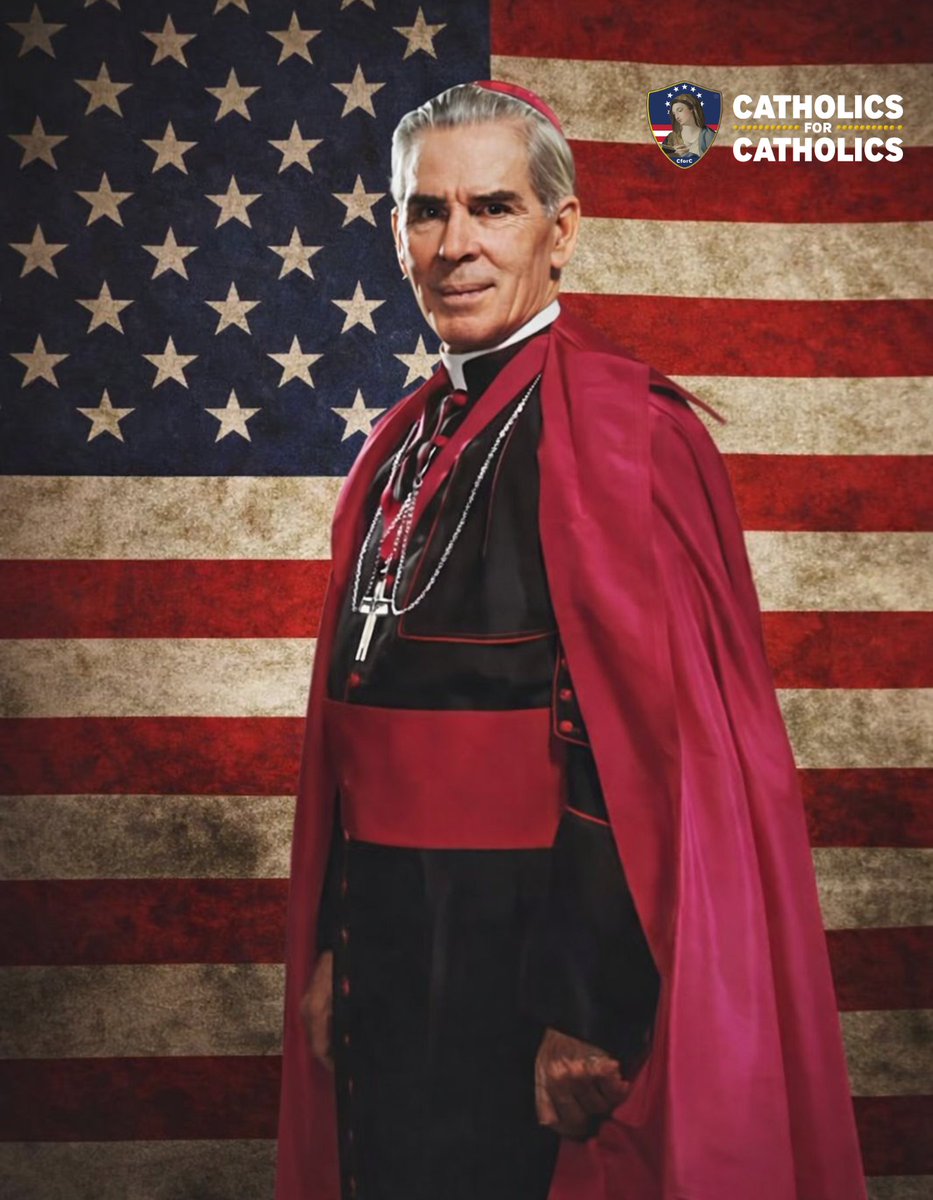
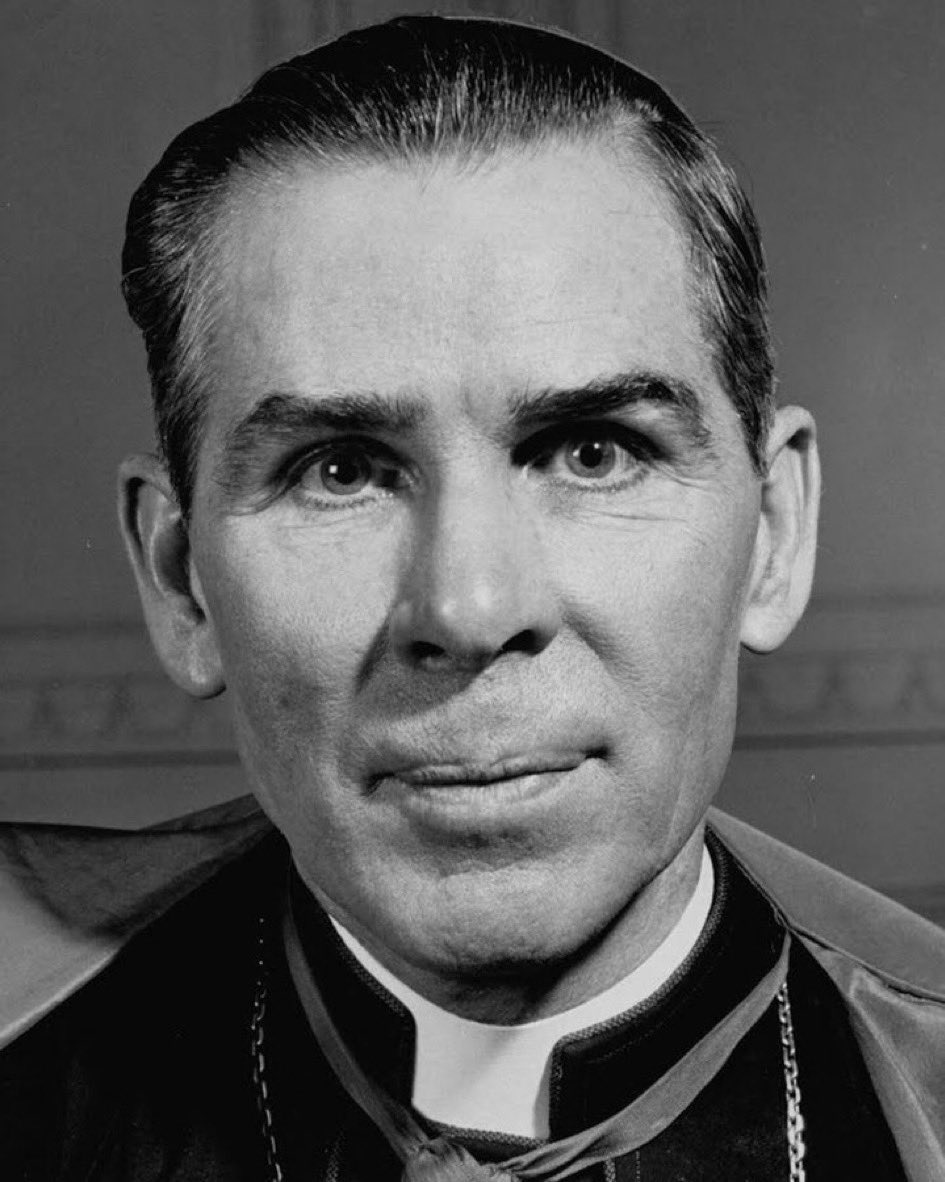
“America, it is said, is suffering from intolerance — it is not. It is suffering from tolerance. Tolerance of right and wrong, truth and error, virtue and evil, Christ and chaos. Our country is not nearly so overrun with the bigoted as it is overrun with the broadminded.” Ven. Fulton Sheen
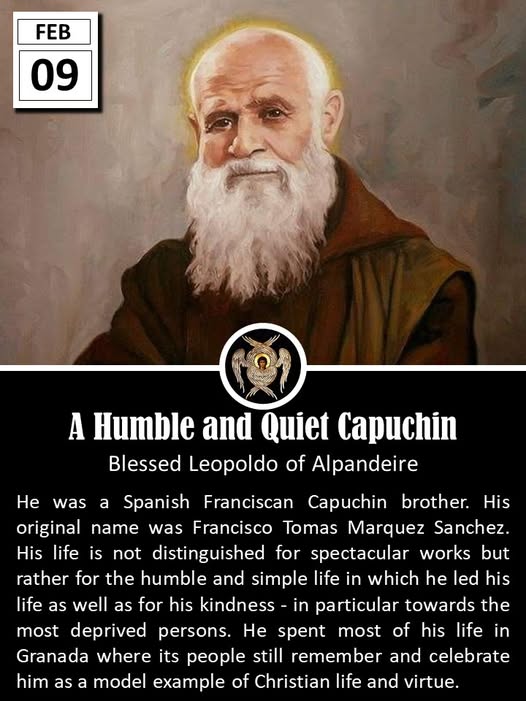
Blessed Leopoldo of Alpandeire, born Francisco Tomás de San Juan Bautista Márquez y Sánchez on June 24, 1864, in the small village of Alpandeire in the province of Málaga, Spain, lived a life of profound humility and quiet devotion that made him a beloved figure in southern Spain. Coming from a simple rural background as the firstborn son of a family of modest means, he worked as a day laborer and shepherd in his early adulthood, delaying his religious vocation until he was older. At the age of thirty-three, he entered the Capuchin Franciscan Order, receiving the habit and taking the name Leopoldo in honor of Saint Leopold Mandić.
After his formation, Brother Leopoldo was assigned to the Capuchin friary in Granada, where he spent more than fifty years, from 1914 until his death. He served primarily as the community's alms beggar, walking the streets daily to collect donations of food and money to support the friars and the poor. Despite the challenges of this role, including periods of religious persecution in early twentieth-century Spain, he approached his task with gentleness and perseverance. He became known affectionately as "the beggar of the three Hail Marys" because he often encouraged people to pray three Hail Marys in exchange for their charity or in moments of need, reflecting his deep Marian devotion and simple faith.
Brother Leopoldo lived a hidden life marked by constant prayer, charity, and humility. He offered spiritual counsel to countless people who sought him out, listened patiently to their troubles, and interceded for them through prayer. His manner was unassuming and serene, yet his presence brought comfort and hope to many in Granada. He never sought recognition, preferring silence and service over prominence.
He died peacefully on February 9, 1956, at the age of ninety-one in the Granada friary. His passing deeply moved the local population, with large crowds gathering to pay their respects. Devotion to him grew steadily in the years that followed, particularly in Andalusia. After a thorough investigation of his life and virtues, as well as reported miracles attributed to his intercession, Pope Benedict XVI approved his beatification. On September 12, 2010, Archbishop Angelo Amato presided over the ceremony in Granada, declaring him Blessed Leopoldo of Alpandeire. His feast day is celebrated on February 9, the anniversary of his death, honoring a modern exemplar of Franciscan simplicity, prayerful trust in God, and selfless love for neighbor.
Catholic philanthropist and media tycoon Jimmy Lai has been sentenced to 20 years in prison, in a bogus show trial by the Chinese Communist Party.
Lai, 78, has donated millions to Catholic causes, especially the persecuted underground Church in China, and has been Joseph Cardinal Zen’s biggest financial backer.
Blessed Anna Katharina Emmerick, also known as Anne Catherine Emmerich, was a German nun, mystic, and stigmatist born on September 8, 1774, in the small farming village of Flamsche near Coesfeld in Westphalia. Coming from a poor but deeply pious peasant family, she showed extraordinary devotion and kindness from childhood, often experiencing spiritual favors and visions that she initially assumed were common to all.
As a young girl, she worked as a seamstress and servant to support herself and help others, even giving away what little she had to those in need. Despite her delicate health and humble circumstances, she longed to enter religious life. In 1802, at the age of twenty-eight, she finally joined the Augustinian convent at Agnetenberg in Dülmen, along with her friend Klara Söntgen. There she lived humbly, performing her duties cheerfully even as her health declined and she faced misunderstanding from some sisters due to her ecstasies and unusual experiences.
When the convent was suppressed in 1812 under secular authorities, she took refuge with a widow and soon became bedridden. From 1813 onward, she suffered intensely, bearing the stigmata—the visible wounds of Christ—on her hands, feet, side, and head. She lived largely on the Eucharist and water, offering her pains as reparation for sinners and for souls in Purgatory. She also counseled visitors, providing spiritual guidance and consolation drawn from her profound union with God.
Her mystical visions encompassed detailed scenes from the life of Jesus, the Passion, the life of the Blessed Virgin Mary, and other biblical events. These were later recorded by the poet Clemens Brentano, who visited her and transcribed her accounts, though questions arose about the extent of his editorial role. Her sanctity rested not on the visions alone but on her heroic virtue, humility, patience in suffering, and dedication to serving others through prayer and sacrifice.
Anna Katharina Emmerick died on February 9, 1824, in Dülmen at the age of forty-nine. Her funeral drew many people touched by her life. The Church investigated her cause over time, and after delays partly due to debates over the visions' authenticity, Pope John Paul II beatified her on October 3, 2004, emphasizing her personal piety, generosity, and offering of suffering in union with Christ. Today she is venerated as Blessed Anne Catherine Emmerich, a model of redemptive suffering and quiet holiness in the Catholic tradition.