@jofpin@danielgomezof De qué habla? Un hacker que no es capaz de orientar a alguien que quiere ser hacker por querer “crear herramientas” no es muy hacker que digamos, las respuestas las sacas con gemini flahs?
@danielgomezof@jofpin Como el tipo no fue capaz de recomendarte algo, te recomiendo que empieces por la academia de hsckthebox, puedes empezar desde lo básico sin saber nada, ver tutoriales de máquinas que se hacen en Youtube ayuda mucho también.
Karpathy method + Claude Code reading your whole Obsidian vault is the smartest second brain on earth.
The method is simple and brutal. If you can’t build a thing from scratch, you don’t know it. Tutorials are fake learning and your brain deletes them in 3 days.
Most people ignore this. They build a second brain that just sits there, folders of notes nobody reopens, dead text.
Point Claude Code at the vault and it wakes up. 5,000 notes, one mind. It reads all of it and answers in your own words and your own proofs, not a model’s guess.
Then the loop closes.
Want to understand neural nets? Skip the 3-hour video and ask Claude Code to build a tiny one. 200 lines from scratch. Watch it train, break a layer, watch it fail, fix it.
It clicks in 20 minutes instead of 3 weeks.
The second it lands the note gets written. One idea per file, linked to 10 others, dropped into the vault while the memory is still hot.
Now it compounds.
Month 1: is 60 notes. Month 6 is 900. Every new note pulls in old ones, so you ask anything and the answer comes from your brain, not the internet.
Before: 40 tabs, 6 half read PDF, 0 retained.
After: build it once, own it for life.
Setup takes 4 minutes. Plain text, no lock-in.
A second brain nobody reads is a graveyard.
Yours just started thinking.
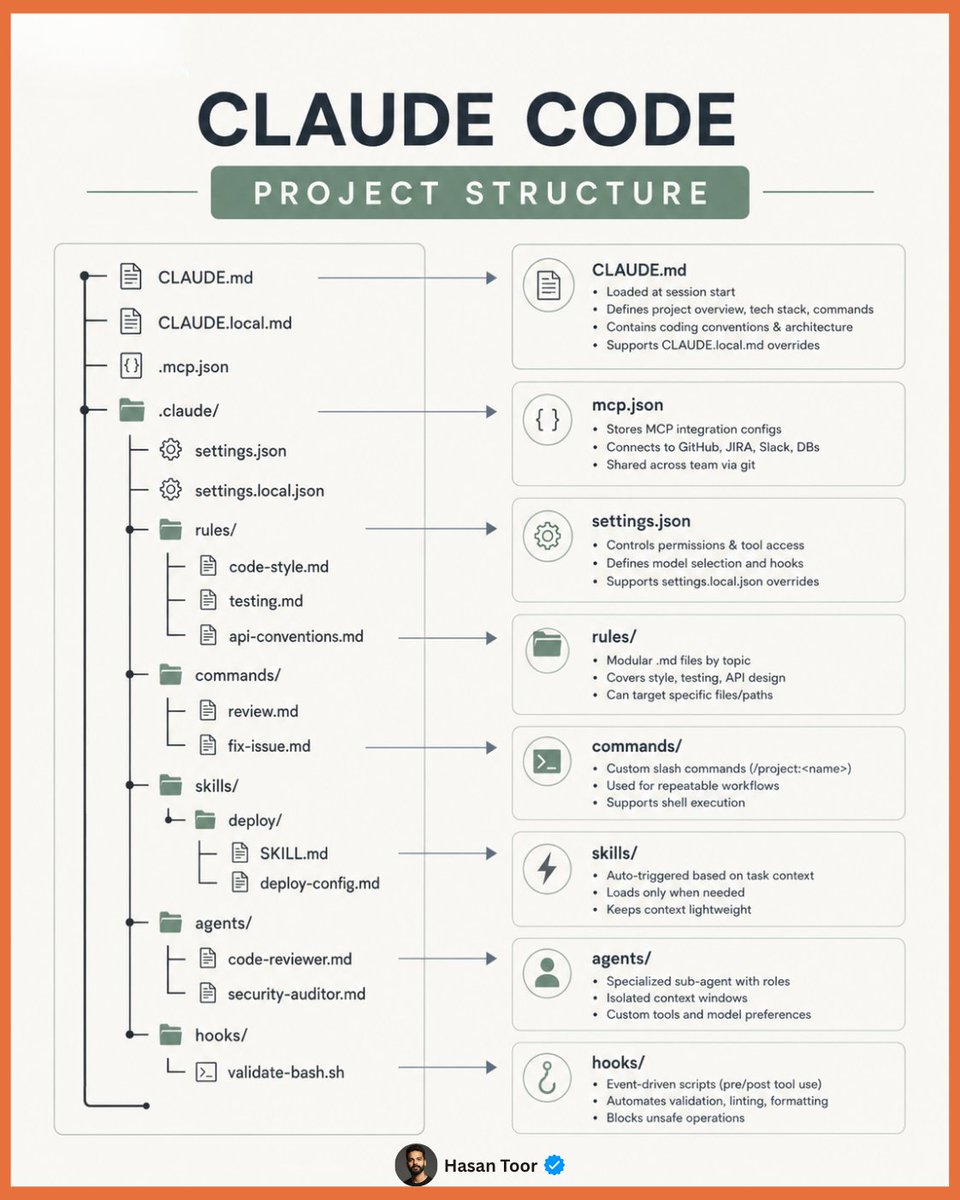
El CLAUDE. md de Karpathy alcanzó el #1 en las tendencias de GitHub.
Más de 220,000 estrellas. La mayoría de los desarrolladores aún no lo han leído.
Son 65 líneas.
Llevó la precisión en la codificación con IA del 65% al 94%.
Las 4 reglas dentro:
-> piensa antes de codificar
expón tus suposiciones. pregunta cuando no estés seguro. nunca adivines.
-> simplicidad primero
escribe el código mínimo que resuelva el problema.
sin abstracciones que nadie pidió.
-> cambios quirúrgicos
no toques código no relacionado con la solicitud.
cada línea cambiada debe rastrearse hasta lo que se pidió.
-> ejecución orientada a metas
convierte instrucciones vagas en criterios de éxito verificables
antes de escribir una sola línea.
eso es todo.
65 líneas. 4 reglas. 94% de precisión.
guarda esto antes de que sea demasiado tarde
Your Hermes Agent can now adopt an animated pet: a small sprite that reacts to what the agent is doing (idle, running a tool, thinking, waiting, finishing, failing) in the GUI or TUI.
You have nearly 3000 pets to choose from via the petdex gallery, or you can submit your own.
Actualizamos el verificador de filtraciones de MuchoHacker.
Ahora cruza más de 2.6 millones de registros entre DIAN, ICFES, Universidad del Cauca y la base de la campaña de Abelardo de la Espriella.
¿Tus datos están ahí? Lo sabes en 5 segundos 👇
https://t.co/ByvnpE9PFe
How I built with Claude 👇
1. Prompt: "Build a storytelling website where each scroll section reveals a new chapter with fluid color transitions"
2. Use Three.js for the painted texture background that reacts to cursor
3. Prompt: "Add GSAP ScrollTrigger so each section animates in as a cinematic scene"
4. Use Lenis.js for that buttery smooth scroll that premium sites have
140K GitHub stars. Three months. Most people still copy-pasting into ChatGPT every morning.
Hermes plus Obsidian plus NotebookLM equals a second brain that compounds forever.
Writes its own skills. Maps its own knowledge. Remembers everything you taught it.
One setup. Runs locally. Never starts from zero again.
Save this before you explain yourself to an AI one more time.
Bookmark this now.
The top Hermes integrations to give your agent superpowers:
1. Obsidian
It works as a Karpathy-style second brain, but one that talks back.
Every note, page, and backlink in the vault becomes live context. The agent doesn't just store knowledge, it reasons over it across everything that's been written and saved.
2. Playwright
It gives Hermes a real browser instead of a read-only window to the web.
It clicks, fills forms, and navigates pages the way a person would, then runs UI tests across Chromium, Firefox, and WebKit. This lets you turn Hermes from something that reads the web into something that can act on it.
3. InsForge
It puts a full agentic backend behind one semantic layer.
Auth, database, storage, and edge functions are all accessible without wiring five services together. The agent reasons about backend primitives directly instead of juggling disconnected APIs.
GitHub: https://t.co/jW3qHLCmS3
(don't forget to star 🌟)
4. GitHub
It connects code, issues, and pull requests, turning Hermes into an engineering teammate that can actually read the repo.
5. Bright Data
It hands agents web access that does not get blocked.
It pulls live search results, full pages, and clean structured data from places like X, LinkedIn, and Reddit, handling the proxies, CAPTCHAs, and rendering underneath so the agent just gets usable data back.
GitHub: https://t.co/w9C83iyoYn
(don't forget to star 🌟)
6. Sequential thinking
It upgrades how Hermes reasons rather than what it connects to.
Most integrations give the agent new senses. This one gives it a better mindset. It forces Hermes to break a hard problem into ordered steps and revise its own plan as it goes, instead of committing to the first answer that looks right.
7. Google workspace
It connects Gmail, Calendar, Drive, Docs, and Sheets in one place.
The agent that can't check the inbox, read the calendar, or write to a shared doc is basically decorative. This should probably be the first integration anyone enables.
8. Zapier
It acts as the layer that connects Hermes to everything else in the world.
This single connector reaches thousands of downstream apps. Hermes can fire off a workflow, update a record, or move data between tools without anyone writing the glue code.
9. Stripe
It surfaces revenue, refunds, subscription changes, and failed charges through a single question instead of clicking through dashboards.
It turns Stripe from a payment processor into a queryable business intelligence layer.
10. Slack
It handles channel-based automation inside Slack.
Hermes can live inside specific channels with its own workflow in each. Support tickets from email get scanned, categorized, and dropped into the right channel every morning without anyone lifting a finger. It can also read on-call threads and post status updates so the team stops switching tabs to stay in sync.
11. Graphiti
It builds real-time knowledge graphs of structured relationships from conversations and documents.
Instead of flat vector similarity, the agent traverses typed connections between entities. That is the difference between finding similar text and understanding how things actually relate.
GitHub: https://t.co/aFsgR0kYb2
(don't forget to star 🌟)
12. Figma
It gives the agent design context it can actually read.
Hermes can pull a frame, read the tokens and layout, and turn it into code that respects the system down to the spacing. With FigJam it goes the other way too, generating architecture diagrams and ERDs straight from a prompt. It is underrated for anyone who lives between design and engineering.
To dive deeper into Hermes, my co-founder wrote a full deep dive covering the Hermes agent's architecture, memory system, self-evolving skills, GEPA optimization, and how to set up multiple specialized agents.
Read it below.
Hermes Desktop dropped this week, so i spent 24 hours using it and made the masterclass.
what i covered:
> phone -> desktop session continuity
> agents + subagents
> crons
> profiles
> tools, skills, MCP
> memory + context
> local // remote gateways
now my Telegram-first agent has a full desktop control room.
OBSIDIAN + HERMES IS THE MOST POWERFUL PERSONAL OPERATING SYSTEM YOU CAN BUILD IN 1 COMMAND FOR UNDER $20/MO - AND ALMOST NOBODY HAS CONNECTED IT YET
Obsidian holds everything you know, permanently, in plain text.
Hermes reads it, reasons across all 1,400 notes, and runs your most important workflows on a schedule.
What it produces every week, hands-off:
→ 7 morning briefs, built from your actual vault
→ 7 inbox runs that file and link every capture
→ 1 project-health report flagging anything stalled 7+ days
→ 1 connection report surfacing links you never made → 1 weekly synthesis waiting for you Monday morning
The math nobody runs:
→ 1 command to connect the whole thing
→ 23 skills doing the work, growing every week
→ ~$0.50 per run · under $20/mo all-in
→ ~5 hrs/week of filing and review
→ 0 → Day 30 first surprise. Day 90 uncopyable.
1 system. Reads. Remembers.
Runs itself while you sleep.
Reply "HERMES", and I will send you a step-by-step playbook in DMs 👇
PewDiePie ha lanzado su propio ChatGPT gratis y de código abierto (y ya lleva casi 50K de estrellas en GitHub).
Una app de IA que se ejecuta en tu propia máquina con modelos locales de manera simple, privada y segura.
Es mucho más que un chat, ya que puedes utilizar agentes para realizar investigaciones, revisar tu email, soporta MCP, skills, memoria y diferentes tools para realizar tareas reales en tu máquina.
Para Windows, Mac y Linux.
→ https://t.co/E3XNLo8Wtw
Nous Research acaba de publicar el hub de skills más completo que he visto para su agente de IA: Hermes
Se llama Hermes Skills Hub y tiene 691 skills listas para instalar.
No es una lista de prompts. Son skills reales que amplían lo que puede hacer tu agente.
89 integradas de serie.
81 opcionales.
521 de la comunidad.
18 categorías.
Algunas de las que me han flipado:
- macos-computer-use: controla el escritorio de Mac en segundo plano sin robar el cursor ni el foco del teclado
- comfyui: genera imágenes, video y audio con ComfyUI directamente desde el agente
- humanizer: elimina el lenguaje de IA y añade voz real al texto
- popular-web-designs: 54 sistemas de diseño reales (Stripe, Linear, Vercel) como HTML/CSS
- claude-code: delega el código a Claude Code CLI desde dentro del agente
- manim-video: animaciones estilo 3Blue1Brown para matemáticas y algoritmos
- excalidraw: diagramas de arquitectura dibujados a mano desde el agente
- ascii-video: convierte cualquier video a ASCII coloreado en MP4 o GIF
Y esto es solo la primera página.
Hay skills para finanzas, seguridad, DevOps, MLOps, traducción, gaming y social media.
Compatible con Hermes Agent, Claude Code, Codex, Cursor y OpenCode.
Todo gratis. Todo open source.
The next evolution of Hermes Agent is here!
Introducing Hermes Desktop: everything you love about Hermes, now native on your machine.
First demoed in Jensen's GTC keynote, it's now in public preview.
15 mil estrellas en GitHub en menos de 24 horas.
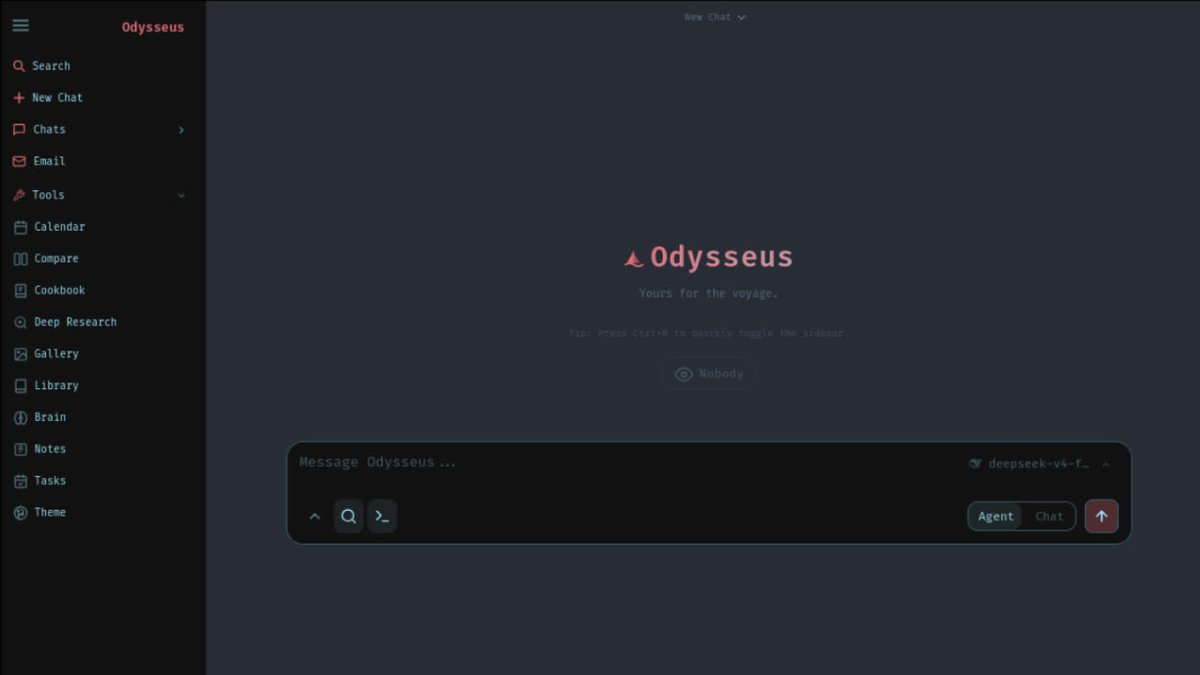
Este proyecto es del famoso creador de contenido PewDiePie y lo está explotando.
Se llama Odysseus y es una especie de ChatGPT/Claude, pero pensado para usarse en IA local.
Tiene agentes con tools, MCP, archivos y memoria.
Funciona en Windows, macOS y Linux:
https://t.co/xylKxBFQie
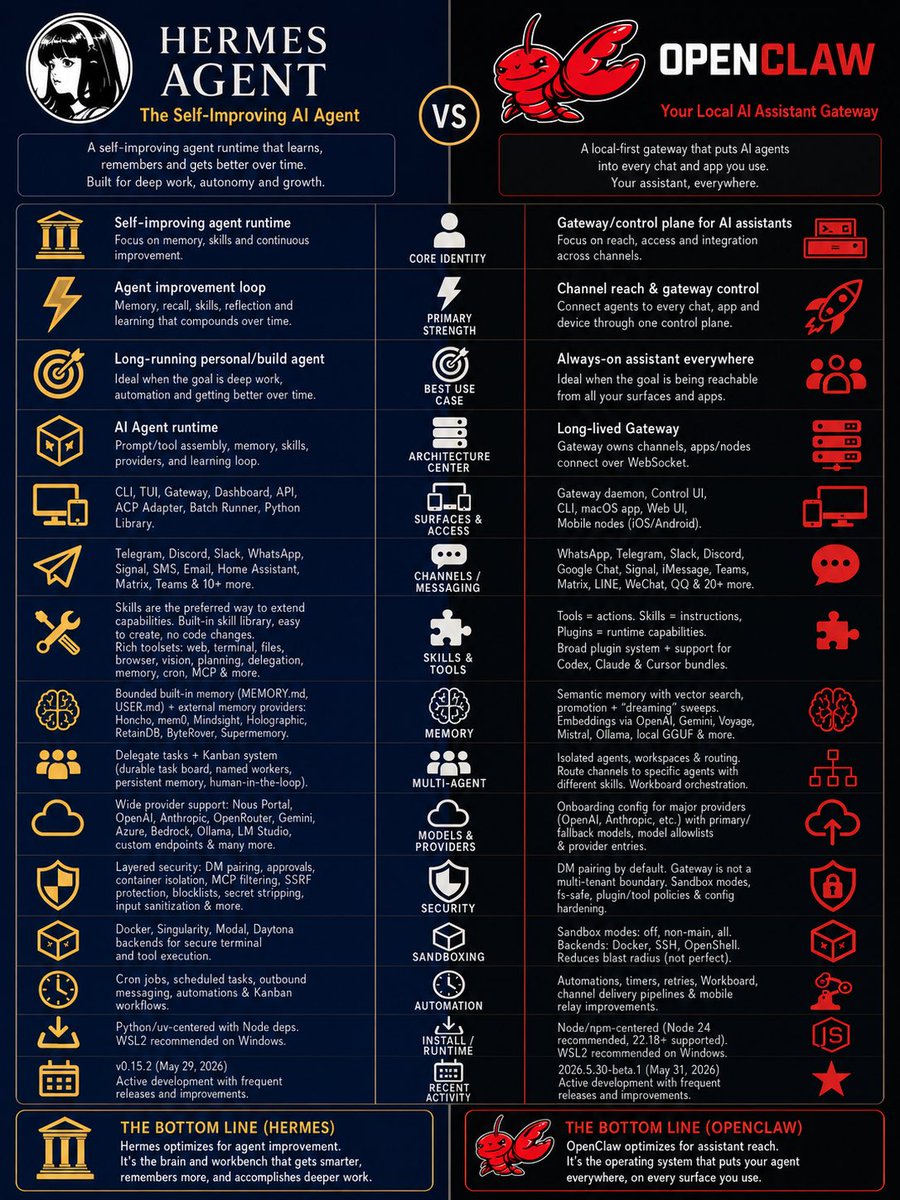
People are arguing Hermes vs OpenClaw like it’s Coke vs Pepsi.
It’s not.
🦞 OpenClaw is a gateway.
⚕️ Hermes is a self-improving agent runtime.
🦞 One is trying to put an assistant everywhere.
⚕️ The other is trying to make the assistant actually get better.
I don’t need my agent in 87 places if it still needs babysitting.
Give me memory, skills, Kanban, cron, delegation, and a learning loop.
Give me Hermes.
ALGUIEN ENCONTRÓ LA MANERA DE APRENDER CUALQUIER COSA 10 VECES MÁS RÁPIDO CON IA.
NotebookLM + Gemini + Obsidiana.
13 minutos. Dale una oportunidad.
Aquí lo tienes. ⬇️