Amplifying the voices of educators sharing what works - Podcast Network Partners: ISTE | ASCD | Education Week | AASA | Microsoft - Weekly group discussions.
During this discussion, Dr. Christina Brown talks about how the attention muscle is something that can be trained. I think this is significant when looking for ways to improve our students' reading stamina. I must admit that my attention muscle has atrophied over recent years because I haven't been working on it. There is no magic cure for improving the attention muscle. We simply need to work on improving it. And, it doesn't always need to be with text that interests students. Students need practice with text that doesn't interest them. They won't always get to choose what they read in school and in their future careers. Rant over. Thoughts?
@christinalbrown@colbysharp@smorrisey@bamradionetwork https://t.co/Fd29O357iy
When budgets get tight, transparency becomes even more important. People can handle difficult news better when they understand what is happening and why. This episode looks at how leaders can communicate through those moments.
@PrincipalGarden@PJCaposey@bamradionetwork https://t.co/MgiLbGiTQZ
Ever wonder why students seem to understand a lesson one day and forget it the next? The latest Teach Smarter episode does a great job explaining why that happens and what teachers can do about it. Worth checking out.
@SoLInTheWild@StamStam193@Helenrey@S_Oberle@bamradionetwork https://t.co/vpXWKkObnu
“You cannot see students being cognitively overloaded.”
That may be one of the most important and unsettling ideas from our conversation. @DylanWiliam@bamradionetwork https://t.co/EtP0MFhrpJ
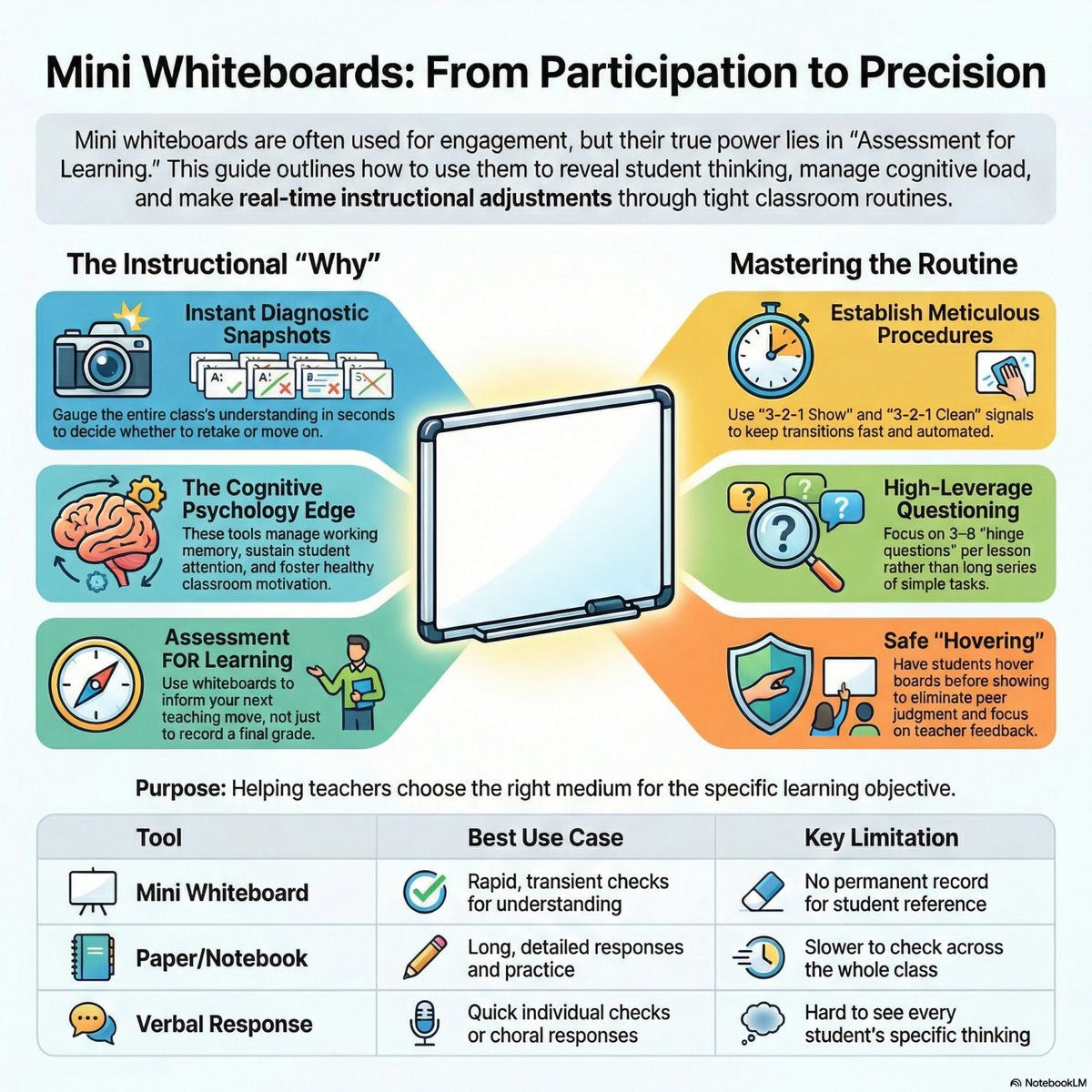
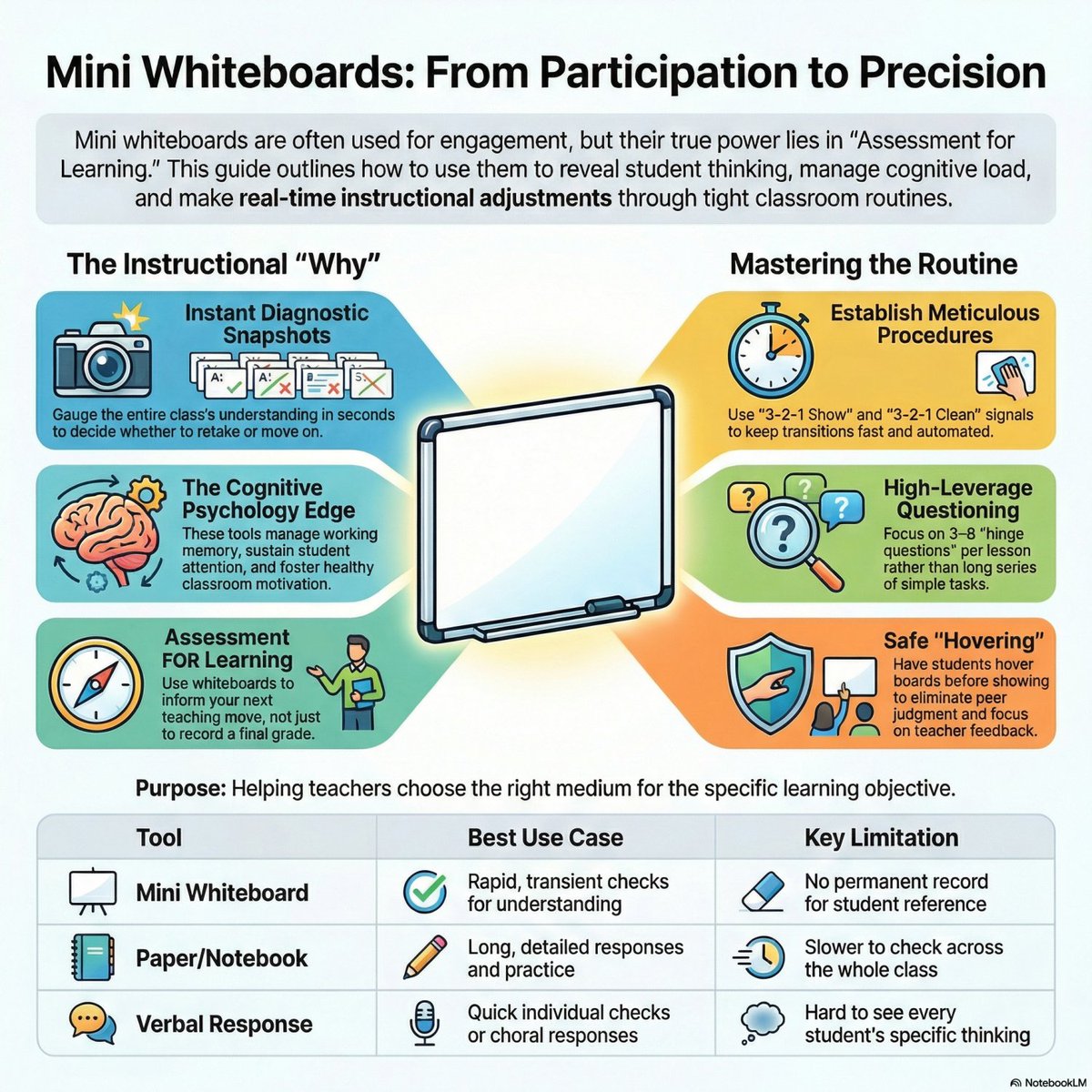
I can't imagine teaching without mini whiteboards and yet last year was my first year ever using them. Looking back, I realize I need to practice white board routines on day 1. I will be starting instruction on day 1. They can get to know each other and I them "while" we are working not "separate" from working.
@AmberBHaven@AndrewWatsonTTB@SoLInTheWild@bamradionetwork https://t.co/tWU40sQQ8g
🚨What happens when you get two experienced teachers, one from the lower elementary grades and one from the upper high school level, together to discuss how they use the science of learning and the Model of Memory to support student learning? You get references to coat hooks, lounging in a beach chair, and slop.
The first episode of Teach Smarter: The Science of Learning has a little bit for everyone. Link in the next post. 🔗⬇️
@BAMRadioNetwork@StamStam193@helenrey@S_Oberle
Dylan's admission that mini-whiteboards helped him realize that his students knew a lot less than he thought they did was powerful. He admits that this let him know he needed to change his teaching. While this discussion was mostly about the power of using mini-whiteboards, there was discussion about when it may not be good to use them and why.
@AmberBHaven@AndrewWatsonTTB@SoLInTheWild@bamradionetwork https://t.co/tWU40sRnXO
As much as I enjoyed this conversation, it left me torn.
I absolutely believe we should get students excited about reading and help them find books that spark their interest.
At the same time, I think we need to be careful not to make reading too easy. We also need to help students build the stamina to read longer and more complex texts.
Yes, I want students reading books they enjoy.
But I also think they need to learn how to read texts they may not enjoy but that are important and worthwhile.
Sometimes I wonder if we spend so much time thinking about what students want to read that we don't spend enough time thinking about what they need to read.
I'm not sure I have the answer.
These are just my thoughts.
Regardless, this was a terrific conversation with four outstanding panelists.
@christinalbrown@colbysharp@smorrisey@bamradionetwork https://t.co/Fd29O357iy
This was a balanced discussion on the use of or allowing kids to have cell phones at school. The part I have a difficult time with is the expectation or the proposal that teachers could or should spend time teaching their students how to use their cell phone responsibly. We have a hard enough time teaching the mandated curriculum. I am clearly against allowing cell phones in the classroom because as Doug shares, they fracture our students' attention. Heck, they are designed to do so. I look forward to hearing others' thoughts on this topic as I am sure we will be discussing this for quite some time.
@radiokeri@nationalparents@Rdene915@Doug_Lemov@bamradionetwork https://t.co/PtbajarbJF
I had never taught using white boards until this year and now it is pretty much all I use. What I appreciated about this conversation that while we discussed the benefits of teaching using white boards we also discussed when not to use them and the danger of overusing them (I am guilty here).
@AmberBHaven@AndrewWatsonTTB@SoLInTheWild@bamradionetwork https://t.co/tWU40sQQ8g
I have concerns about allowing cell phones in the classroom regardless of the expectations or parameters that are set. I think their ability to fracture attention is simply too great. Having said this, I am not well versed in how to teach students how to use them effectively. I believe our students lack too many of the basic skills that should come before learning how to use their cell phone to help them in the classroom. I think modeling and teaching productive use of cell phones is something that shouldn't be on teachers' plates and definitely shouldn't come before teaching many of the basic skills that many of our students sorely lack.
@lkolb@ISTE_ASCD@Rdene915@bamradionetwork https://t.co/qIjrVjSr1t
As the school year comes to an end I am still working on having all of my 4th grade students know their multiplication facts instantly. The thing is, they knew them in January and we practice them every day. This is frustrating but eye opening. In this conversation we discuss specific retrieval practices that teachers have found work for them. I have begun to revisit some of the strategies these last few weeks and I have noticed it has helped, especially having them recall their facts from memory and not just studying flash cards.
@smorrisey@effortfuleduktr@bamradionetwork@SciInTheMaking https://t.co/s7hTmwkb3I
My biggest takeaway from this discussion is that students can not possibly enjoy reading until we teach them how to read. It may sound obvious but I think far too often we try to get students excited about something they don't know how to do. I am certain that I have been guilty of this. Great discussion here.
@Jenschwanke@bamradionetwork https://t.co/XebTVo3pG7
This conversation does not treat AI in writing as a simple yes-or-no issue. Instead, it wrestles with the tension many teachers are feeling right now: how do we protect foundational writing skills while also acknowledging that AI is not going away?
@JSerravallo@MelanieMeehan1@T_F_Berger@BAMRadioNetwork https://t.co/oI9HBcXo9Y
Retrieval isn’t just about remembering. It’s about building understanding and confidence over time.
I feel like our conversation connects those pieces.
@smorrisey@effortfuleduktr@bamradionetwork@SciInTheMaking https://t.co/DklMio6Gnu
It’s May, and many classrooms start to feel different as students become louder, attention spans shrink, and everyone in the room feels the weight of a long school year. If your class has felt harder to settle lately, this conversation is a reminder that even experienced teachers go through it too. Great suggestions here for teachers of all ages.
@dalorleon @mrs_frommert@EmilyAPaschall@Mr100Teacher@jonHarper70bd@bamradionetwork https://t.co/rACeqUzxza
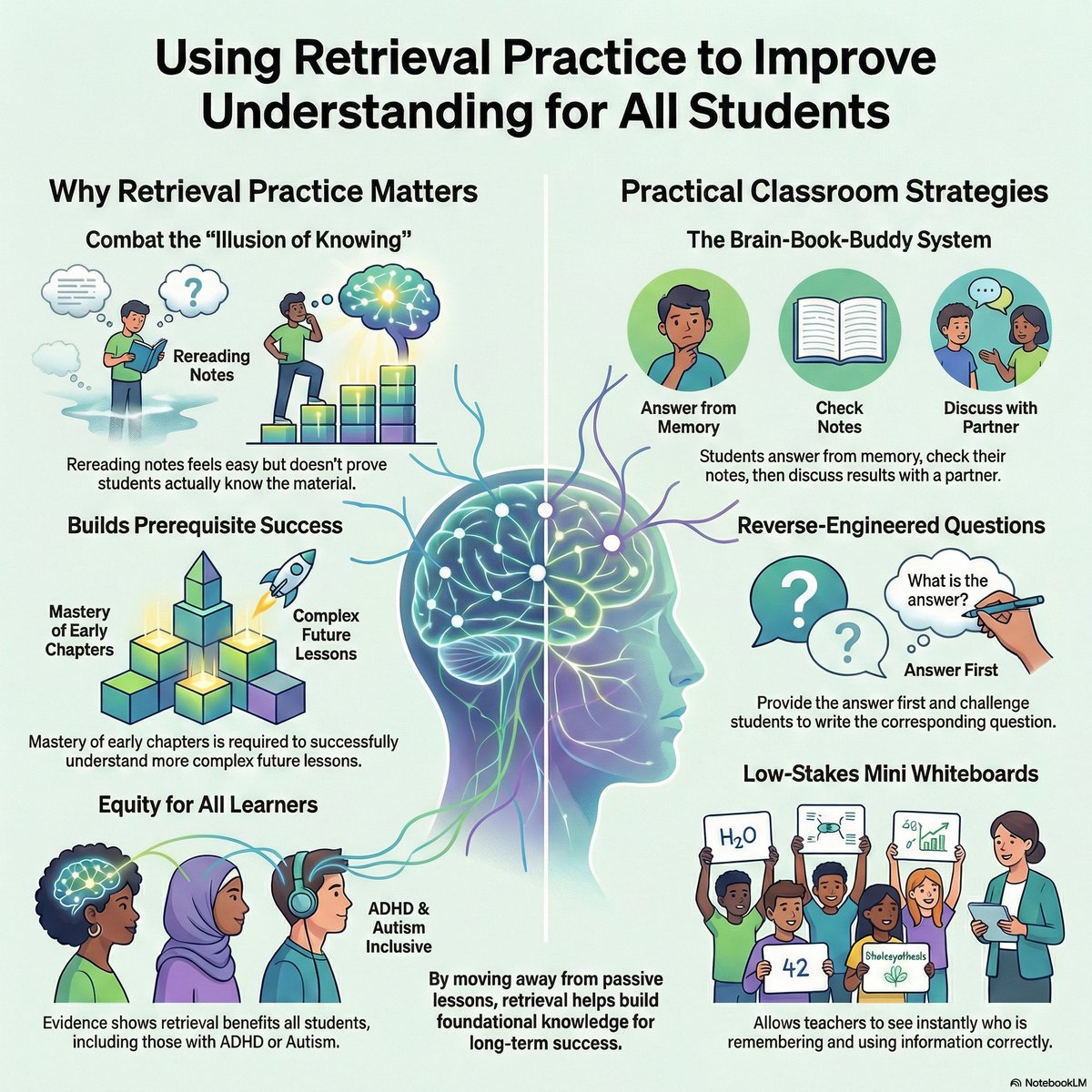
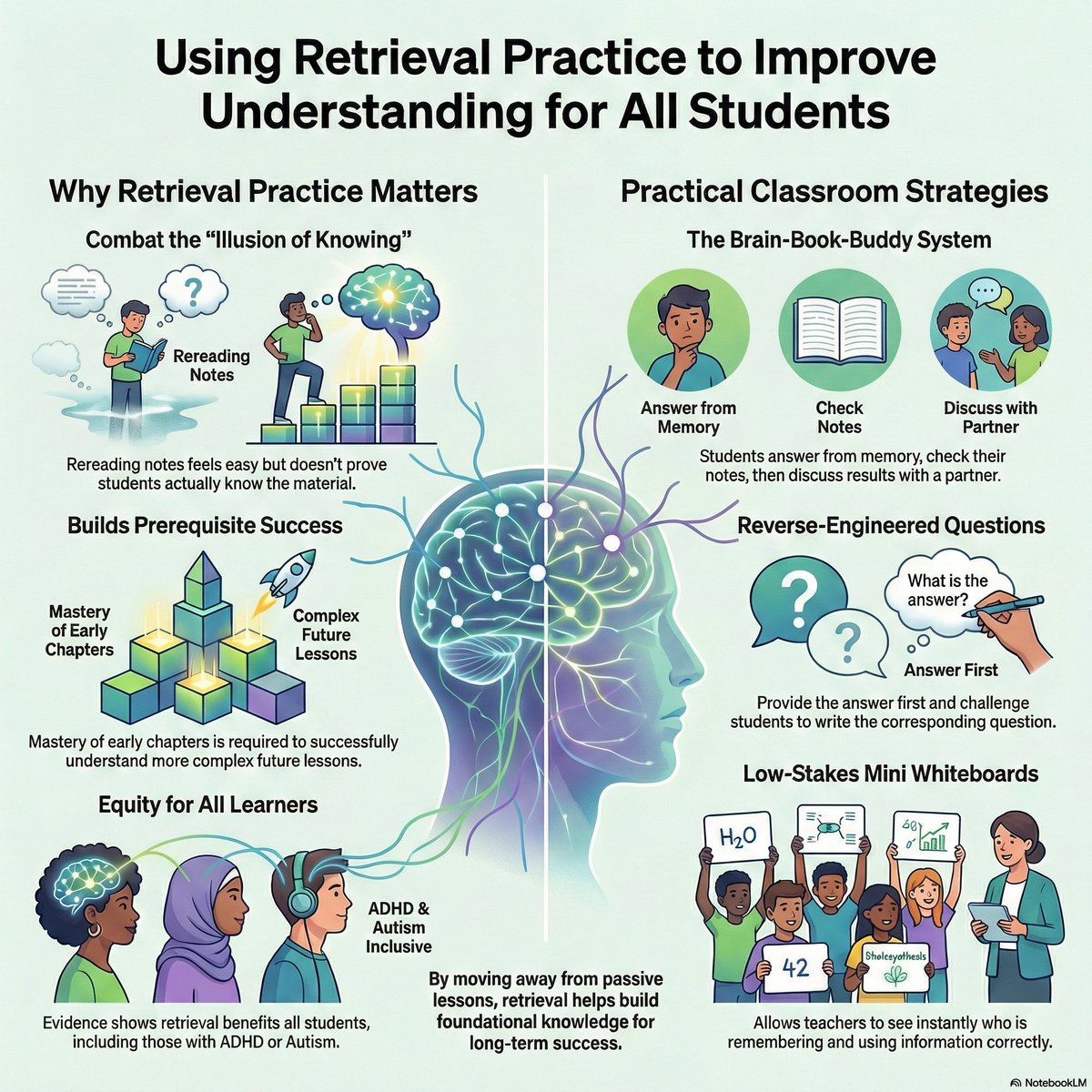
Rereading notes feels productive. It feels like learning.
But it doesn’t prove students actually know anything.
Retrieval does. This conversation digs into why that matters.
@smorrisey@effortfuleduktr@bamradionetwork@SciInTheMaking https://t.co/DklMio6Gnu
We talk a lot about teacher autonomy. But in K–12 it is not unlimited. Where that line is matters more than ever right now. This discussion takes on this tricky topic and how to handle it.
@rickwormeli2@rpondiscio@mellyteaches@bamradionetwork@curriculumblog https://t.co/t2qAInMhCc
The positive multiplier effect of spending just a few minutes on basic math facts each day is unlike anything I’ve seen in my 28 years in education. It’s incredible. Listen as we dig into why this practice matters so much.
@brian_poncy@rastokke@StamStam193@bamradionetwork https://t.co/Lpu1XWUxar




![BAMRadioNetwork's tweet photo. [PRIORITIES] What If we valued teachers like we value celebrities?
http://t.co/u9atVeU8I8 #NationalTeachersDay http://t.co/RcMeAXCnTY](https://pbs.twimg.com/media/CEQkutEWoAI1Lib.png)