I am Muslim, and I ask my fellow Muslims in Britain and around the world. Is Islam so weak that we need to take to the streets every time someone criticizes it?
Why are we screaming at the top of our lungs over something some Tom, Dick or Harry said? What exactly are we afraid of? A man in London can say what he thinks about my religion. I can tell him he’s wrong, go home, pray, and sleep just fine.
Harman Singh Kapoor is a Sikh restaurant owner in Hammersmith. A crowd outside his business chanted, “Shut them down.” He says his family has received death threats. What do his wife and daughter have to answer for?
Disagree with him about Gaza? Tell him why. Want halal food? Eat somewhere that serves it. And if you take to the streets to exercise your freedom of speech, have the decency to defend his freedom to speak, too.
I grew up in Pakistan. I know what it feels like to weigh every word about religion before saying it out loud. Britain, is that how you want your children to grow up?
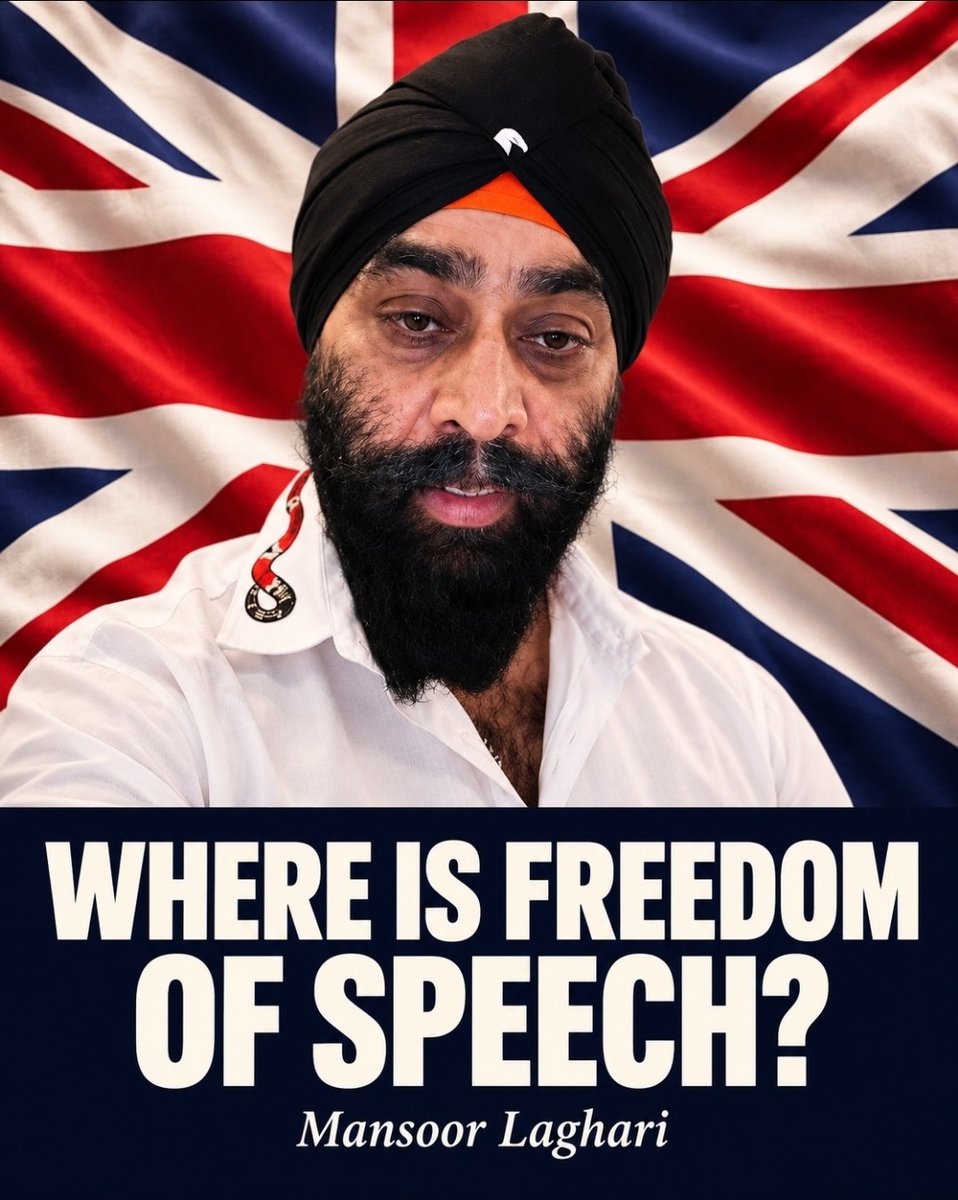
Mansoor Laghari
#FreedomOfSpeech #Britain #ReligiousFreedom
One of the most poignant stories about Sam Houston's final years concerns a quiet visit he made to the San Jacinto battlefield, accompanied by Jeff Hamilton, the formerly enslaved man who had served as his personal attendant for years. The story comes from Hamilton himself, and it offers a glimpse of Houston looking back on the greatest triumph of his life.
Hamilton was born enslaved in Kentucky in 1840 and brought to Texas as a child. In October 1853, when he was just thirteen, he was separated from his mother and sold at an auction in Huntsville. Sam Houston purchased him, and Hamilton subsequently became his personal attendant, traveling companion, and eventually a trusted member of the household. Hamilton remained with Houston after the latter announced the emancipation of the people he enslaved in 1862.
The battlefield visit is recounted in Hamilton's memoir, "My Master: The Inside Story of Sam Houston and His Time," originally published in 1940, which I highly recommend. Hamilton recalled that Houston instructed him to drive to San Jacinto before they returned home.
As Hamilton remembered it:
"The General didn't speak a word on the way – he was wrapped up in his own thoughts."
They eventually reached the large oak tree where Mexican general Antonio López de Santa Anna had been brought before Houston as a prisoner following the Battle of San Jacinto in April 1836.
"The General sat on the ground under the tree for a long time, never speaking to me or looking at me."
He described Houston as having a distant expression and noticed that his eyes were wet with tears.
It's a remarkable image. The man who had commanded the Texian army to victory, secured Texas independence, served as president of the Republic twice, represented Texas in the United States Senate, and governed the state was now sitting silently beneath a tree, contemplating the place where his life and the history of Texas had changed forever.
Houston died in Huntsville on July 26, 1863, with Hamilton at his bedside. Hamilton lived until April 3, 1941, dying in Belton just thirteen days before his 101st birthday.
I read Hamilton's account of this and thought that i really is an incredible scene to contemplate, isn't it? The old warrior returning to the scene of his greatest triumph, perhaps knowing that time was running out and thinking that this would be his last visit, recalling all his friends and ruminating on all that had happened to him over the course of his unparalleled life.
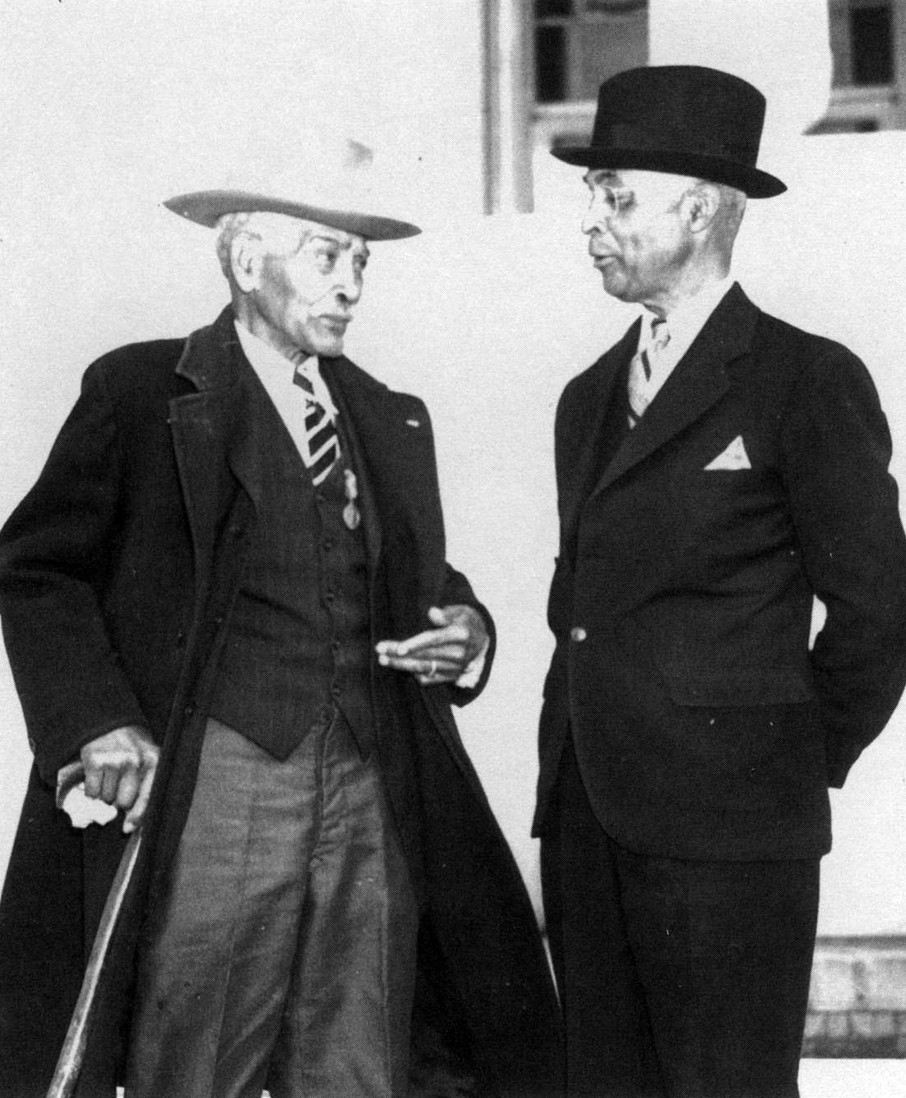
Shown here: Jeff Hamilton (left) and Samuel Walker Houston at the Texas Centennial Celebration in Dallas, 1936. Jeff was 96 years old when this was taken. You can buy Jeff's book online at all the usual places.
It has been 67 years since she left Earth and even now, her story still feels heavy.
Laika wasn't just a dog in a rocket. She was trust, wrapped in fur - a gentle soul who never knew she was being sent to die for science.
Her real name was Kudrjavka, meaning "curly" in Russian. A stray found on Moscow's cold streets, chosen not for her strength, but for her calm. For her ability to survive what others couldn't. As if pain itself made her more "fit" for space.
On November 3, 1957, they placed her inside Sputnik 2 - a capsule with food, water, and padded walls... but no plan to bring her home.
Some say she lived for a few hours. Others say a few days. Either way, her last moments were spent alone, orbiting in silence - unaware of the applause she would never hear.
She circled Earth 2,570 times before her capsule burned up on re-entry, the following April.
Laika didn't choose to be a pioneer. She didn't ask to be a symbol of progress. She was simply a creature who trusted - and in doing so, became the first to bridge the distance between Earth and the stars.
Today, we remember her not with guilt, but with aratitude - for remindina humanitv that everv great journey begins with courage, even from the smallest of hearts.
#laika #grateful #space #spaceexploration #courage
This is the life we want for them. 🤎
Wild. Free. With their families. On the land they call home. 🐎✨
We’re fighting to keep wild horses like the Fish Springs herd where they belong: on the range.
Stand with wild horses: https://t.co/SMhwM6iwzT
Video Credit John T. Humphrey
UPDATE: The officer who shot a family's miniature donkey is now facing a federal lawsuit and a $1 million demand.
Cedartown, Georgia. HeeHaw, a socialized miniature donkey that made appearances at petting zoos, was shot and killed last month in a Polk County pasture while officer Trenton Garner was searching for a missing 12-year-old girl. Garner said the donkey charged him and wasn't deterred by a Taser. Owner Hannah Israel says that doesn't match the animal she knew.
Her attorney has now sent a $1 million demand to the Cedartown Police Department, the Board of Commissioners, and the city, with 30 days to respond, and filed a federal lawsuit against Garner directly. The same day these filings landed, a rally held for HeeHaw turned violent, and a man was taken into custody.
A donkey that did petting zoos is dead, and now a federal court gets to decide who's telling the truth about what happened in that pasture.
H/t WSB-TV