24 HOURS TO GO 👀👀
This is a great opportunity for us to raise awareness of Young Carers and to help us to continue to support the amazing Young Carers in Thurrock.
We have identified over 1,300 young carers in Thurrock alone 💛
VOTING CLOSES TOMORROW👀
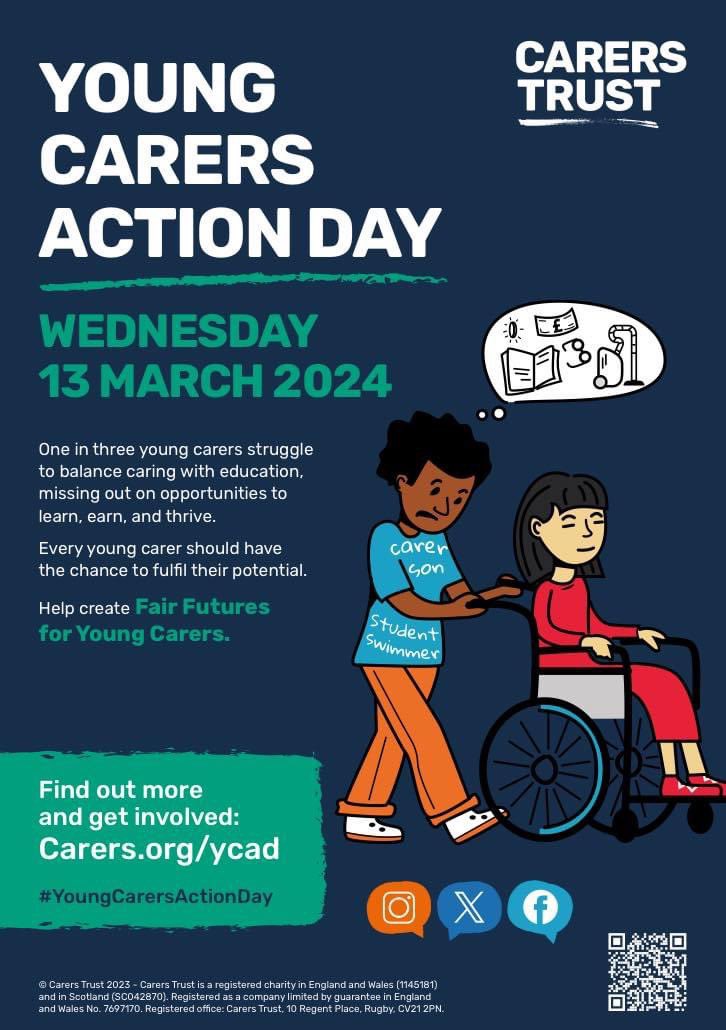
🤩 YOUNG CARERS ACTION DAY 2024 🤩
The theme for this year is Fair Futures
We can all play a part in making fair futures for young carers a reality: governments, local authorities, schools, colleges, charities - everyone.
https://t.co/Vpg41i9ceo
Using the internet is a normal part of life for young people. But as a parent, it can be tricky to keep your children safe online 📱
These tips can help reduce the negative impact of things like social media & encourage healthy online habits.
Read more: https://t.co/MLD38PcgRx
To any parent whose child is experiencing school anxiety, this story is really worth reading. Sarah shares what happened when her daughter Emily couldn’t go to school because of overwhelming anxiety.
“Primary school was easy. Emily was outgoing, sociable, loved her drama classes. Secondary started well: new friends, good grades. She seemed positive.
Then, in Year 8, things went wrong. First came the odd detention; then repeated warnings in class, frequent calls home, meetings about behaviour.
We stumbled on until the pandemic sent school online. At home, Emily became withdrawn. She saw less of friends. Reluctantly, she returned to school for Year 9, but things fell apart in weeks. One morning she simply said she couldn’t put her uniform on or go in. I knew nothing about anxiety-related school absence. I naively thought young people just got up and went unless they were physically ill.
Attempts to cajole or force (yes, I bundled her into the car one day) led to panic attacks and uncommunicative days under the duvet. As term progressed, so did the anxiety. The result was six months of depression, self-harm - and no more school that academic year.
It was deeply distressing; for Emily mainly, but also for me. Witnessing your child’s mental health decline rapidly is terrifying. It was also very isolating. Even the most empathetic friends and family cannot understand without direct experience.
Where are we now?
Emily, now in Year 10, is in school most days. She works on her anxiety with a fantastic mentor and spends breaks in a quiet room. She has regular CAMHS appointments and is waiting for an autism assessment. Things aren’t easy, but they are so much better.
The turning point was hospital admission after a particularly serious self-harm incident. A psychiatrist assessed Emily (she had previously refused to engage with CAMHS) and prescribed sertraline for anxiety and depression. There was real improvement, quickly. It was an indescribable relief.
After a few weeks, Emily said she felt like going back to school. She was still anxious, as well as nervous about missed work and what people would be saying, and there were some failed attempts. Then her mentor offered a home visit. They chatted and then she suggested Emily put her uniform on for a walk “just to the school gates”. She managed an hour in school for the next three days. That would have seemed inconceivable previously. The home visit from school was the link we needed.
There are still days when Emily can’t go in, but letting go of the idea that education has to be a linear progression helps. It’s not easy, but I try not to worry about the future too much. I’ve learnt that mental health takes priority over education. School remains a daily battle for Emily, and I am so proud of what she has achieved.”
If you relate to Sarah’s story, our Parents Helpline can support you. You can call us call us for free on 0808 802 5544, from 09:30am – 4pm, Monday – Friday. You’ll get through to a trained adviser who will listen and talk through your concerns in complete confidence. You are not alone in this.
If someone you know starts to have a panic attack, here is what you can do to help. ⬇
1/ Stay with them
If you can, stay with the person during their panic attack. Just by you being there, you can help them to calm down and remind them that help is available. It is okay if you are finding it overwhelming. You can find another friend, family member or teacher they trust to support your friend and you.
2/ Talk to them and encourage them
You can chat to the person about how they are feeling or anything that they like, such as favourite Netflix shows or their hobbies. This can distract them from their anxious thoughts, helping them to feel calm and to slow down their breathing. They might find it difficult to talk and might want to focus on their breath - that’s okay and it’s important to respect their boundaries and how they are feeling.
3/ Check in with your friend
Even though your friend may no longer be panicking, they can still feel anxious or on edge afterwards. You can check in with them to see how they are feeling. This will remind them that they are not alone and you are there for them.
Frustrated with a service you’ve received? Feel like you’re not being listened to?
Join our information session on making an effective complaint on Tues 12 Sept, 12-1pm.
Carers can sign up for free at https://t.co/lK3ZXBqw3p
The government is changing its guidance for councils about children's social care
The guidance must promote support for disabled children and their family carers
@DCPCampaign has worked with @educationgovuk to create a short consultation for families
🔗https://t.co/hRPEtzFcfL
Physical activity releases feel-good chemicals in your brain and can reduce symptoms of depression and anxiety. Check out the benefits of exercise for mental health 🏃♀️🧠
https://t.co/NelFEM2fkd
Anxiety isn't just 'worrying'. It can show up as:
difficulty concentrating
eating more or less
needing the toilet more or less
feeling tense or fidgety
sleep problems
having panic attacks
Solidarity with everyone struggling with anxiety right now.
With more services moving online, many older carers report feeling lonely and isolated in a digital world.
Older carers need more support to help them become digitally included. Read our new best practice guide for supporting older carers: https://t.co/CfWUiKde66