Bhatt & Joshi Associates is a leading law firm in Ahmedabad, Gujarat. The firm is recognized by its expertise, efforts & work in wide range of cases & matters.
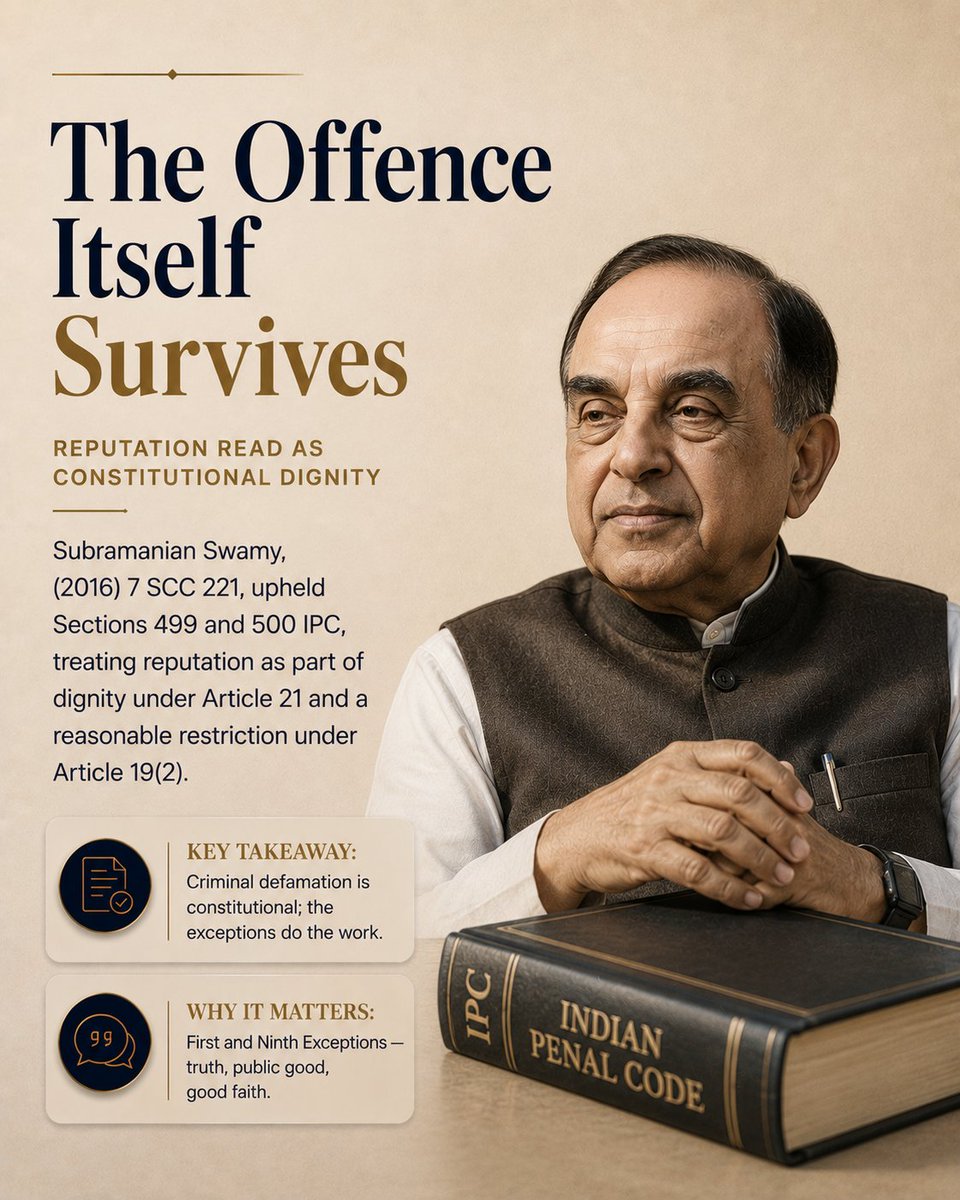
Criminal defamation itself survived constitutional challenge in Subramanian Swamy v. Union of India (2016).
But:
Cognisance ≠ guilt.
Standing ≠ proof.
Procedure ≠ merits.
The real story is what happens after the gates are crossed.
3/3
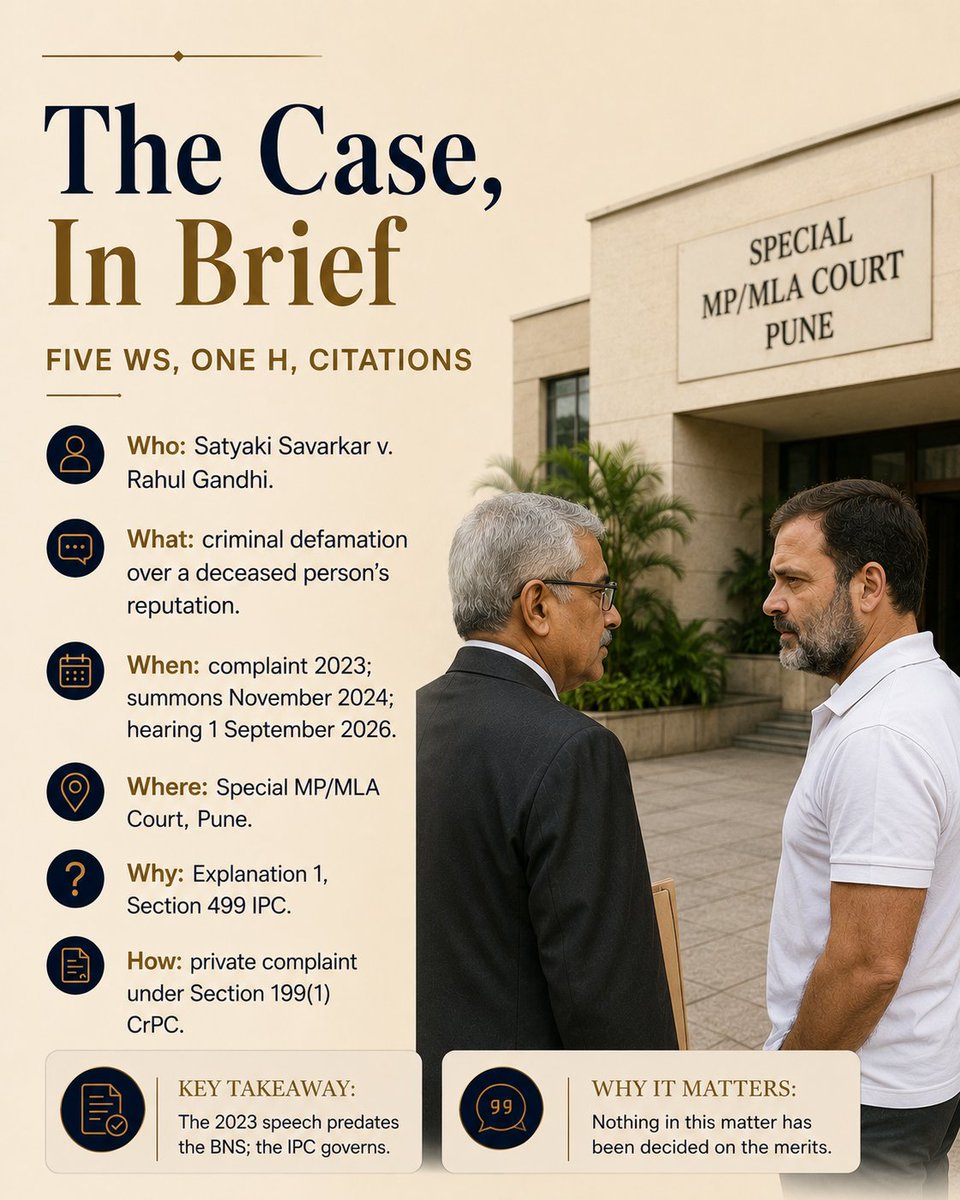
Can you defame the dead?
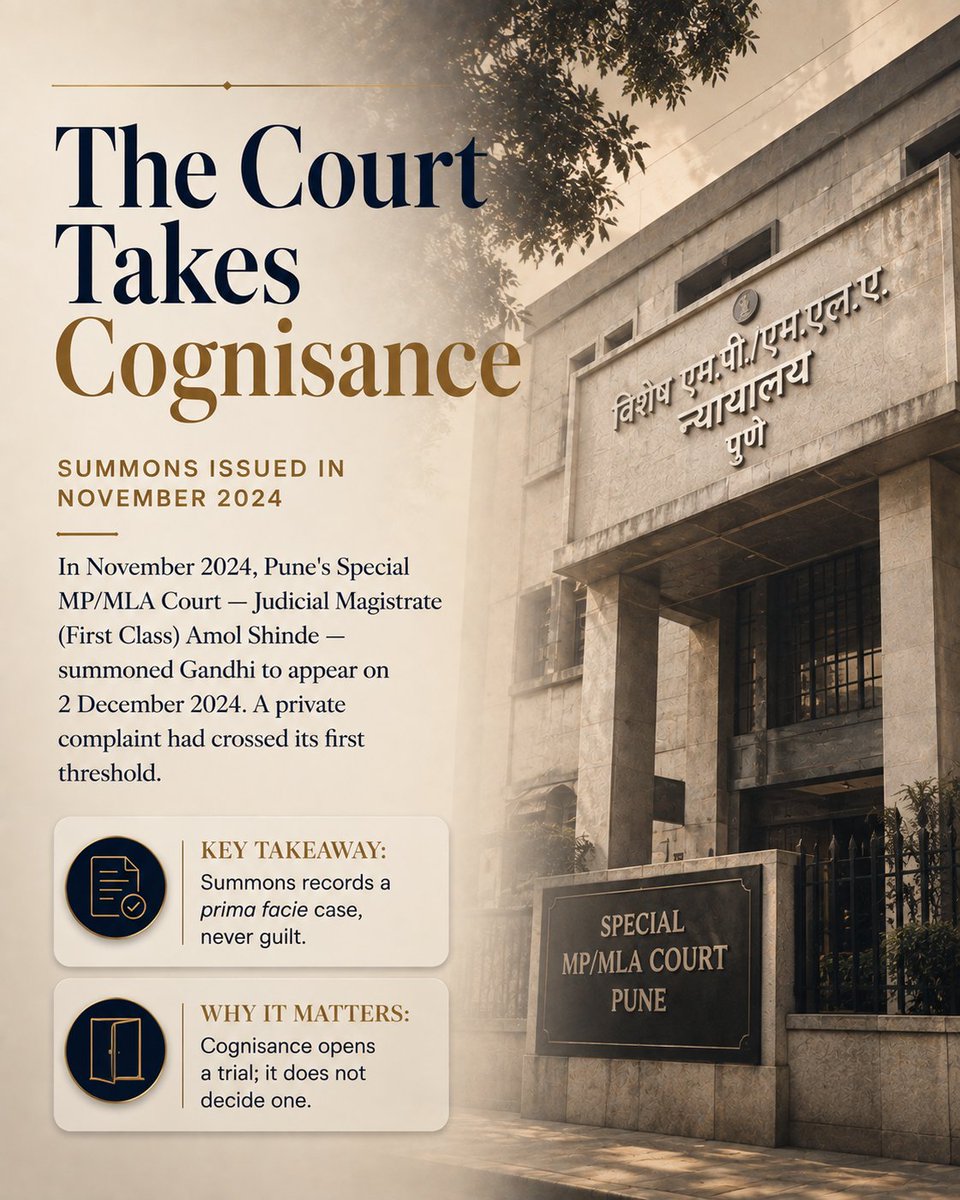
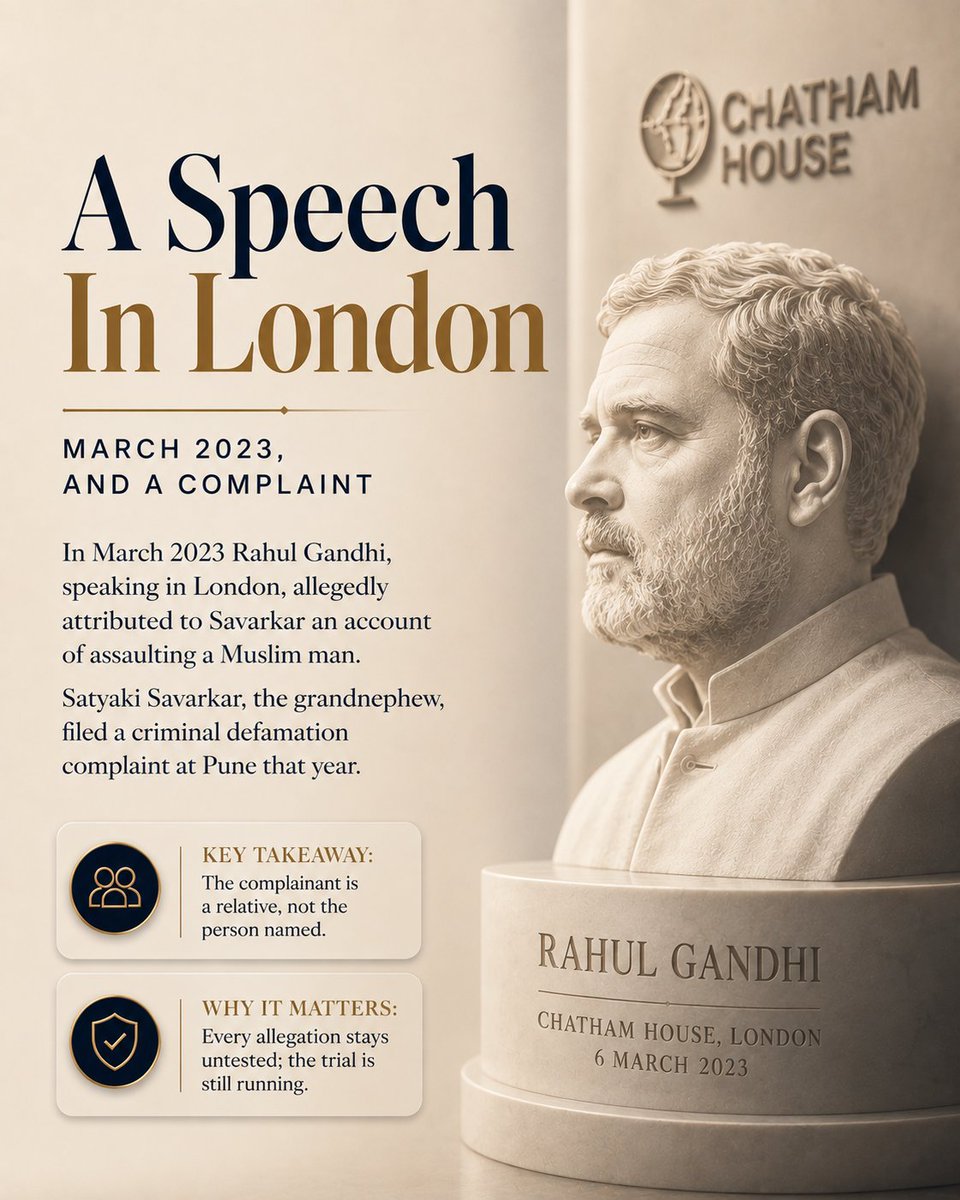
In Pune, Rahul Gandhi’s 2023 London remarks about V.D. Savarkar are now being tested in cross-examination.
But the bigger legal question is:
What happens when the person allegedly defamed is dead?
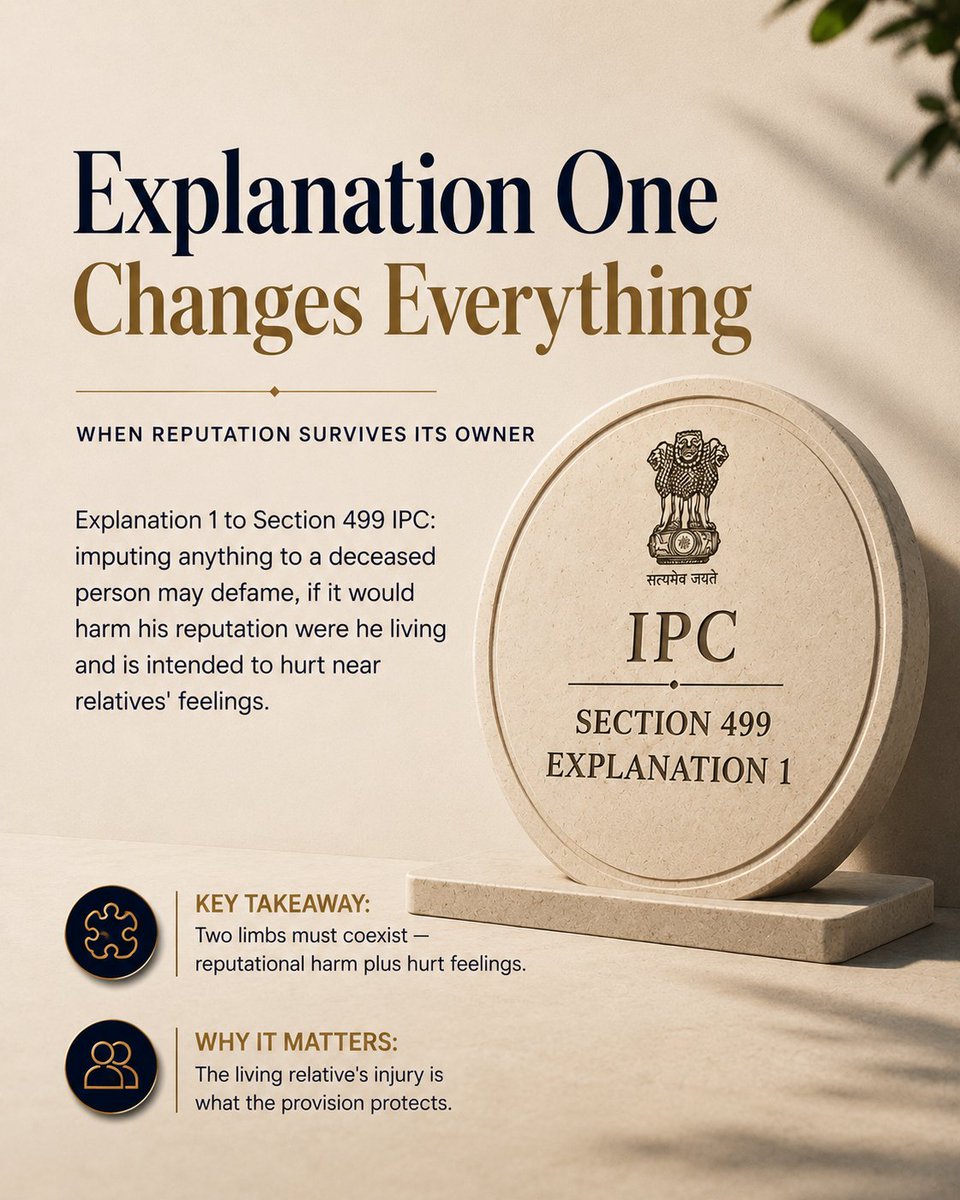
Explanation 1 to Section 499 IPC begins the answer.
1/3
But who can complain?
Section 199 CrPC requires a “person aggrieved.”
For a deceased person, courts have limited standing to near relatives.
In a separate case, the Supreme Court found another gate:
No Section 196 sanction? The prosecution ends before the merits.
2/3
#SupremeCourt#Tribunals — Post 1 only. Re-entry: quote-post Post 1 at 48h with the single line "Both Houses in two days. Lok Sabha without debate." Window: 9:00–10:30 AM IST.
In 2020 the Supreme Court ordered the Union to build a National Tribunals https://t.co/zNmmP9W6W2 ordinance re-enacted what the Court struck down. Struck down. An Act repeated it. Struck down again.On 13 Aug 2026 it finally exists. Read who appoints it. 🧵
The doctrine since R. Gandhi (2010) is that tribunal independence turns on the conditions of office — appointment, tenure, pay, removal — not on the seniority of who sits.
A tariff heading can alter the economics of an import. This explainer examines how classification is determined, why the Notes and Rules matter, where the burden lies, and when advance certainty is worth seeking.
#CustomsLaw https://t.co/BQ9qhI4iwE
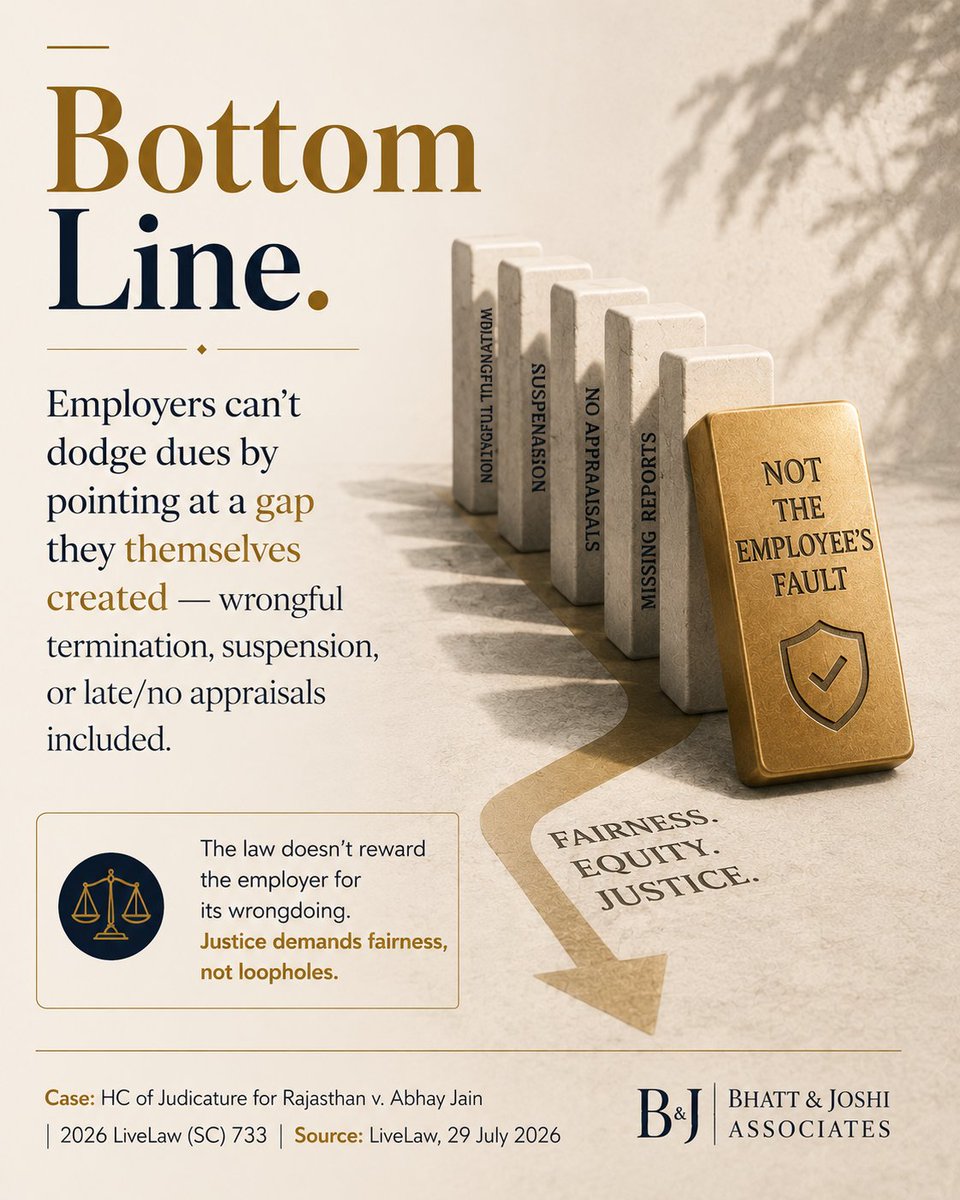
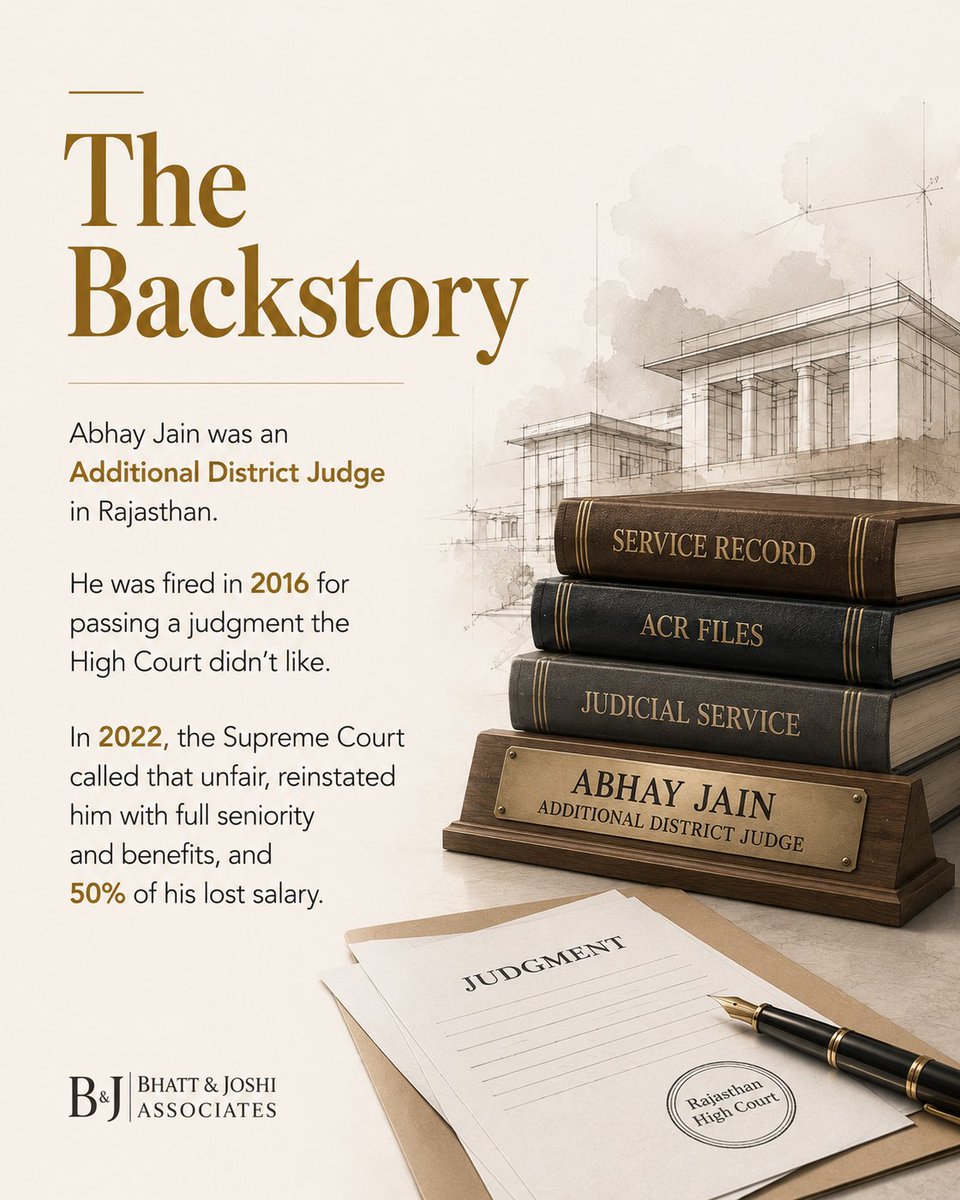
SC ordered the Rajasthan HC to fix his pay + benefits within 3 months, and sent the ruling to every High Court in India. Case: HC of Judicature for Rajasthan v Abhay Jain | 2026 LiveLaw (SC) 733 For legal awareness only, not legal advice or solicitation.
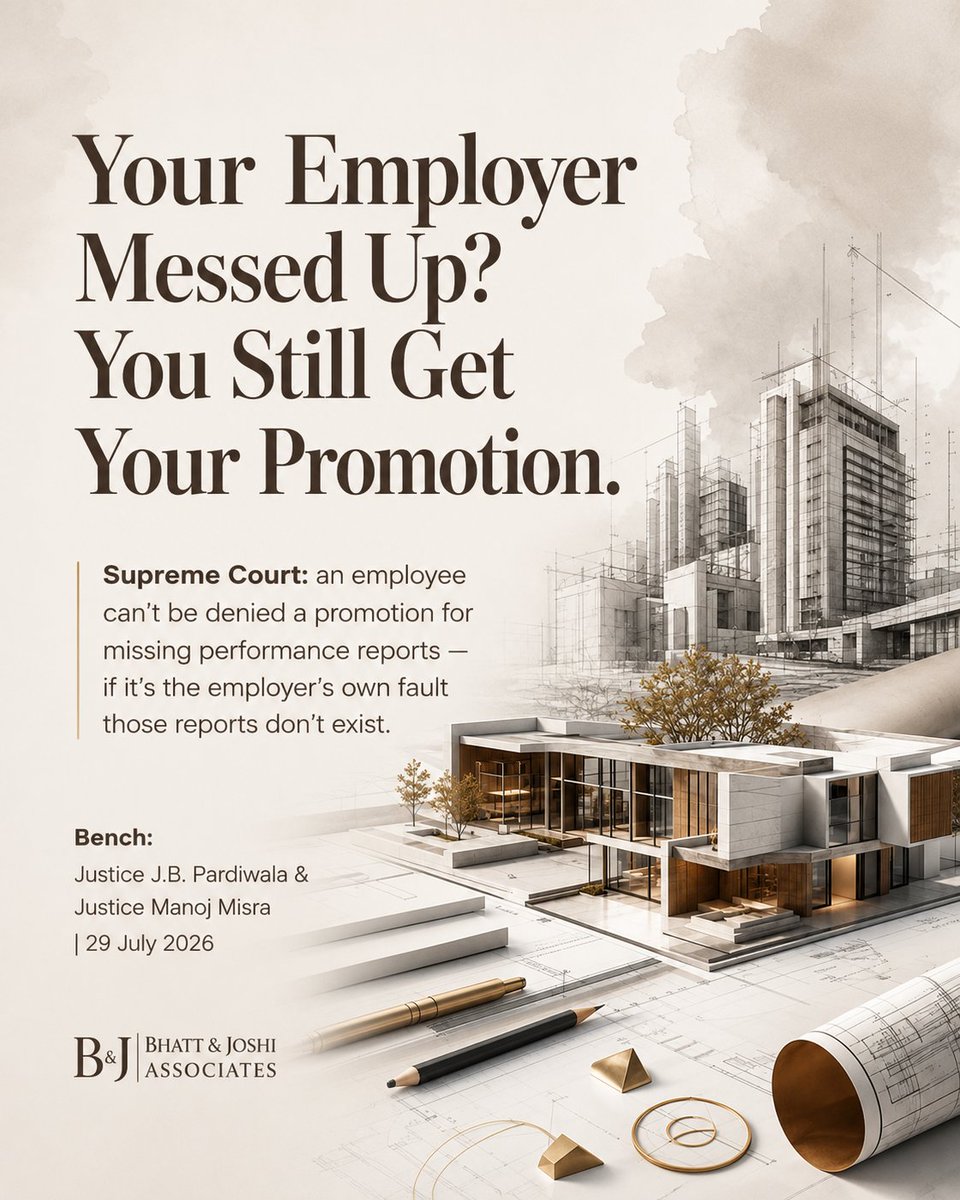
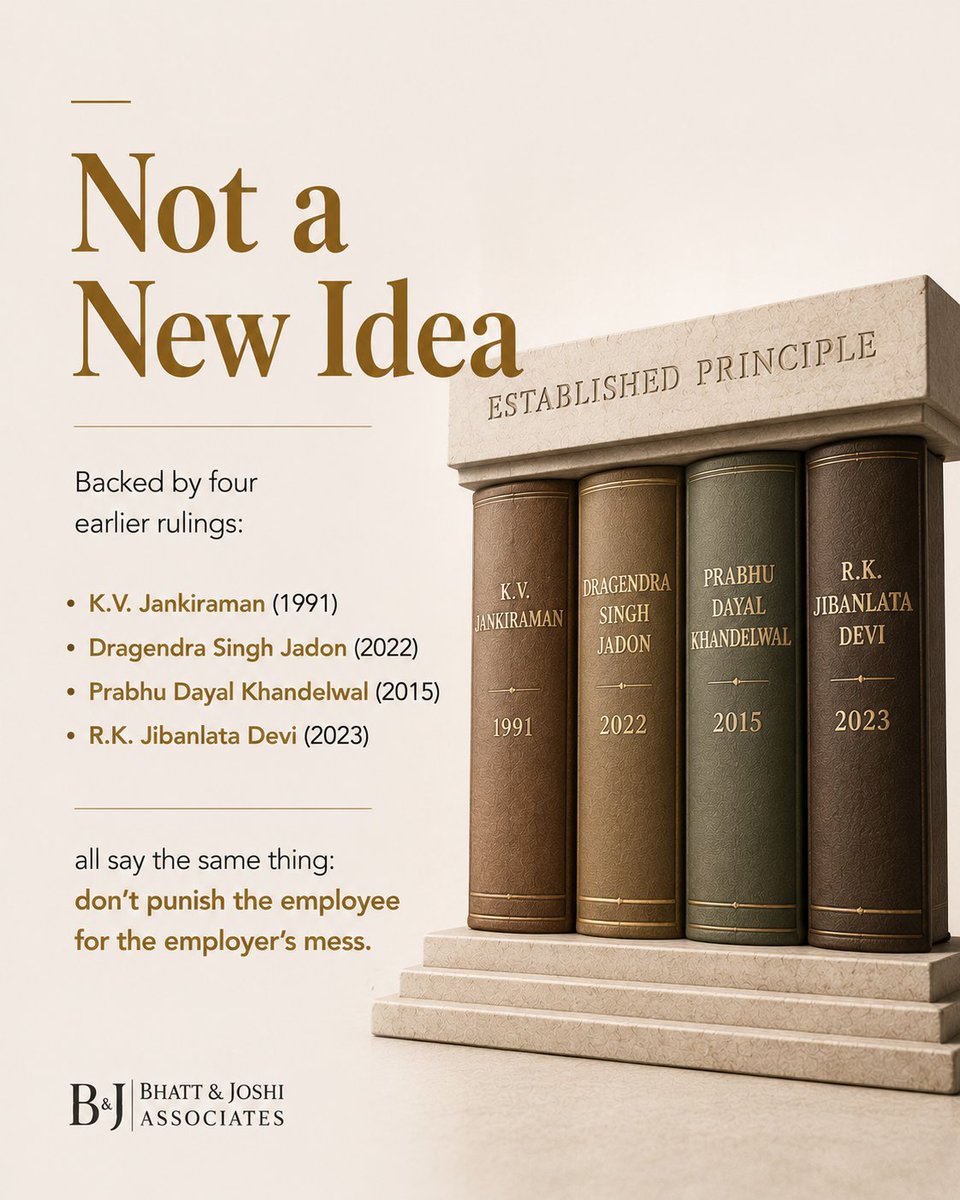
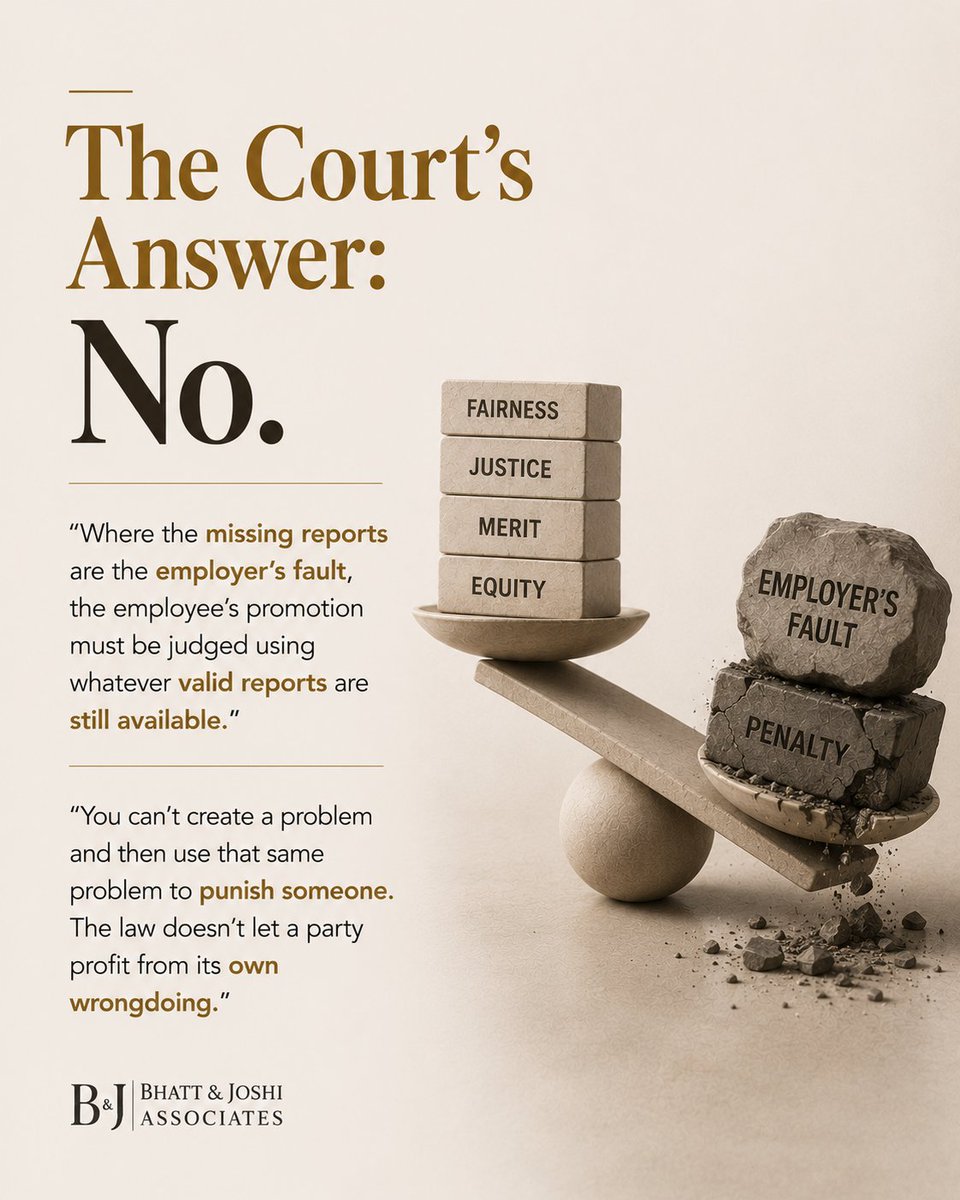
He was fired. The Supreme Court got his job back. His employer still tried to deny his promotion. The Supreme Court wasn't having it. #SupremeCourtOfIndia#ServiceLaw#IndianLaw
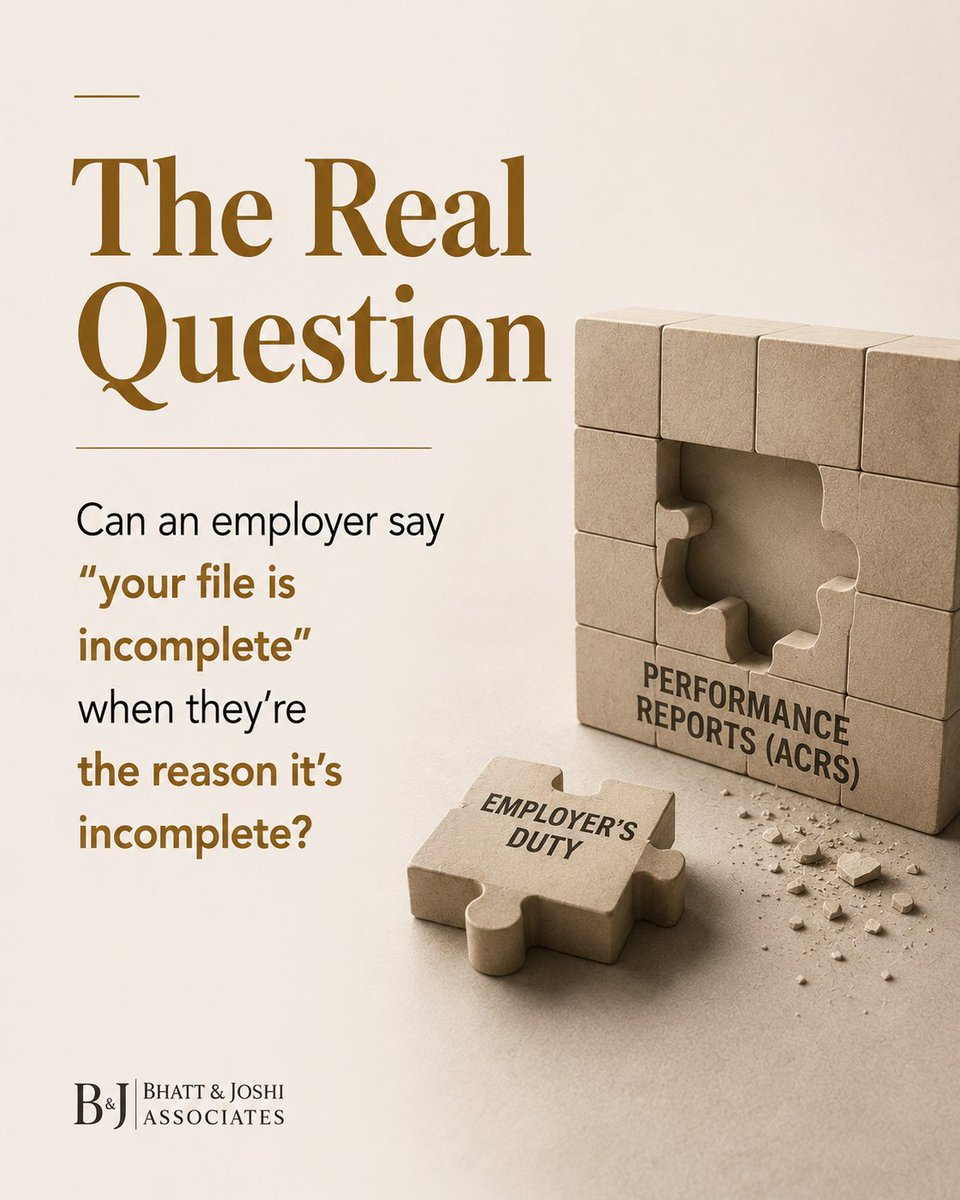
The twist: he was out of a job for 6+ years after a wrongful discharge. No job = no performance reports (ACRs) for those years. His employer then said: “File incomplete, no promotion.” SC's answer: you can't blame him for a gap YOU created
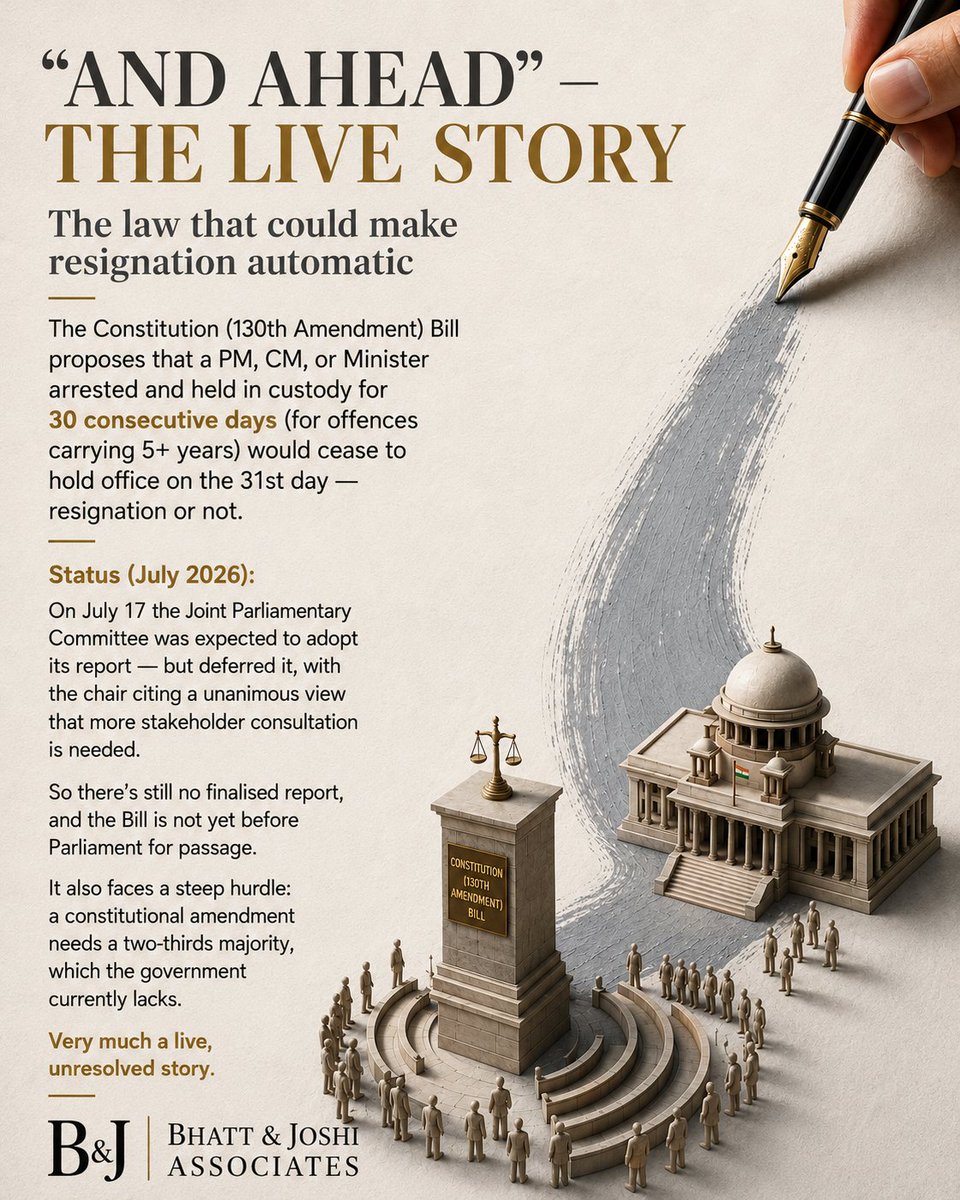
Can Parliament make resignation automatic?
The proposed Constitution (130th Amendment) Bill seeks to introduce a significant constitutional change.
If enacted, certain ministers held in custody for a prescribed period could automatically cease to hold office without tendering a resignation.
The proposal remains under consideration and continues to raise important constitutional questions regarding accountability, democratic governance, and institutional safeguards.
The final two slides examine the proposal, its current legislative status, and the broader constitutional debate.
#ConstitutionOfIndia
#ConstitutionalLaw
#IndianConstitution
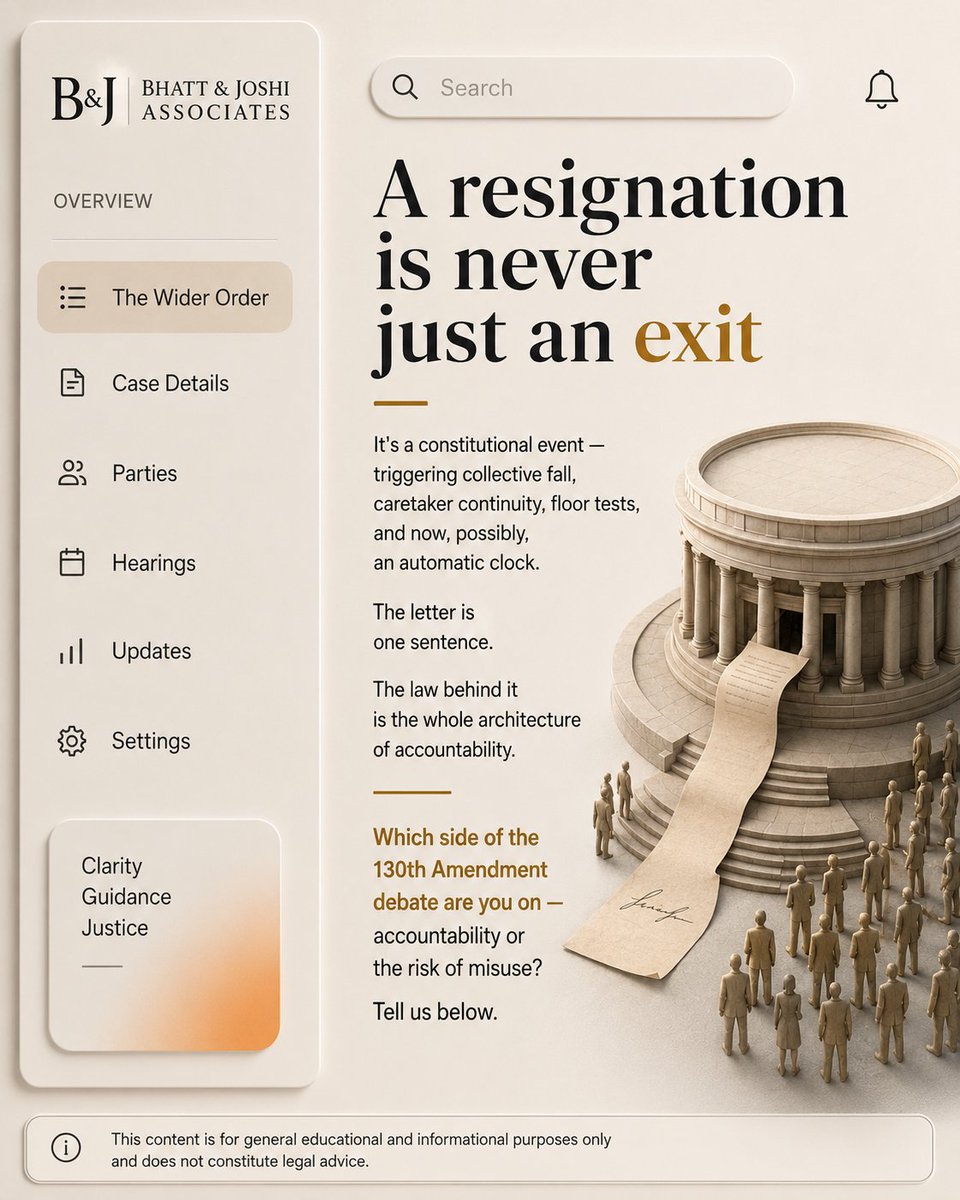
A minister's resignation is far more than a political announcement.
Constitutionally, it can trigger questions about: • Article 75 & Article 164 • Collective responsibility • Caretaker governments • Constitutional conventions • Constitutional morality • The proposed 130th Amendment
This carousel examines the constitutional framework governing ministerial resignation in India.
For educational and informational purposes only. #ConstitutionOfIndia
#ConstitutionalLaw
#IndianConstitution
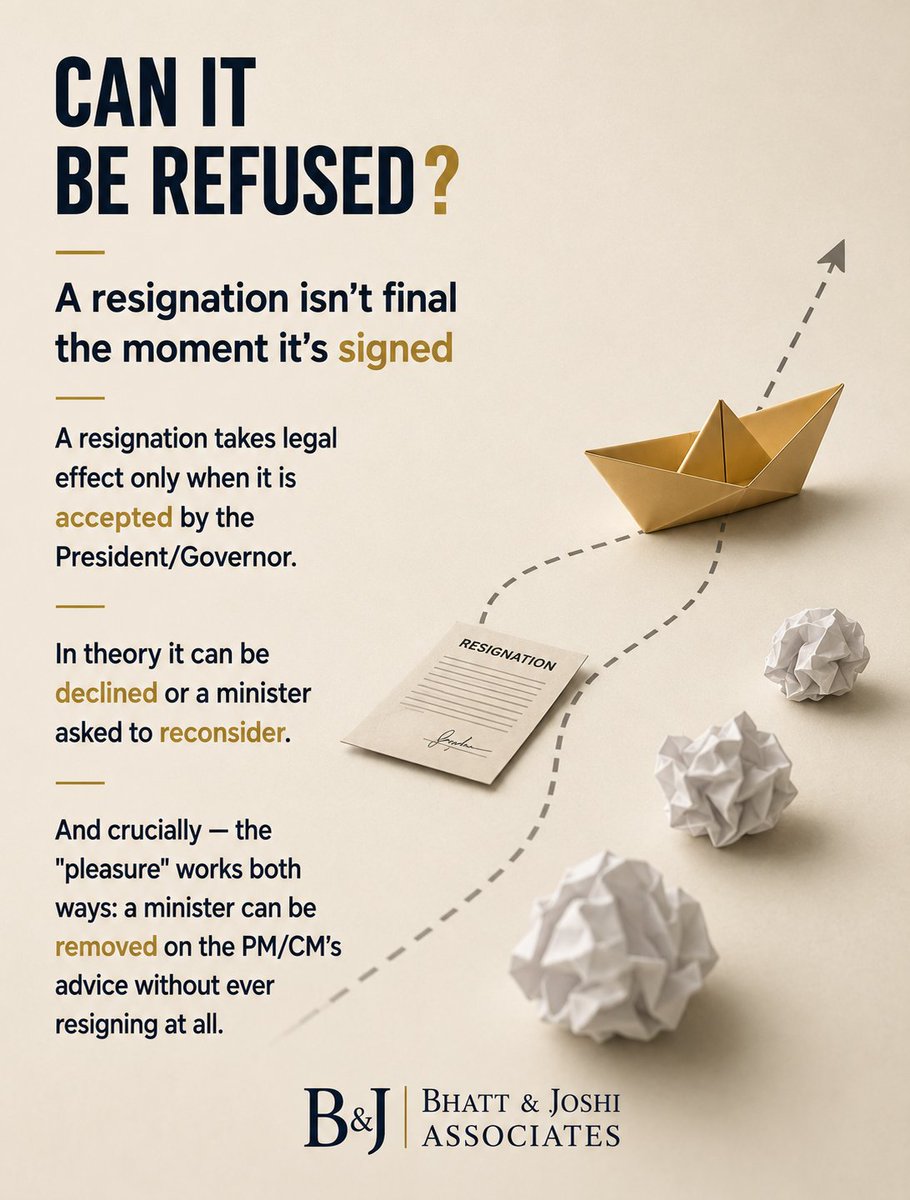
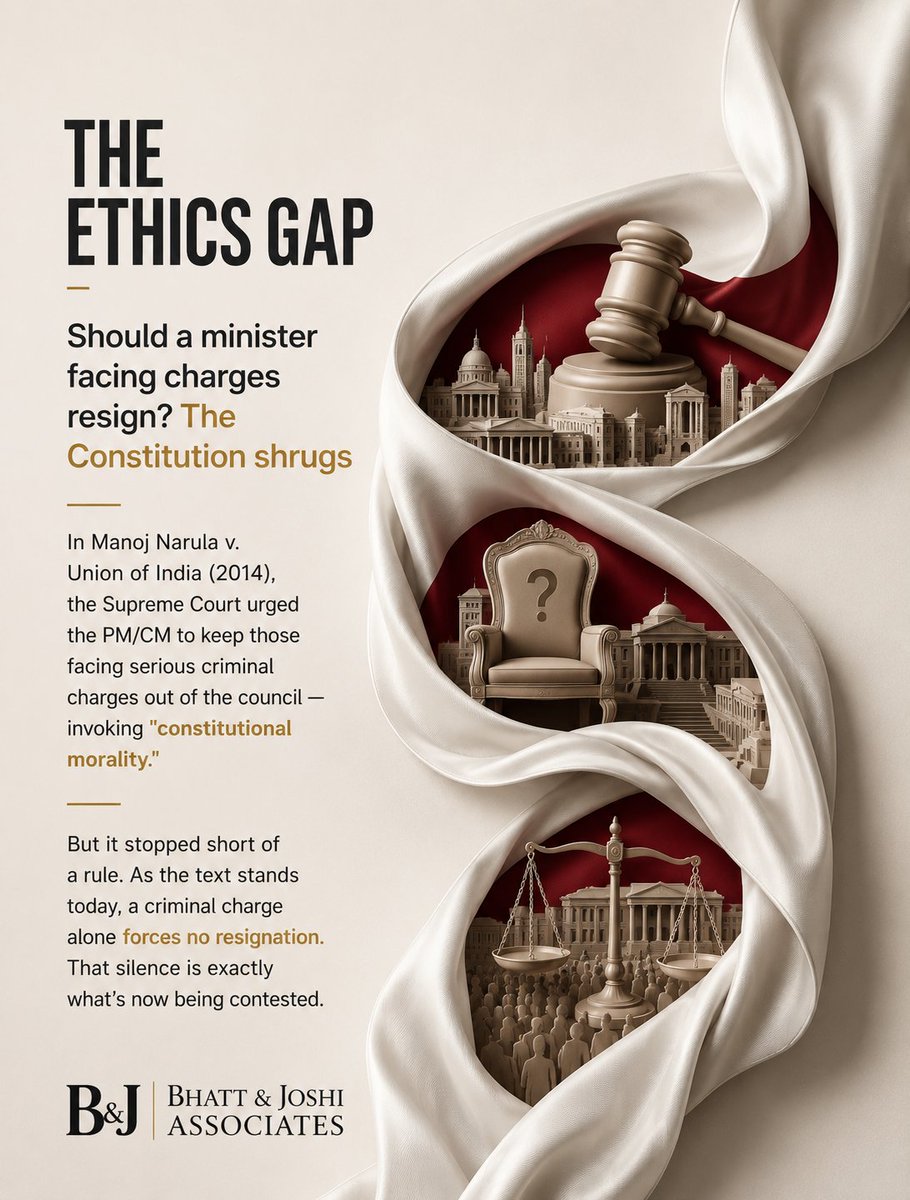
What happens after a resignation?
The Constitution is only part of the story.
Many of the most important consequences arise from constitutional conventions, judicial observations, and statutory provisions.
• Caretaker governments
• Whether a resignation can be refused
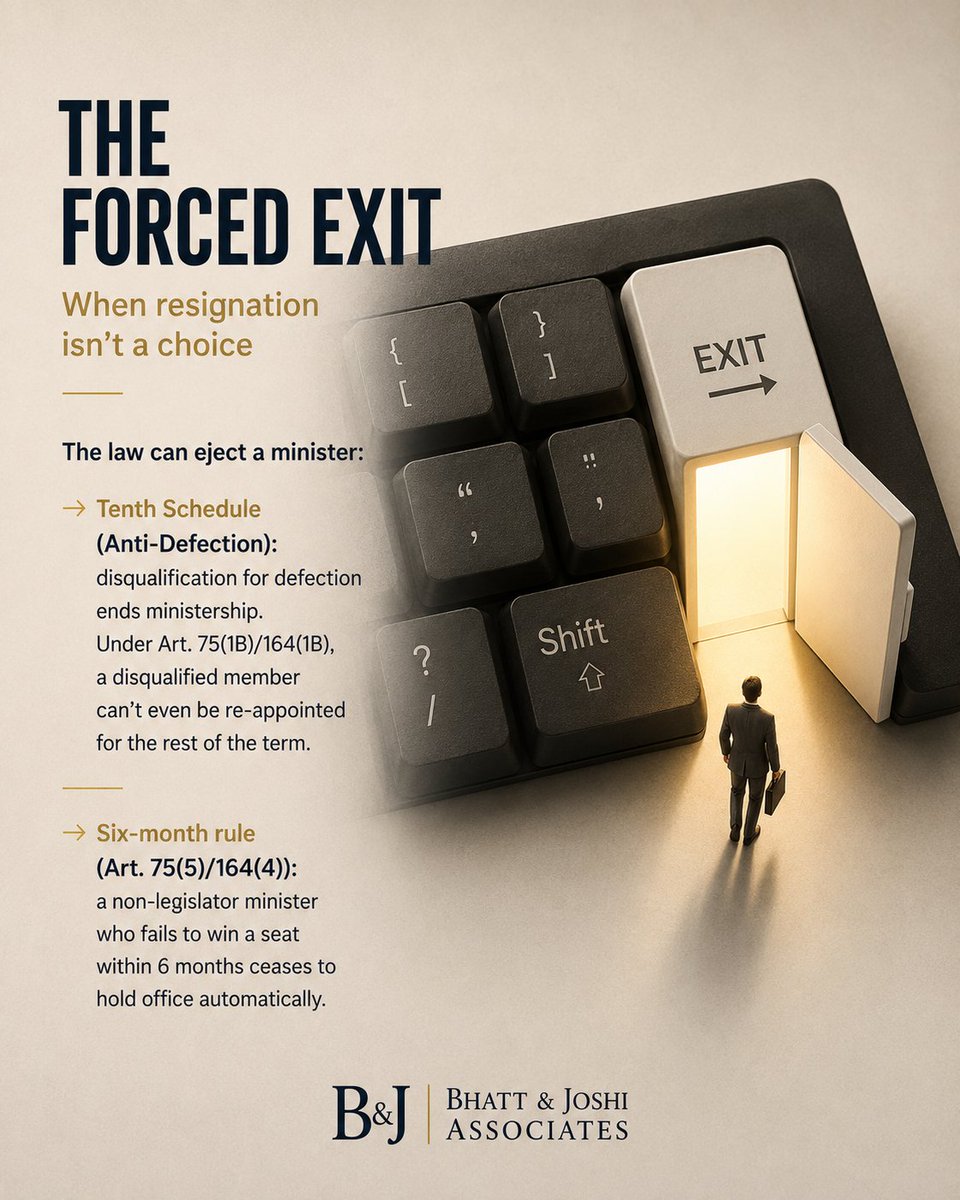
• When the law itself removes a minister from office
• Constitutional morality and the ethics of resignation
The distinction between constitutional text and constitutional practice is often where the most interesting questions arise. #ConstitutionOfIndia
#ConstitutionalLaw
#IndianConstitution
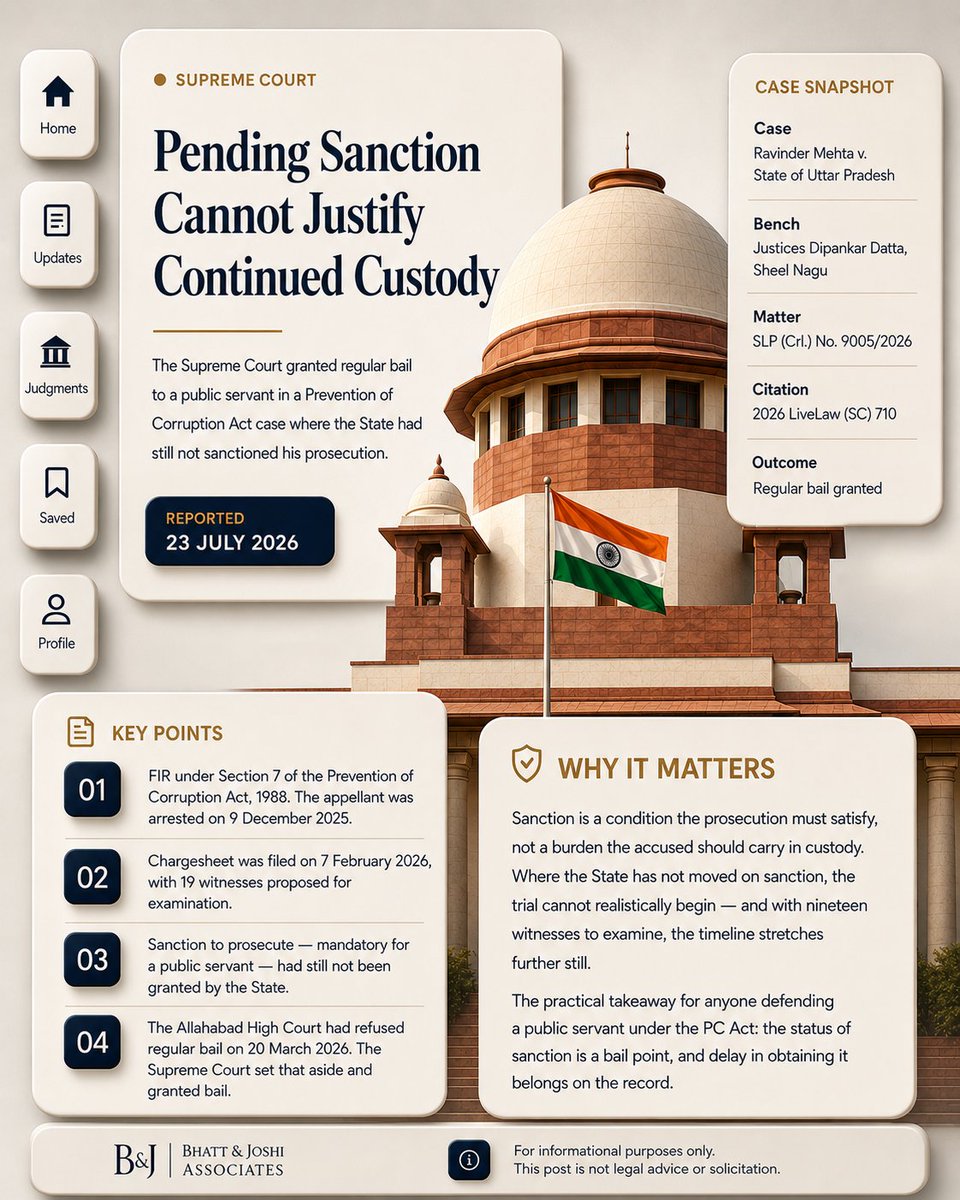
The state didn't obtain sanction.
The accused stayed in jail for it.
Supreme Court just said - that's not how it works.
Ravinder Mehta v. State of UP
Mandatory sanction under PC Act - State's obligation.
Delay in sanction ≠ reason to keep accused behind bars.
Bail granted. 19 witnesses pending. Trial had no start date.
Delay in sanction ≠ reason to keep the accused behind bars.heel Nagu