Built on K-Prism (ICLR 2026) and VerSe (IPMI 2025), with cardiac fine-tuning on ACDC, M&Ms and M&Ms-2.
Bug reports, usability feedback and contributions are welcome. Fork the repo and submit a PR to develop! #DeepLearning#ComputerVision#OpenScience#ResearchSoftware
Introducing Cardiac-Prism: a open-source self-hosted workstation for LV, RV & MYO segmentation in cardiac cine MRI.
Code + weights for noncommercial research. Try it and share feedback!
https://t.co/YcpLU1rS6L
#CardiacMRI#CineMRI#CardiacImaging#MedicalAI
Review 3D volumes and 4D cine, refine masks with positive/negative clicks or a one-pixel brush, propagate annotations across time, and lock reviewed slices.
CPU, single-GPU and multi-GPU inference. Save studies and export masks. #MedicalImaging#InteractiveSegmentation
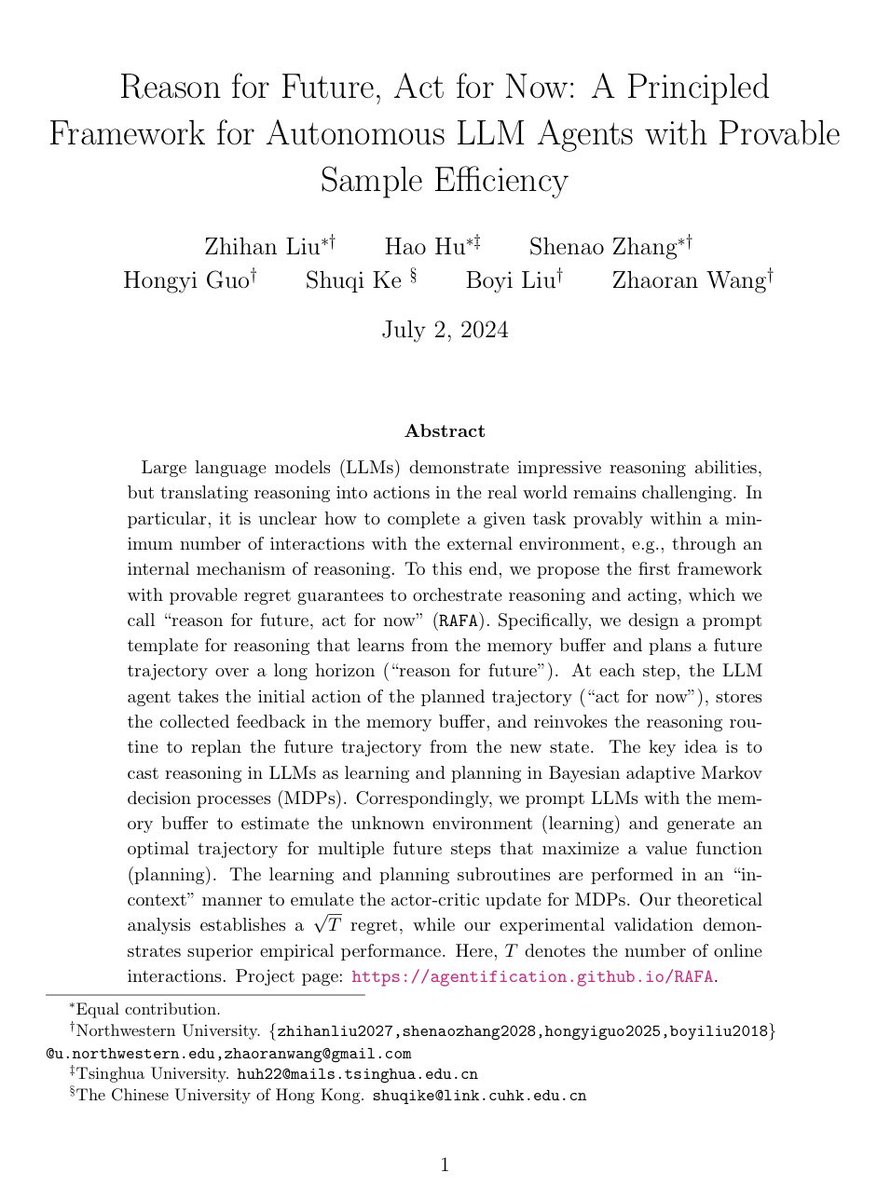
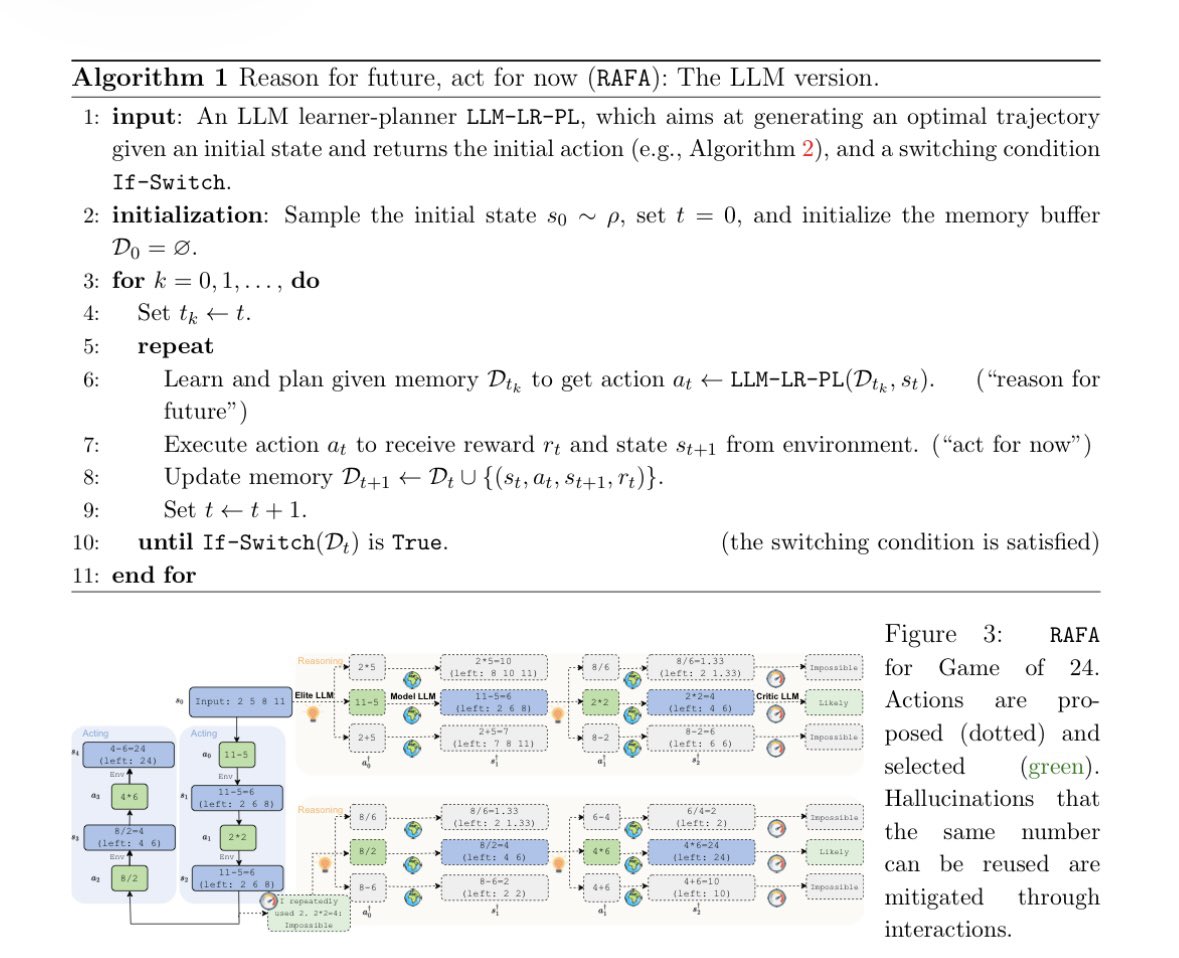
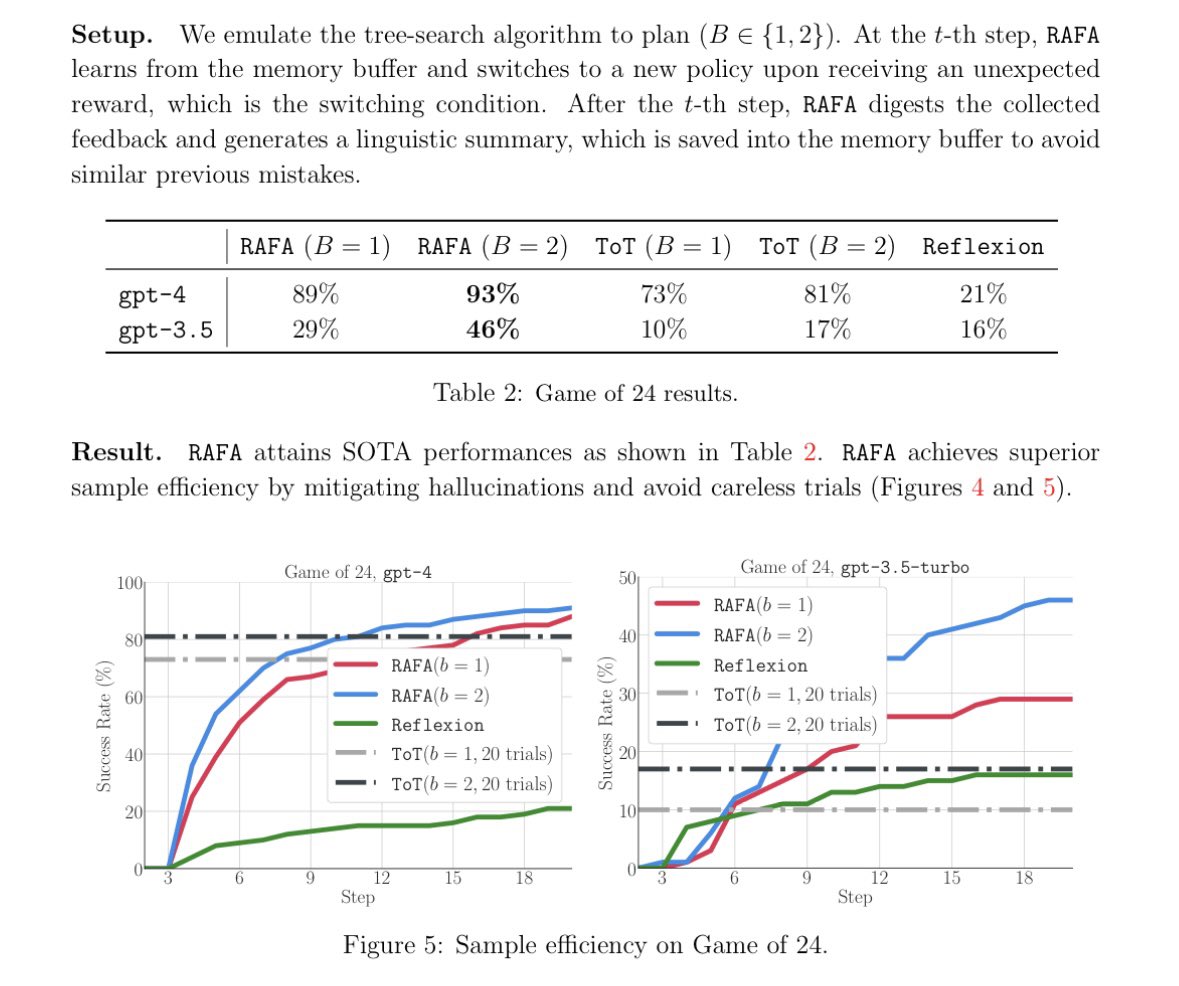
🚀 Just revisited RAFA (Reason for Future, Act for Now) from ICML 2024.
🤯 It’s honestly surprising how forward-looking this work was.
Back in 2024, they were already framing LLM agents as a closed-loop learning + planning + acting system:
✨ Reason for future, act for now
🧠 Memory-driven replanning
🌍 Long-horizon planning
⚡ Sample-efficient interaction
📐 Even with theoretical regret guarantees
Looking at today’s wave of autonomous agents, online RL, test-time adaptation, and memory-based reasoning, many of these ideas feel remarkably prescient @ZhihanLiu21628 .
👏 Definitely a paper worth revisiting if you’re working on LLM agents.
📄 https://t.co/zHFkB05HBw
#LLM #AIAgents #Reasoning #ReinforcementLearning #ICML #MachineLearning
Does mechanistic interpretability really find the circuit?
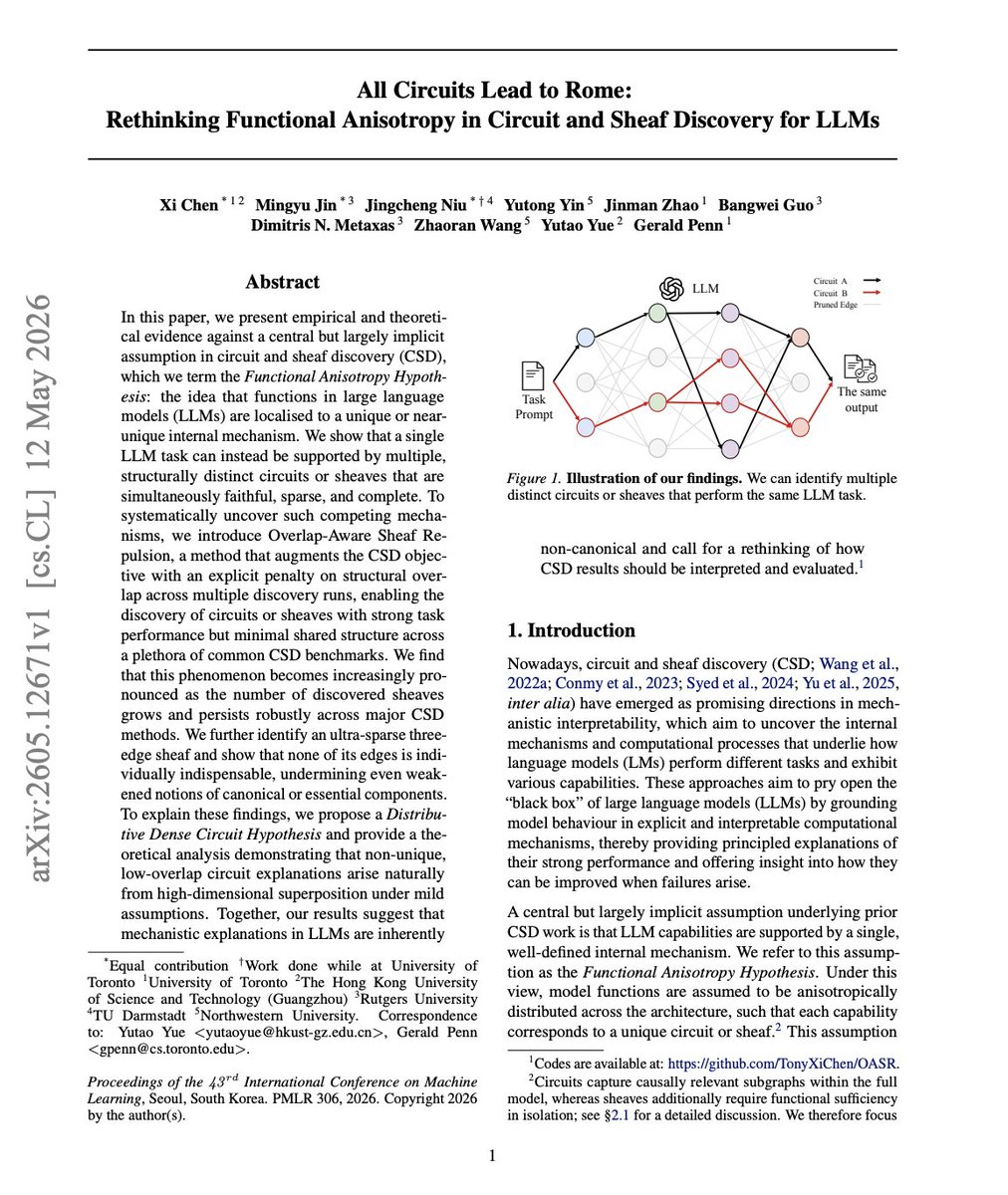
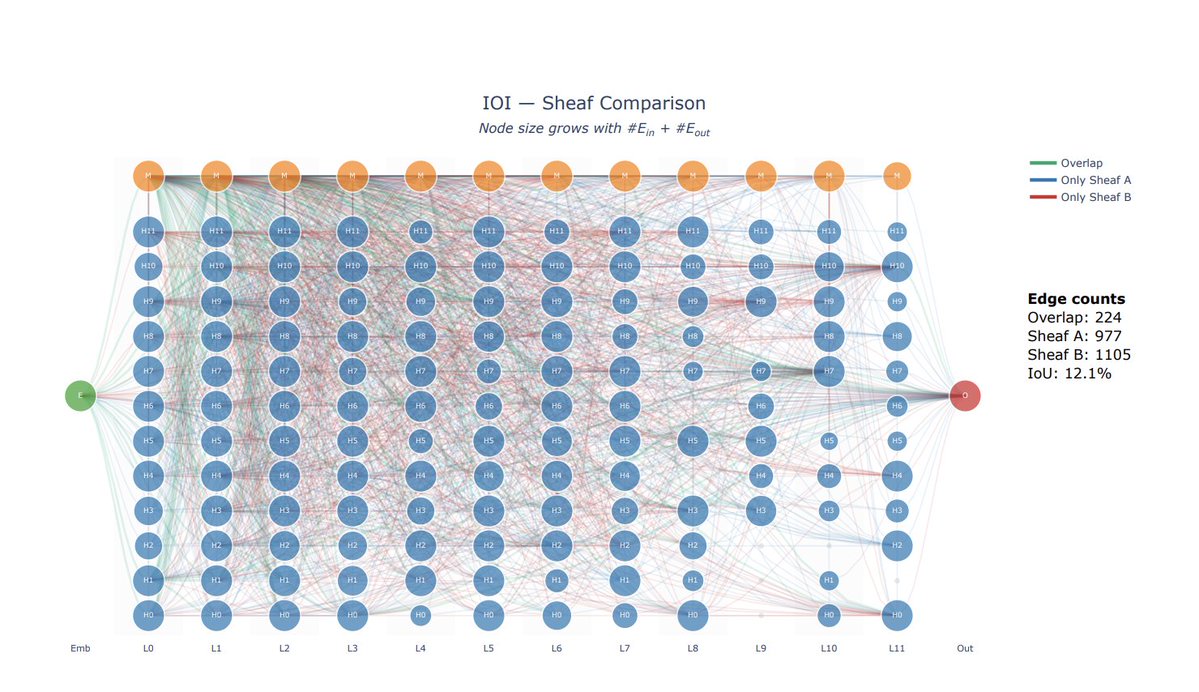
Our new paper, "All Circuits Lead to Rome: Rethinking Functional Anisotropy in Circuit and Sheaf Discovery for LLMs," (Accepted by ICML 2026) suggests the answer may be: not always.
A common implicit assumption in mechanistic interpretability is that a model's behavior is explained by the circuit — a sparse, canonical, almost-unique mechanism.
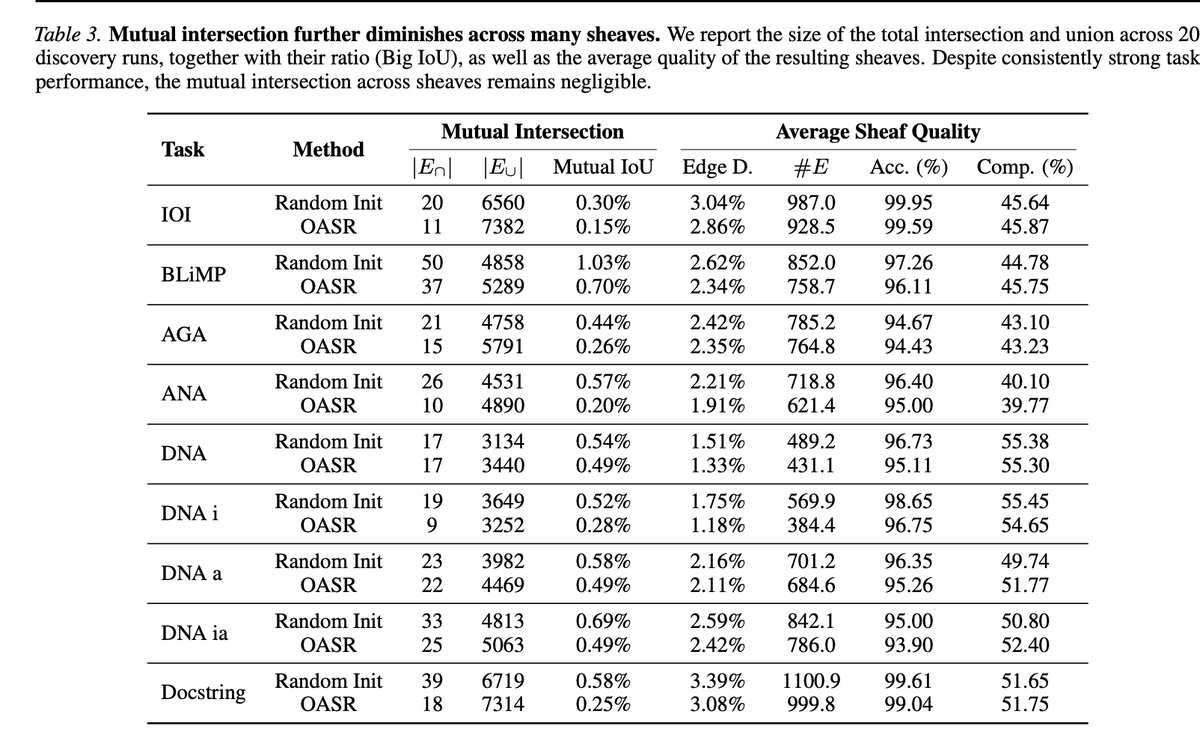
Instead, for the same LLM task, we find multiple circuits/sheaves that are:
✅ faithful
✅ sparse
✅ structurally different
✅ low-overlap
This means a discovered circuit may not be the unique mechanism behind a behavior, but one realization among many possible mechanisms. We call for rethinking how circuit/sheaf discovery results should be interpreted and evaluated.
Huge thanks to my amazing collaborators: @frankniujc, @YutongYin774638, and @zhaoran_wang
Paper: https://t.co/J5zO36Mr7m
#MechanisticInterpretability #LLM #AI #MachineLearning