Lesson 5: Attitude and Talent
From my experience, Talent matters, but attitude matters more.
You need talent to succeed. Technical skills, analytical ability, communication skills, commercial awareness, and all the other capabilities we spend years building absolutely matter.
But attitude matters too.
By attitude, I mean how you approach work and people. Your willingness to learn, openness to feedback, sense of ownership, ability to stay positive under pressure, respect for others, accountability and work ethic etc.
But talent alone does not guarantee success.
I've seen very talented people underperform or struggle in teams because of poor attitude.
On the other hand, a good attitude does not automatically guarantee success either. However, a bad attitude almost guarantees failure.
Leaders want people with both talent and attitude.
But if they had to choose between a moderately talented person with a great attitude and a highly talented person with a poor attitude, I know which one most leaders would rather work with.
Talent is not contagious. Attitude is.
One person with a poor attitude can affect an entire team.
One person who constantly complains, resists feedback, creates excuses, avoids accountability, or brings negative energy can do more damage than a skill gap ever will.
Skill can be taught. Experience can be gained.
Attitude is much harder to fix.
In fact, most times, you can get a fairly good sense of someone's attitude within the first few weeks of working with them.
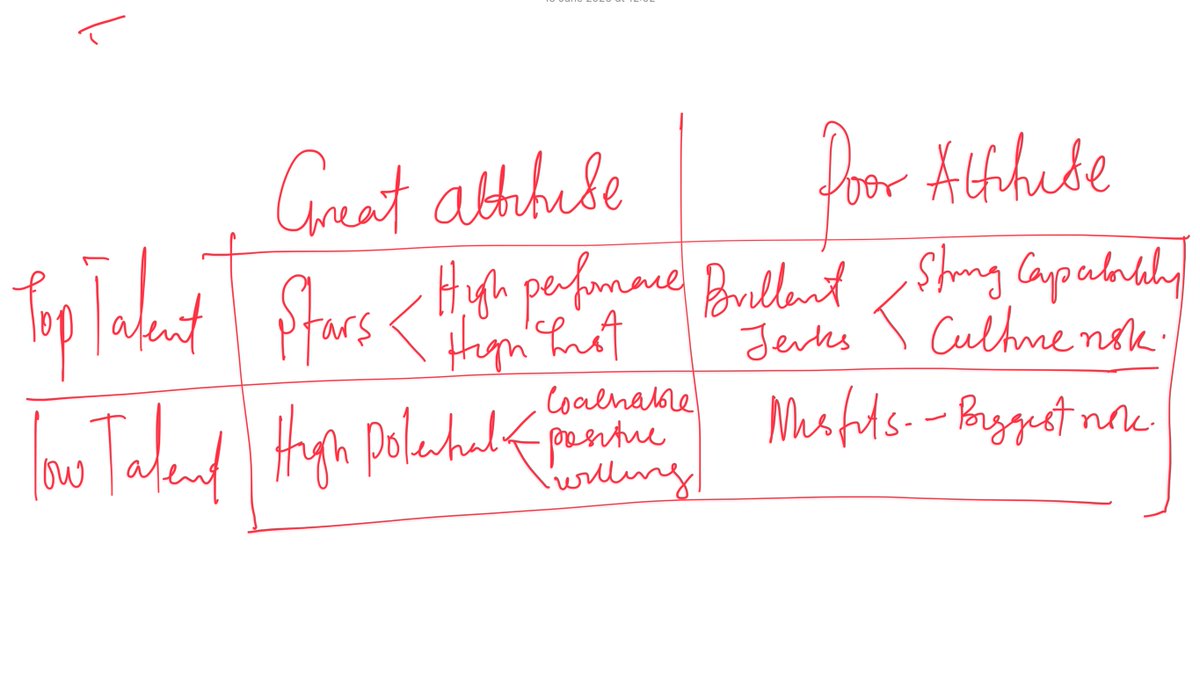
Over the years, I've found it useful to think about people in four categories (as shown in the pics)
The best teams are not built on talent alone.
They are built on people who are capable, coachable, accountable, dependable, and positive.
Never underestimate the power of attitude.
A lot of team can survive a talent gap. It rarely survives an attitude problem.
Your talent may get you noticed. Your attitude determines how far people are willing to go with you.
Be intentional about the attitude you are building and displaying at work
@footbolmatter10@Footbolmatter10, who is the best option for chelsea now.
I will be expecting your tiktok video analysis on the best option for chelsea now.
talking about an organised wardrobe, this is what a man’s wardrobe should look like:
3 plain t-shirts (black, white, grey)
2 fitted polos
2 shirts (white, light blue)
2 overshirts or casual shirts
1 hoodie
1 knit sweater
1 cardigan
1 blazer
1 lightweight jacket
1 proper coat
1 pair of black jeans & 1 pair of blue jeans
1 pair of chinos
1 tailored black trouser
1 relaxed everyday trouser
2 shorts
1 black suit
1 pair of white trainers
1 pair of black casual shoes
1 pair of loafers
1 everyday belt
1 dress belt
1 watch
1 pair of sunglasses
1 everyday bag
simple yet classy
& this gives you 80+ outfit combinations
remember, quality over quantity
For my first five years in corporate America I had no promotion.
Then in my next five, I had three.
Same me. Same company. Different results.
What changed? 👇
Keep money in money market mutual funds for cushion.
In treasury bills for certainty.
In stocks for compounding.
In real estate for concrete value.
And in other ventures for creativity and growth.
Wealth is not built in one basket.
Diversify wisely.
10 Habits That Will Change Your Life Forever.
1. Learning How to Learn: Once you know how you learn best, you can pick up new skills quickly and effectively in any area of your life.
2. Adapt, Improvise, Overcome: Staying flexible and finding solutions when challenges arise can set you apart in any situation.
3. Clearing Your Mind: A clear mind helps you stay focused, make better decisions, and handle stress with ease.
4. Express Yourself: Being able to articulate what you think and feel strengthens relationships and boosts your communication skills.
5. Sell & Negotiate: Whether you're pitching an idea, a product, or yourself, this skill is invaluable in both personal and professional settings.
6. Listen & Learn: Knowing when to be quiet, listen, and absorb knowledge from others can lead to new insights and growth.
7. Energy Management: Learning how to manage your energy effectively ensures you're at your best when it matters most.
8. Self-Analysis: Understanding your strengths, weaknesses, and areas for growth helps you continuously improve.
9. Emotional Intelligence & Empathy: Connecting with others on an emotional level can enhance both your personal and professional relationships.
Add the 10th ⬇️