Writer. Reader. Nana. Passionate about family, friends, the prairies, social justice, thinking. Furious about haters & destroyers, climate crisis ignorers.
My indie novel has fans!
-- "this romp through the timeline of women is told with humour and grace..." (Laura Burkhart, author of Venus Rising)
Find out more at https://t.co/DYnCe4ck8e
In today's @nationalpost, @IrwinCotler and @joeoliver1 write that it is important to accurately present the historical record when it comes to the "Nakba" and the creation of modern-day Israel in 1948.
In its current format, the "Nakba" exhibit at @CMHR_News does not accomplish this.
Discussions of this contentious period should be grounded in historical accuracy, proper context, balanced analysis, and rigorous scholarship. They should also reflect Canadian values by promoting understanding and reconciliation between communities rather than deepening divisions. Above all, historical narratives must not be distorted through misinformation or disinformation to advance political, ideological, theological, or partisan objectives.
https://t.co/xiLClC6Gm8
Is Israel legally obligated to grant citizenship to Palestinians who lived in Mandatory Palestine (or their descendants)?
Under Israeli law: No obligation exists. The 1952 Citizenship Law granted citizenship to Arabs who were present in Israel continuously from 1948 through 1952 (later amended to be more inclusive), which is why roughly 160,000 Arabs who remained became citizens and their descendants are Israeli citizens today, now about 2 million people. Those who left or were displaced beyond the armistice lines, and their descendants, have no claim under Israeli law.
Under international law: Advocates of a "right of return" point to three sources. UNGA Resolution 194 (1948) said refugees "wishing to live at peace with their neighbours" should be permitted to return. Article 12(4) of the ICCPR says no one shall be arbitrarily deprived of the right to enter "his own country." And some cite customary law on state succession, arguing habitual residents of a territory are entitled to nationality in the successor state.
Each of these has serious weaknesses, which is why most international lawyers, even sympathetic ones, concede the legal case is weaker than the political rhetoric suggests. Resolution 194 is a General Assembly resolution, which is non-binding, was rejected by the Arab states at the time precisely because it implied recognizing Israel, and conditioned return on living at peace. The ICCPR postdates 1948, "his own country" has never been authoritatively interpreted to cover descendants born abroad generations later, and no treaty body has ordered a mass return anywhere. And state succession norms address people in the territory at the moment of succession, not populations outside it decades later. There is also the uniqueness of UNRWA's inheritable refugee status: no other refugee population in the world passes refugee status to great-grandchildren, which is how 700,000 original refugees became 5-6 million claimants. Under UNHCR rules that apply to everyone else, most would have been resettled and naturalized long ago, as tens of millions of post-WWII refugees were.
There is no binding, enforceable international legal obligation on Israel to grant citizenship to 1948 refugees' descendants.
Harvard says antisemitism is down. 170 Jewish and non-Jewish faculty say it just went underground: students hiding Star of David necklaces, scrubbing Israel references off their CVs, tucking yarmulkes under baseball caps.
Invisible isn't the same as gone. It's just harder to document. It is NOT progress that Jews have learned to hide again, this time on an Ivy League campus, in 2026.
The ceaseless headlines about Hamas “ending its government” in Gaza and “preparing to give up control” are yet another ruse and a nothing‑burger dressed up as a concession by the terror group, which has zero intention of relinquishing real power or disarming. Similar announcements like this have happened frequently in the past.
The resignation of the head of the so‑called “Emergency Committee,” or Hamas’s post–October 7 governing façade, is simply the removal of a figurehead. His duties have already been quietly assumed by another “temporary” Hamas administrator while everyone pretends to wait for NCAG, the incoming Technocratic Committee, to take over. Hamas has already announced that its administrative and technical staff will continue working until NCAG arrives, fully aware that the new transitional governing body will lack the capacity, personnel, or infrastructure to run Gaza. This is Hamas’s plan: recycle its current/existing apparatus into the new administration expected to emerge from the Trump Administration’s transitional process overseen by the Board of Peace.
What we’re seeing is the sloppy rollout of a long‑predicted strategy: Hamas shifting from direct control to indirectly reigning, Hezbollah‑style. It’s cheaper, it shields the group from accountability, and it allows new civilian faces to absorb public anger while Hamas retains decisive control over every meaningful lever of power in the Gaza Strip.
None of this resembles disarmament. Hamas’s al‑Qassam Brigades are working nonstop to repair tunnel networks and rebuild munitions stockpiles using unexploded ordnance and Israeli bombs from two years of war. Yet the media coverage of this non‑event has already reframed Hamas as cooperative, reasonable, even constructive; a narrative shift that obscures Hamas’s role as the primary obstacle to Gaza’s recovery. And this is landing successfully and working well for Hamas; not only with outlets, voices, and platforms who are typically softer on the terror group, but even in some mainstream political discourse, where some are treating this as tantamount to the initiation of disarmament or the start of Phase II of the ceasefire.
The timing is no coincidence: this move by Hamas comes one week after the Board of Peace met in Cyprus and agreed to pursue “Plan B,” the approach I’ve long advocated: moving Gaza’s civilian population across the “Yellow Line” and draining Hamas of access to resources and human shields it relies on.
Ultimately, Hamas “dissolving its government” will be judged by simple metrics like whether Gazans can share posts on Facebook without being tortured, beaten, or dragged into hospital interrogation rooms, abuses that continued from October 7 until just last week. Until that changes, the headlines are theater, and Hamas’s grip in Gaza remains intact.
Rebecca Barker
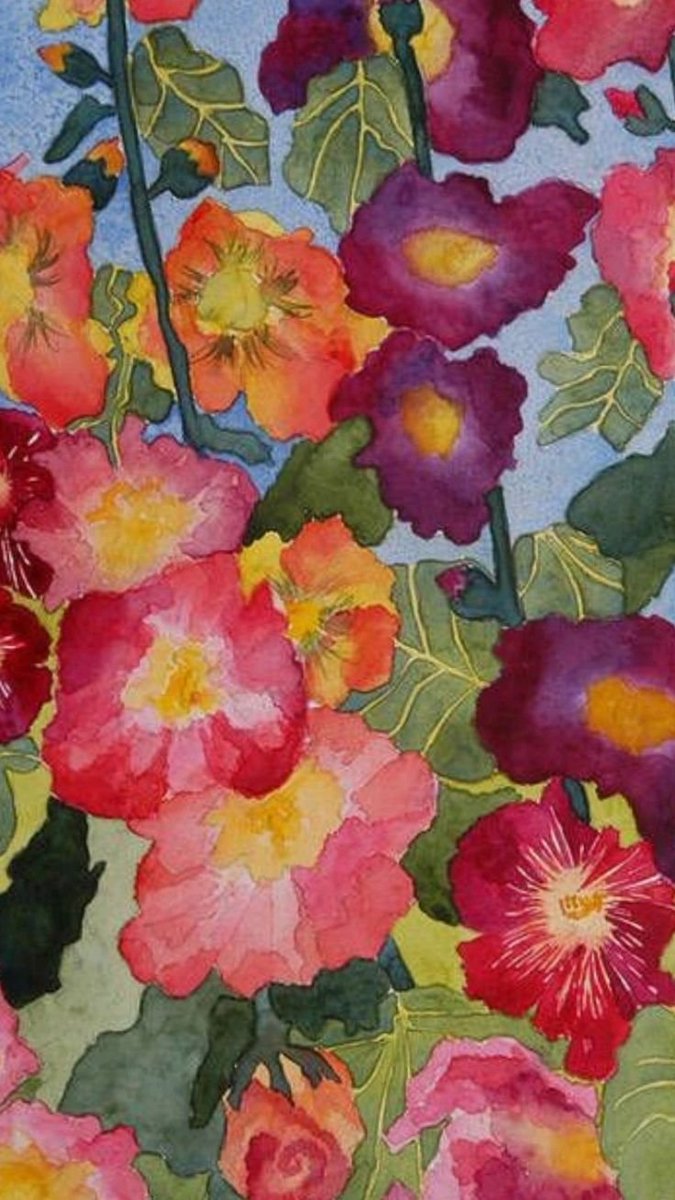
Quiltscapes.
Amazing work
They are actually paintings but she is a quilter too.
Nevertheless they are amazing pieces and she uses the traditional patterns of the quilts. Very clever
Robert Savignac
Canadian painter of bright garden scenes like these two which are good examples of his work
Jardin Intime
Le Vieux Moulin.
I was told off last time I translated it.
Titles in French
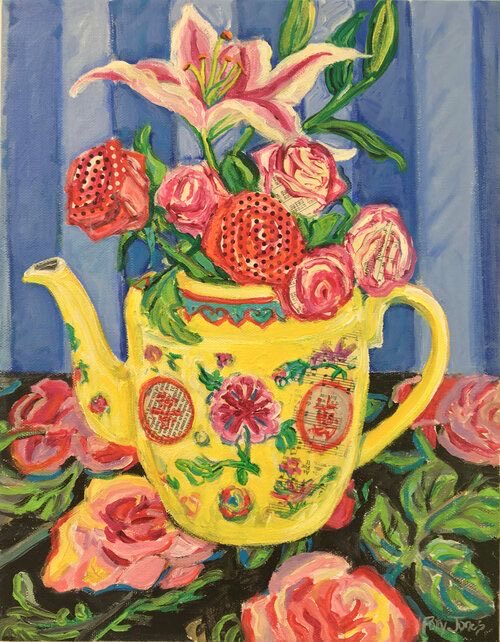
Polly Jones Mixed Media artist
American painter (Texas)
Bringing joy and gratitude are her aims with her work
Certainly bright and easy to see
She has a sunny converted porch studio. Plenty of light.
John Pototschnik painter
Although born in St Ives Cornwall he is best known as an American artist
I like his work , and there is a lot to see, over 50 years worth in fact!
The first I don’t have a title for sorry
The second ‘ A Peaceful World ‘
Free lesson for anyone wanting to know if someone on X is a genuine humanitarian or just selectively posturing when it comes to Israel/Palestine:
Go to their account and check what they posted on October 7th (or the full week after).
If they said nothing at the time but are now loudly posting about the war in Gaza or a Naqba museum, they’re either antisemitic or desperately fishing for attention and moral legitimacy.
See the attached image for the fastest way to check without scrolling for an hour.
@strombo you said nothing. You were completely silent on October 7th. As a music journalist, when Israeli concertgoers were mowed down, raped, and taken hostage, you couldn’t even manage a single word of condolence or condemnation of the terrorists. You are severely morally depraved.
Now everyone knows exactly who you are.
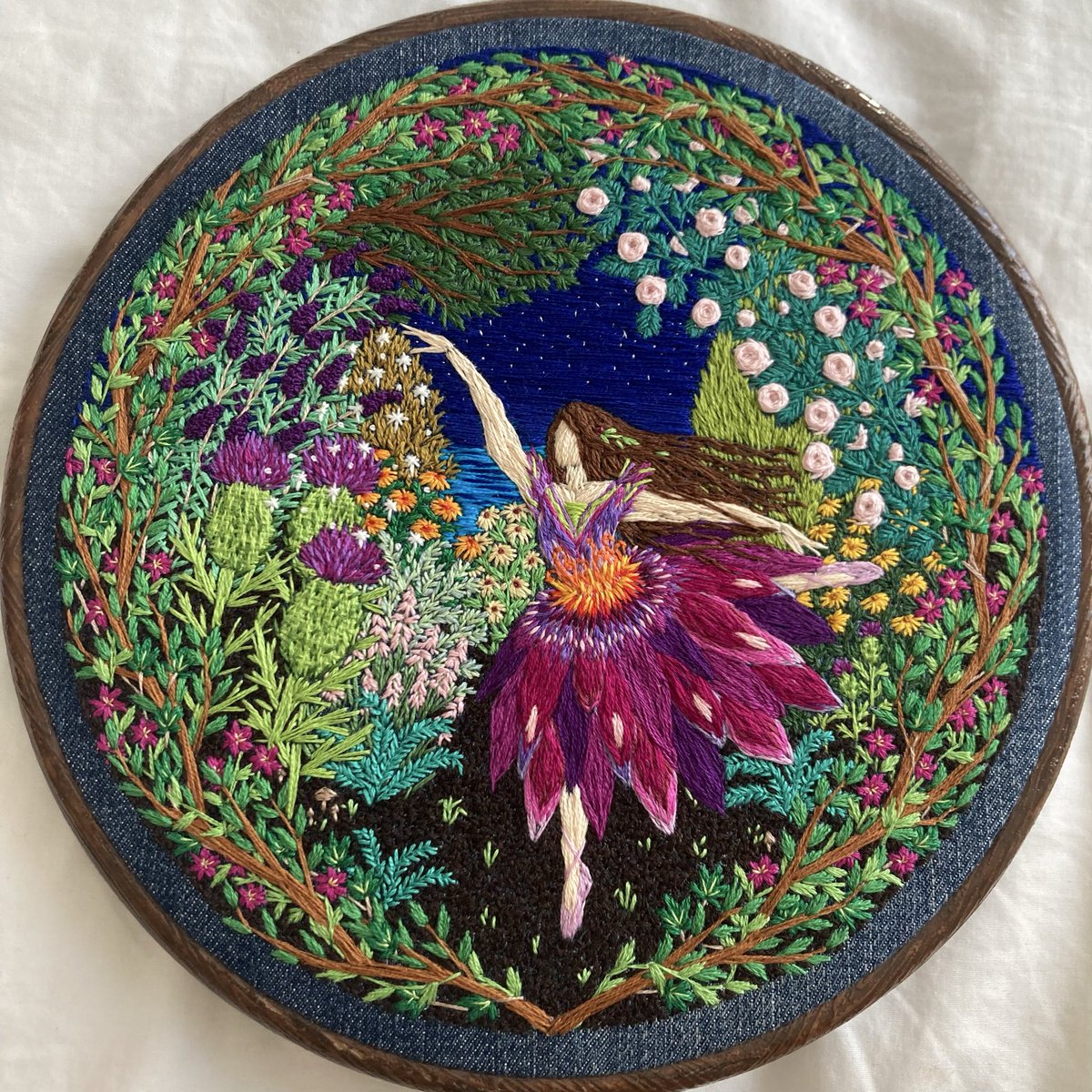
It’s 2 years since I stitched my embroidery, The Dance of the Flowers. So maybe worth a look back, and sprinkle a little magic too… 😉🪡🌿🌺✨🩰
*completely freehand stitched, without patterns or paint, just threads & imagination. #stitchedart#embroidery#thesewingsongbird