“It is beneficial to perform asymmetric exercises by running or jumping on sloping or inclined tracks, running around curves in both directions, running and jumping in shoes with soles of different thickness, or running with leg weights of different mass.”
Want to run faster? Train your hips.
📚Recent musculoskeletal modeling suggests sprint speed is more sensitive to hip muscle strength (especially hip flexors and adductors) than to strength at the knee or ankle 💨 🏃♀️
https://t.co/uzmkBCORhu
Strength gains occur in phases
🧠➡️💪 Early progress is mostly neural: better technique, coordination & motor unit recruitment
Over time, tendons and muscle hypertrophy contribute more
Long-term strength = skill + nervous system + tendons + muscle mass
https://t.co/s9OzVtHZfu
"At very high strain rates, if you strain the tendon until failure, you cause more localized failure.
At very low strain rates, if you strain the tendon until failure, you cause more global or more distributed indications of failure.
If we go to the physiological level, this suggests that the strain distribution is more homogeneous if the strain is applied rather slowly."
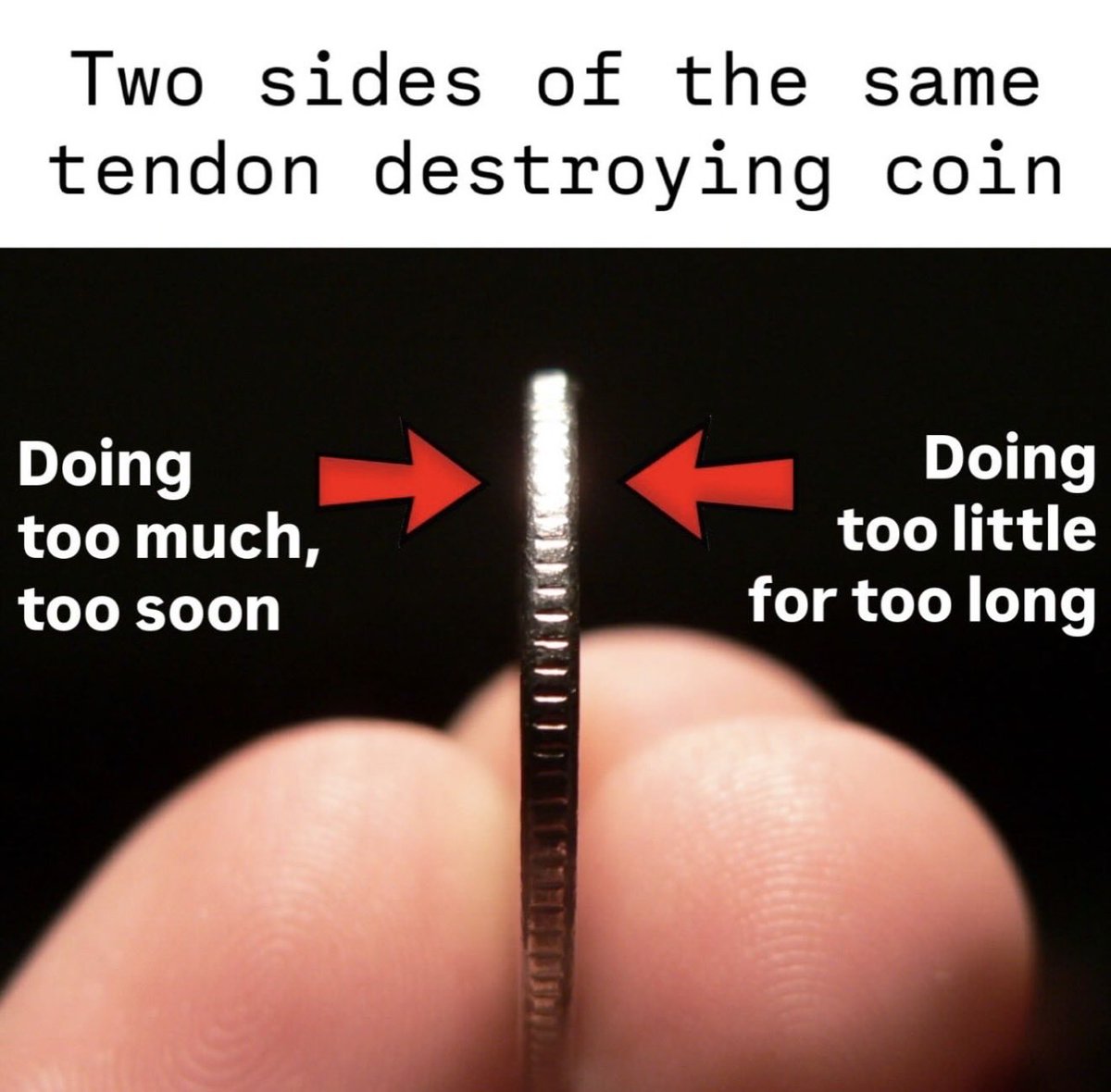
In fast things, the strong parts of the tendon get stronger and the weak parts get weaker.
In slow things, the whole tendon can get stronger because slow allows for internal redistribution of stress and strain.
Quote from the podcast with Falk Mersmann: https://t.co/G78Xhixjht
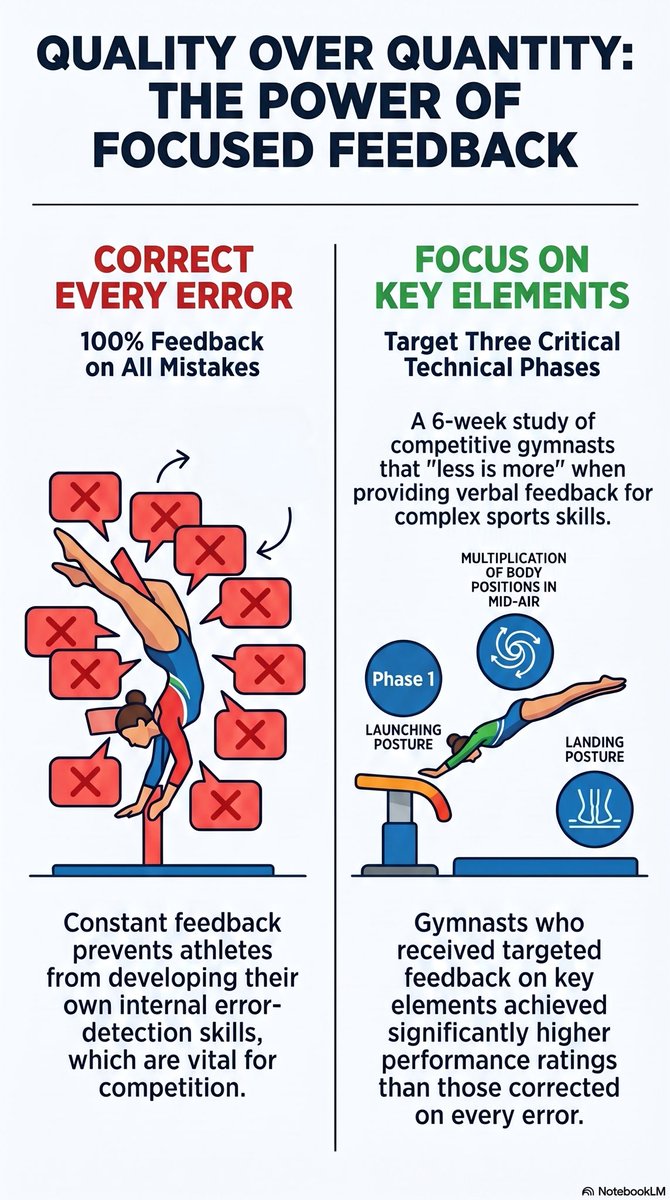
Strength cueing is rampant with word diarrhea
Emphasizing external landmark positions of the motor task produce more retention than constant cueing
( Niźnikowski et al.,2025)
#sportscience#coaching#learning#explorepage
2) Worry about scenarios that haven't happened
Sapolsky's signature line: a zebra reacts to a lion for 30 seconds, then grazes peacefully. A human worries about an imagined lion for 30 years.
When you catch yourself: ask "is this happening right now?"
We do not want to build easily broken robots programmed for a dance recital.
We want to design environments that cultivate highly adaptable problem-solvers.
Adding a forward lean to foot exercises can increase muscle activation and joint torque🦶
A new study from Osborne et al. (2025) examined intrinsic and extrinsic muscle activity and MTP joint torque during common foot exercises.
Traditional toe-based exercises did recruit the intrinsic muscles but resulted in minimal force output. These exercises generally created low activation levels in important extrinsic muscles such as Soleus, Gastrocnemius and Flexor Digitorum Longus. They might be suitable for lower level intrinsic strengthening when higher loads aren’t tolerated.
Calf raise variations resulted in high intrinsic and extrinsic muscle activation as well as high MTP joint torque making them a good bang for buck option for strengthening the foot and ankle.
Muscle activation and MTP torque can be increased by adding a forward lean and/ or additional weight. The forward lean calf raise is a nice option for this as it can be loaded with a backpack and works the calf in a lengthened position which can help both strength and flexibility.
Reference:
Osborne JWA, Menz HB, Landorf KB, Whittaker GA, Cotchett M, Kelly LA. The influence of body posture and added mass on intrinsic and extrinsic foot muscle activation and force output during common foot strengthening exercises. J Sport Health Sci. 2025 Dec 16:101110. doi: 10.1016/j.jshs.2025.101110. Epub ahead of print. PMID: 41412495.
46 years ago Today, Terry Fox, a 21-year-old Canadian who lost a leg to cancer, began his Marathon of Hope—a cross-country run to raise funds and awareness for cancer research
He ran 5,373 km in 143 days before cancer forced him to end his bold journey.
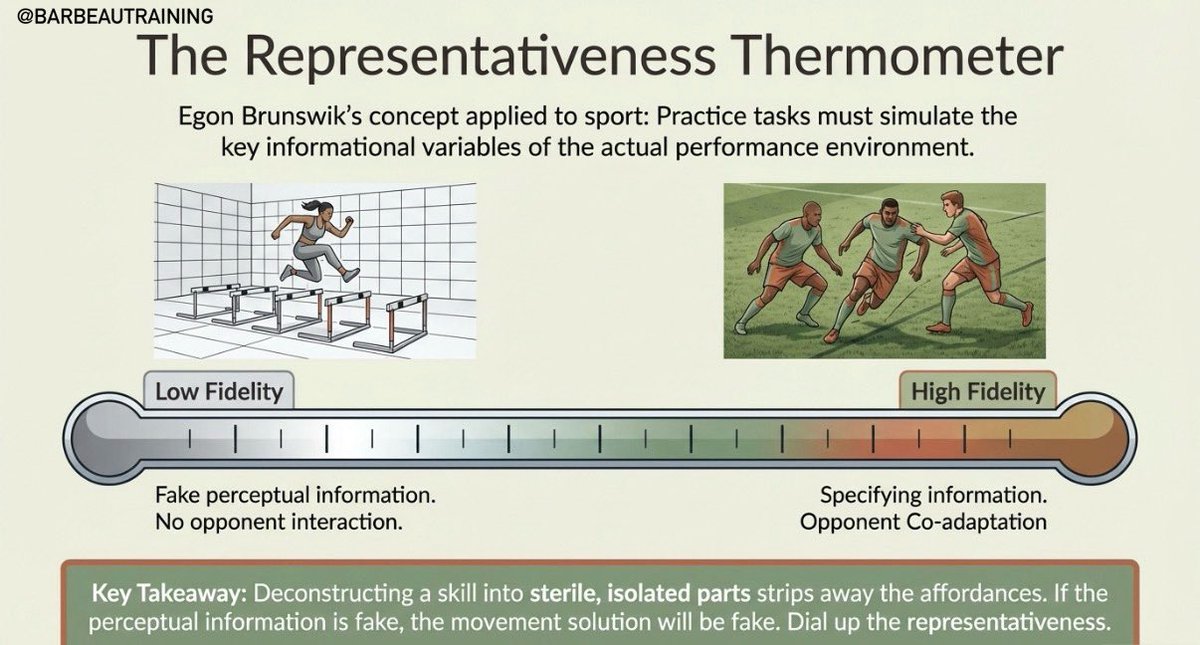
Drill Design: Deconstructing a skill into sterile, isolated parts strips away the affordances. If the perceptual information is fake, the movement solution will be fake.
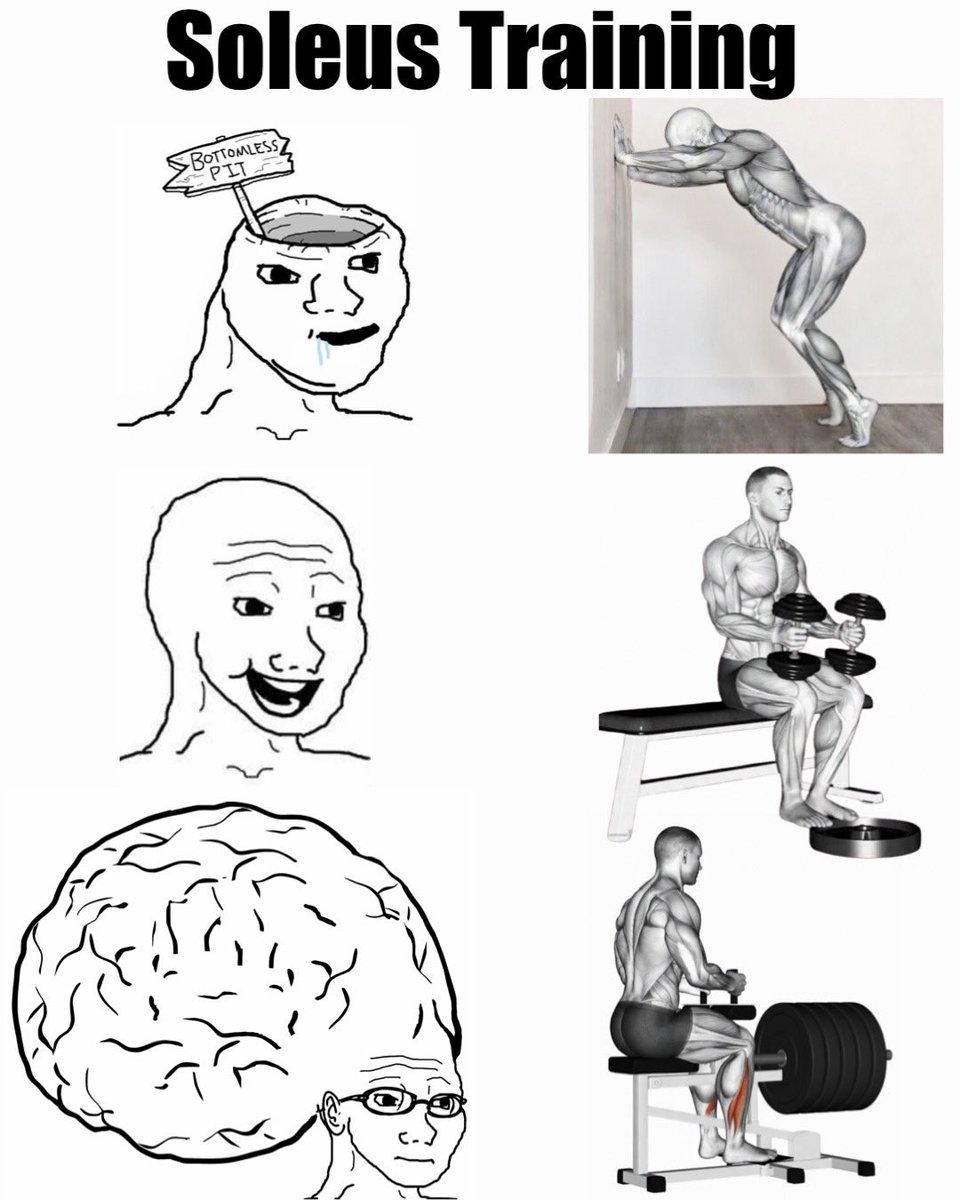
Soleus needs heavy load.
From the podcast with Seth O’Neill:
"For most steps when you're jogging, you're probably looking at about 7-8 times body weight at most speeds in steady state running. If you then accelerate, the soles will get about 10 times body weight... this is internal force production. And that depends on the lever arm and the axis of movement. So if we are looking at measuring that externally, we use an isometric strength test in a flex knee position, single-leg... If you hit twice body weight as an external force production on that test, the internal force will be between 7-12 times body weight, depending on how big your foot is basically. So that equates to the typical internal physiological load. So externally, twice bodyweight is our target. Internally, that will be then somewhere in the region of our typical demands."
Coaching is not building a house from the ground up; it is a renovation built on the athlete's existing perceptual-motor landscape. You observe if they accept affordances, and step in to safely guide the search.
Human beings are brutally efficient learners. A movement solution is not created from nothing; it emerges spontaneously from the interaction between the task, environment and individual.
A major hurdle in long-term knee rehab is a dysfunctional internal focus. Athletes become hyperaware of the injury, which can lead to "choking" and rigid movements. This is countered by using analogies, and focusing on external effects rather than their own body mechanics