In this week’s BWA, the Venezuela Experiment. Three phases of reconstruction and assets in play, security services pieces moving, and collaboration with US forces.
https://t.co/2fr46RSstn
IN this week's Barbershop Whipsers...Russia; wartime agriculture and Crimea. Russia is one of the World’s largest grain exporters. How is the agro-industrial sector faring in this chaotic war environment of fuel and fertilizer shortages? What does Russian-occupied Crimea tell us about Russian agriculture?
https://t.co/1egZM8LTdA
In this week’s BWR: Smoke on the Neva: a struggling wartime economy that the Kremlin does its best to portray as a center of stability and an investment-grade opportunity. Ukraine made its presence felt as well — physically, with drones over St. Petersburg, and economically, in the damage beneath the spectacle. Dima, can you hear the nostalgic Blackmore tune in the background? This is not Montreux. https://t.co/aLi4aZwbfO
In this week’s BWA, I discuss Cuba’s stack of sovereign and quasi-sovereign debt and the impact of the Odious Doctrine, the newly signed US Presidential Order 14404, and the Paris and London Clubs. Where is the money? Who will collect money or worthless paper?https://t.co/HAawPQ7fBn
In this week’s BWR, I discuss the emergence of Russia’s Asian energy network. By land and by sea, from Siberia to Shanghai and through the Northern Sea, a Russian energy distribution system is taking shape in Asia. Will Power of Siberia 2 be added to the network?
https://t.co/iZAl40TscM
The EU–Mercosur agreement goes live on 1 May 2026. It has created a consumer market of 780 million people and a free trade zone with an estimated GDP of €24 trillion. The EU has stepped up its game for resources and influence in South America, and Mercosur members have taken control of their own destiny. How will this affect the great power competition for resources – the US, China, Russia, and now the EU – in South America?
https://t.co/wQh4HbK3lo
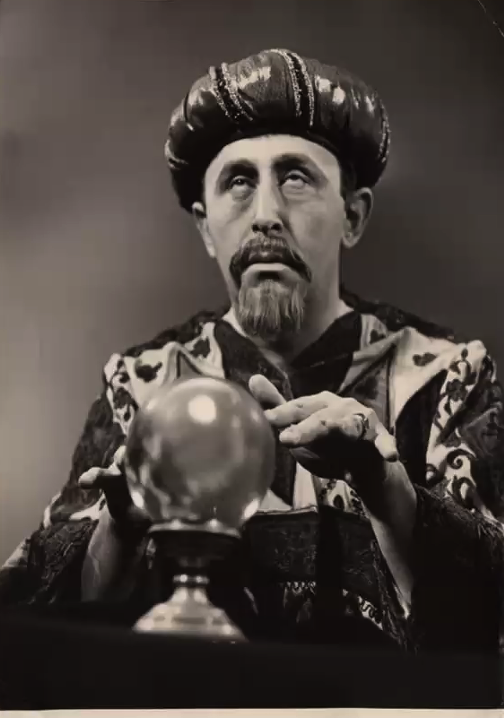
This week’s BWR, I am taking a break from the serious to dive into the very serious. Komsomolskaya Pravda (KP) conducted and published two séances in sixteen days. What did the spirits of Vladimir Zhirinovsky and Vladimir Lenin have to say to the world? Did KP open a permanent hotline to the other side? Two Vladimirs down, one medium on retainer, and a 100-ruble offering that barely covers a dollar. At this rate, should Dzerzhinsky, Beria, and Prigozhin expect to be summoned? What about Baba Vanga and Alan Chumak? Is this the revival of political messaging wrapped in mystic journalism?
https://t.co/aLOSgz529s
The EU–Mercosur agreement goes live on 1 May 2026. It has created a consumer market of 780 million people and a free trade zone with an estimated GDP of €24 trillion. The EU has stepped up its game for resources and influence in South America, and Mercosur members have taken control of their own destiny. How will this affect the great power competition for resources – the US, China, Russia, and now the EU – in South America?
https://t.co/p4hjhK1wmS
From Yuri Gagarin to the Artemis space crew – to boldly go where no man has gone before. Spacefaring has expanded beyond the US and Russia. Newcomers have rapidly entered the Race to the Moon 2.0 – China, India, Europe, and a host of other countries. The Russian space program has much to offer beyond its legacy and past achievements, but can it deliver, and with whom? What challenges does Roscosmos face in this new era of the Race to the Moon 2.0?
https://t.co/8wwFYq9l9S
The Kremlin is building a sovereign digital garden that operates independently from the global network. Justified by national security—whether real or perceived—it is being developed, with the Russian government’s super-app MAX leading the effort. The economic costs of this move will be significant.
https://t.co/aYVh7EOpQ2
The Cuban government’s oscillation between loosening and tightening restrictions on small businesses acts as a tool for alleviating economic and social pressure during tough times. After decades of inconsistent private sector policies, the surviving and glowing ambers of capitalism might finally ignite into a wildfire in Cuba. Watch this space.
https://t.co/iYDezWzf5B
Russian LNG producers are spending billions in capital on infrastructure, expanding their Asian presence. They will work around Western sanctions, use domestic technology substitution, and outsource critical equipment to China.
https://t.co/b3fLtDp7pK
In this week’s Barbershop Whispers...Russia, the winners and losers from the impact of two ongoing wars reshaping the world’s energy markets remain uncertain. Russia is well-positioned to benefit from the broken and shifting energy supply chains, while Europe and the Arab Gulf states’ prospects do not look promising. And what’s this about the transfer of drone technology to Iran?
https://t.co/E5Sq54RZjW
Today is the debut launch of Barbershop Whispers…Las Améяicas.
The Cuban regime's collapse has been predicted for 67 years. So why is this time different? Because a perfect storm of factors has come together to isolate the regime more than ever before in its history. How will the people with the guns and money—the Uncle Sam and the Cuban regime—manage Cuban political and economic change?
https://t.co/kGy0bVJqiG