During the Genocide against the Tutsi, Valentine was just a child, surviving in ways no child ever should hiding among the dead, carrying wounds far deeper than the eye can see.
Years later, she returned to Nyarubuye, to the very church that held her darkest memories. Instead of turning away, Valentine chose to pray.
In a place once filled with fear, she found strength. In the shadow of tragedy, she chose faith.
Her story is not just survival it is courage, resilience, and the power to rebuild after the unimaginable.
Remember. Unite. Renew.
#Kwibuka32
DRC
The Truth They Don’t Want Told: Rwanda, Congo, and the Thirty-Year Lie of War
For three decades, the world has been told that Rwanda and the Democratic Republic of Congo (DRC) have been locked in a cycle of war. That formulation is repeated so often it is accepted as fact: “thirty years of war.�� But it is a dangerous distortion. What the region has endured is not thirty years of war between equals, but thirty years of denial — denial that genocidal forces defeated in Rwanda in 1994 were allowed to survive, regroup, and thrive under international cover in Congo. Denial that United Nations peacekeepers and international experts, mandated to protect civilians and tell the truth, instead became complicit in perpetuating instability. Denial that successive Congolese governments have collaborated with these forces while Western institutions inverted reality to portray the victims as perpetrators. This is ultimately part of the Denial of the Genocide Against the Tutsi in Rwanda 1994 and the same time a support for those who committed the genocide and their western supporting powers.
This narrative inversion — turning the perpetrators of genocide into victims, and Rwanda into the aggressor — has been so persistent that it now structures international debates at the UN Security Council and the Human Rights Council. The most recent sessions in New York and Geneva showcased the same pattern: Félix Tshisekedi’s government, which has integrated genocidal militias and even contracted foreign mercenaries, was spared scrutiny, while Rwanda was once again presented as the destabilizing actor. Such distortions are not just insulting; they are dangerous. They perpetuate impunity, embolden genocidal forces, and condemn millions of Congolese to continued suffering.
1994: The Crime the World Saw but Chose Not to Stop
The truth begins in 1994, when Rwanda descended into the fastest genocide of the twentieth century. The United Nations Security Council was not blindsided. It had reports on its desk from the commander of the UN peacekeeping force in Rwanda. It knew about hate speech broadcast by extremist radio stations. It knew about militias arming and training openly. Yet when the presidential plane was shot down on April 6th and the genocide machinery was unleashed, the Council dithered. For one hundred days, more than a million Tutsi were hunted down and slaughtered while the so-called international community watched.
When the genocide was halted by the Rwandan Patriotic Front, the perpetrators were not dismantled. Instead, they were escorted into Zaire, under French military cover, and given sanctuary by Mobutu’s regime. It was a stunning betrayal: would the Allies after World War II have tolerated a Nazi army regrouping in Switzerland or Austria, rearming, and launching cross-border raids? The question answers itself. What was unthinkable in Europe was tolerated in Africa.
Thirty Years of Denial
The remnants of the genocidal regime reconstituted themselves into new armed groups, most prominently the FDLR. They launched raids into Rwanda, destabilized eastern Congo, and embedded themselves into local conflicts. Rwanda and other African states were drawn into wars to neutralize them, yet the international community consistently refused to recognize the root cause. Instead, it adopted the lazy shorthand of “thirty years of war between Rwanda and Congo,” erasing the agency of the genocidal forces and the complicity of their enablers.
The refusal to confront this truth has consequences. It allows the myth to persist that instability in eastern Congo is a Rwandan export rather than the direct result of harboring genocidal actors. It permits Congolese leaders, from Laurent Kabila to Félix Tshisekedi, to use the FDLR as a political tool, while scapegoating Rwanda whenever domestic failures come under pressure. And it encourages Western chancelleries and UN officials to absolve themselves of responsibility by blaming the most convenient target.
MONUSCO: A Mission that Multiplied Armed Groups
Since 1999, the United Nations has deployed its largest-ever peacekeeping mission, MONUC — later renamed MONUSCO — in the DRC. Its track record is damning. When the mission began, there were just four armed groups active in Congo. Today, there are more than 200. When Tshisekedi began his presidency, there were 28. This explosion of armed groups happened under MONUSCO’s watch.
Even more damning is its relationship to the very forces it was meant to neutralize. MONUSCO never dismantled the FDLR. At times, it even cooperated with them. Atrocities in Ituri province continue to unfold despite MONUSCO’s heavy presence. And yet, year after year, the Security Council mandates “UN Experts” to report on the situation. These reports, opaque in recruitment and methodology, have consistently deflected blame away from MONUSCO and the Congolese government, while shifting suspicion onto Rwanda. Far from being impartial, they have helped to construct and entrench the false narrative of Rwanda as aggressor.
Tshisekedi’s Calculated Escalation
Félix Tshisekedi has not only inherited this machinery of denial; he has actively deepened it. His government has integrated the FDLR into the Congolese army, multiplied local militias known as Mai-Mai (later rebranded as “Wazalendo” to dodge international criticism), and even hired foreign mercenaries. Romania, a NATO member, sent a contingent that was captured during the fall of Goma. The United States, through Erik Prince — founder of the notorious Blackwater — has supplied another. Neither the UN, nor the EU, nor the African Union, which formally banned mercenaries in Africa in 1977, has spoken a word of condemnation.
The hypocrisy is staggering. Rwanda is scrutinized for defensive actions aimed at protecting its borders from genocidal militias, while the Congolese government is given carte blanche to collaborate with those militias and employ Western mercenaries. This is not neutrality; it is complicity.
The Manipulation of Numbers and Memory
The distortion goes beyond politics into the realm of memory itself. The oft-repeated claim of “millions dead in Congo” is traced back to the UN’s infamous “Mapping Report” covering 1993–2003. That document was so riddled with methodological flaws that it reads less like professional research than a political pamphlet. Its purpose was transparent: to inflate numbers in ways that incriminate Rwanda, while erasing the structural causes of death in Congo — state collapse, corruption, and the harboring of armed groups.
Yes, thousands have perished in Congo — from direct violence, from displacement, from preventable disease. But to inflate these figures into the millions without context, and to assign blame selectively, is not just bad scholarship. It is a moral crime. It erases the real victims, most of all the Congolese Banyarwanda, who have been displaced and targeted for over thirty years. And it allows those responsible — Congolese politicians, UN officials, and their international enablers — to wash their hands of accountability.
Geneva, New York, and the Inversion of Truth
All of these threads converge in the present. At the UN Security Council’s latest session on the DRC, and at the Human Rights Council in Geneva, the script was repeated once more. Tshisekedi’s government organized side events and interventions designed to paint Rwanda as the aggressor, while UN officials played along. The FDLR’s role was minimized. MONUSCO’s failures were ignored. The use of mercenaries was never mentioned. Instead, the narrative inversion was complete: Rwanda, the country that stopped a genocide and has spent thirty years defending its borders from its remnants, was presented as the destabilizer.
It is a shameful spectacle. But it is also a revealing one. The international system is not neutral. It protects its own failures. It prefers denial to accountability. And in doing so, it ensures that the cycle of violence continues.
The Urgency of Truth
Thirty years on, the question is no longer whether the world failed Rwanda in 1994. That is beyond dispute. The real question is why the world has continued to fail the Great Lakes region for three decades afterward — by denying the root causes of instability, by shielding the perpetrators, and by inverting the roles of victim and aggressor.
It is time to say it plainly: this has not been thirty years of war. It has been thirty years of denial. Denial that has protected genocidal actors. Denial that has enabled Congolese governments to weaponize militias. Denial that has allowed UN peacekeepers and “experts” to preside over the multiplication of armed groups. And denial that has permitted Western chancelleries to avoid their own complicity by pointing the finger at Rwanda.
Breaking that denial is not only about Rwanda. It is about justice for the Congolese civilians trapped in cycles of violence, abandoned by their own state, and failed by the international community. It is about accountability for institutions that claim moral authority while practicing selective blindness. And it is about finally affirming that African lives, African history, and African truths cannot be endlessly distorted without consequence.
If the world truly cares about peace in the Great Lakes, it must abandon the thirty-year lie and confront the truth it has avoided for too long. Until then, every new resolution in New York and every new declaration in Geneva will be nothing more than a continuation of the denial that has condemned the region to endless suffering.
𝗥𝗪𝗔𝗡𝗗𝗔 𝗜𝗦 𝗔 𝗠𝗔𝗥𝗩𝗘𝗟.
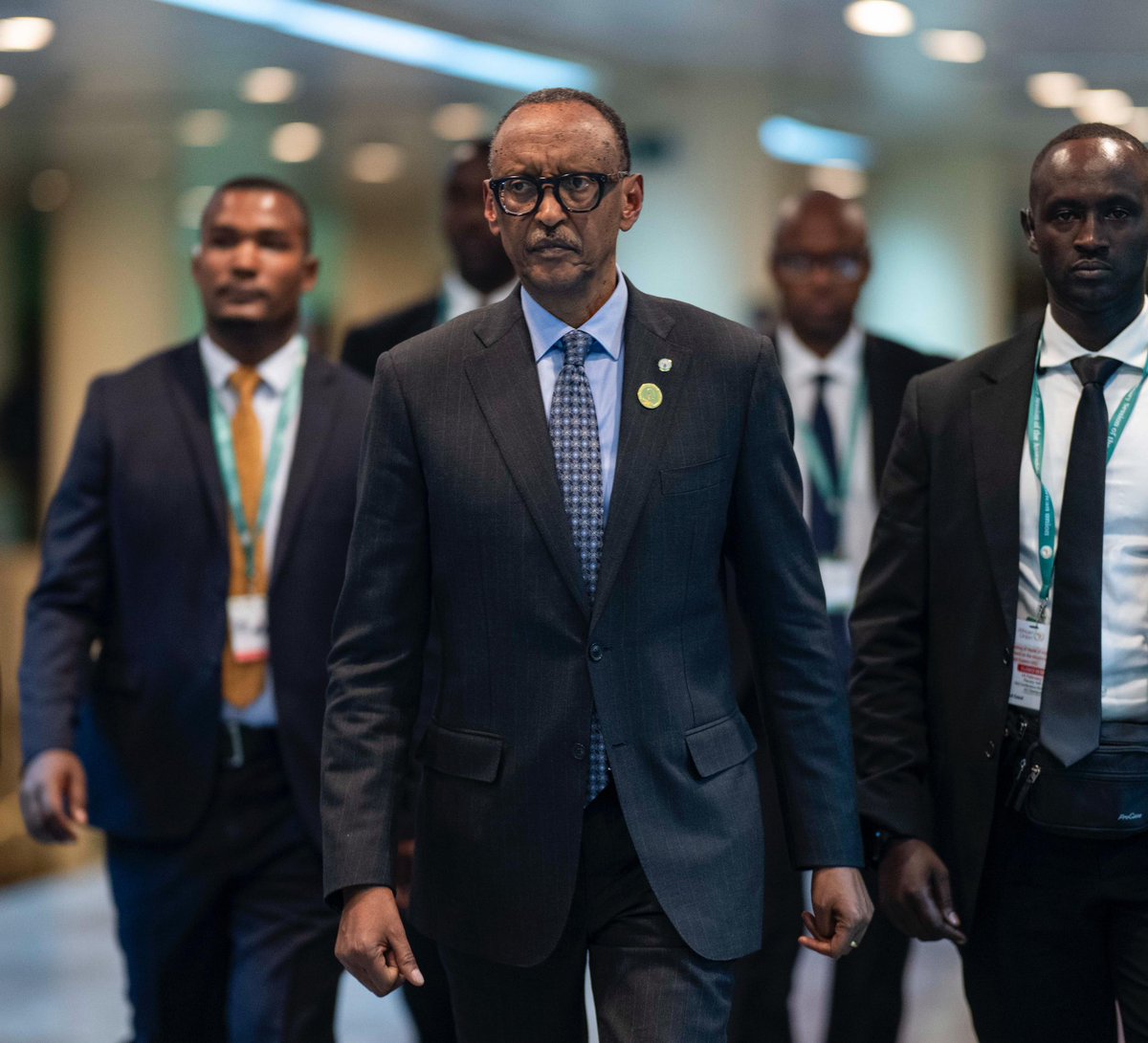
President Kagame and the Rwandan Patriotic Front (RPF) have accomplished an extraordinary transformation in Rwanda. Despite having one of the smallest GDPs in Africa, the Rwandan government has built impressive institutions, clean and beautiful cities, and infrastructure that extends even to rural areas. Pedestrian walkways, electrified interstate roads, robust healthcare systems, and a formidable national defense are testaments to their dedication.
It's evident that Rwanda's limited resources are being utilized efficiently for nation-building rather than lining individual pockets. The Rwandans operate with a collective ethos reminiscent of a kingdom, where the individual's interests are secondary to the collective good.
This collective approach has instilled a level of patriotism rarely seen in Africa, paralleled only by Ethiopia. Rwandan ministers exhibit an unparalleled focus on advancing their nation, in contrast to many counterparts across the continent who often prioritize personal interests over national well-being.
Africans have much to learn from Rwanda, and it's now clear why some external forces have historically, and currently, view the nation's royal bloodlines and ruling elite as a threat, fearing they might inspire transformative change across the continent.
Across the border, the M23 has introduced Rwanda style 'muganda'—a community cleanup initiative—in Goma. Residents have embraced this practice, cleaning their homes and city collectively.
This spirit of unity is so compelling that citizens of Bukavu reportedly ousted Congolese officials to embrace the Congo River Alliance as their interim governors, even before M23's arrived to fire a shot in the city.
Upon M23's entry into Bukavu, the community immediately began collective cleaning efforts, mirroring Goma. Rwanda’s cultural influence appears both unifying and contagious, leading to reports of calls in Kinshasa for M23 to assume control.
It’s a cultural revolution that is challenging the enduring influence of 'Françafrique' in the Democratic Republic of Congo, Congo-Brazzaville, and potentially West Africa. This emulation of Rwandan practices and discipline by M23, has led to accusations that M23 is Rwanda invading its neighbor; yet it is merely cultural influence.
With the Sahel region now free from French influence, the convergence of their movement with Rwanda's culture of colonial resistance, threatens to dismantle 'Françafrique', which could have profound implications for France. This context explains why Canada, Belgium, and France—all members of the Francophonie, currently led by Rwandan Louise Mushikiwabo—have rushed to sanction Rwanda in an effort to bring it back into the fold.
Reflecting on this, it seems Rwanda is not merely led by a political party but by a modern version of the traditional royal council, encompassing all social classes—Twa, Hutu, and Tutsi—and headed by a paramount leader (the nephew of a traditional queen) who ascended to power by liberating, uniting, and restoring the traditional Rgwandan kingdom that was once fragmented.
Understanding this dynamic clarifies why the paramount leader, his council, the army, and the citizens are united and willing to defend Rgwanda to the death.
It is out of the spirit of reconciliation and forgiveness that took the nation out of its dark past, that I was welcomed, treated with exceptional hospitality, and allowed to leave in one piece, despite having been a threat to their national security and hard-won unity. I am profoundly grateful for the mercy of the Rwandan people and once again apologize for my errors.
Now, I comprehend why adversaries strive to prevent this small nation from rising to heal the heart of Africa by finding peace with its neighbor Congo. Because once the two come together as King Kigeri V Ndahindurwa and Lemumba did on the 30th June 1960, when they took down the Belgian flag, Africa will be united forever.
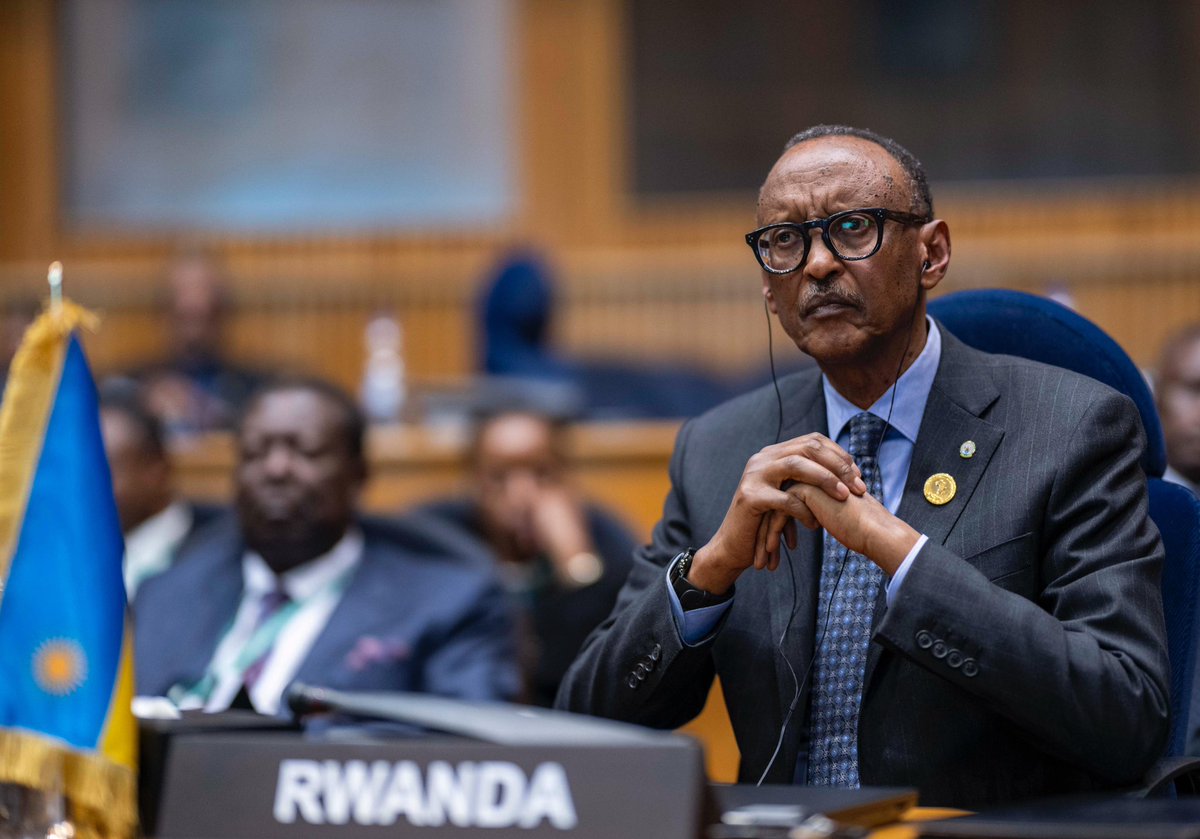
“If the blame game, nice speeches, lies, being shameless, were the solution to this problem, it would have ended long ago. We wouldn’t have this problem. We have people who tell lies without any reason.
How can FDLR not exist in the minds of some people? Or why is it something that is supposed to be trivialized? When you trivialize that; you trivialize my history and I am not going to accept it. It doesn’t matter who you are.
I am not seeking any favor from anybody in this room to be given permission for me to live or for my people to live? Absolutely not. I will live by the fact that it is my right. Just that.
So, when I am listening to some people saying these things; when does Congo take responsibility for its own mess? How does Congo think all their problems come from outside, and therefore they outsource solutions for their problems? Rwanda has nothing to do with Congo’s problems. We have our own problems to deal with. Congo is too big for Rwanda to carry on its back.
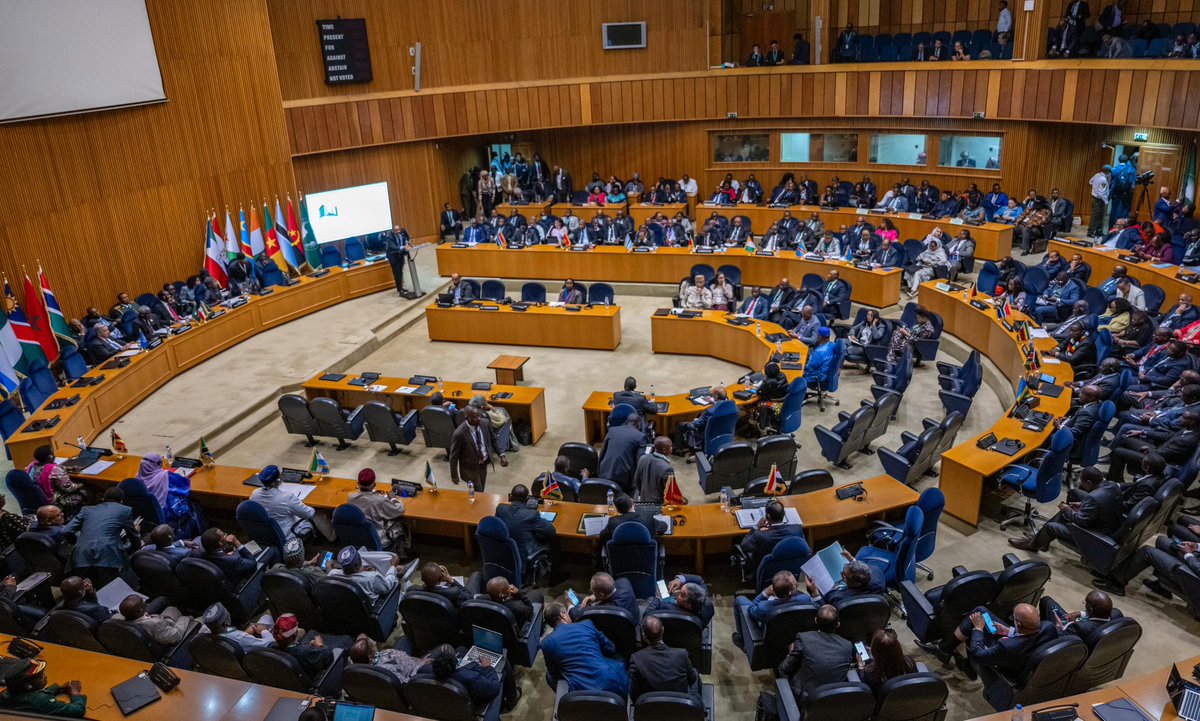
As I told you, we are a small country, we are a poor country, but when it comes to the right to live, don’t you be mistaken. I am not begging, I will not beg anyone.” President Kagame | AU Peace and Security Council Meeting on the security situation in Eastern DRC.
What is happening in Eastern DRC is a failure of the international community. 28 years, $1billion a year later, when genocidaire FDLR are integrated into FARDC and empowered to shell Rwanda from the DRC border, MONUSCO can no longer claim "observer" status. That is complicity.
#BREAKING: Divine Nshuti Muheto is crowned Miss Rwanda 2022, taking over the reins from Grace Ingabire who won the beauty pageant last year.
#MissRwanda2022