Strategic financial planning for a select group of UK doctors & senior professionals.
WealthMap® connects major financial decisions into one lifetime strategy.
We provide strategic financial planning for a select group of UK doctors & senior professionals facing major financial decisions.
If you’re at that stage, request an introductory strategy call:
https://t.co/cQdLIZPNs4
Most surgeons I speak to have cash sitting in their company earning ~0–1%.
Inflation destroys the value of cash over time.
There's no rule that says it has to.
You don't need to invest it.
You just need to hold it somewhere better.
>3.5% is available on cash right now.
If you're not getting that, it's worth asking why.
A consultant said something to me recently that made me smile.
“I’m working less… and earning more.”
They had moved to partial retirement through the NHS pension.
4 days a week.
Soon 3.
And the surprising part?
Their income hadn’t fallen.
Many doctors assume retirement is a hard stop.
But the reality can be very different.
With the right structure, the NHS pension can allow you to:
• reduce clinical sessions
• maintain strong income
• keep building wealth
• transition gradually into the next stage of life
The question often shifts from:
“How long do I have to work?”
to
“How much freedom do I want?”
Because financial planning isn’t really about retirement.
It’s about control over your time.
A month ago I arrived in Antigua after rowing 3,000 miles across the Atlantic, solo.
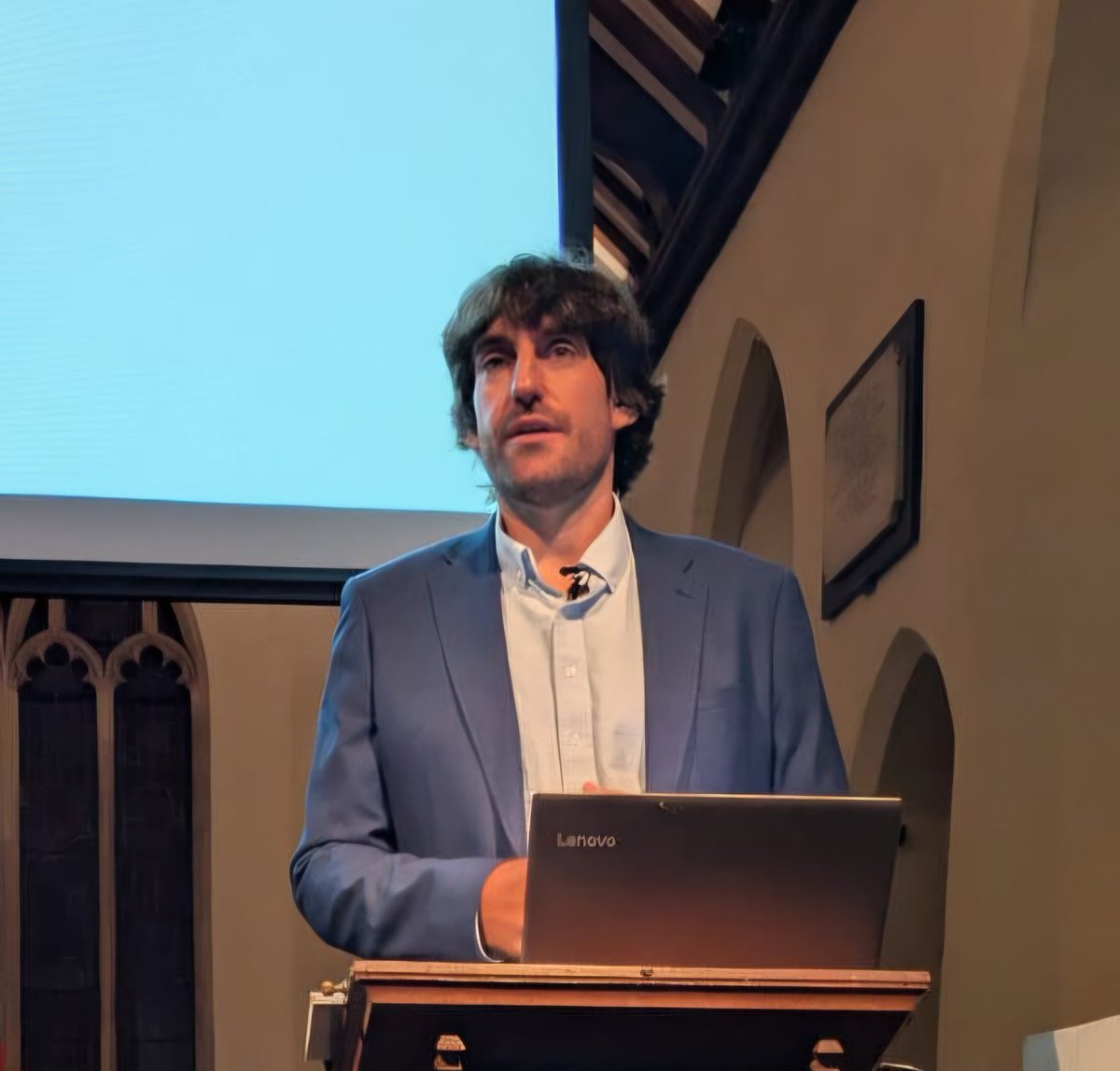
This weekend I was invited to speak at the Cheriton Talks in Hampshire about the experience.
Looking at the list of previous speakers, I’ll admit I felt a little apprehensive.
The talk wasn’t really about rowing.
It was about what happens when things don’t go to plan.
Before I even made it to the start line, I very nearly drowned during a training row accident off the Welsh coast.
Later in the Atlantic there were long stretches where everything slowed down and the doubts crept in.
Somewhere out there I realised something important about why we push ourselves to do difficult things.
Thank you to everyone who attended and for such a warm welcome.
The questions, and the feedback afterwards, were incredibly kind.
Pinch punch first Monday of the month! 📈
Here are the cumulative returns from our 10 Navigate Portfolios to date. ⚓
Use Navigate Portfolios to build your WealthMap® financial plan.
✅ Identify your investment goals
✅ Access global markets
✅ At minimal cost
If you invest in our portfolios your capital is at risk. Past performance is not a guide to future performance.
Actual returns received may be lower depending on which Momentum® support service you select. Please ask me for more details.
Follow the link below for more information👇👇👇
📊 The Illusion of Predictability in Markets
I believe that on a daily, weekly, and even monthly basis, market movements are essentially random.
Why?
Because markets are constantly pricing in news events, in real-time, by the millisecond.
And it's only getting faster.
Twenty years ago, you probably had about 15 seconds to react to breaking news.
For traders back then, 15 seconds was a significant window, a “lifetime” for computers at the time.
But today?
That window has vanished. Market reactions now happen in tenths of a second.
We’re at a point where markets are adjusting as words are still leaving a speaker’s mouth during a live event.
That fast.
With that kind of speed, predicting bottoms or tops is practically impossible.
The news that will shape those moves hasn’t even happened yet.
But here’s what I do know:
📈 The average market return is around 10% per year.
📉 After a 10% decline, the average return historically jumps to 14.7%.
I like those odds.
Long-term trends often tell a more reliable story than short-term noise.
Keep going. 🚀
📈 Tariffs, Tantrums & Triumphs 🎢
Navigating economic uncertainty is no small feat.
Our latest blog unpacks key insights to help investors thrive amid volatile markets — even when global politics takes a wild turn.
🔎 Read more: https://t.co/uwdIvs7Y4o #Investing #FinanceTips
A BABY BORN TODAY, graduating as a doctor in 2048, will need £308,955 for a 5-year medical degree in London.
💰 Saving in cash makes the mountain much bigger ⛰️
At 3% return, you must save £778/month
At 7% return, it drops to £453/month
🔑 THE LESSON? Invest early. Use equities. Let compounding work.
⏳ WAIT TOO LONG, and the financial mountain becomes unscalable.
Not sure where to start? We can help. Get in touch.
*Cost extrapolated from Guardian university estimates.
One of the key things to identify in financial planning is the...
"Well, I worry that..."
Everyone has at least one.
In most cases, you can build a solution within the plan.
To remove each of the "Well, I" worries.
New Pension Rules & NHS Pension Alert
From 6 April 2024, the new £268,275 lump sum allowance applies to tax-free pension withdrawals.
But NHS Pension calculations differ—meaning you may have already used 100% of this allowance.
The Transitional Tax-Free Amount Certificate (TTFAC) is a possible workaround, but it must applied for before taking benefits.
If you’ve accessed your NHS Pension post-April 2024, your personal pension withdrawals may now be taxed at your marginal rate.
Plan ahead to avoid surprises!
Applying for TTFAC would have saved a new client £13,000 in tax.
Please RT.
#NHSPension #PensionTax #FinancialPlanning
𝐖𝐡𝐲 𝐎𝐧𝐠𝐨𝐢𝐧𝐠 𝐅𝐢𝐧𝐚𝐧𝐜𝐢𝐚𝐥 𝐏𝐥𝐚𝐧𝐧𝐢𝐧𝐠 𝐈𝐬 𝐒𝐨 𝐕𝐚𝐥𝐮𝐚𝐛𝐥𝐞
The opposite of ongoing financial planning is a one-time financial plan. In a one-time plan, you’d map out a client’s goals—for example:
- Retiring at 55.
- Funding two children through university without relying on loans.
- Taking a big family holiday once a year.
- Tapering down travel and expenses from 70, perhaps spending more time in Europe and less travelling further afield.
Achieving these goals requires a plan.
But here's the difference: with a one-time financial plan, you hand someone a roadmap and say, "Here's how to get there. Best of luck."
Ongoing financial planning, however, is about so much more than just handing over a plan.
It’s about continuously reacting to short-term changes, reassessing long-term goals, and ensuring the desired outcomes are achieved, no matter what life throws your way.
One client once said to me, "The first phone call I made was to my children. The second was to you."
That’s the essence of ongoing financial planning: 𝐚𝐜𝐜𝐞𝐬𝐬.
Clients are paying for a service where they know they can access expert advice whenever they need it—whether during business hours or on a Sunday morning for an urgent situation.
Certain phone calls can’t wait, and I’m there to answer them.
Yes, a one-time financial plan is better than no plan at all.
But the true value lies in having an ongoing service, one that evolves with you and ensures your goals are not just planned for—but achieved, with support that reacts when you need it to.
And you may not be able to plan for those moments. Unless you planned for them.
Do you agree?
Have You Ever Faced This (Great) Problem?
You’ve got some extra cash or you’re rethinking how you allocate your time.
Maybe you’ve been considering:
- Dropping 2 PAs to focus on private work but are unsure how that will affect your NHS pension.
- Scaling back private work to improve work-life balance but worried about covering school fees.
- Or simply deciding whether to pay down your mortgage or invest your savings.
What’s the right move for your future?
The challenge is, it’s hard to weigh these options.
Our brains can focus on one strategy—like reducing NHS commitments—but struggle to calculate the knock-on effects on other parts of our financial life, like pensions or long-term savings.
Which option really sets you up for a better future?
That’s where WealthMap comes in.
It’s a financial planning service designed for doctors, helping you compare multiple strategies side by side.
- See the impact of dropping PAs on your pension.
- Understand how scaling back private work affects your ability to cover big expenses.
- Find out how paying off debt compares to investing your savings.
No more guesswork. No more sleepless nights.
Just clarity, confidence, and a plan tailored to you.
Want to see your WealthMap? 🚀
What excites you most about the future?
Is it doing less of something?
Less hours
Less on-call
Less clinical / management
Is "less" the best thing to focus on?
Removing the things you like doing least is good planning.
But maybe it's not less of something that's needed.
Swap less for MORE.
What do you want to be doing more of?
Maybe that's where the focus should be?
What excites you most about the future?
Is it doing less of something?
Less hours
Less on-call
Less clinical / management
Is "less" the best thing to focus on?
Removing the things you like doing least is good planning.
But maybe it's not less of something that's needed.
Swap less for MORE.
What do you want to be doing more of?
Maybe that's where the focus should be?
Incredibly proud of 11-year-old Ollie today.
He smashed his challenge to walk, run and cycle 500km during 2024 to raise awareness of Lewy body dementia, which his grandad Nick is living with.
He also raised £1,300 for Lewy Body Society!
Thank you, Ollie. You are an LBS hero. 🦸
Read more about his challenge: https://t.co/5LrNgmlC9w
#Lewybodydementia #dementia #Salisbury @journalupdate
Pinch punch first Monday of the month! 📈
Here are the cumulative returns from our 10 Navigate Portfolios to date. ⚓
Use Navigate Portfolios to build your WealthMap® financial plan.
✅ Identify your investment goals
✅ Access global markets
✅ At minimal cost
If you invest in our portfolios your capital is at risk. Past performance is not a guide to future performance. Actual returns received may be lower depending on which Momentum® support service you select. Please ask me for more details.
Follow the link below for more information👇👇👇
This Year, Let’s Try a Different Approach to Resolutions
We all know how it goes: the new year arrives, and we set ambitious goals—get fit, learn a new skill, achieve something extraordinary.
But by mid-February, we've binned them all off six nations rugby at the pub and long Sunday lunches with a couple of mates in the warm.
Daniel Kahneman, the brilliant behavioral psychologist, demonstrated through numerous studies that humans are generally more motivated to avoid pain than to seek pleasure, a phenomenon central to his groundbreaking Prospect Theory.
Resolutions often fade and are replaced by the demands of everyday life or something shiny and new. Like beer. 🍺
Here’s a thought: instead of focusing on what you want to achieve, consider what you don’t want.
In 2018, I realised the thing that made me most miserable during the week:
Traveling through London during rush hour. At 6'8", I constantly had an elbow in someone’s face (or someone's rucksack in my crotch).
Beyond the discomfort, it really annoyed me everyday - such an inefficient way to move humans around the city! 🤬
So, I made a small change:
I scheduled meetings just 30 minutes later. That tiny adjustment transformed my experience.
If I travel at 9:45am... I feel like I've won the Lottery. Such decadence! 🌴🏖
A small change but it made so much difference to how I felt at the start and end of each day.
Sometimes, the most effective resolutions aren’t about adding something new but removing something that weighs you down.
So as you think about the year ahead, ask yourself:
what’s one thing you don’t want in your life anymore?
Start there. The results might surprise you.
Let’s make 2025 a year of subtraction to happiness!
#NewYearReflections #Resolutions #HappinessHacks
Lots of discussions with clients atm around:
Does Ltd company still make sense for a doctor?
And,
Is now the best time to go for Entrepreneurs' Relief before the new BADR rates come in?