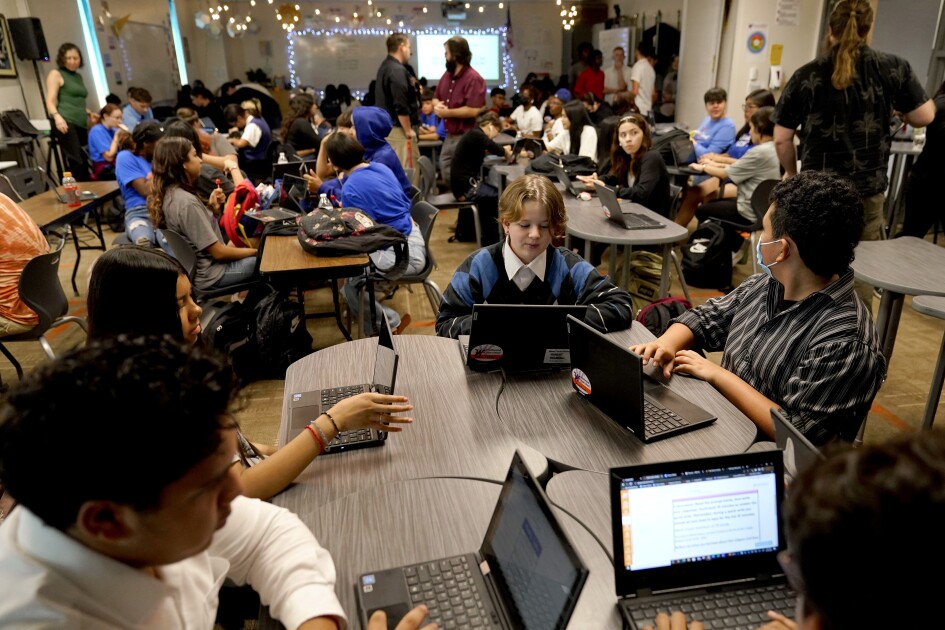
In districts like Broken Arrow, hundreds of free preschool slots are sitting empty. Why are Oklahoma families opting out of a program that once led the nation? From "homeschool vibes" to safety concerns, Andrea Eger dives into the data behind the decline.
https://t.co/bdrAvgX2q5
Librarians play a crucial role in teaching specific academic reading skills that students need to master to succeed on standardized tests.
The Librarian Effect on Literacy
https://t.co/IMLaEqbmRb
Schools put a lot of emphasis on “belonging” these days, but many miss one of the best, most organic ways to cultivate this sense of belonging. Reading and discussing great (whole) books together creates connections with others like nothing else. Schools don’t need to implement another gimmicky program; they need to get back to reading and teaching great books.
New article from E. D. Hirsch and me on (1) the evidence for the importance of knowledge in reading; (2) why it’s taken so long for people to acknowledge the evidence; (3) what we predict if the role of knowledge is taken seriously. https://t.co/JJONYhQCxQ
Here's a study on exactly that point:
The proportion of academic words used by teachers during the school day is a significant predictor of student vocabulary growth and reading achievement. Research indicates that higher teacher usage of sophisticated, academic language directly correlates to higher student vocabulary scores at the end of the year, particularly for language-minority students.
https://t.co/OlpnYdvNjI
@adamboxer1 The real danger of "when done well" is that many educational interventions require considerable teacher skill to do well, so looking only at the results of those teachers is cherry-picking the data. It looks like an intervention effect, but it's really a teacher quality effect.
“What matters most for learning is not the strength of any single component, but how instructional expectations, opportunities and support are organized over time.”
Neuman and Bukzin: Today’s Kindergarten classrooms demand more, earlier — revealing a system out of sync with how young children actually learn https://t.co/r7KEDAMV4W
"What problem are you trying to solve? Here's the most powerful Q consequential leaders ask when considering data gathering, analysis & action.
Without clarity, we risk gathering & analyzing the wrong data & then wondering why nothing has changed."
#leadership
@JamesAFurey Most implementations of multi-tiered systems of support that I have seen spend way too much of their energy on tiers 2 and 3 and not enough time on tier 1. Do we want a fence at the top of the cliff or an ambulance at the bottom?
“Progress in education is rarely about discovering something new. More often it involves having the courage to stop doing things that never worked in the first place.”
Students who regularly experience "sustained cognitive activity"--focused, directed, uninterrupted thinking, reading and writing--during the school day develop better "cognitive endurance" that is, they learn to productively focus on tasks for longer.
https://t.co/eyz4u0qn4w
Research shows what happens before class – and in the first 5 minutes – matter.
That's why P @AK_El_Jefe's community doubled down on "Focus First Five." https://t.co/TCMvWTYUfT
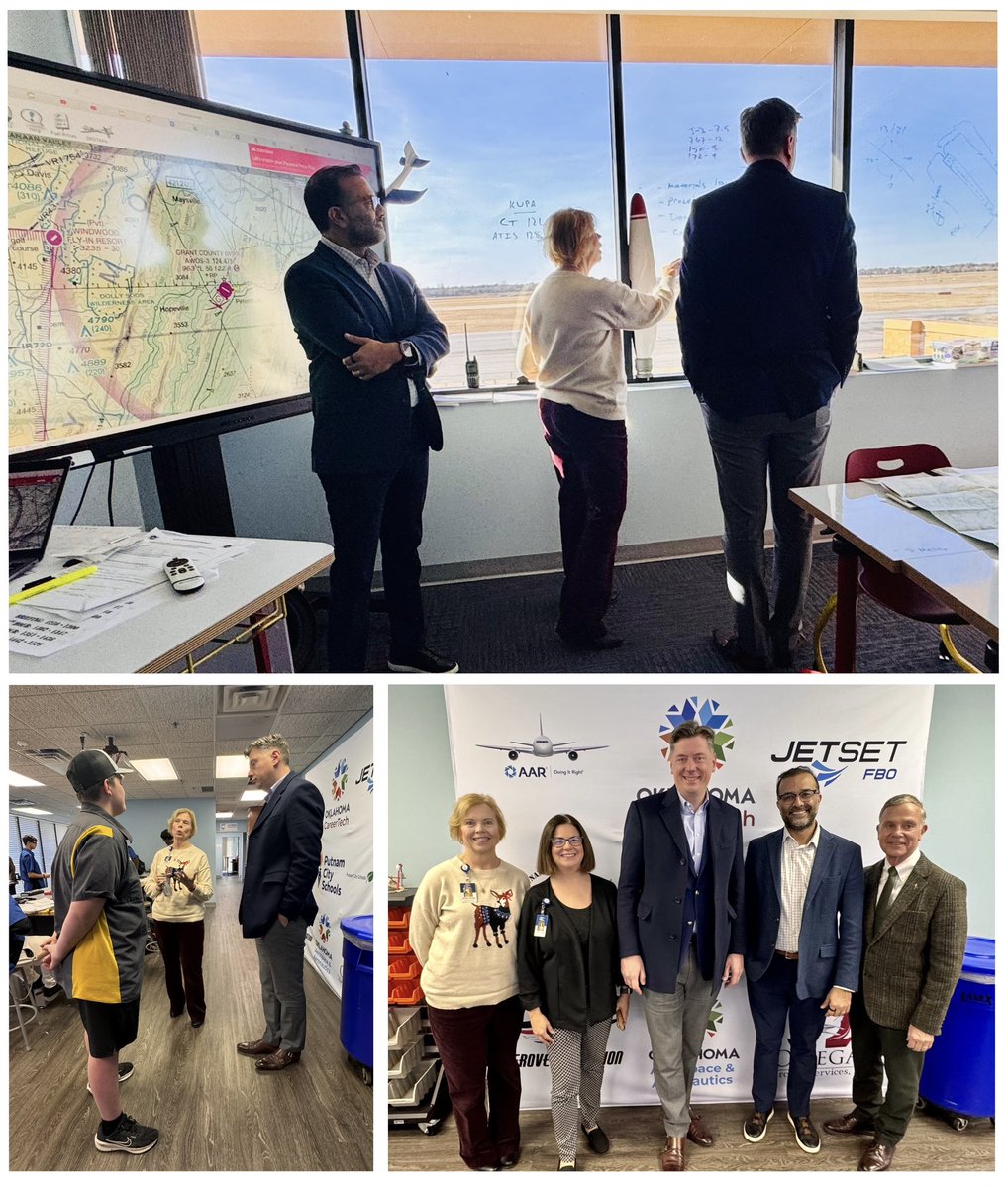
Oklahoma City owns three airports - Will Rogers, Wiley Post and Clarence Page. Wiley Post is now the home of the only high school aviation program in Oklahoma that is actually on the site of an airport. The runway sits right outside the classroom windows. At this unique Putnam City Schools initiative, students from all three Putnam City high schools have the opportunity to learn about mechanical and maintenance work, or train to be a pilot. I enjoyed visiting this week and learning about this innovative and important program.
Today, @Civitas_UK releases a collection of essays on the value of a knowledge-rich curriculum. Here's my chapter titled "Knowledge-rich curricula: A key driver of equity in education" https://t.co/Yv5ES6HfqM
"Curriculum-based professional learning" invites teachers to engage with their material as learners – and can renew educator energy!
Read on to find out more via, @LearningForward:
https://t.co/5A7s6GHEc2