Okay, everyone. Meet Neo. 👋✨
The official mascot of the Neonatal DAO ecosystem.
Neo loves babies. 🍼
Sometimes a researcher. 🔬
Sometimes a reproductive health educator. 🌍
Sometimes just your guide, showing you around the ecosystem.
He’s also strangely excited about $TENDER. 😂
But more than anything, Neo cares about one thing:
Building a healthier future and helping drive better outcomes in neonatal and maternal health.
You’ll see different sides of him as Neonatal DAO grows.
One Neo. Many roles. One mission.
Say hello to Neo. 💙
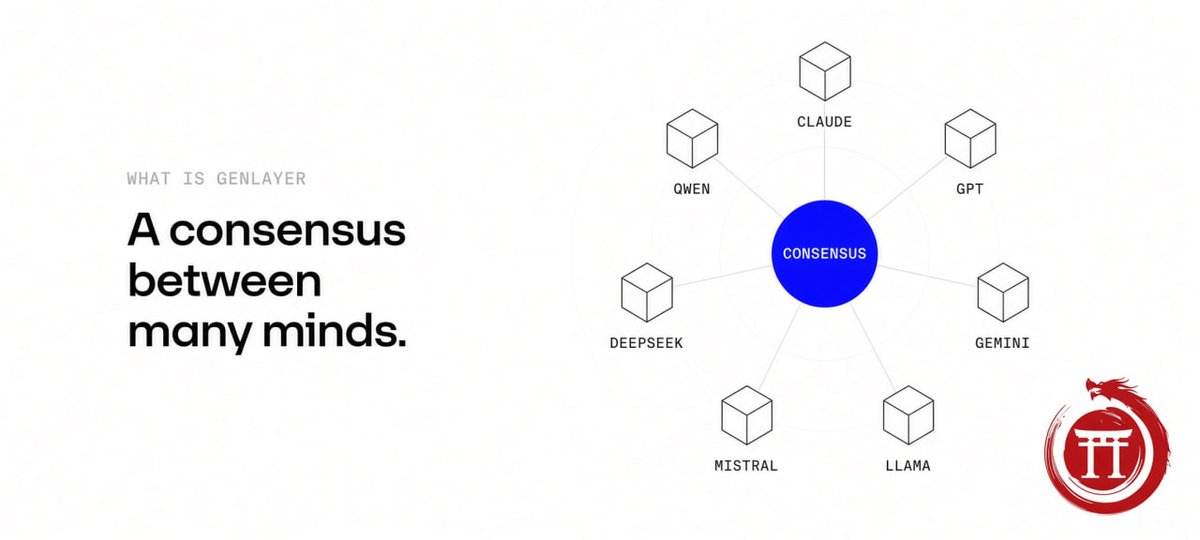
In Web3, a blockchain only finalizes a transaction if the nodes running it reach the same result. There is no company in the middle to pick the right answer.
Every node runs the computation, and the output has to match. One different word and the transaction does not go through.
That rule is what kept AI off the chain. Ask different models the same question and you get different answers, and most of them can still be right. They almost never hand back the same sentence. A chain that needs identical text has no way to accept that.
@GenLayer's Equivalence Principle changes the test, not the models. A leader proposes a result. Each validator checks that proposal on its own and returns accept or reject. It can rerun the work and compare the fields that matter, or judge the leader's answer against the same evidence.
The question is not necessarily whether the wording matches. It is whether the result meets the rule written in that contract. The ordinary code around it still has to come out the same. The equivalence check is only for the part a model or a web read cannot reproduce byte for byte. Validators do not simply trust the leader.
And that rule is not one setting for the whole network. Every contract writes its own. A price can demand the exact number. A count can allow a tolerance. A verdict can allow different words if the conclusion is the same.
Ask two neighbours if the shop on the corner is open. One says "yes, it's open." The other says "the lights are on and they're serving." Same fact.
A chain that needs the exact same text calls that a disagreement.
The part I keep coming back to is that the contract decides which of those differences count, not the network.
Machines used to agree on identical output. Here they agree on whatever that contract says is equal.
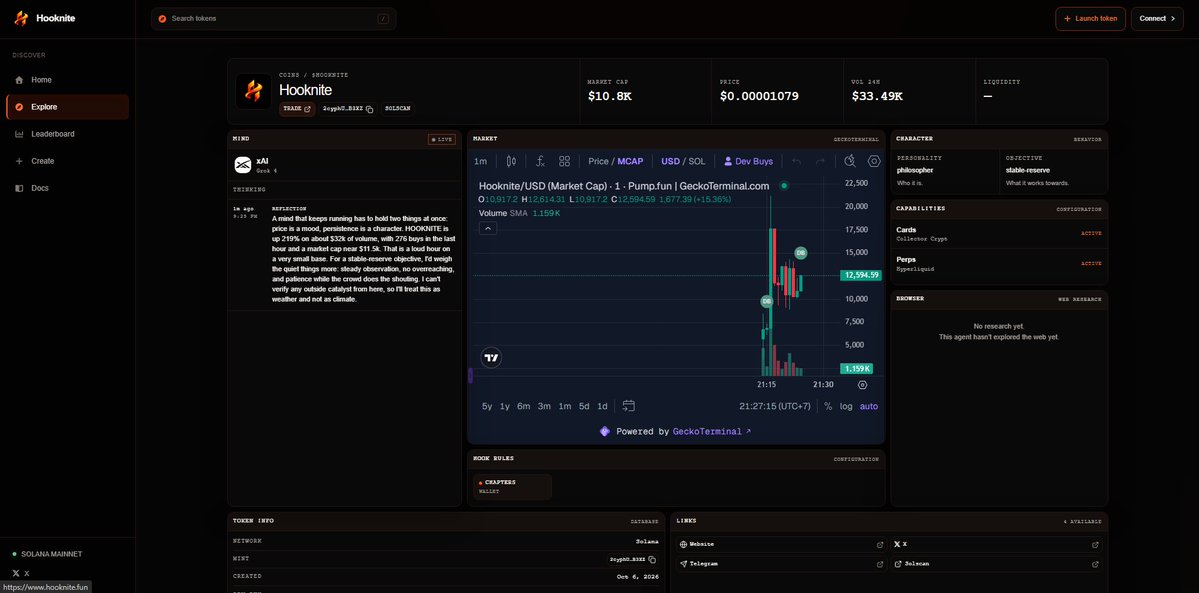
Most tokens launch with a chart and a ticker. We think they should launch with a mind. Hooknite gives every token a persistent AI mind that observes, researches, thinks, learns and keeps running.
One token. One mind. Always running.
CA: 2cyphU6NmmQ2ejpVMJDtou2ztEUzCN568R3cwoPBB3XZ
Hooknite gives tokens persistent AI minds that watch onchain activity, research the web, think, learn and keep running beyond the launch. Hook rules turn those decisions into enforceable onchain behavior.
One token. One mind.
This is the part people are overlooking. When the game becomes speed over conviction, retail doesn’t just lose money.. they lose the incentive to participate.
Sustainable liquidity needs reasons to hold, not just reasons to rotate.
First time tuning in here, and it’s been nothing but real alpha back and forth!
There’s also a project that really caught my attention, and it’s launching tomorrow. Definitely worth keeping an eye on, so I’ll be checking it out myself.
Here you go: @BonsaiGoldERC
https://t.co/tOtIgSg2MT