@realwillreil HQB is just amazing. I am so fortunate to live in Shenzhen, just about 40 minutes away from HQB. As an electronics engineer and tinkerer, it's just a dream come true.
While many areas of the US and Europe still lack reliable 5G coverage, China has already rolled out 5G-Advanced in many cities and is moving into the second phase of 6G trials.
This is no longer just about testing one clever piece of technology. The latest trials are testing complete systems in real-world conditions: how equipment connects, how networks perform across different scenarios, and whether coverage holds up beyond a single test point.
At the 2026 6G Development Conference in Shanghai, researchers are set to unveil a 6G base-station prototype built using domestic computing power, alongside a dataset of U6GHz spectrum and real-world channel measurements. That data matters because AI-powered networks need to learn from actual signal conditions before they can make decisions about beams, interference and network resources.
China Mobile has also reported an 18Gbps download speed in a 6G experiment using U6GHz spectrum. That’s a striking result, but it is still an experimental figure—not a speed people can expect from a phone today. The bigger story is that testing is moving from individual technologies towards entire networks, with 15 organisations involved in trials covering areas such as immersive communications, AI in wireless networks and integrated sensing.
There is still a long road to commercial 6G. The standards are being developed now, and important questions remain about component supply, continuous coverage and when phones will be able to use the new spectrum. But the groundwork is already being laid.
While other countries are still trying to close gaps in their 5G networks, China is preparing for what comes next.
Do not underestimate China.
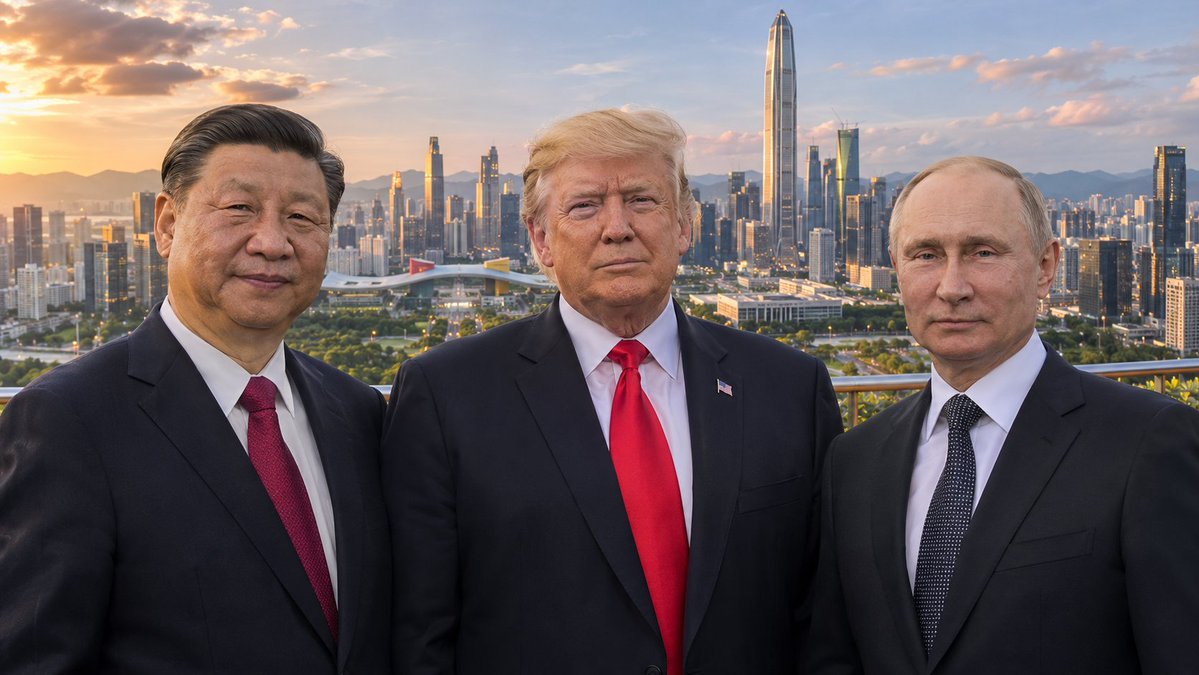
There’s a lot riding on the meeting between Xi Jinping, Vladimir Putin and Donald Trump here in Shenzhen.
Whatever you think of these three men, the decisions they make affect all of us. Trade, energy prices, technology, security — these things reach into our everyday lives, often much more than we realise.
Each brings different priorities to the table. Xi leads a China whose manufacturing, infrastructure and growing technological capabilities give it enormous influence. Trump can shift America’s relationships with the world through tariffs, sanctions and security commitments. Putin’s decisions, particularly over the war in Ukraine, carry consequences far beyond Russia’s borders.
They don’t control everything. Other countries have their own interests and deserve a say in decisions that affect them. But relations between China, Russia and America can either create room for cooperation or make solving almost any international problem more difficult.
For me, the significance of this meeting is the opportunity to talk directly. You don’t need to agree with someone to recognise the value of sitting down with them. In fact, when the disagreements are this serious, that’s when talking matters most.
And Shenzhen is quite a setting for it. Living here, I’ve seen how much this city has to show the world. Hosting these talks puts it at the centre of a conversation with consequences well beyond China.
I’m not expecting one meeting to suddenly resolve years of mistrust. The real test will be what follows: whether commitments are kept, tensions ease, and ordinary people see some benefit.
Because behind all the speeches and photographs are people who simply want a decent living, a secure future for their children and a world where disagreements don’t keep turning into conflict.
That’s what I’ll be looking for. What would you most like to see come out of these talks?
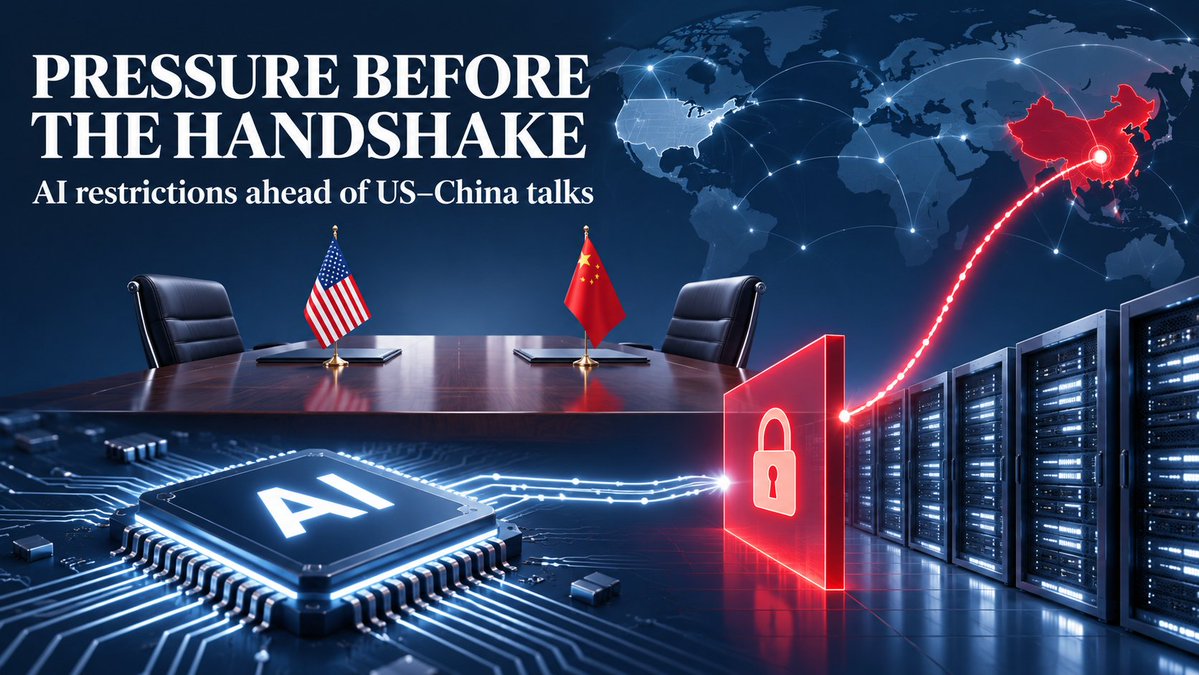
Washington’s idea of preparing for talks with China? Announce another restriction on China.
Just hours before Trump meets Xi Jinping at the APEC summit in Shenzhen, the USA is moving to tighten controls on Chinese companies accessing American AI computing power—even when the chips are sitting in another country.
So this goes beyond stopping chip exports to China. Washington now wants to restrict Chinese companies’ ability to use those chips remotely through overseas data centres. Source: US Commerce Department
The timing looks very familiar. Back in June 2019, the US blacklisted five Chinese supercomputing organisations just before Trump and Xi met in Osaka. Pressure before the handshake—we’ve seen this approach before. (Source: AP)
The US calls this national security. To me, it looks like another attempt to hold back China’s technological development while creating leverage ahead of talks.
If Washington wants a constructive relationship with China, it has a strange way of showing it.
How much trust can you build at the table when you’ve just put another obstacle in the way?
For years we’ve been told China is collapsing. This week, Trump gets to see it for himself.
On November 19, Xi, Trump and Putin are expected to sit down together in Shenzhen. It would be the first three-way meeting of its kind, and it’s happening in a city that barely existed as we know it a few decades ago.
Picture the drive in. Glass towers lit up against the night sky. Freeways packed bumper to bumper. Electric buses and taxis humming past. Delivery riders weaving through traffic at every hour. A city that doesn’t seem to know what “off” means.
As the motorcade rolls through, you have to wonder what’s going through Trump’s head.
“This is the economy that’s falling apart?”
Or maybe: “Have I been getting a very selective version of China all these years?”
It’s a fair question. The “China is about to crash” story has been told so often it’s become background noise. Every few years there’s a new deadline, and every few years the cranes are still up.
On one side, decades of predictions that China is in decline. On the other, a skyline that’s still going up.
Whatever gets said inside that room, the view outside speaks for itself. No press release needed.
#Shenzhen #APEC2026 #China
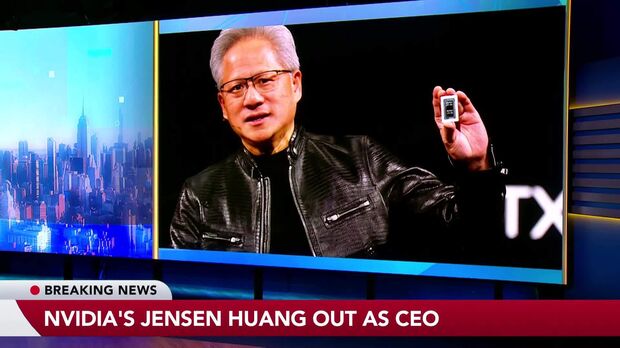
Well, that didn’t take long, did it?
Jensen Huang leaves Nvidia, and Bloomberg is straight out with “China is the biggest loser.”
An American company loses its leader, and somehow the headline is about China losing. You really couldn’t make it up.
What I find ridiculous is the way China’s engineers disappear from this argument. Years of research, investment and work get reduced to smuggled chips and “distilled” American technology. Apparently, Chinese people couldn’t possibly have contributed anything themselves.
Then we’re asked to believe that hopes for AI cooperation between the world’s two largest economies rested on one man at one company.
If that’s your assessment, surely you should be asking how cooperation became so fragile in the first place?
Of course Huang’s departure could create difficulties for Chinese companies. But that’s a very different argument from declaring China the “biggest loser.” Where’s the accounting of what American companies stand to lose when cooperation breaks down?
Chinese internet users call this “中必输” — “China always loses.”
China makes progress? Explain why it doesn’t count.
America has a problem? Explain why it’s worse for China.
Whatever the event, the conclusion is already written.
At some point, you have to ask whether you’re reading an analysis or simply being told what you want to hear.
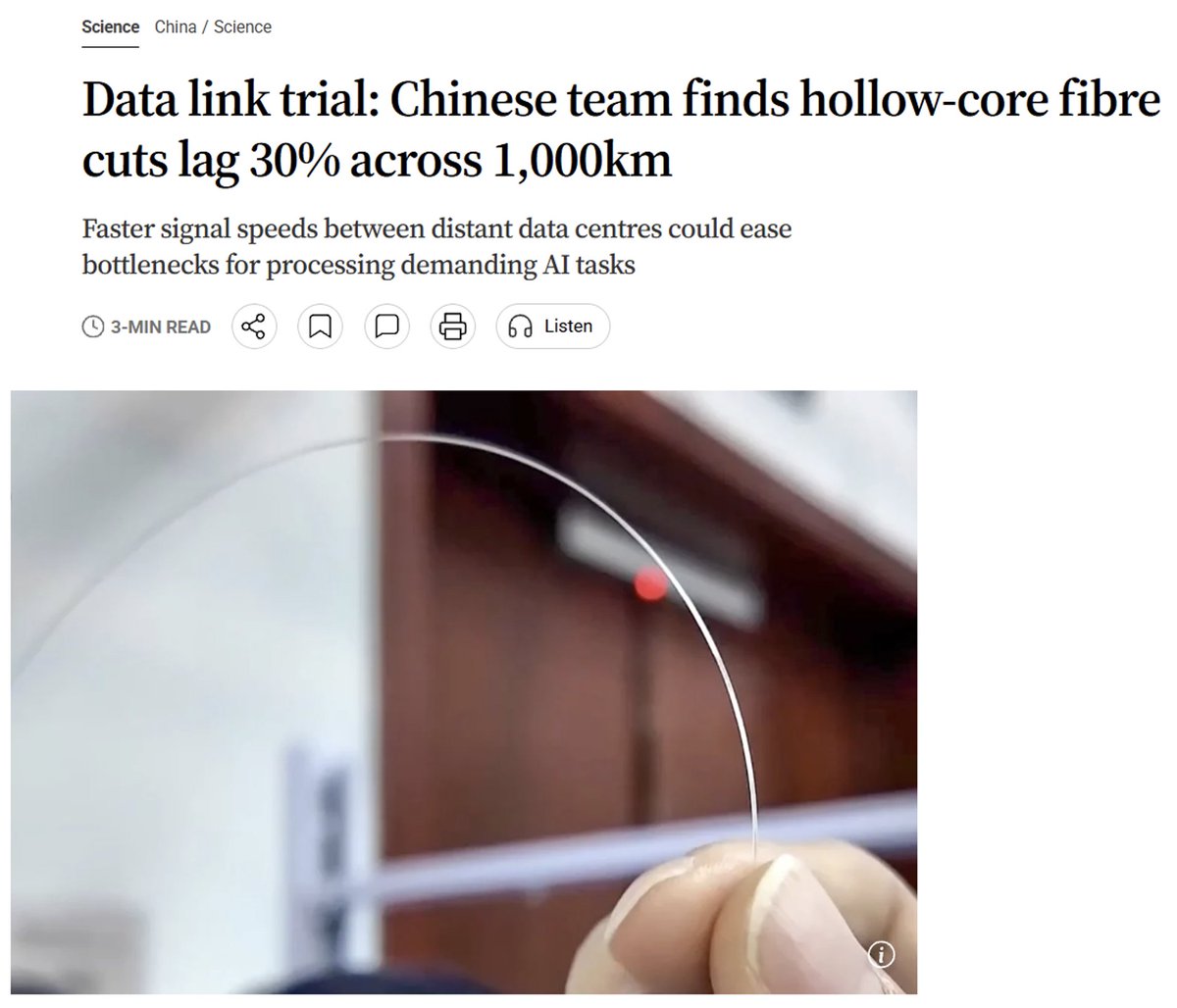
CHINA HAS JUST MADE LIGHT TRAVEL FASTER THROUGH THE INTERNET! And this could be a game changer for AI.
While much of the world is focused on who can build the fastest AI chips, Chinese researchers have been tackling another major challenge: how to move enormous amounts of data between computing centres at incredible speeds.
Researchers from China Telecom, ZTE and Yangtze Optical Fibre and Cable have successfully tested a new type of optical fibre over a distance of more than 1,000 kilometres, reducing transmission delays by around 30%.
Now, here's the clever part.
Traditional fibre-optic cables transmit light through solid glass, which actually slows the light down. This new technology uses something called hollow-core fibre, where light travels mainly through air, allowing it to move much closer to its maximum possible speed.
The results? An astonishing 64 terabits per second in each direction, simultaneously, with signals travelling 1,000 kilometres in just 3.43 milliseconds.
To put that into perspective, that's enough bandwidth to transmit around 160 full-length 4K movies every second, in each direction!
But what's really interesting is what this means for artificial intelligence.
As AI models become increasingly sophisticated, massive data centres need to communicate with each other, often across enormous distances. Reducing those communication delays could make distributed AI computing considerably more efficient.
And this fits perfectly with China's strategy of building computing infrastructure across the country, taking advantage of cheaper energy in western regions while serving the major technology centres in the east.
Of course, this was a controlled transmission trial rather than a fully deployed 1,000-kilometre commercial network. But it demonstrates just how far the technology has progressed.
What I find fascinating is that China isn't simply concentrating on developing more powerful processors. It's investing across the entire technology ecosystem, from semiconductors and AI models to energy infrastructure and now the networks connecting everything together.
This is something I've said many times: don't underestimate China.
While everyone is watching the AI chip race, China is quietly working on the infrastructure that could help power the next generation of artificial intelligence.
And sometimes, the biggest technological breakthroughs aren't the ones you can see.
CHINA IS TAKING A VERY DIFFERENT APPROACH TO THE RACE TO THE MOON — AND EVEN AMERICAN EXPERTS ARE ADMITTING IT MAY BE THE SMARTER ONE!
Both China and the United States are racing to put astronauts on the Moon, but there's a fundamental difference in how they're going about it.
China's approach is relatively straightforward: Test it, test it again, and then test it some more before putting human lives at risk.
The Americans, meanwhile, are relying heavily on private companies like SpaceX and Blue Origin to develop the technology needed to get astronauts safely onto the lunar surface.
And that approach is proving rather challenging.
NASA's Artemis programme has already suffered multiple delays, with its planned crewed lunar landing now pushed back to 2028. Technical problems, integration challenges and concerns over the safety of commercial lunar landers continue to raise questions about whether that deadline is achievable.
Perhaps even more concerning, a NASA Inspector General report highlighted that the agency currently has no capability to rescue astronauts stranded on the Moon following a serious accident.
Now, here's where things get interesting.
Casey Dreier, Chief of Space Policy at the American Planetary Society, has acknowledged that China's strategy of conducting a complete unmanned lunar mission rehearsal before sending astronauts could significantly reduce the risks.
China is already making substantial progress. Its Lanyue lunar lander has completed landing and take-off verification tests, while its Mengzhou spacecraft has undergone critical escape-system testing.
The Chinese philosophy is simple: wherever possible, test the technology in Earth orbit before attempting it around the Moon, and test it without astronauts before putting people aboard.
Personally, I think this says a great deal about China's approach to engineering.
It's not simply about being first. It's about developing the technology, proving it works, and making sure everything is ready before taking the next step.
We've seen this approach across so many Chinese industries, from high-speed rail and electric vehicles to advanced manufacturing and now space exploration.
Of course, both countries face enormous technical challenges, and there's no guarantee China will meet its target of landing astronauts on the Moon before 2030.
But I do find it interesting that while so much attention is focused on SpaceX and America's return to the Moon, China is quietly getting on with the job, systematically testing the technology needed to make its own lunar ambitions a reality.
And remember, the last time Americans walked on the Moon was back in 1972, more than half a century ago.
The question is no longer whether China can put astronauts on the Moon. It's whether China or America will get there first this time around.
One thing I've learned after spending so many years in China is this:
Never underestimate China's ability to achieve what it sets out to do.
CHINA'S ROBOT REVOLUTION IS ALREADY HERE!
While much of the world is still talking about the future of robotics, here in China, robots are already getting on with the job!
I recently visited PUDU Robotics in Shenzhen, and what I saw was seriously impressive.
We're talking about robots delivering food in restaurants, providing room service in hotels, cleaning shopping centres, transporting heavy loads in factories, and even making your morning coffee!
And these aren't just fancy prototypes designed to impress people at exhibitions. These are practical machines already being deployed in businesses around the world.
What impressed me most was how PUDU is developing different types of robots for different jobs, rather than assuming every robot needs to look like a human.
This is where China really excels — turning advanced technology into affordable, practical solutions for everyday problems.
@ShangguanJiewen Wow, that's pretty cool. It's always Chinese brands pushing the innovation envelope these days. Yet so may in the USA are in complete denial about China's capabilities. Don't underestimate China.
Solar generators used to be camping gear. In 2026, they're starting to look like home preparedness.
Why the shift? A few things seem to be happening at once:
1. Governments in at least 17 countries now ask households to be ready for 3–7 days on their own.
2. Winter and storm outages are a recurring reality across much of the US.
3. NERC, the grid's reliability watchdog, has warned that demand is growing faster than new supply.
4. US home electricity prices are expected to rise about 5% this year.
The category is moving too. Jackery, EcoFlow, Bluetti and Anker SOLIX have all been pushing beyond camping and into home backup.
Is demand following? One data point: Jackery, the world's No.1 solar generator brand, sold out its hero product line within 3 days of opening Black Friday preorders. Preorders are available now, and thousands of people are already on the waitlist.
No single cause explains that. But "personal energy" is starting to sound less like a niche and more like common sense.
What would you want to keep running if the power went out for 3 days?
@CleansedTweets It's getting crazy.... I live in China, travel around SE Asia, but still have some banking in UK, so often I have to complete questions, and get accounts blocked..
OH, THE IRONY! America spent years accusing China of stealing its technology. Now a former CIA deputy director wants America to spy on Chinese companies to get ahead!
You really couldn't make this stuff up!
For decades, we've heard the same accusations coming out of Washington. Chinese companies copy American designs, steal American technology, and only succeed because they supposedly can't innovate for themselves.
Well, how the tables have turned!
David Cohen, a former Deputy Director of the CIA who served under both Obama and Biden, has now openly called for the United States to abandon its longstanding ban on economic espionage and start spying on foreign companies to help American businesses compete.
And guess who's firmly in the crosshairs? China, of course!
We're talking about some of the most important technologies of the future, including artificial intelligence, semiconductors, 6G and quantum computing.
For years, Washington has portrayed China as a country that simply copies Western innovation. Yet now we're hearing arguments that America needs to steal technological secrets from its competitors because its own companies risk falling behind.
What happened to all that talk about American technological superiority?
I've been saying for years that people seriously underestimate China's ability to innovate. I've visited countless Chinese factories, technology exhibitions and research facilities, and I've seen firsthand just how quickly Chinese companies are developing new technologies.
China isn't simply catching up anymore. In many areas, it's pushing the boundaries of what's possible.
And perhaps that's what really worries Washington.
Of course, Cohen's proposal isn't official US government policy, but the fact that a former senior CIA official is openly advocating economic espionage to benefit American companies tells you something about how the technological competition is changing.
Imagine the reaction in Washington if a senior Chinese intelligence official publicly suggested doing exactly the same thing to American companies!
The headlines would be absolutely deafening.
When China is accused of doing it, it's called intellectual property theft. When America considers doing it, suddenly it's a matter of national security and economic competitiveness.
You really have to admire the double standards.
The irony is extraordinary. After spending decades telling the world that China couldn't innovate without stealing Western technology, some in Washington are now suggesting America should steal its competitors' technology to stay ahead.
Oh, how the tables have turned!
And I'll say it again: DO NOT UNDERESTIMATE CHINA.