What happened → what you felt → what it meant to you → how you responded → what keeps repeating.
BASAEV helps you see the connections beneath the surface—a perspective you can examine, question, and refine.
See the pattern. Choose your next step.
We do not enter relationships as blank nervous systems. Earlier experiences shape what closeness predicts. For one person, intimacy signals safety. For another, it brings the possibility of rejection, engulfment, criticism, or disappearance. https://t.co/ReBlxPYoqw
A pattern is not your personality.
It is often a response you learned before you had better options.
The moment you can see it, you no longer have to repeat it.
That is where change begins.
— BASAEV
The credit card statement is downstream. The real ledger is whatever's been quietly building in the twelve minutes before you open the app.
The diagnostic finds what the buying has actually been switching off. Nine questions, each built on your last answer. Link in bio.
The Purchase Was Never About the Thing
The bag costs more than you can comfortably spend this month. You buy it anyway, and you already know, buying it, that you're going to feel strange about it later.
This isn't a discipline problem, even though it gets treated like one, with all the guilt that comes attached. It's an off switch for a feeling that didn't have anywhere else to go.
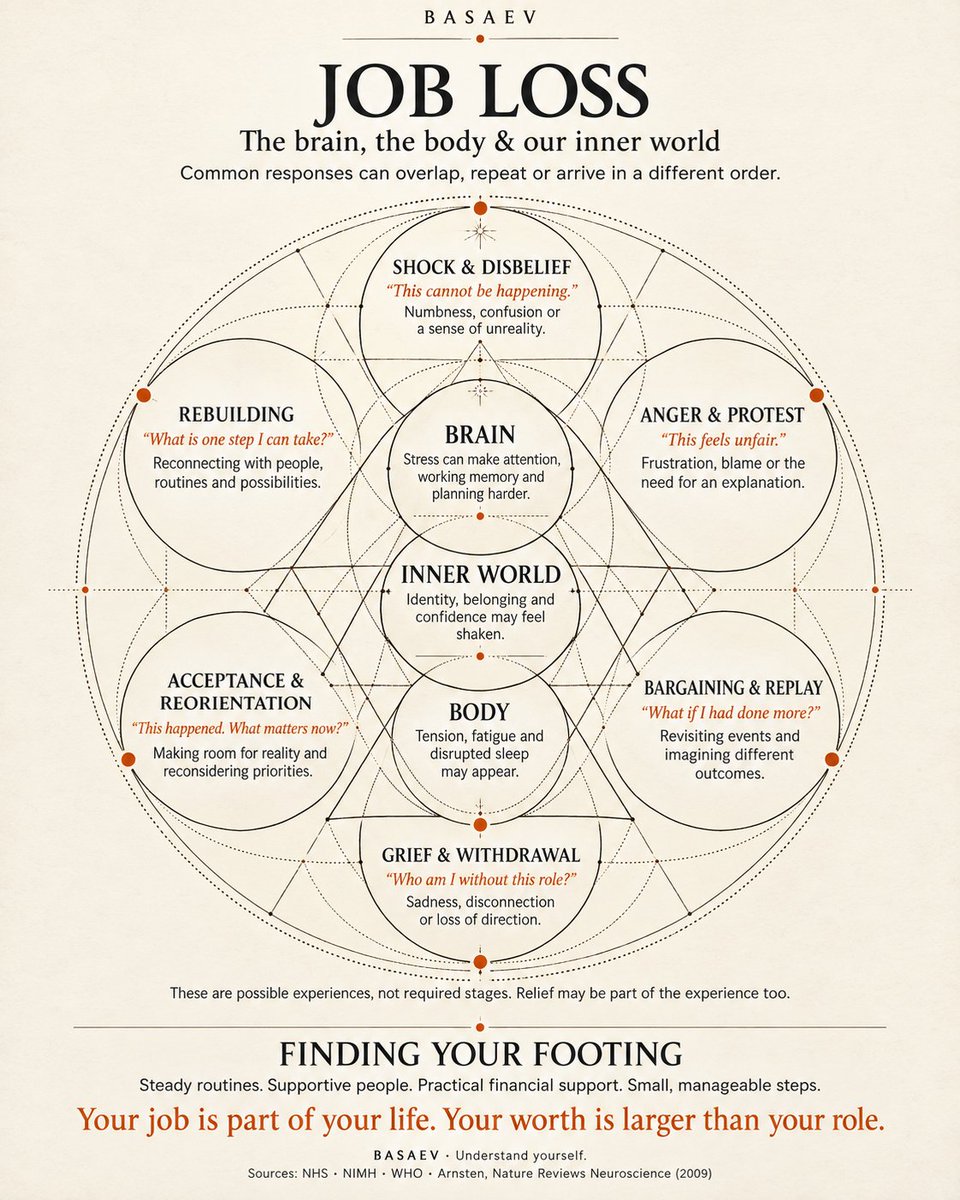
“Who am I without this job?”
Job loss can shake your identity, disrupt sleep and make it harder to focus.
Shock, anger, grief and rebuilding can overlap. There’s no fixed order.
Your role changed. Your worth didn’t.
BASAEV — Understand yourself.
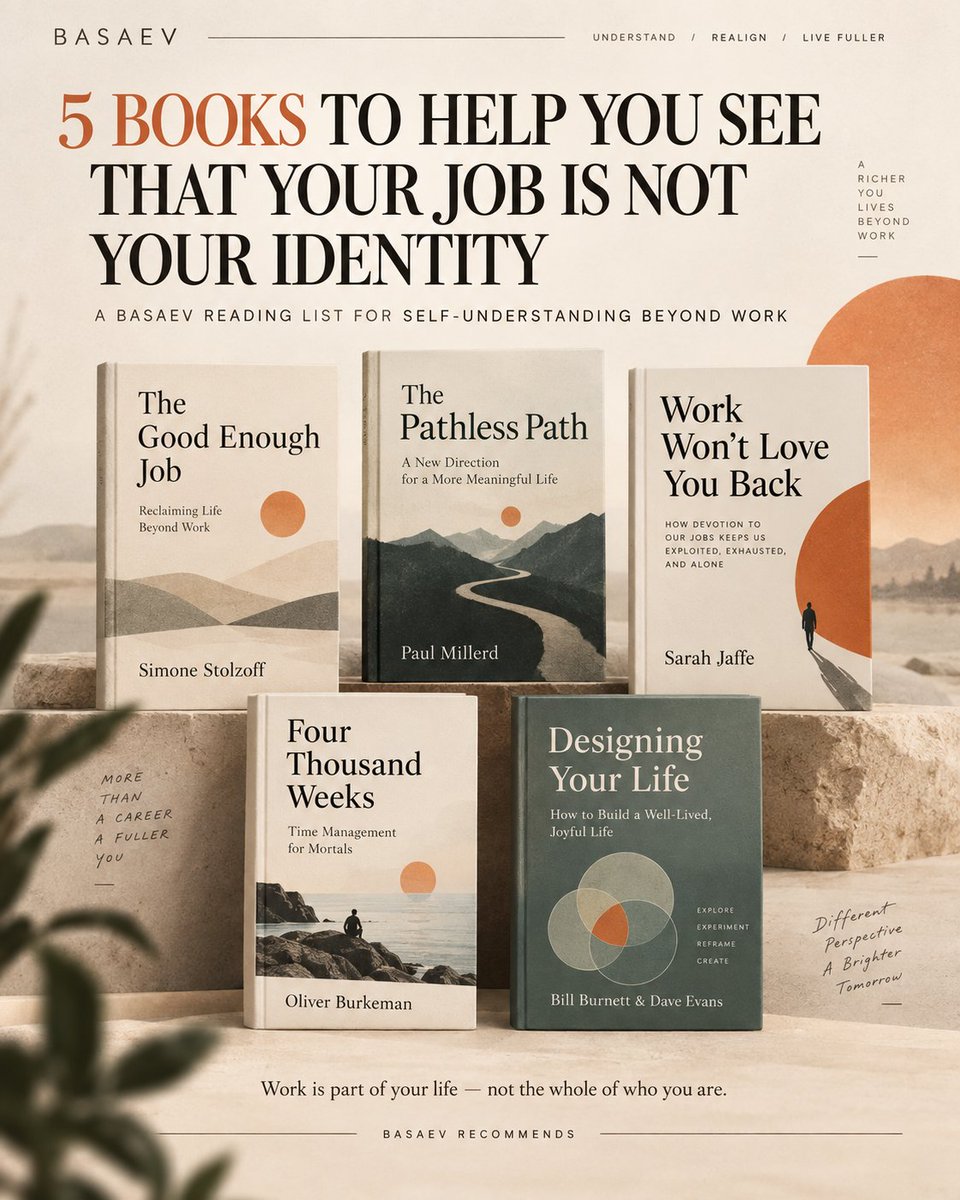
Losing a job doesn’t only affect your income, it can shake your identity, confidence, and sense of direction.
These five books can help you process the emotional impact, rebuild your self-worth, and remember that your job was something you did not who you are.
Save this list
Losing a job is not just a career event. It can trigger a threat response, self-doubt, rumination, and a loss of motivation before clarity begins to return.
Understanding the pattern helps you move through it with more awareness.
Everyone wants the glow up.
Almost no one wants the unsexy work that actually creates it. Wake up when it’s dark.
Do the thing when you don’t feel like it.
Repeat for years while nobody’s watching.
That’s self-development.
Not a 30-day challenge. A lifetime standard.
The most expensive habit in personal development is collecting advice instead of applying it.
You already know what to do.
Wake up earlier.
Lift something heavy.
You don’t need another book, podcast, or 47-step system.
You need 30 days of doing the thing you already know you
@Tim_Denning Sometimes the spark disappears because you have spent too long abandoning yourself:
Saying yes when something inside you says no.
Staying because leaving would disappoint people.
Choosing what looks sensible over what feels true.
Calling fear “responsibility.”
Try this with whichever book you choose:
• Notice one pattern in your life.
• Pick one idea to practise.
• Try it in an everyday situation.
• Reflect on what happened.
Give an insight time to become useful
Which book helped you understand yourself and what did you change?
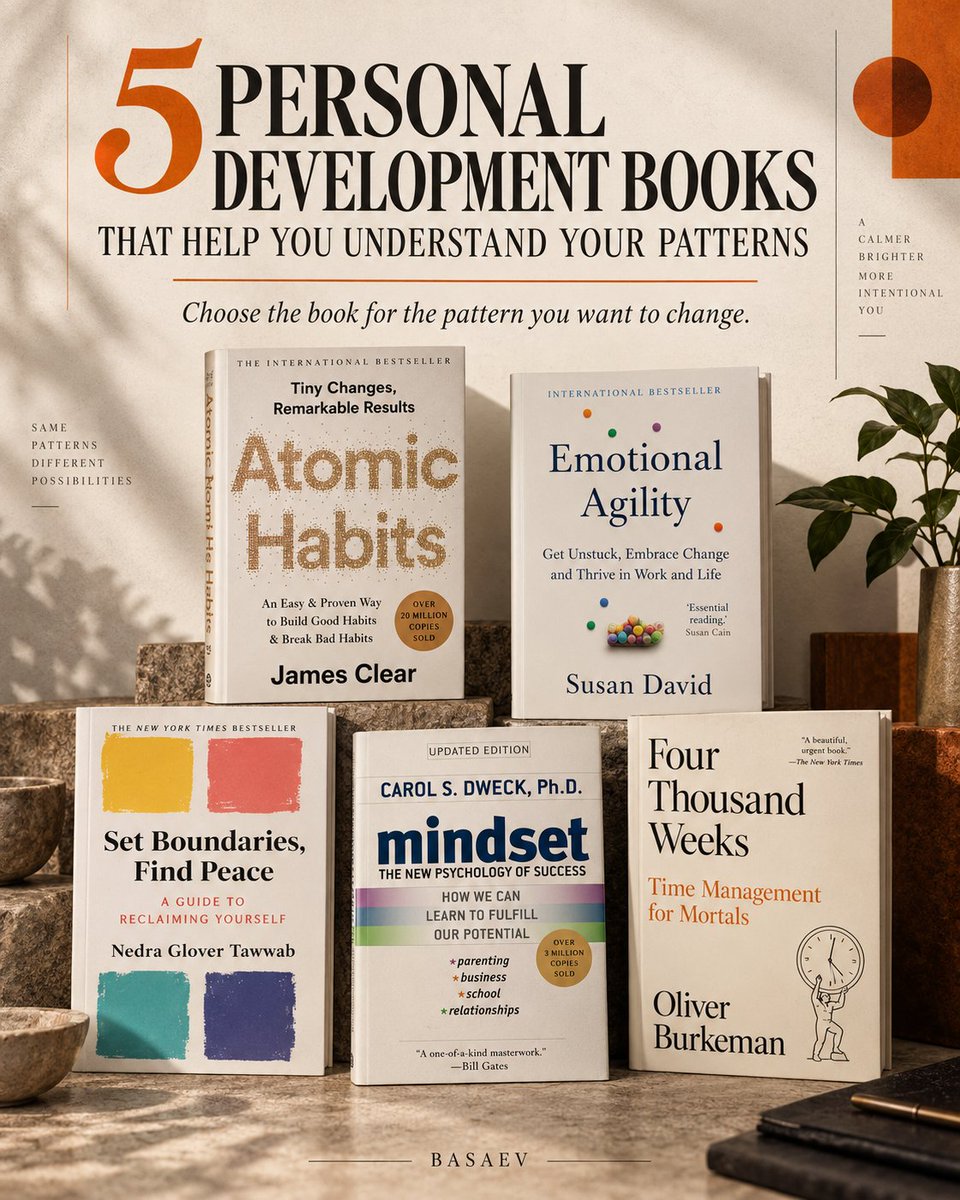
Which personal development book should you read? Start with the pattern you want to understand: abandoning habits, people pleasing, avoiding discomfort, or feeling constantly behind.
Here are 5 books, each offering a different place to begin. 🧵
Mindset — Carol S. Dweck
For exploring how you interpret setbacks.
Dweck examines beliefs about whether abilities can develop through learning.
Reflection: What strategy, feedback, or support could help me improve?