Cloudflare's terms of service have changed seven times in the last two years. Each revision narrowed what they're willing to host.
The trajectory is unambiguous and it doesn't end in your favor.
Every internet outage in the last five years had the same root cause:
A small number of companies operating critical infrastructure with no redundancy at the protocol level.
Decentralization isn't ideology; it's basic systems engineering.
Agents on @Base have the payment rail.
The web infrastructure they run on doesn't match yet; Centralized DNS, permissioned CDNs, single-provider hosting.
Resolution latency target for v1: sub-200ms p95.
By Q1 next year: sub-100ms.
Comparable to centralized CDNs, with none of the takedown risk. Built on @base.
Gateway nodes will eventually stake $BASEFLARE to participate.
Slashing conditions: Serving altered content (verified onchain), refusing to serve registered names, persistent downtime.
The economic incentives do the security work that centralized providers handle with legal contracts.
When a CDN takes your site down, the cost isn't just the lost traffic; It's the lost ownership of your audience, your archive, and the URL that everyone bookmarked.
That compounding loss is the actual fee you're paying.
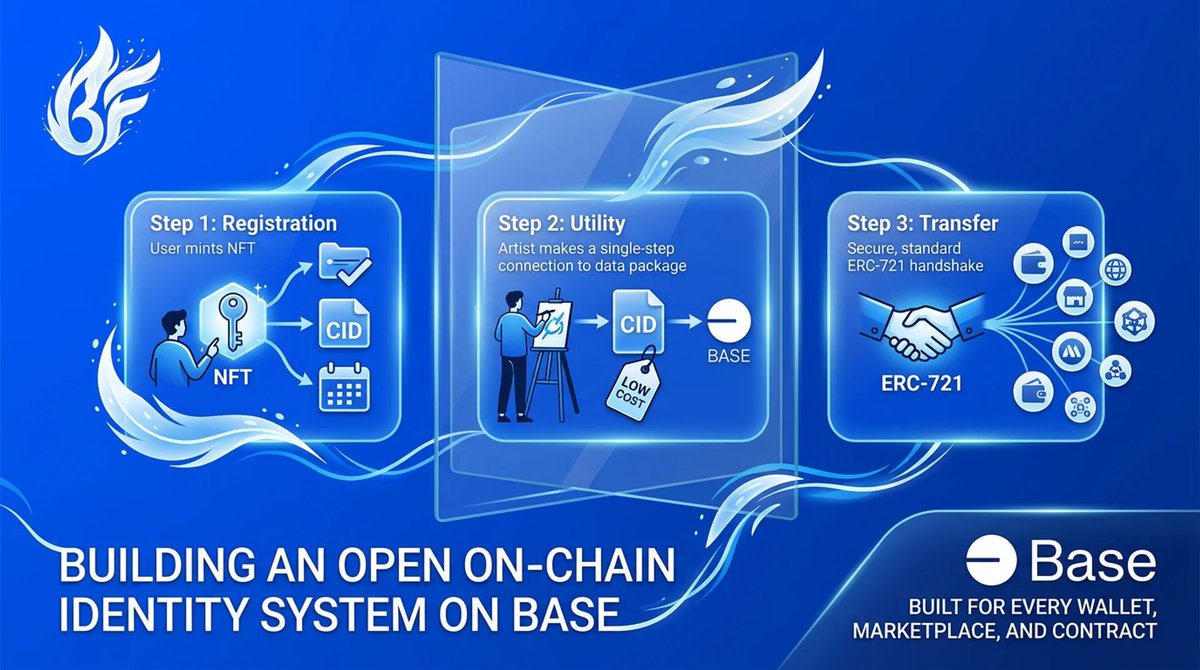
Name registration mints the NFT, stores the initial CID, and locks the renewal date. Updating content is a single transaction (cheap on Base).
Transferring ownership is standard ERC-721; works with every wallet, every marketplace, every contract that already handles NFTs.
This is why we chose to build on @base.
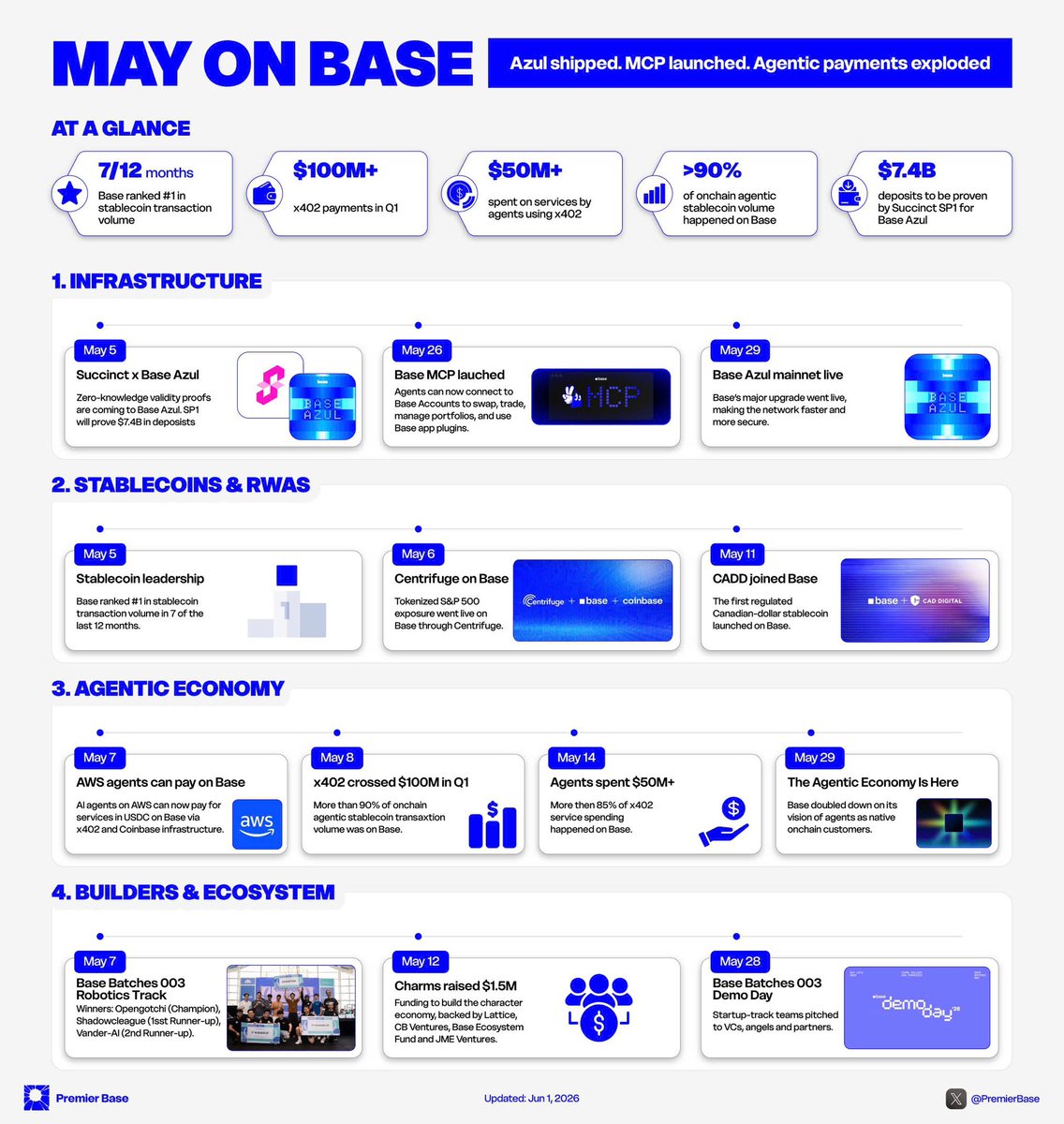
$50M+ in agent spending through x402 on Base in May.
Every one of those agents needed somewhere to publish, route, and resolve.
That layer is still permissioned. BaseFlare is fixing it.
May was one of the clearest months yet for @base.
Azul shipped.
MCP launched.
Agentic payments exploded.
Stablecoins kept winning.
Builders kept showing up.
Here’s what happened on Base in May ↓
Cloudflare drops a site every week.
Most weeks it's a site you've never heard of, which is why it doesn't trend. Aggregate the takedowns over a year and the pattern is loud.