Truely Inspirational.
Divorced by husband, young mother Mubeen Fatima clears J&K Administrative Services Exam by securing Rank 154. Befitting reply to those who thought her live was over after her traumatic divorce. Kudos!
@grok@IamJoelBrown@Manifest_Lord@grok What will its implications be on India and do you see a lockdown type scenario in future owing to the fuel and energy crisis that may emerge owing to this conflict?
*🚨 Missing Girl Alert | Baramulla Police*
Baramulla Police has activated a Special Tip Line to trace missing girl Ranjeet Kaur (20 yrs), daughter of Dalbir Singh, R/o Trabooni Karnah, Tangdhar, Kupwara.
She reportedly left her relatives’ residence at Singhbagh, Baramulla.
For a 90s kid in Kashmir, New Year’s Eve was quiet family meals, Doordarshan countdowns, huddling around kangris in blackouts, snowball fights amid curfews, and distant echoes of uncertainty.
Simple joys in tough times.
#Kashmir#HappyNewYear2026
🚨 Baramulla Police Strike
Again!
Two drug peddlers arrested near GMC Baramulla; 964g heroin worth ₹1 crore seized. FIR 214/2025 registered & probe underway. War on drugs continues with full intensity.
#JmuKmrPolice#KashmirPolice#DIGNorthKashmirRange
No Protection Under PC Act 1988 for Corruption Cases filed in J&K Before Oct 2019
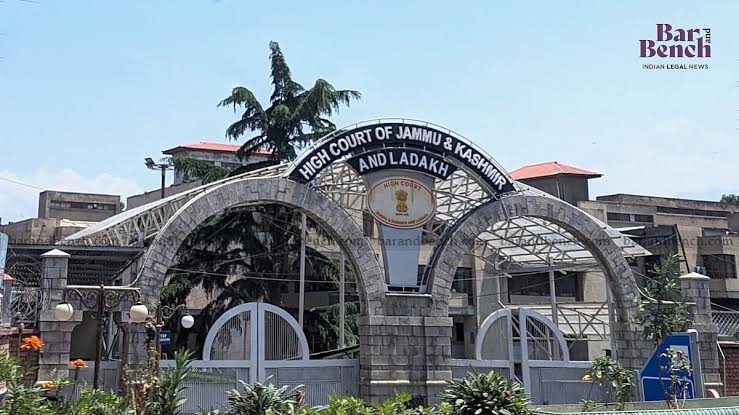
The J&K High Court has ruled that public officials accused of corruption before the J&K Reorganisation Act, 2019 came into effect cannot claim the protection of Section 17-A of the Prevention of Corruption Act, 1988.
What is Section 17-A
Inserted through the 2018 amendment, Section 17-A requires mandatory prior approval from the government before any investigation can be initiated against a public servant for decisions taken in the discharge of official duties.
Without this sanction, an investigation under the PC Act cannot proceed. However, this safeguard does not apply if the public servant is caught red-handed taking a bribe.
The now repealed J&K State PC Act did not contain Section 17-A, which protects public servants from investigation without prior approval of the government.
What did the HC say and why did it say so:
A petition was filed before the J&K High Court seeking protection against investigation in corruption charges.
The petitioner argued that since the Central Prevention of Corruption Act, 1988 came into force in J&K after reorganisation, the investigation should follow its procedure, giving him the benefit of Section 17-A protection and requiring the probe to be conducted by higher-ranked officers.
A Bench comprising Justice Sanjay Dhar, rejected this argument. He held that Clause 13 of the J&K Reorganisation (Removal of Difficulties) Order, 2019 saves both the initiation and continuation of investigations, trials, and penalties under repealed State laws.
Since the alleged offence in this case took place before 31 October 2019, when the Jammu & Kashmir Prevention of Corruption Act, 2006 (the State’s own anti-corruption law) was still applicable, the investigation and trial must proceed under that repealed State Act, “as if the Reorganisation Act had not been passed.”
Implications:
This ruling settles the legal position. All corruption cases in J&K relating to offences before 31.10.2019 will continue under the repealed J&K Prevention of Corruption Act, 2006.
It means that the repeal of the law does not erase liability, and the protections under the Central PC Act, including Section 17-A, cannot be claimed for those offences.
[#LongReads]
Something unprecedented, perhaps constitutionally unsettling, has unfolded at the highest level of the Indian judiciary. As we all know, on August 4, the Supreme Court passed an order that effectively institutionally rebukes a sitting High Court judge (#JusticePrashantKumar of the #AllahabadHighCourt). The Top Court did not merely disagree with Justice Kumar's judicial reasoning; he was publicly stripped of his judicial responsibilities.
Now, the case, once disposed of, is listed again for hearing tomorrow. It is to be seen what transpires tomorrow in the #SupremeCourt, but before that, I have a few thoughts to make public on this issue, which has sparked discomfort within the legal fraternity.
At the outset, I must say that the remarks made in a judicial order of the Supreme Court, even if expunged tomorrow, would not completely restitute and restore the harmed judge from the loss of dignity and honour suffered by him.
Not to forget, such criticism of a judicial officer gives the litigating party a sense of victory not only over his opponent but also over the judge who had decided the case against him.
As we know, the #SupremeCourtofIndia is the final interpreter of law in India. Its jurisdiction under #Article136 allows it to correct legal errors, however significant. However, there is a vast difference between appellate correction and disciplinary intervention.
In directing the Chief Justice of the Allahabad High Court to remove Justice Prashant Kumar from the criminal roster (and that too until his retirement) and assign him only to a division bench, the Supreme Court has stepped into territory it constitutionally does not inhabit: administrative superintendence over High Courts.
The foundational error in the Court's reasoning is its conflation of legal error with judicial incompetence, or worse, judicial misconduct. Even if the High Court's refusal to quash criminal proceedings was flawed, such a mistake remains squarely in the domain of legal disagreement, not disciplinary sanction.
Errors in reasoning do not become acts of misconduct unless accompanied by bad faith, corruption, or manifest bias, all of which are conspicuously absent here.
Indeed, the top court's speculative suggestion that the impugned order "may have been passed on some extraneous consideration" lacks both evidentiary foundation and procedural fairness.
Such an insinuation was floated in the top court's order without a shred of supporting proof or the opportunity for the judge to be heard. I am of the opinion that condemning a judge unheard is not merely unjust, but it is institutionally corrosive.
In a 1994 judgment of 'KP Tiwari vs. State of MP', the top Court had said that : "every error, however gross it may look, should not, therefore, be attributed to improper motive. It is possible that a particular judicial officer may be consistently passing orders creating a suspicion of judicial conduct which is not wholly or even partly attributable to innocent functioning".
Moreover, the Court's attempt to portray this as a pattern of judicial failings is unconvincing. The order notes that this was not the "only erroneous" decision of Justice Kumar, and that "many such erroneous orders have been looked into by (the Court) over a period of time".
But if a pattern was indeed being alleged, where was the demonstration of that pattern? Which other judgments? What were the factual or legal errors in those cases? The absence of any such record would definitely make us question the claim of credibility and give us an impression of arbitrariness. In a system governed by the rule of law, suspicion must never substitute for evidence.
However, in SC's defence, in my research, I did find a recent judgment of the Supreme Court passed last month, in which a division bench order of the Allahabad HC (of which Justice Prashant Kumar was also a part), was criticised ('Shailesh Kumar Singh Alias Shailesh R. Singh v. State of Uttar Pradesh & Ors 2025 LiveLaw (SC) 726') by the same bench of Justice JB Pardiwala and Justice R Mahadevan.
But this particular order of the Allahabad HC also involved Justice Mahesh Chandra Tripathi (senior judge on that bench). Yet, it is only Justice Kumar (a puisne judge in that matter) who now bears the institutional brunt. Now, I ask myself this question: Can responsibility be parsed so selectively in a decision rendered by a division bench?
And if the Top Court's concern was over repeated judicial lapses by Justice Prashant Kumar, why were similar institutional actions not taken earlier or against other judges? This selective attribution of fault raises troubling questions of consistency and fairness.
Judicial discretion, even when expansively exercised, is not a constitutional sin. At best, the High Court's decision could be described as unfortunate, and one may argue that this was perhaps an example of empathy overrunning doctrinal bounds. But that is hardly unprecedented.
In a pluralistic legal system that permits interpretive discretion, such deviations are expected and they have continued to take place. But the actual danger lies in equating a controversial judgment with incapacity. The moment we begin treating legal error as a disciplinary trigger, we transform appellate review into an instrument of professional intimidation.
And intimidation is exactly what seems to be setting in. A sitting judge of the Allahabad High Court, speaking off the record, termed the Supreme Court’s order 'unnecessary' and an instance of judicial overreach. Another bench of the same High Court today even remarked in open court that "the Supreme Court is getting strict on us".
Can one argue that these are just idle observations? No. They signal a quiet but growing unease. A judiciary second-guessing itself, cautious not out of prudence but out of fear that someone from the top would reprimand them, most likely, without even hearing them.
This chilling effect is antithetical to judicial independence. High Court judges are constitutional authorities in their own right. They are not subordinate to the Supreme Court in any administrative sense. In fact, the Supreme Court itself made this clear recently in 'Shankar Kumar Jha Vs The State Of Bihar & Ors 2023 LiveLaw (SC) 114' that High Courts are not subordinate constitutional bodies.
Of course, the Indian judiciary is integrated, but not centralized. While Article 227 empowers High Courts to have superintend over subordinate courts, there is no reciprocal provision allowing the Supreme Court to control the judicial assignments within High Courts.
This is why the August 4 order raises the spectre of a deeper structural concern: is it becoming a case of centralisation of judicial control? In the guise of judicial reasoning, we are in effect witnessing an administrative diktat.
The Supreme Court has requested the Chief Justice of the Allahabad High Court to take away criminal cases from Justice Kumar, a domain which completely and constitutionally belongs to the Chief Justice of the High Court alone.
Even if framed as a 'request', such language carries coercive weight when it comes from the apex court. It is a veiled exercise of administrative superintendence, a power the Supreme Court does not possess over the High Courts.
Ironically, even in matters where the High Court has constitutional authority over subordinate judges under Article 227, the Supreme Court has repeatedly advised restraint.
In 'Sonu Agnihotri vs. Chandra Shekhar 2024 LiveLaw (SC) 910' a three-judge bench held that "adverse comments on the personal conduct and calibre of the Judicial Officer should be avoided".
In this case, the top Court cautioned that while criticism of judgments may sometimes require strong language, criticism must remain tethered to the impugned order itself, not the judge’s character or capacity.
In that same spirit, the Supreme Court once eloquently warned in 'In The Matter Of 'K' A Judicial Officer' (2001), quoting Justice Cardozo, that even the most brilliant judges are fallible and that judicial humility must include a recognition of this fallibility in others.
To quote from the 2001 judgment: "The wisdom of a Superior Judge itching for making observations on a Subordinate Judge before ventilating into expression must pause for a moment and read the counsel of Cardozo - "Write an opinion, and read it a few years later when it is dissected in the briefs of counsel. You will learn for the first time the limitations of the power of speech, or, if not those of speech in general, at all events your own. All sorts of gaps and obstacles and impediments will obtrude themselves before your gaze, as pitilessly manifest as the hazards on a golf course. Sometimes you will know that the fault is truly yours, in which event you can only smite your breast, and pray for deliverance thereafter.""
In a 1997 judgment, the Supreme Court had observed that the Higher courts must remind themselves constantly that higher tiers are provided in the judicial hierarchy to set right errors which could possibly have crept in the findings or orders of courts at the lower tiers and that "such powers are certainly not for belching diatribe at judicial personages".
In fact, in the 1994 judgment of 'KP Tiwari vs. State of MP' the Supreme Court observed that our legal system acknowledges the fallibility of judges and hence provides for appeals and revisions and that "a judge who has not committed an error is yet to be born, and that applies to judges at all levels from the lowest to the highest".
What applies to judges of the subordinate judiciary must apply even more forcefully to judges of constitutional courts. And yet, in the present case, a High Court judge has been publicly rebuked, effectively demoted, and stripped of his judicial determination, without any formal inquiry, charge, or process. His record has not been placed in the public domain, and he can neither speak about it in public.
The broader cost is institutional. When the Supreme Court sets a precedent of equating error with incapacity, dissent with dereliction, and discretion with defiance, it sends a message to all judges: constitutional authority is no protection from reputational annihilation.
Judicial independence was designed to shield judges from executive interference. Increasingly, it seems, the more pressing threat comes from within the judiciary itself.
Upholding Safety of Women and Children
Bharatiya Nyaya Sanhita (BNS) 2023 introduces a dedicated chapter on offences against woman and child
*** Stringent Punishment for Offenders
*** Victim-centric Approach
*** Gender Neutrality and e-FIR
*** Victim's Right to Information
#NewCriminalLaws
@KashmirPolice@ZPHQJammu
I strongly condemn the terror attack in Pahalgam, Jammu and Kashmir. Condolences to those who have lost their loved ones. I pray that the injured recover at the earliest. All possible assistance is being provided to those affected.
Those behind this heinous act will be brought to justice...they will not be spared! Their evil agenda will never succeed. Our resolve to fight terrorism is unshakable and it will get even stronger.
Kedar Nath Vs State Of Bihar
He challenged the might of the State and won, partly. In 1962, Kedar Nath Singh became the face of a landmark sedition verdict.
Just months later, in the rain-soaked fields of Barauni, he died saving children from the tracks.
A martyr in silence!




![ISparshUpadhyay's tweet photo. [#LongReads]
Something unprecedented, perhaps constitutionally unsettling, has unfolded at the highest level of the Indian judiciary. As we all know, on August 4, the Supreme Court passed an order that effectively institutionally rebukes a sitting High Court judge (#JusticePrashantKumar of the #AllahabadHighCourt). The Top Court did not merely disagree with Justice Kumar's judicial reasoning; he was publicly stripped of his judicial responsibilities.
Now, the case, once disposed of, is listed again for hearing tomorrow. It is to be seen what transpires tomorrow in the #SupremeCourt, but before that, I have a few thoughts to make public on this issue, which has sparked discomfort within the legal fraternity.
At the outset, I must say that the remarks made in a judicial order of the Supreme Court, even if expunged tomorrow, would not completely restitute and restore the harmed judge from the loss of dignity and honour suffered by him.
Not to forget, such criticism of a judicial officer gives the litigating party a sense of victory not only over his opponent but also over the judge who had decided the case against him.
As we know, the #SupremeCourtofIndia is the final interpreter of law in India. Its jurisdiction under #Article136 allows it to correct legal errors, however significant. However, there is a vast difference between appellate correction and disciplinary intervention.
In directing the Chief Justice of the Allahabad High Court to remove Justice Prashant Kumar from the criminal roster (and that too until his retirement) and assign him only to a division bench, the Supreme Court has stepped into territory it constitutionally does not inhabit: administrative superintendence over High Courts.
The foundational error in the Court's reasoning is its conflation of legal error with judicial incompetence, or worse, judicial misconduct. Even if the High Court's refusal to quash criminal proceedings was flawed, such a mistake remains squarely in the domain of legal disagreement, not disciplinary sanction.
Errors in reasoning do not become acts of misconduct unless accompanied by bad faith, corruption, or manifest bias, all of which are conspicuously absent here.
Indeed, the top court's speculative suggestion that the impugned order "may have been passed on some extraneous consideration" lacks both evidentiary foundation and procedural fairness.
Such an insinuation was floated in the top court's order without a shred of supporting proof or the opportunity for the judge to be heard. I am of the opinion that condemning a judge unheard is not merely unjust, but it is institutionally corrosive.
In a 1994 judgment of 'KP Tiwari vs. State of MP', the top Court had said that : "every error, however gross it may look, should not, therefore, be attributed to improper motive. It is possible that a particular judicial officer may be consistently passing orders creating a suspicion of judicial conduct which is not wholly or even partly attributable to innocent functioning".
Moreover, the Court's attempt to portray this as a pattern of judicial failings is unconvincing. The order notes that this was not the "only erroneous" decision of Justice Kumar, and that "many such erroneous orders have been looked into by (the Court) over a period of time".
But if a pattern was indeed being alleged, where was the demonstration of that pattern? Which other judgments? What were the factual or legal errors in those cases? The absence of any such record would definitely make us question the claim of credibility and give us an impression of arbitrariness. In a system governed by the rule of law, suspicion must never substitute for evidence.
However, in SC's defence, in my research, I did find a recent judgment of the Supreme Court passed last month, in which a division bench order of the Allahabad HC (of which Justice Prashant Kumar was also a part), was criticised ('Shailesh Kumar Singh Alias Shailesh R. Singh v. State of Uttar Pradesh & Ors 2025 LiveLaw (SC) 726') by the same bench of Justice JB Pardiwala and Justice R Mahadevan.
But this particular order of the Allahabad HC also involved Justice Mahesh Chandra Tripathi (senior judge on that bench). Yet, it is only Justice Kumar (a puisne judge in that matter) who now bears the institutional brunt. Now, I ask myself this question: Can responsibility be parsed so selectively in a decision rendered by a division bench?
And if the Top Court's concern was over repeated judicial lapses by Justice Prashant Kumar, why were similar institutional actions not taken earlier or against other judges? This selective attribution of fault raises troubling questions of consistency and fairness.
Judicial discretion, even when expansively exercised, is not a constitutional sin. At best, the High Court's decision could be described as unfortunate, and one may argue that this was perhaps an example of empathy overrunning doctrinal bounds. But that is hardly unprecedented.
In a pluralistic legal system that permits interpretive discretion, such deviations are expected and they have continued to take place. But the actual danger lies in equating a controversial judgment with incapacity. The moment we begin treating legal error as a disciplinary trigger, we transform appellate review into an instrument of professional intimidation.
And intimidation is exactly what seems to be setting in. A sitting judge of the Allahabad High Court, speaking off the record, termed the Supreme Court’s order 'unnecessary' and an instance of judicial overreach. Another bench of the same High Court today even remarked in open court that "the Supreme Court is getting strict on us".
Can one argue that these are just idle observations? No. They signal a quiet but growing unease. A judiciary second-guessing itself, cautious not out of prudence but out of fear that someone from the top would reprimand them, most likely, without even hearing them.
This chilling effect is antithetical to judicial independence. High Court judges are constitutional authorities in their own right. They are not subordinate to the Supreme Court in any administrative sense. In fact, the Supreme Court itself made this clear recently in 'Shankar Kumar Jha Vs The State Of Bihar & Ors 2023 LiveLaw (SC) 114' that High Courts are not subordinate constitutional bodies.
Of course, the Indian judiciary is integrated, but not centralized. While Article 227 empowers High Courts to have superintend over subordinate courts, there is no reciprocal provision allowing the Supreme Court to control the judicial assignments within High Courts.
This is why the August 4 order raises the spectre of a deeper structural concern: is it becoming a case of centralisation of judicial control? In the guise of judicial reasoning, we are in effect witnessing an administrative diktat.
The Supreme Court has requested the Chief Justice of the Allahabad High Court to take away criminal cases from Justice Kumar, a domain which completely and constitutionally belongs to the Chief Justice of the High Court alone.
Even if framed as a 'request', such language carries coercive weight when it comes from the apex court. It is a veiled exercise of administrative superintendence, a power the Supreme Court does not possess over the High Courts.
Ironically, even in matters where the High Court has constitutional authority over subordinate judges under Article 227, the Supreme Court has repeatedly advised restraint.
In 'Sonu Agnihotri vs. Chandra Shekhar 2024 LiveLaw (SC) 910' a three-judge bench held that "adverse comments on the personal conduct and calibre of the Judicial Officer should be avoided".
In this case, the top Court cautioned that while criticism of judgments may sometimes require strong language, criticism must remain tethered to the impugned order itself, not the judge’s character or capacity.
In that same spirit, the Supreme Court once eloquently warned in 'In The Matter Of 'K' A Judicial Officer' (2001), quoting Justice Cardozo, that even the most brilliant judges are fallible and that judicial humility must include a recognition of this fallibility in others.
To quote from the 2001 judgment: "The wisdom of a Superior Judge itching for making observations on a Subordinate Judge before ventilating into expression must pause for a moment and read the counsel of Cardozo - "Write an opinion, and read it a few years later when it is dissected in the briefs of counsel. You will learn for the first time the limitations of the power of speech, or, if not those of speech in general, at all events your own. All sorts of gaps and obstacles and impediments will obtrude themselves before your gaze, as pitilessly manifest as the hazards on a golf course. Sometimes you will know that the fault is truly yours, in which event you can only smite your breast, and pray for deliverance thereafter.""
In a 1997 judgment, the Supreme Court had observed that the Higher courts must remind themselves constantly that higher tiers are provided in the judicial hierarchy to set right errors which could possibly have crept in the findings or orders of courts at the lower tiers and that "such powers are certainly not for belching diatribe at judicial personages".
In fact, in the 1994 judgment of 'KP Tiwari vs. State of MP' the Supreme Court observed that our legal system acknowledges the fallibility of judges and hence provides for appeals and revisions and that "a judge who has not committed an error is yet to be born, and that applies to judges at all levels from the lowest to the highest".
What applies to judges of the subordinate judiciary must apply even more forcefully to judges of constitutional courts. And yet, in the present case, a High Court judge has been publicly rebuked, effectively demoted, and stripped of his judicial determination, without any formal inquiry, charge, or process. His record has not been placed in the public domain, and he can neither speak about it in public.
The broader cost is institutional. When the Supreme Court sets a precedent of equating error with incapacity, dissent with dereliction, and discretion with defiance, it sends a message to all judges: constitutional authority is no protection from reputational annihilation.
Judicial independence was designed to shield judges from executive interference. Increasingly, it seems, the more pressing threat comes from within the judiciary itself.](https://pbs.twimg.com/media/GxwPEppXUAANUEf.jpg)