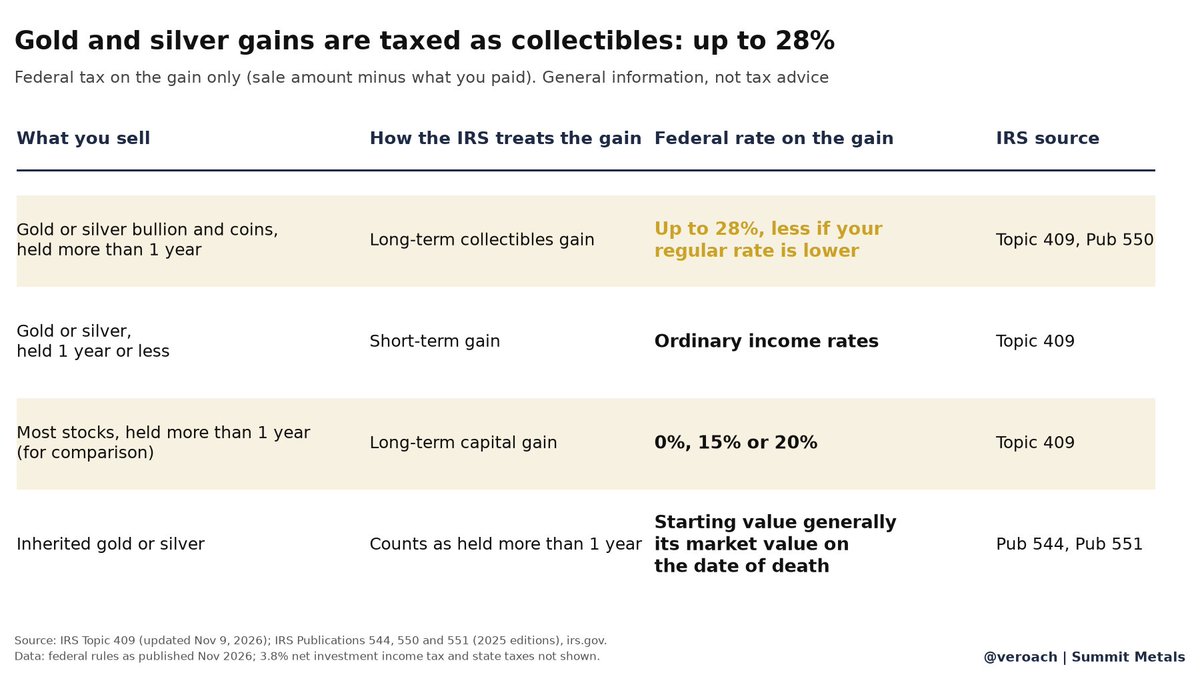
When you sell gold or silver at a gain, the IRS taxes it as a collectible, and that can mean a higher rate than stocks get.
IRS Topic 409 and Publications 544, 550 and 551:
• Held more than 1 year: the gain on bullion and coins is taxed at no more than 28%, and less if your regular rate is lower
• Held 1 year or less: the gain is taxed as ordinary income
• Long-term gains on most stocks top out at 20%. Both figures leave out the 3.8% net investment income tax that applies above certain income levels
• Inherited metal counts as held more than 1 year, and its starting value is generally its market value on the date of death
If you hold metal for retirement or plan to pass it on, keep a record of what you paid, because the tax is figured on the gain. This is general information from IRS pages, not tax advice. A tax pro can check how it applies to you.