@fimiletoks The reforms that this man is making... we won't understand it until after about 20 years... he's really rebuilding the country from scratch. These reforms are necessary and long overdue.thank you @PBATMediaCentre
There's something Tinubu keeps doing signing things into law that get very small headlines, but when you actually read about it, you realize it's a massive foundation for the Nigeria that's about to unlock.
That man is very smart but people underrate him. Maybe that's exactly why he has never lost an election.
@OgbeniDipo@officialABAT Are Nigerians even aware that 40% salary uplift is part of the deal President Tinubu had with the ASUU which took effect on January 1,2026?
We are not singing President Tinubu's praises enough..
I had Bola Tinubu's manifesto in my possession since 24 October 2022.
I read it for the 1st time on 25th October 2022.
I read all 80 something pages in 1 sitting.
My conclusion at the time - "if he does even half of all these things, I will support him"
Its 2026, he's done almost everything.
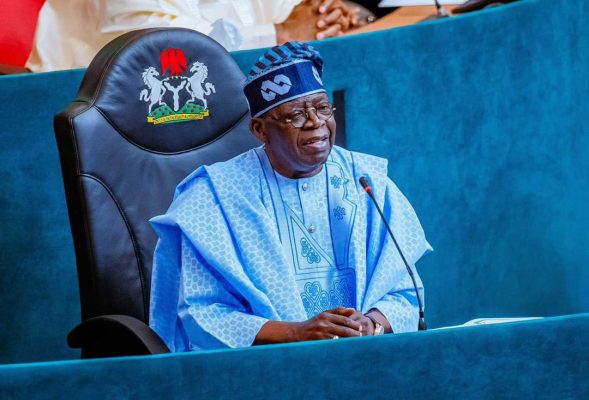
STATEMENT BY PRESIDENT BOLA AHMED TINUBU (GCFR) ON THE THIRD ANNIVERSARY OF HIS ADMINISTRATION, MAY 29, 2026.
My fellow compatriots,
Three years ago, you entrusted me with the sacred responsibility of leading our beloved nation at a defining moment in our history. I accepted that responsibility, fully aware of the magnitude of the challenges before us, but also deeply confident in the resilience and potential of the Nigerian people.
Today, on the occasion of the third anniversary of our administration, I speak to you not only as your President but also as a fellow citizen who understands the sacrifices many families have made in recent years and shares your hopes for a better Nigeria.
When this administration assumed office, our nation faced profound economic and structural difficulties. Mounting fiscal pressures, unsustainable fuel subsidies, declining revenues, exchange-rate distortions, rising debt-servicing costs, insecurity in several parts of the country, energy supply constraints, and declining public confidence in institutions all threatened our progress.
At the height of the subsidy regime, Nigeria was spending as much as ₦18.4 billion daily to sustain petrol subsidies—over ₦4 trillion in 2022 alone—resources that could have been invested in roads, healthcare, education, housing, and critical infrastructure. Multiple exchange rate windows and forex arbitrage created massive distortions, with Nigeria losing more than ₦8 trillion over three years to rent-seeking and speculative practices.
The situation demanded urgent and courageous action. Difficult but necessary decisions had to be taken to stabilise the economy and prevent a deeper national crisis. The easy choices would have been politically convenient. But leadership demands courage, especially when the right decisions are difficult.
Had we refused to act, our nation would have drifted toward fiscal breakdown, worsening poverty, and severe economic uncertainty. Together, we chose reform over ruin and decisiveness over hesitation. We chose long-term national recovery over short-term comfort.
These decisions came with sacrifice. The rising cost of living triggered by our measures placed enormous pressure on families, workers, and businesses. Young people searching for jobs felt discouraged. Many questioned whether these difficult decisions would lead to a better future.
I remain deeply conscious of those sacrifices, and I assure you: your sacrifice has not been in vain. And today, I can say with confidence that Nigeria has stabilised and is moving forward again. Across the country, visible progress is taking shape.
VISIBLE PROGRESS AND ECONOMIC GROWTH
Our economy is now more competitive and better positioned for sustainable growth than it was in 2023. Public finances are improving. States and local governments have greater resources to invest in their people. Investor confidence is growing. The stock market is booming, with the All Share Index rising from 53,000 and market capitalisation of N30 Trillion in 2023 to a record All Share Index of 250,000 and market capitalisation of N160 Trillion this year. Companies are declaring record profits and dividends.
Critical infrastructure projects are advancing at an unprecedented scale. Over 2,700 kilometres of highways and major roads are under construction, reconstruction, or rehabilitation, including the Lagos-Calabar Coastal Highway, the Sokoto-Badagry Super Highway, the Abuja-Kaduna-Zaria-Kano Road, the East-West Road, and many rural access roads. Significant sections are already completed or nearing completion, improving transportation, reducing travel time, boosting regional trade, and creating thousands of jobs.
Rail modernisation projects are ongoing to improve connectivity, logistics, and economic integration across the federation.
In the oil and gas sector, the reforms we instituted have attracted billions of dollars in fresh investment from the international oil companies that had shunned our country. The $5 billion NLNG Train 7 project is nearing completion to boost LNG production capacity, exports, and dividends.
Domestic gas utilisation is expanding. Local refining capacity has improved our energy security. With large-scale domestic and modular refineries operational, Nigeria is reducing its dependence on imported petroleum products and conserving foreign exchange.
For years, the power sector suffered from debt, underinvestment, and uncertainty, which weakened generation capacity and limited growth. Today, we are confronting those challenges directly.
Our administration is clearing legacy obligations, expanding transmission infrastructure, investing in renewable energy, and strengthening the national grid because no modern economy can grow in darkness. When power improves, businesses expand, industries grow, jobs are created, and families prosper.
We are determined to power Nigeria into a new era of industrial growth and economic opportunity.
EMPOWERING NIGERIANS: AGRICULTURE, EDUCATION, AND HOUSING
Agricultural interventions have supported millions of farmers by improving seedlings, fertilisers, mechanisation, and irrigation and by expanding access to finance and markets. We are opening new agricultural corridors to create jobs, strengthen supply chains, and reduce pressure on household incomes.
The Nigerian Education Loan Fund has provided over 1.5 million students with access to higher education, disbursing more than ₦282 billion to ensure that no willing student is denied access due to financial hardship.
Our Renewed Hope Housing Programme, along with that of the Federal Housing Authority (FHA), is delivering over 10,000 housing units across 14 states and the FCT, creating over 300,000 jobs and expanding access to affordable housing. Major Renewed Hope Cities in Abuja, Lagos, and Kano are progressing steadily. Our consumer credit initiative, CREDICORP, is opening up new economic opportunities for workers and families.
In healthcare, thousands of primary healthcare centres are being revitalised, while health insurance coverage is expanding for vulnerable Nigerians.
DEEPENING TELECOMS ACCESS AND INVESTMENT
We also took decisive action to stabilise the telecommunications sector, which remains one of the most important drivers of modern economic growth.
After years of severe operational pressures and declining investment, confidence is gradually returning to the sector. Telecom operators are expanding networks, investing in infrastructure, recruiting Nigerian talent, and widening digital access across the country.
A connected Nigeria is a more competitive Nigeria. Digital infrastructure is now essential to commerce, education, innovation, and national productivity.
YOUTH, TECHNOLOGY AND DIGITAL TRANSFORMATION
To our young people, I want you to know this nation believes in you. You are not a problem to be managed. You are the engine of Nigeria's future. Across technology, manufacturing, creative industries, agriculture, sports, and entrepreneurship, we are expanding opportunities for you to compete and succeed. We are investing in digital skills, technical education, innovation, student financing, and enterprise support because the future must be driven by Nigerian talent, creativity, and productivity.
SECURITY AND NATIONAL UNITY
Security remains central to our national mission and to the creation of a virile and prosperous society. Our Armed Forces and security agencies have intensified operations against terrorists, bandits, kidnappers, oil thieves, and criminal networks. While challenges remain, many communities and highways are becoming safer and more economically active. We continue investing in intelligence, surveillance, logistics, technology, and inter-agency coordination. We are improving the capabilities of our armed forces and security agencies, and reclaiming the authority of the Nigerian state wherever criminality threatens peace and order. While we continue to confront the challenges head-on, progress is being made. I want to assure you that this government will not relent until every Nigerian can live, work, travel, and dream in safety.
My fellow Nigerians,
A nation develops when its people can see and touch progress. From highways under construction to rail modernisation and expanded energy investments, our goal remains clear: to build a Nigeria that works for Nigerians.
We have not solved every problem, and we are not yet where we want to be. But the foundation for recovery has been laid. The task before us now is clear: we must ensure that the benefits of reform are felt more directly in the daily lives of ordinary Nigerians.
We shall achieve this task by continuing to ensure that food prices, which have largely come down from their peak in 2023/2024, remain low.
We are also working to reduce transportation costs as operators of commercial trucks, buses, and taxis convert their petrol engines to CNG and switch to electric vehicles. We have also set our sights on creating more opportunities for decent work and enabling enterprise expansion.
A CALL TO NATIONAL PURPOSE
The journey of national renewal is not completed in a single year or a single administration's tenure. Nations rise when their people remain united in purpose, disciplined in effort, and hopeful about the future.
We must choose hope over despair, unity over division, and nation-building over narrow interests.
But true security and prosperity require that every Nigerian feel included and valued. Nigeria belongs to all of us—no region, faith, or group should feel marginalised or forgotten. Our diversity is a source of strength. Whether Christian or Muslim, North or South, urban or rural, we rise or fall together as one nation under God.
To our youth, workers, entrepreneurs, farmers, professionals, security personnel, students, and diaspora: your sacrifices sustain our nation, and they will not be in vain. To the international community and investors: Nigeria remains committed to democratic stability, economic reform, responsible governance, and mutually beneficial partnerships.
My fellow Nigerians,
History teaches us that great nations are not built in comfort. They are built through sacrifice, resilience, courage, and collective purpose.
Ours is a nation of extraordinary people. We survived civil war and rebuilt.
We overcame dictatorship and restored democracy. We endured hardship and remain bearers of hope. The Nigerian spirit remains strong and unbroken.
Today, the world is watching our country again, not as a nation defined by its difficulties, but as a nation determined to rise. Across agriculture, infrastructure, power, technology, manufacturing, and industry, the signs of recovery are becoming clearer. Confidence is returning. Productivity is improving. Opportunity is expanding.
LOOKING FORWARD
The work ahead is enormous, but I remain optimistic because I believe deeply in this country and in you, the Nigerian people.
I ask you to keep faith with Nigeria. Let us reject cynicism and division. Let us move forward together, united in purpose, disciplined in effort, compassionate toward one another, and confident in the greatness that lies ahead.
My fellow Nigerians, history tests nations before it elevates them. Nigeria is passing through such a test. But I believe with all my heart that we shall emerge stronger, fairer, more united, and more prosperous than ever before.
Let us continue this journey together. Let us build a Nigeria that is secure, prosperous, inclusive, and respected worldwide. Let us continue to believe in the promise of our nation.
May God bless you all.
May God bless the Federal Republic of Nigeria.
Thank you.
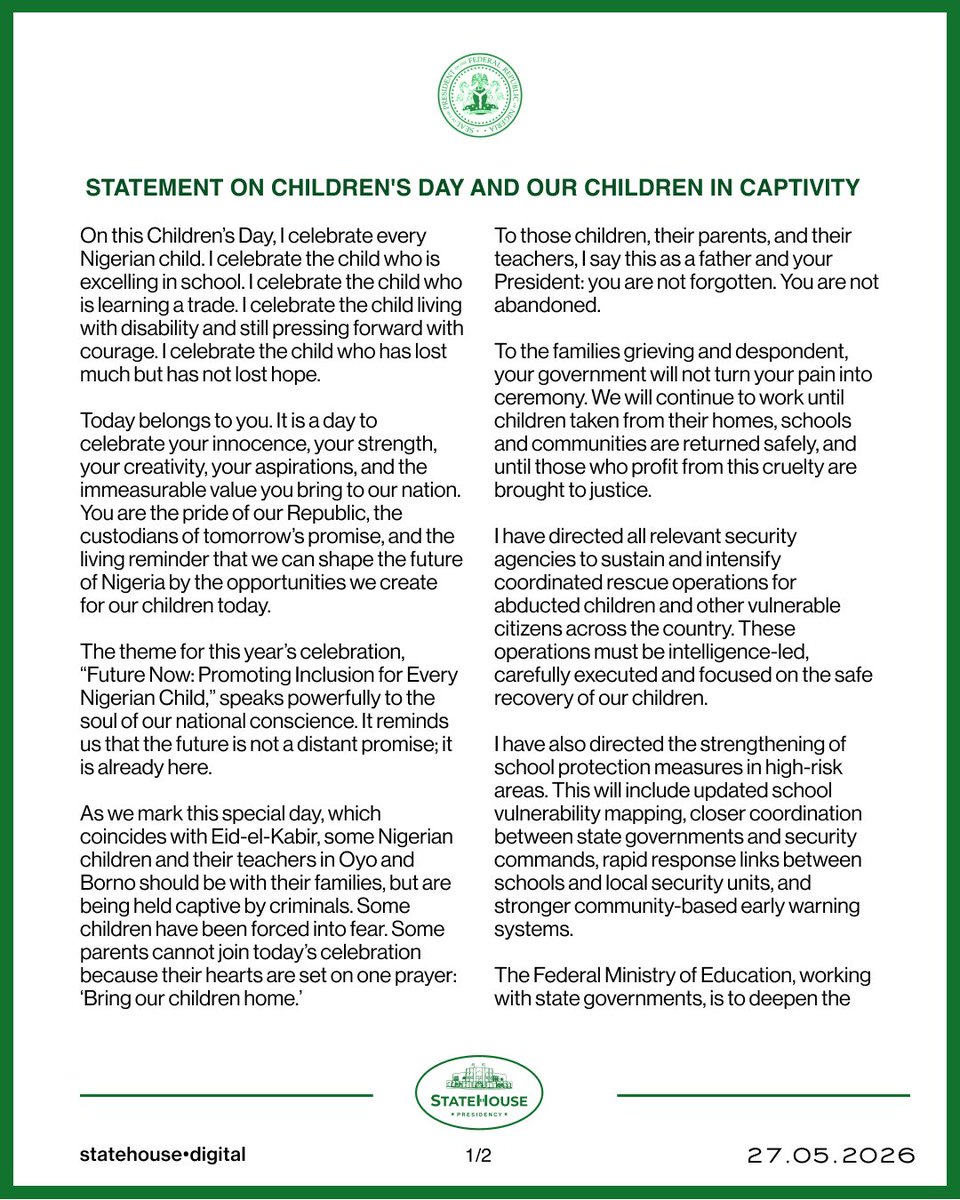
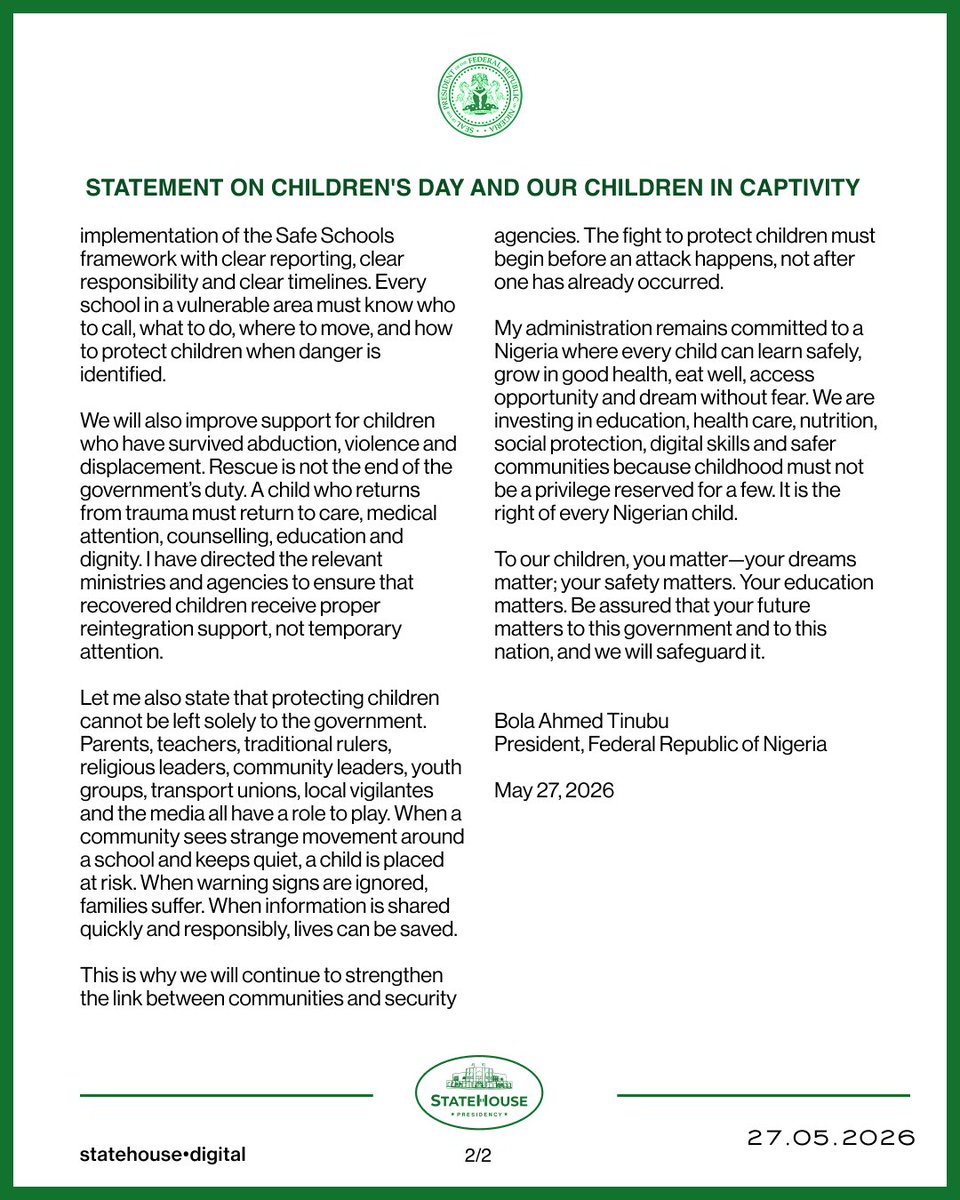
On this Children’s Day, I celebrate every Nigerian child. I celebrate the child who is excelling in school. I celebrate the child who is learning a trade. I celebrate the child living with disability and still pressing forward with courage. I celebrate the child who has lost much but has not lost hope.
Today belongs to you. It is a day to celebrate your innocence, your strength, your creativity, your aspirations, and the immeasurable value you bring to our nation. You are the pride of our Republic, the custodians of tomorrow’s promise, and the living reminder that we can shape the future of Nigeria by the opportunities we create for our children today.
The theme for this year’s celebration, “Future Now: Promoting Inclusion for Every Nigerian Child,” speaks powerfully to the soul of our national conscience. It reminds us that the future is not a distant promise; it is already here.
As we mark this special day, which coincides with Eid-el-Kabir, some Nigerian children and their teachers in Oyo and Borno should be with their families, but are being held captive by criminals. Some children have been forced into fear. Some parents cannot join today’s celebration because their hearts are set on one prayer: ‘Bring our children home.’
To those children, their parents, and their teachers, I say this as a father and your President: you are not forgotten. You are not abandoned.
To the families grieving and despondent, your government will not turn your pain into ceremony. We will continue to work until children taken from their homes, schools and communities are returned safely, and until those who profit from this cruelty are brought to justice.
I have directed all relevant security agencies to sustain and intensify coordinated rescue operations for abducted children and other vulnerable citizens across the country. These operations must be intelligence-led, carefully executed and focused first on the safe recovery of our children.
I have also directed the strengthening of school protection measures in high-risk areas. This will include updated school vulnerability mapping, closer coordination between state governments and security commands, rapid response links between schools and local security units, and stronger community-based early warning systems.
The Federal Ministry of Education, working with state governments, is to deepen the implementation of the Safe Schools framework with clear reporting, clear responsibility and clear timelines. Every school in a vulnerable area must know who to call, what to do, where to move, and how to protect children when danger is identified.
We will also improve support for children who have survived abduction, violence and displacement. Rescue is not the end of the government’s duty. A child who returns from trauma must return to care, medical attention, counselling, education and dignity. I have directed the relevant ministries and agencies to ensure that recovered children receive proper reintegration support, not temporary attention.
Let me also state that protecting children cannot be left solely to the government. Parents, teachers, traditional rulers, religious leaders, community leaders, youth groups, transport unions, local vigilantes and the media all have a role to play. When a community sees strange movement around a school and keeps quiet, a child is placed at risk. When warning signs are ignored, families suffer. When information is shared quickly and responsibly, lives can be saved.
This is why we will continue to strengthen the link between communities and security agencies. The fight to protect children must begin before an attack happens, not after one has already occurred.
1/2
You want the truth?
It has not. The reforms were not meant to improve the quality of life and living conditions of ordinary Nigerians in obvious ways yet.
According to IFC, reforms typically take between 2 and 10 years before ordinary citizens feel the effects in a broad and obvious way.
0–2 years: Citizens often feel the pain first:
-subsidy removal
-inflation
- currency devaluation
-layoffs/restructuring
- tax increases
2–5 years: If reforms are consistent, countries may start seeing:
-lower inflation
-currency stability
-improved investor confidence
-job creation in new sectors
-infrastructure improvements
5–10+ years: The deeper societal impacts usually emerge:
-higher incomes
-productivity growth
-stronger institutions
-better living standards
-more stable private sector growth
Everything listed above is according to the IMF, the OECD, and the WB. It is well researched especially during the reforms of the Asian tigers and Eastern Europe.
I can defend this further, but please tell me you rest this with honesty and you can't see that we are perfectly in line with the timelines.
I fear the mistake is that most media aides of the Presidency didn't communicate this well to people enough, and to be honest, I get it, nobody loves to hear that the next couple of years would be for suffering.
Curse out Asiwaju for the security issues all you want; I will totally support you. But you see this economy side: while more can certainly be done, the team has done the unprecedentals by African standards.
STATEHOUSE PRESS RELEASE
PRESIDENT TINUBU POLLS 11 MILLION VOTES IN APC PRESIDENTIAL PRIMARIES, PROMISES TO CONSOLIDATE ECONOMIC REFORMS
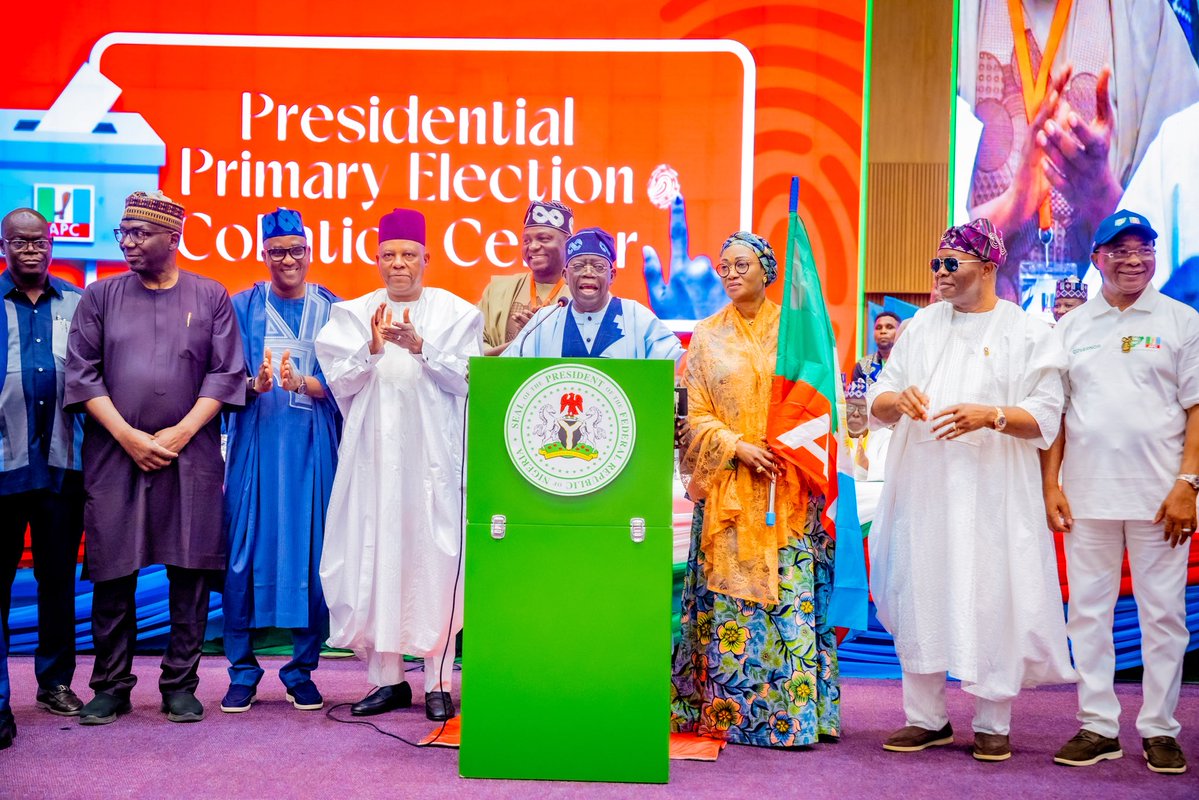
President Bola Ahmed Tinubu, on Sunday, emerged the presidential candidate of the All Progressives Congress (APC) with a total of 10,999,162 votes after the nationwide collation of results, promising to consolidate economic reforms, secure progress, and strengthen the foundation of a modern Nigeria in the second term.
He spoke after receiving from the APC chairman, Professor Nentawe Yilwatda, the certificate of return and the party's symbolic flag as the torchbearer in the upcoming election.
Addressing the party faithful at the International Conference Centre, President Tinubu announced his acceptance of the presidential nomination, with humility and gratitude to the members.
“In accepting this nomination, I renew my commitment to serve our nation with even greater determination.
"With another four years of disciplined focus and national cooperation, we will firmly place Nigeria on an irreversible path of economic expansion, industrialisation, energy security, infrastructure development, food sufficiency, and democratic consolidation," President Tinubu said.
The Chairman of the APC Presidential Election Committee, Sen. Anyim Pius Anyim, announced the result of the presidential primary in the hall, with National Assembly members, serving and former state governors, ministers and presidential aides, party stalwarts, members of the National Working Committee, and the National Executive in attendance.
Stanley Osifo, the second presidential aspirant, had 16, 503 votes.
Anyim said the Presidential primaries followed the laid-down procedures of the Independent National Electoral Commission (INEC), the Electoral laws, and the APC constitution, with voting taking place in 36 states and the Federal Capital, 774 local councils, and 8,809 wards on Saturday, May 23, 2026.
He said the votes were collated and counted in Abuja by collation officers, mostly governors from various states.
According to him, 12,643,316 party members were registered, 11,069,746 were accredited, and 11,015,665 voted in the presidential primary elections.
He said the process was fair and that the agents of both aspirants were allowed to challenge the results and seek redress where necessary.
President Tinubu thanked governors, members of the National Assembly, the presidential primary elections committee, the APC National Executive Council, the National Working Committee and party members for giving him another opportunity to fly the party's flag in next year’s election.
President Tinubu said his administration has achieved a lot in the last three years and urged party members to take pride in and showcase the party's achievements since 2015, especially in the last three years.
“Our economy has undergone significant structural reform, supported by new tax laws and fiscal policies that have boosted revenue collection for the federation.
“We promised to remove the financial barriers to higher education for our youth. Today, we have established the Nigerian Education Loan Fund, with over N282 billion disbursed and over 1.5 million beneficiaries.
Bayo Onanuga
Special Adviser to the President
(Information & Strategy)
May 24, 2026
Read the full statement here:
https://t.co/7bVoc4IgyS
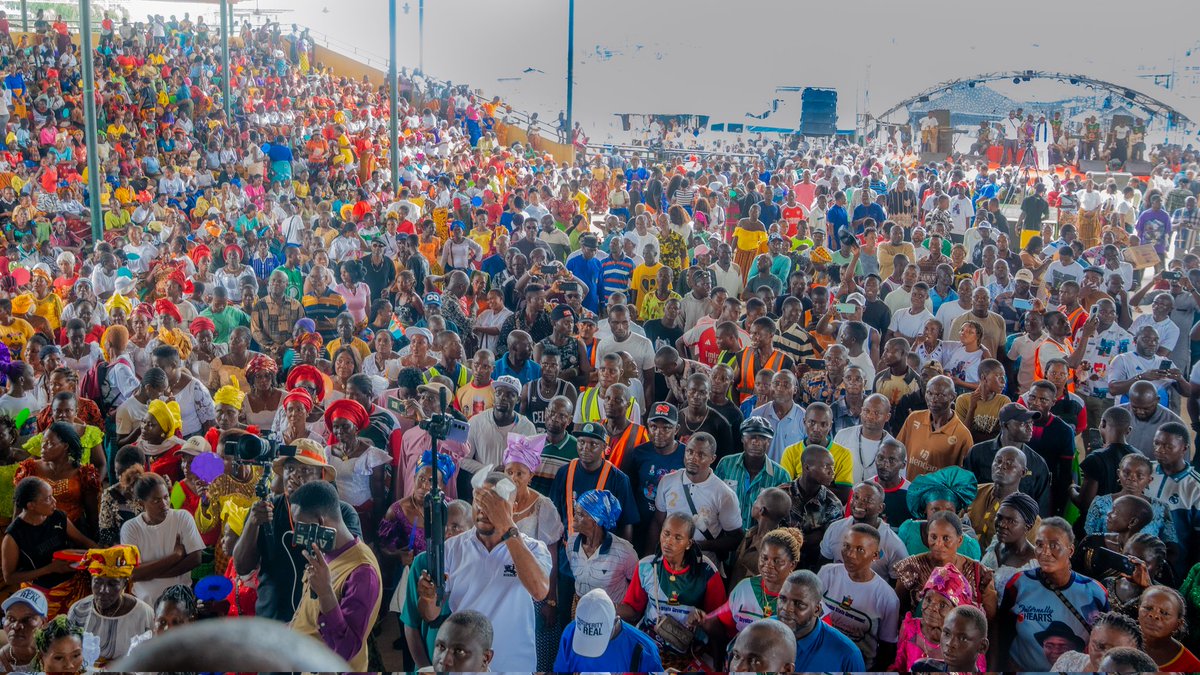
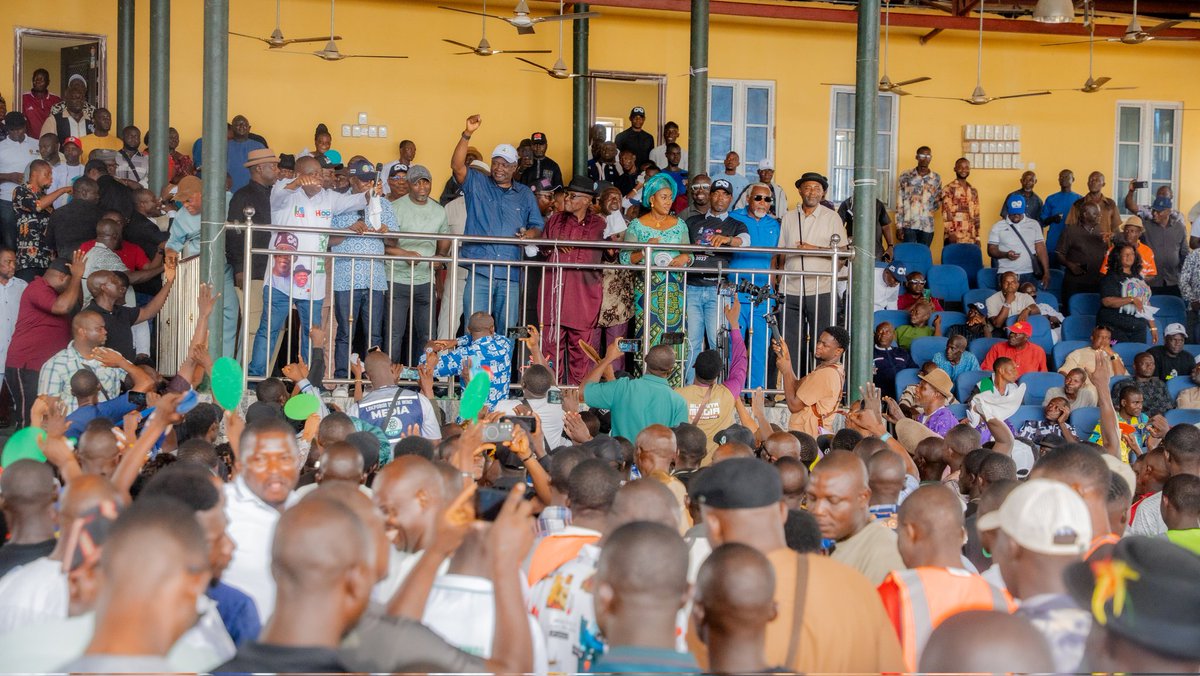
PHOTO NEWS: Sen. Heineken Lokpobiri’s leadership inspired massive support across Ekeremor's 12 wards, strengthening confidence in the #RenewedHope agenda of President Bola Ahmed Tinubu and APC victory.
PRESIDENT TINUBU TO RECEIVE APC CERTIFICATE OF RETURN, PARTY FLAG AS 2027 PRESIDENTIAL CANDIDATE ON SUNDAY
President Bola Ahmed Tinubu is set to officially receive the Certificate of Return and the flag of the All Progressives Congress, APC, as the party’s Presidential Candidate for the 2027 General Elections.
The presentation ceremony is scheduled to hold on Sunday at the Bola Ahmed Tinubu International Conference Centre in Abuja, following the nationwide collation of results from the APC Presidential Primary Elections.
Top party leaders, including APC Governors, members of the National Executive Committee, the National Working Committee, members of the National Assembly, and other party stalwarts are expected to attend the event.
In a statement, Special Adviser to the President on Information and Strategy, Bayo Onanuga, said the Presidential Primary Elections Committee will formally present the Certificate and Party Flag to President Tinubu at the ceremony.
The event is expected to further consolidate the party’s support for President Tinubu ahead of the 2027 elections.
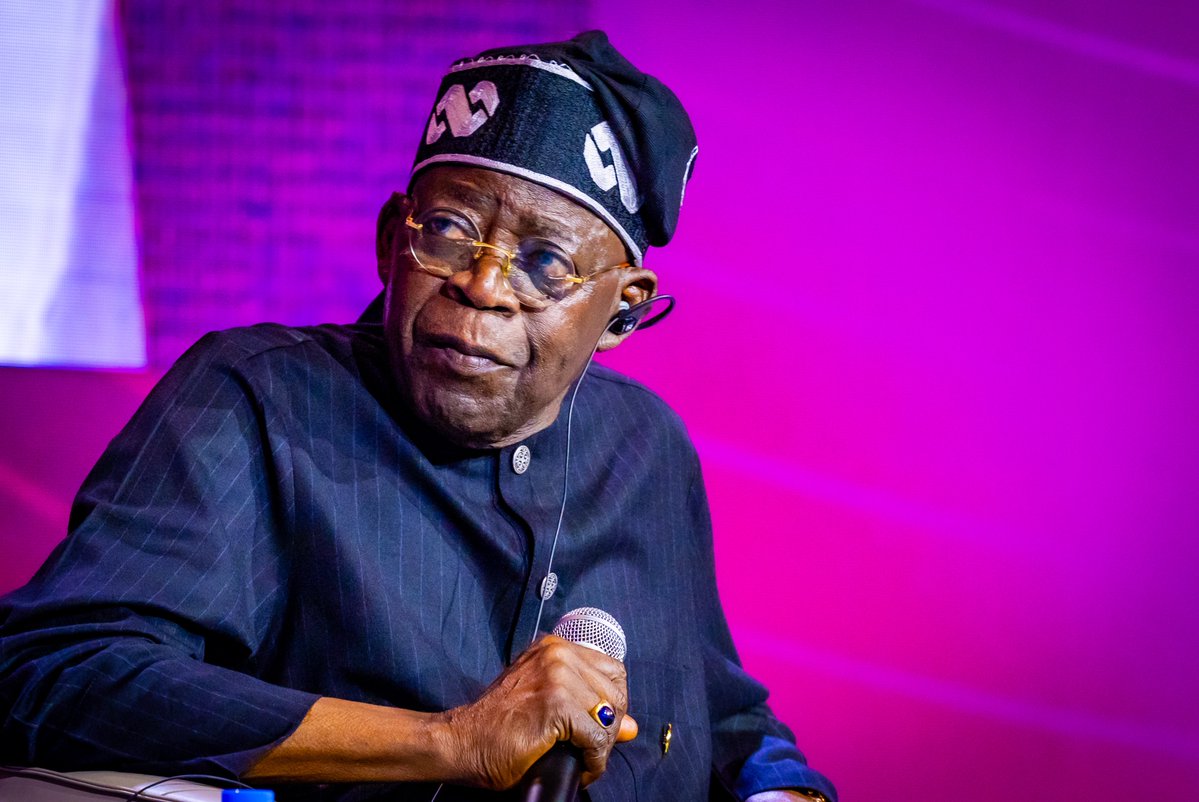
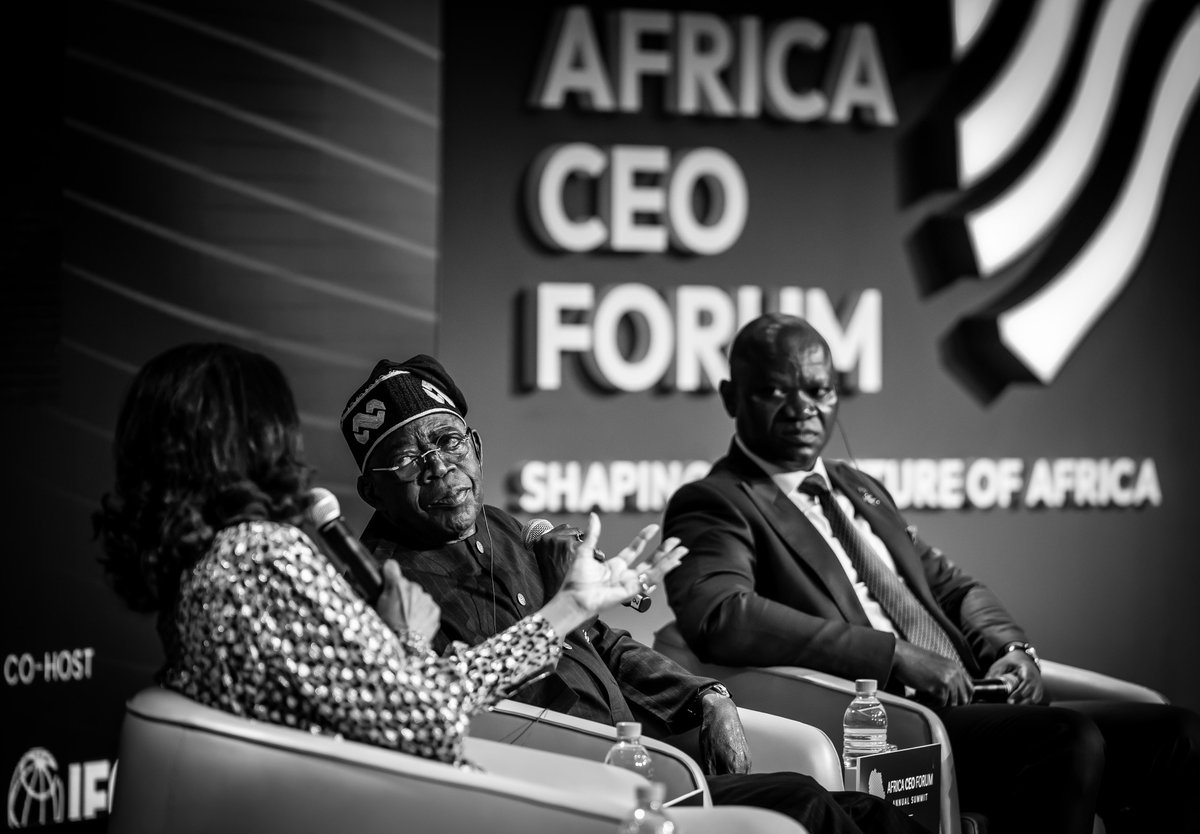
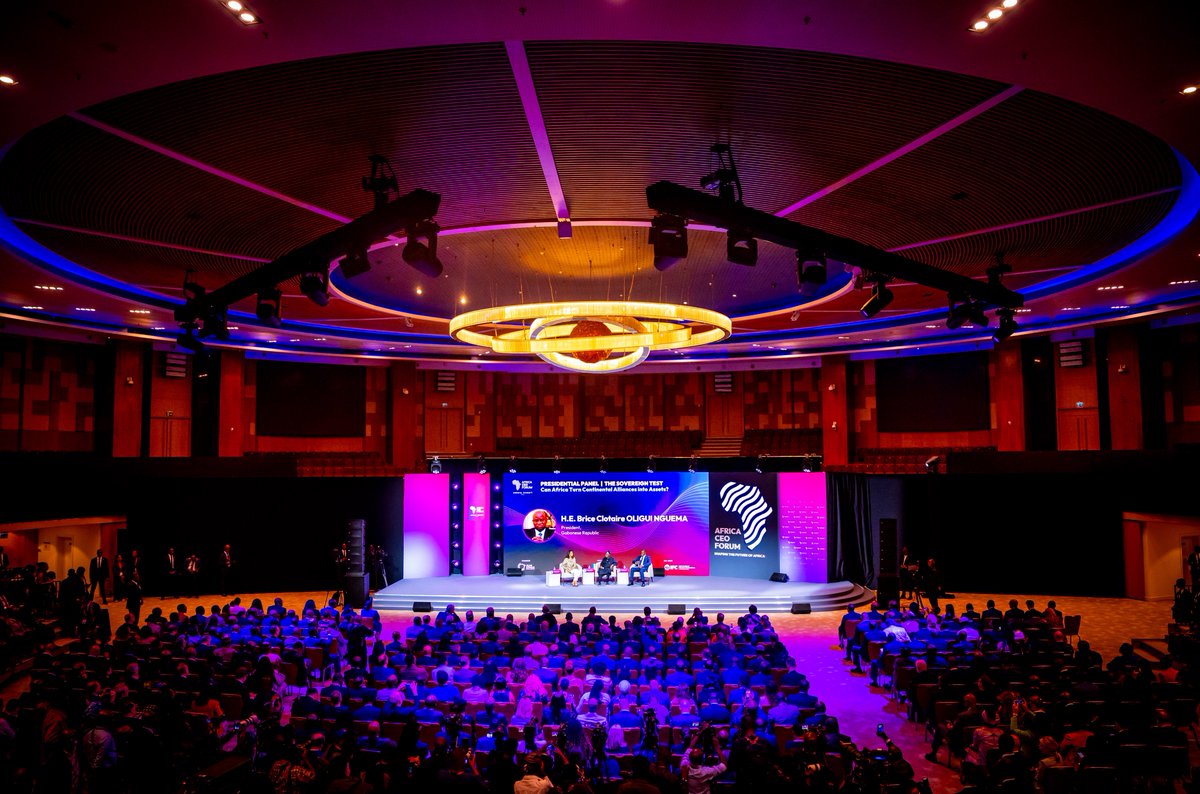
Speaking at the Africa CEO Forum Presidential Panel yesterday evening in Kigali, I re-emphasised that Africa must put Africa first whilst creating opportunities for intra-Africa collaboration between our countries.
Our continent cannot build scale by looking outward first. We must invest in one another, trade more with one another, build the corridors that connect our markets, ensure our innovative youthful population get the support they need, and give African businesses the confidence to expand across African borders.
Nigeria’s reforms are not only about fixing yesterday. They are about preparing our economy to lead in the Africa of tomorrow. With AfCFTA, digital trade, shared infrastructure, stronger logistics, commodities exchange, and deeper private sector partnerships, we can turn Africa’s population and resources into real continental prosperity. The global risk and financial architecture must also give Africa a fair deal that recognises our local nuances and contexts.
I thank my brother, President Paul Kagame, for his warm hospitality and for Rwanda’s continued leadership in showing what discipline, clarity and execution can do for development.
Nigeria will continue to work with Rwanda and other African partners to build a continent that produces more, trades more, connects better, and competes with greater confidence in the world.
Africa’s future will not be handed to us. We must build it, own it, and defend it together.
~ Bola Ahmed Tinubu, GCFR