Wars are full of stories of soldiers desperately trying to save the lives of fellow soldiers. Every now and again, there is a story of a soldier saving the life of an enemy soldier, sometimes at the cost of their own life. The story of German Lieutenant Friedrich Lengfeld is such a story.
Locked into fierce combat in the Hurtgen Forest, Lengfeld’s company defended a minefield in front of the town of Hürtgen against repeated attacks by the US 12th Infantry Regiment, 4th Infantry Division. On 12 November 1944, after another attack, a wounded US soldier was left behind in the minefield. Lengfeld eventually went out with some others to help the US soldier but was severely wounded himself stepping on a mine whilst trying to get to the American. Lengfeld was medically evacuated and died of his wounds later that day in a dressing station in Froitzheim.
While this is a remarkable story about selfless sacrifice in war, the story took an even more remarkable turn in 1994. On 7 Oct of that year, almost 50 years after the event, the veterans association of the US 22nd Infantry Regiment, a sister regiment to the 12th in the 4th Inf Div during WW2, unveiled a monument in honour of Lengfeld at the German war cemetery outside Hurtgen, mere yards from the place where it all happened. A unique monument by soldiers honouring the sacrifice of an enemy soldier to save one of their own. A must-see when visiting the Hürtgen Forest.
#ww2 #ww2history #hürtgenwald #hurtgenforest #4thinfantrydivision #12thinfantryregiment #22ndinfantryregiment
Anne Frank and her sister Margo briefly lived in Aachen from September 1933 till February 1934 and December 1933 respectively. Fleeing from Nazi antisemitic persecution, their parents arranged the girls to stay with their grandmother there whilst organising the family’s move to Amsterdam, The Netherlands. Grandmother Rosa Hollānder stayed in Aachen and passed away in January 1942 from cancer.
The family went into hiding a few months later. Sadly, the Nazis finally caught up with them and arrested them in their hiding place in Amsterdam on 4 August 1944 and sent them to the camps.
Mother Edith Frank died of exhaustion and illness on 6 Jan 1945 in Auschwitz-Birkenau, only three weeks before Russian forces liberated the camp, aged 44.
Margot Frank died in February or March 1945 in Bergen Belsen from Typhus, aged 19.
Anne Frank succumbed to typhus as well in Bergen Belsen one or two days after her sister, aged 15.
Only father Otto Frank would survive the war. He would eventually publish his daughter’s diary which was salvaged by some friends after the family had been arrested. Anne Frank diary became one of the well-known, most powerfull and most read accounts of Jewish persecution during WW2.
During annual commemorations in September last a new memorial was officially unveiled commemoratinf Captain Queripel who was awarded the Victoria Cross posthumously for his actions and sacrifice during Operation Market Garden. One of five VCs awarded for this battle. We visited the memorial and many more places today on a Battle of Arnhem tour for two Dutch friends who wanted to explore this impressive battlefield.
#ww2 #battleofarnhem #operationmarketgarden #victoriacross #battlefieldtour
A wonderful day around Nijmegen with an American family, following the footsteps of their (grand)father’s unit, the 325th Glider Infantry Regiment during Market Garden and beyond in the area of Nijmegen. The tour included a visit to the always excellent and welcoming Remember September museum in Mook.
A fab day with a group of wonderful people, who mentioned at the end of the tour that they learned a lot about their relative’s service and war experience today.
#operationmarketgarden #82ndairbornedivision #325thgliderinfantryregiment #ww2
Along the way, we did a special stop in Thirimont at the memorial to the 120th Infantry Regiment of the 30th Infantry Division who fought a bitter battle here between 13-15 January 1945. We included this stop because a relative of two of our guests was killed in action during this battle in 1945. It was the first time any family had visited this location tied to their family history. 2/2.
Yesterday, on the final day on @WWIImuseum ‘Into the Bitter Woods Tour’ on the Hurtgen Forest and the Battle of the Bulge, we followed the route of the infamous Kampfgruppe Peiper and discussing both the military events and the numerous warcrimes and atrocities committed by the ss in the area. 1/2 ..
Another superb day on The National WWII Museum ‘Into the Bitter Woods Tour’ on the Huertgen Forest and the Battle of the Bulge. Today had many highlights but the top one definitely was a visit to the excellent Museum of Military History at Diekirch. Its collection and its dioramas are always a treat to look at.
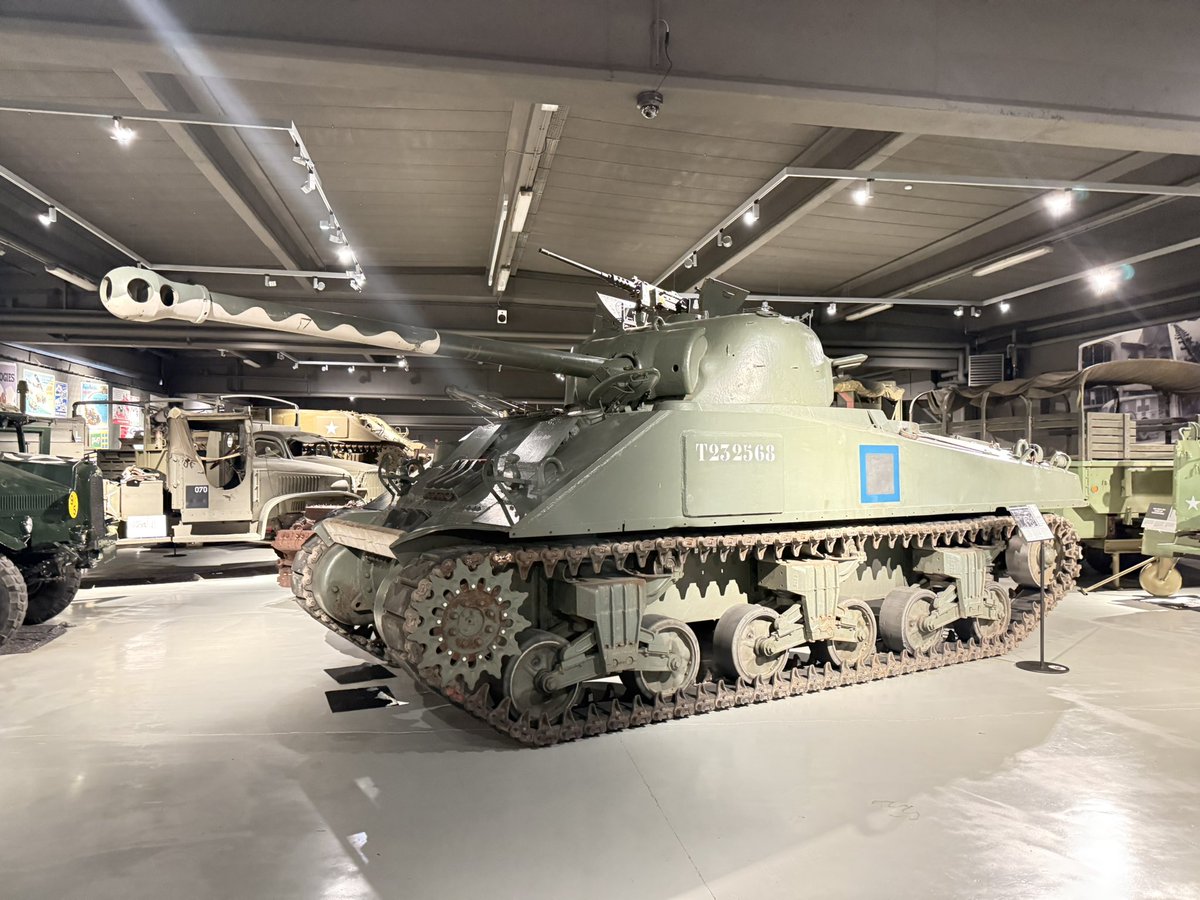
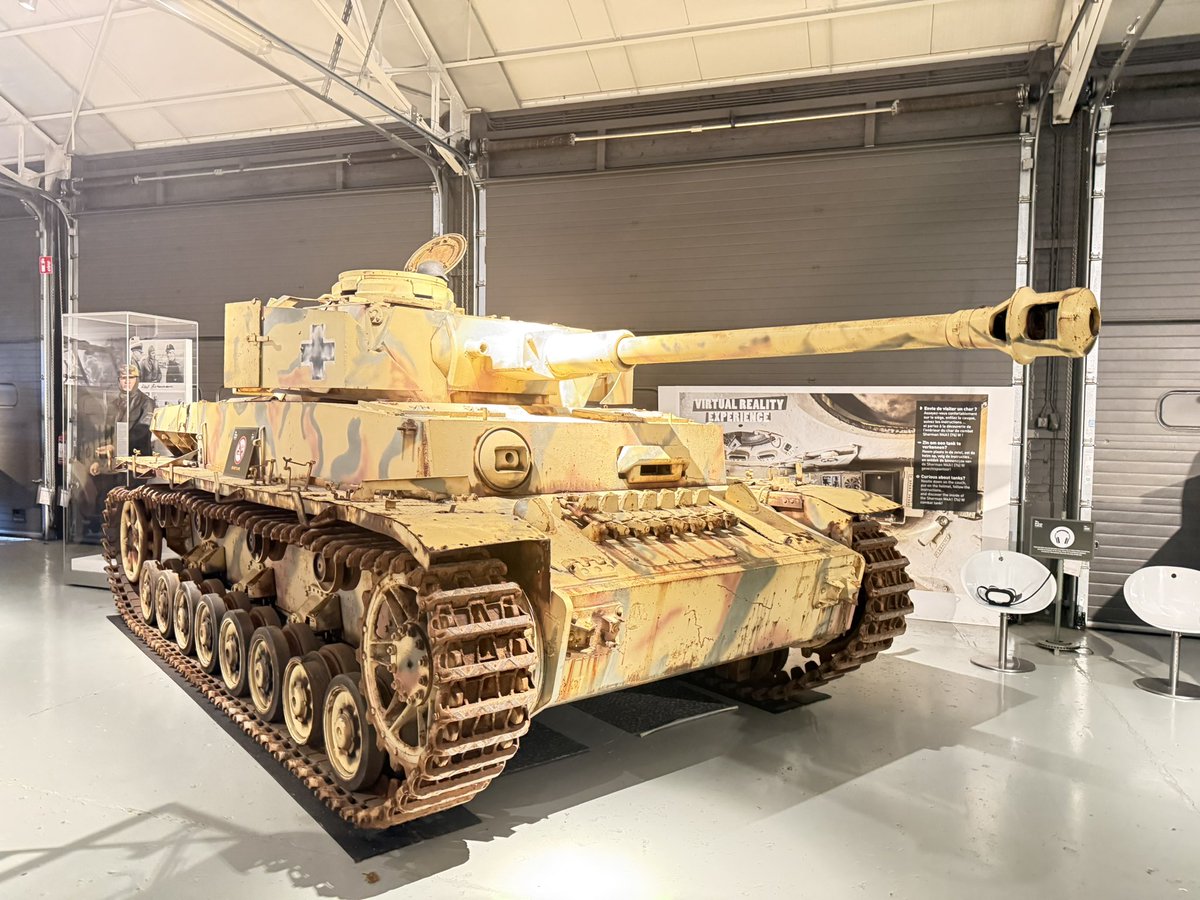
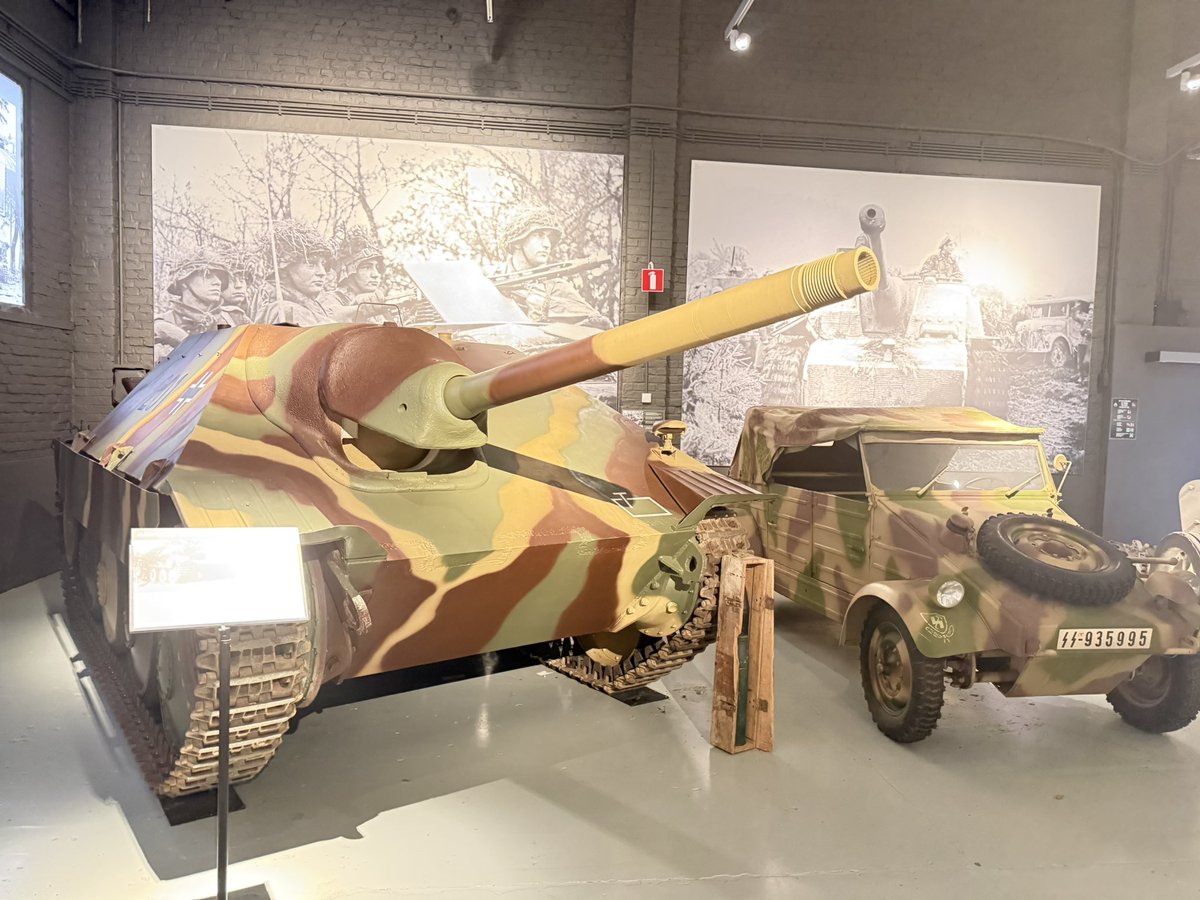
Guiding a group on the @WWIImuseum ‘Into the Bitter Woods Tour’, today we were covering the battle around #Bastogne in Dec 1944 - Jan 1945. On of the places we visited was the excellent vehicle collection at the #bastognebarracks
A visit our guests enjoyed enormously. And why not 😊
On 18 September 1944, 4th Parachute Brigade landed on Ginkel Heath, its arrival delayed for hours. As the planes bringing in the brigade approached the DZ, they could see that part of the heath on fire as the 7th King’s Own Scottish Borderers were fighting SS-Wachbattalion 3 who had overran part of the DZ. Hackett’s brigade jumped in the middle of this raging battle, which actually caused the battle to swing in favour of the British. After fight died down, Hackett concluded that his brigade had suffered about 20% losses already; an eerie omen for what was to befall the brigade over the next few days during the Battle of Arnhem.
We visited Ginkel Heath today on a tour with two British couples interested to learn more of the Battle of Arnhem.
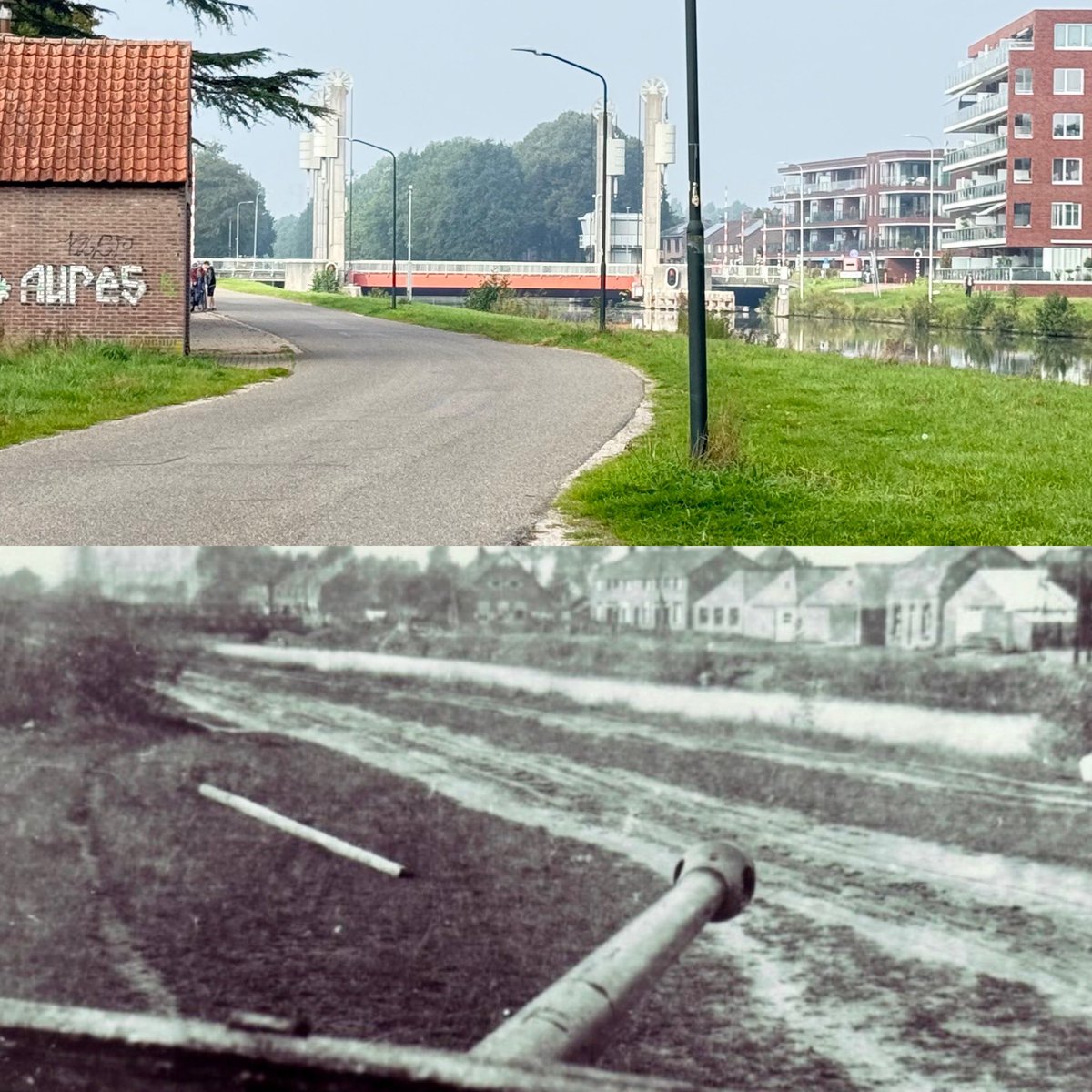
On 19 September 1944, the vanguard of German 107. Panzer Brigade attacked Son bridge. The lead tank managed to get to about 200 meters from the bridge before it was destroyed, forcing the other tanks to withdraw. The first attack on what became known as Hell’s Highway was fended off. However, the attack raised serious concerns about the presence of a strong German armoured force southeast of Son / Northeast of Eindhoven. It led to a series of troop movements and decisions. One of which was that #easycompany 506th PIR and a squadron of British tanks would attack the village of Nuenen the next day.
We visited Son bridge, Nuenen and other significant places yesterday on the last Easy Company Tour by @WWIImuseum this year.
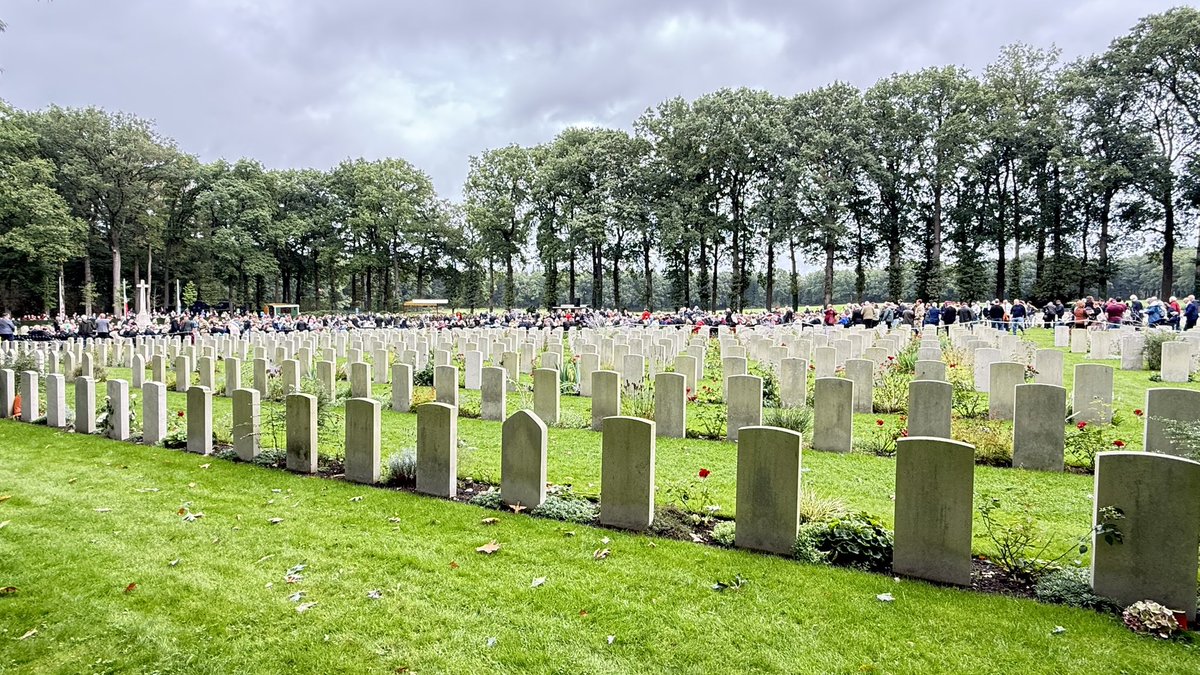
Last weekend’s Commemorative Service at CWGC Oosterbeek, also known as The Airborne Cemetery, was beautiful, meaningful and evocative. Without a doubt, the laying of the flowers at the soldiers’ graves by the Flower Children from local primary schools was the most touching part. A tradition that started during the first commemoration on 25 September 1945 - a year after the battle and a few months after the war in Europe had ended - and is still an integral and unique part of the Arnhem commemorations. A tree-top level fly past by a ww2 C-47 Dakota was the cherry on the top.
Normally, we are full on guiding around Market Garden commemorations and do not have time to attend one of the many ceremonies. But this year it fell right in between two tours. So, me and @jojohook2003 pottered down to Oosterbeek to attend the commemorative service at CWGC Oosterbeek, more commonly known as the Airborne Cemetery.
Another @WWIImuseum#easycompany tour came to an end with a visit to the mountain top retreat built by the nazi party to impress visitors, more commonly known as The Eagle’s Nest. Always a fitting final stop to end this marvellous tour in the footsteps of a few of the soldiers who helped liberate Europe from this evil regime.
Honouring the men of #easycompany, 506th PIR who are buried in cemeteries in Europe is an important and integral part of @WWIImuseum Easy Company Tours. Today, we did a wreath laying ceremony at the grave of Corporal William ‘Buddy’ Dukeman, one of the company’s original Toccoa men, killed in action on 5 Oct 1944 at the Crossroads near Heteren. Buddy was 23 years old.
All good things come to an end. So was this @WWIImuseum#easycompany tour, the first of the Autumn season. But not before we made a visit to the Eagle’s Nest which was in and out of the clouds. Always a stunning place to end an equally stunning tour.
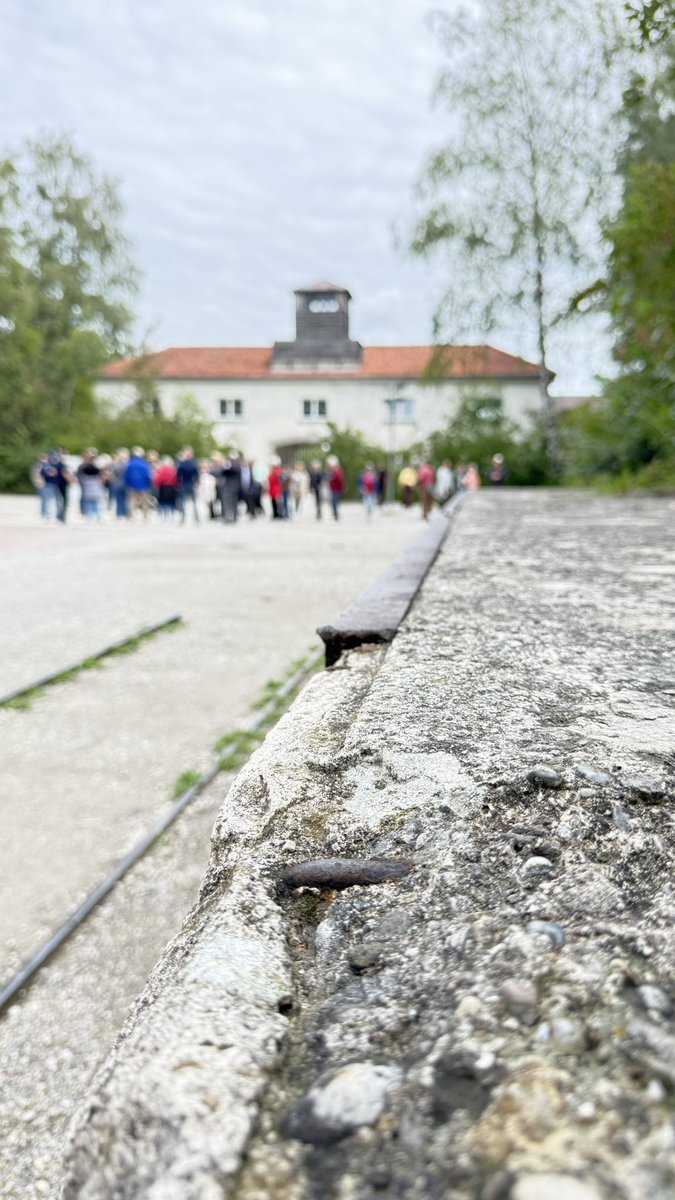
Ruins of a former unloading dock with railway tracks next to them are still visible in front of the old guardhouse and entrance of former Dachau concentration camp. Though the unloading docks were used for goods and not for people, the image is a poignant reminder of what happened in several other camps built to the standards invented and perfected at Dachau.
Visited today on the @WWIImuseum #easycompany tour.
While his grave mentions 1 Jan 1945 as the date he died, veterans of #easycompany, 506th PIR have always maintained that John Julian actually was killed during the patrol in the Bois Jacques of 21 Dec 1944. We visited his grave today on the @WWIImuseum Easy Company Tour to talk about his service with E/506 and honour John, placing our wreath at his grave.