@thvruu Imagine your free time spending with a judgmental nag...that kid your mom makes you invite who's deeply insecure so theyre unbearable and pompous
@vexnoir0000@mimmi1013 Youre mad taekook hang out?
Jikook hang out for their show but they dont hang out off time. They don't hang out in korea.
2023 solo: jm said he was closest to jhope
2025 post sm: jm hangs out with namjoon and yoongi the most
Why don't you ask them to cancel Are You Sure
How embarrassing it must be over two members hanging and posting photos of one another on their Instagram accounts, on which both post other members
When you only have shippers fans
@comeb4its2late the reason why NYTimes called taehyung the most powerful singer in BTS. he can do all the parts. he has the widest range and best breath control.
@43750nly@comeb4its2late listen to the range in stigma. taehyung goes low in a chest voice and effortlessly transitions to falsetto. he does this many times in this song.
this song has yet to be covered by any tenor bc they dont have his range.
I really appreciate the fact that in most of his solo songs, Kim Taehyung himself produces the harmonies and also records them.
Taehyung has the vocal ability to record in any voice: baritone, tenor, alto or soprano. The harmonies in Stigma are amazing!
THE VOICE OF STIGMA
Using an impressive 3 octaves in a single song: what was Kim Taehyung's artistic intention?
Composed and written by Kim Taehyung, STIGMA possesses a high level of technical difficulty: different resonances, phonation modes, register changes, and a 3-octave vocal range. The decision to use such a wide vocal range is not virtuosity — it's sonic dramaturgy. The voice fragments, expands, and tenses because the character does too.
In Stigma, the voice is used as a tool for raw emotional exposure and internal conflict. Taehyung constructs a deeply psychological and emotional narrative, in which the voice is not just a means of musical expression, but the very field where the conflict takes place. The lyrics give voice to someone who feels misunderstood, isolated, and emotionally overwhelmed, trying to break free from these shackles to achieve authenticity and self-acceptance.
Within this framework, Taehyung's vocal choice is anything but arbitrary.
VOCAL RANGE AS A NARRATIVE REQUIREMENT
The use of approximately three octaves in a single song, ranging from G2 (in deep ad-libs) to G5, is not intended to showcase technical skill. This extreme amplitude exists because the story being told demands movement, instability, and emotional contrast. The song's character is not at rest: he oscillates, fragments, tries to contain himself, and fails.
Each vocal range represents a distinct psychological state, as if identity were in constant displacement.
THE LOW VOICE: WEIGHT, REPRESSION, AND GUILT
In the low registers, the voice emerges dense, dark, and restrained. It is the space of emotional repression, of that which is kept silent for fear of judgment. The timbre carries weight and intimacy, like a thought that dares not be spoken aloud. Here, pain is internalized.
This low note does not seek comfort; it translates the burden of carrying a stigma.
THE MIDDLE REGION: TENSION AND CONFLICT
As the melody shifts to the middle register, the voice begins to express instability. There is a perceptible effort to maintain control, like someone trying to balance emotionally amidst external pressure. The precise intonation, firm support, and clarity of delivery show technical mastery, but the feeling conveyed is one of constant tension.
This is the point where the internal conflict intensifies.
HIGH NOTES, HEAD VOICE, AND FALSETTO: RUPTURE AND EXPOSURE
In the high notes and falsetto, the voice becomes more fragile, less dense, and emotionally exposed. These moments sound almost like contained cries, not of strength, but of exhaustion. The choice of falsetto and head voice reinforces the vulnerability of the lyrical self, revealing an urgent desire for liberation from social and emotional constraints.
Here, the pain ceases to be silent and begins to overflow.
THE JOURNEY BETWEEN REGISTERS AS METAPHOR
More important than reaching four octaves is “continuously traversing them”. The constant transition between registers, resonances, and vocal densities reflects an identity in formation, still unstable, still in conflict. There is no fixed place of comfort — the voice is always in motion, just like the character in the song.
This vocal mobility translates the growth process, marked by frustration, anguish, and the desire to be seen without filters or labels.
TECHNIQUE IN SERVICE OF EMOTIONAL TRUTH
In Stigma, vocal technique is entirely subordinated to the narrative. Breath control, precision in register transitions, and sustain in extreme ranges exist to allow emotion to be conveyed honestly. There is no gratuitous ornamentation; each vocal choice responds directly to what the lyrics demand.
The result is a performance that sounds raw, intense, and human.
Kim Taehyung transforms his own voice into a living narrative: a portrait of youth in conflict, marked by silent pain, a desire for liberation, and the hope of one day existing fully without fear of the gaze of others.
#Stigma200MOnSpotify
CONGRATULATIONS TAEHYUNG
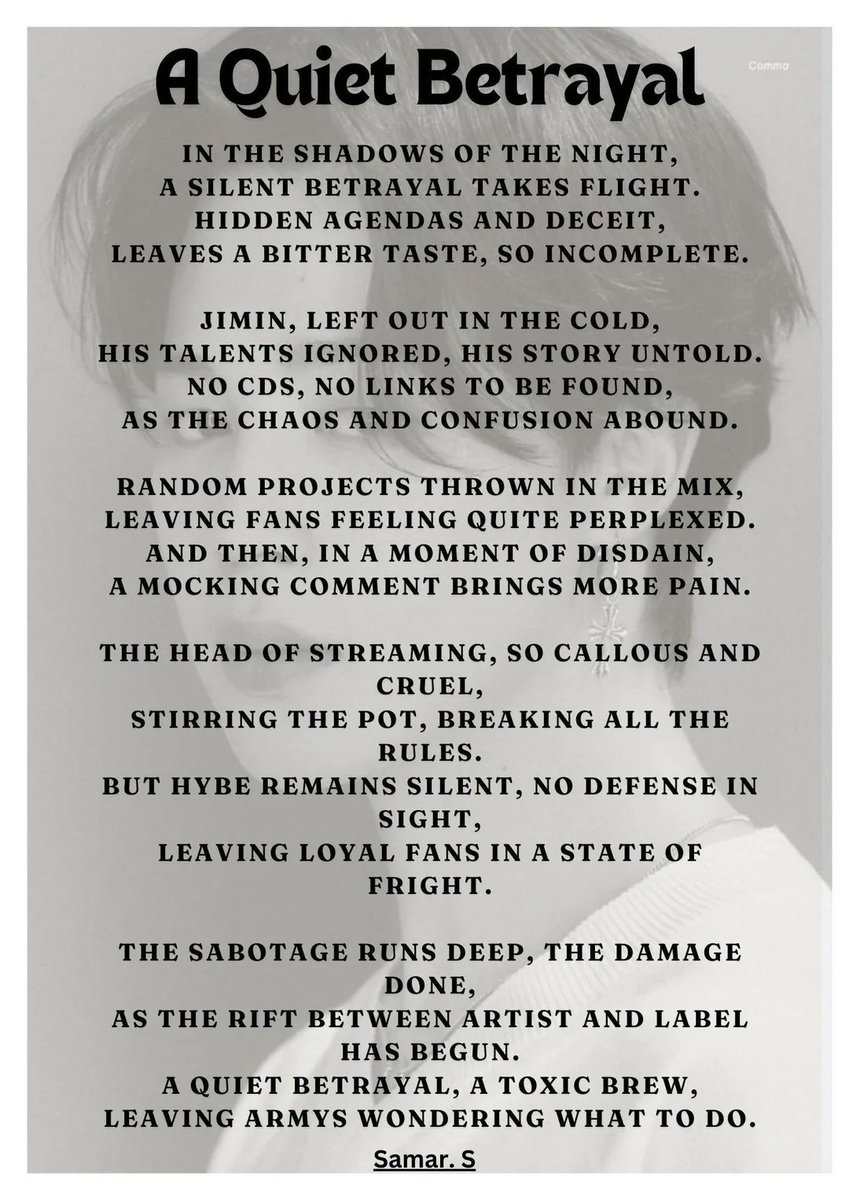
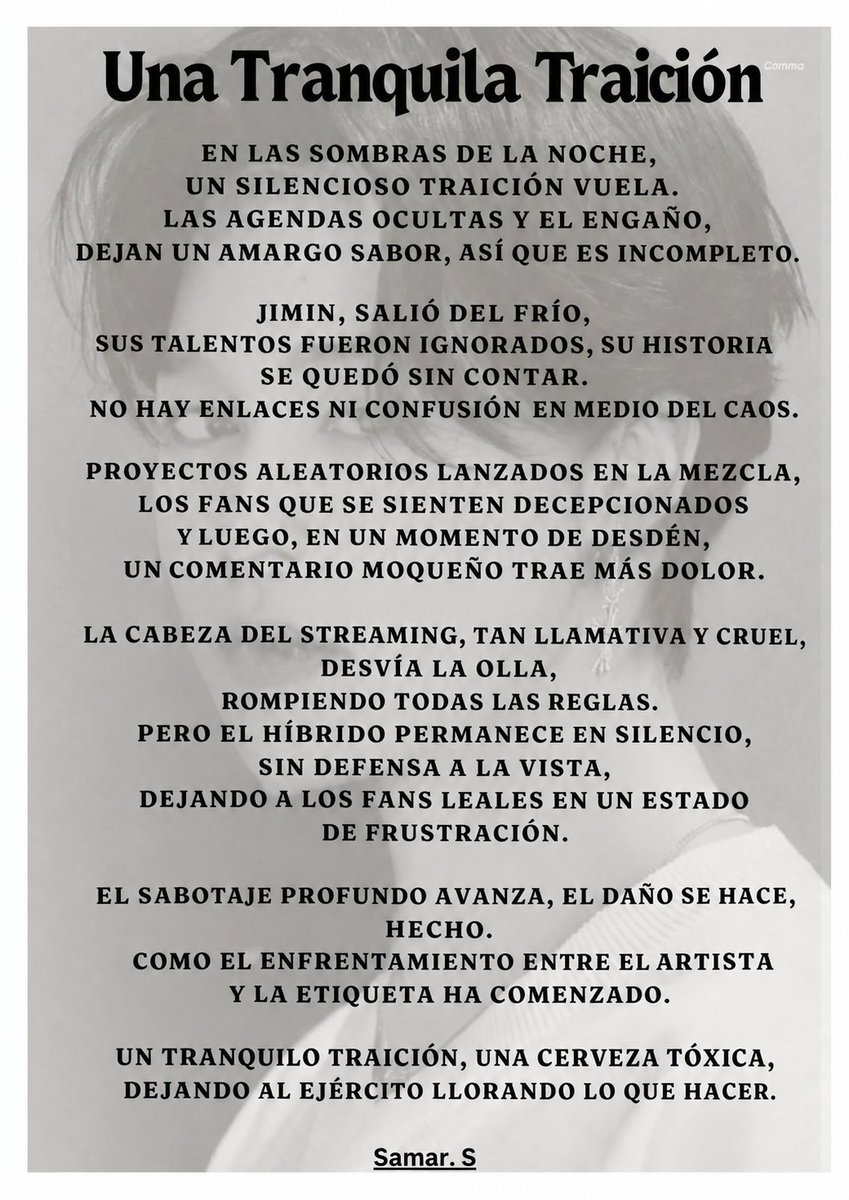
@needitbiebs youre discovering how taehyung is treated by the fanbase. this was a poem when tae released his first photobook, TYPE 1, a week after jimin's 2nd album was released.
according to jimin's fans if tae hangs out with jk, he's evil lol
@jaeftstars im learning that taehyung is the argentina of bts, truly. im glad to get to know argentines this past week. how are you are misunderstood and blamed for everything - pogo, banner, passion