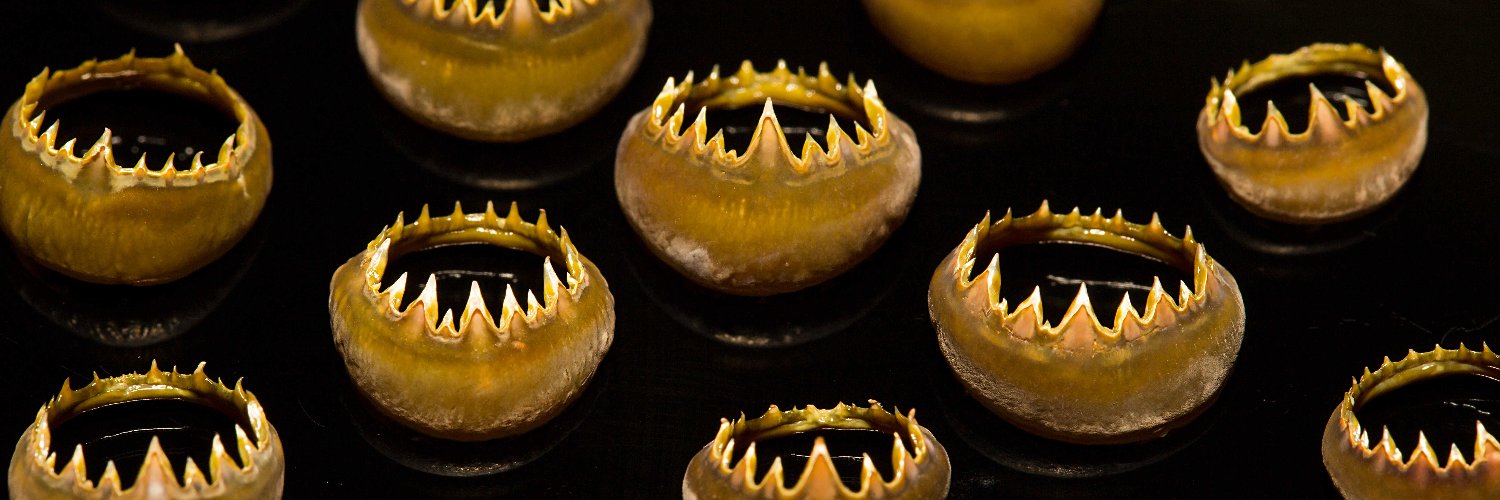
Ticks join the ranks of organisms that exploit phase separation to produce strong biological adhesives.
I enjoyed writing this News and Views perspective of this recent research article published in Nature Chemistry, full tex here: https://t.co/H9eElDD9Ti
@Pha_Tran_Papers
Phase separating peptides coacervates enter cells by a dual macropinocytosis/phagocytosis pathway.
This SEM picture from our lab on the cover of Advanced Science is arguably a textbook example of macropinocytosis.
https://t.co/tf4hKwgGN4
https://t.co/m0CmDXVg2F. Peptide
condensates are very versatile vehicles to deliver large macromolecules into cells (genes, mRNA, proteins). We have finally unveiled how they enter cells. @Pha_Tran_Papers
Manuscript accepted in @AdvSciNews. (Very) high publication fees paid and yet after a few weeks, manuscript still not available on-line. New experiment: will posting a complaint in social media get the journal to act ?
Our peptide coacervates can deliver any macromolecular therapeutics (mRNA, pDNA, proteins, antibodies) intracellularly. We can now modulate their materials properties by rationale design to tune cell uptake and intracellular release kinetics.
https://t.co/ZQV79Twvds
Latest phase-transition paper from our team: Using transfer NOESY NMR and neutron scattering to study the hierarchical structure of coacervates and the dynamic interactions of their building blocks. @Pha_Tran_Papers
https://t.co/evWcf5gRNv
Academic genealogy trees are quite interesting. Found out my Academic ancestor, Louis Agassiz, is originally from the same Canton of Neuchatel where I grew up.
We should never forget that every technological or biomedical breakthrough initially started with basic, blue-sky research. An example from our lab reviews in this recent Account of Chemical Research.
https://t.co/yPx8XCXAYl
Fluid protein condensates, such as elastin and spider silk, can inspire the design of high-performance fibres, adhesives and composites for bioengineered materials! New Review by @MezzengaRaf@BioinspiredMatt@BbmlNtu
https://t.co/OrDseiy1A7
Was an absolute pleasure to work on this review on fluid protein condensates in biological and bio-inspired materials fabrication with Ali @bbmlntu and Raffaele @MezzengaRaf !
https://t.co/vEv4AuOf7q. 40 Millions tons of chicken feathers are produced annually and burnt, producing toxic sulfur dioxide. @foodenomics from @BbmlNtu has converted chicken feathers into membranes for fuel cells. Great collaboration with the lab of @MezzengaRaf!
I am so proud to be on the first page of @ETH_en, with my great colleague Ali Miserez @BbmlNtu for this amazing invention: Generating #clean#electricity with chicken feathers | ETH Zurich. BIG CONGRATS @foodenomics @Mohpey1 https://t.co/qKwzfMr6Ne
One ring to rule them all.
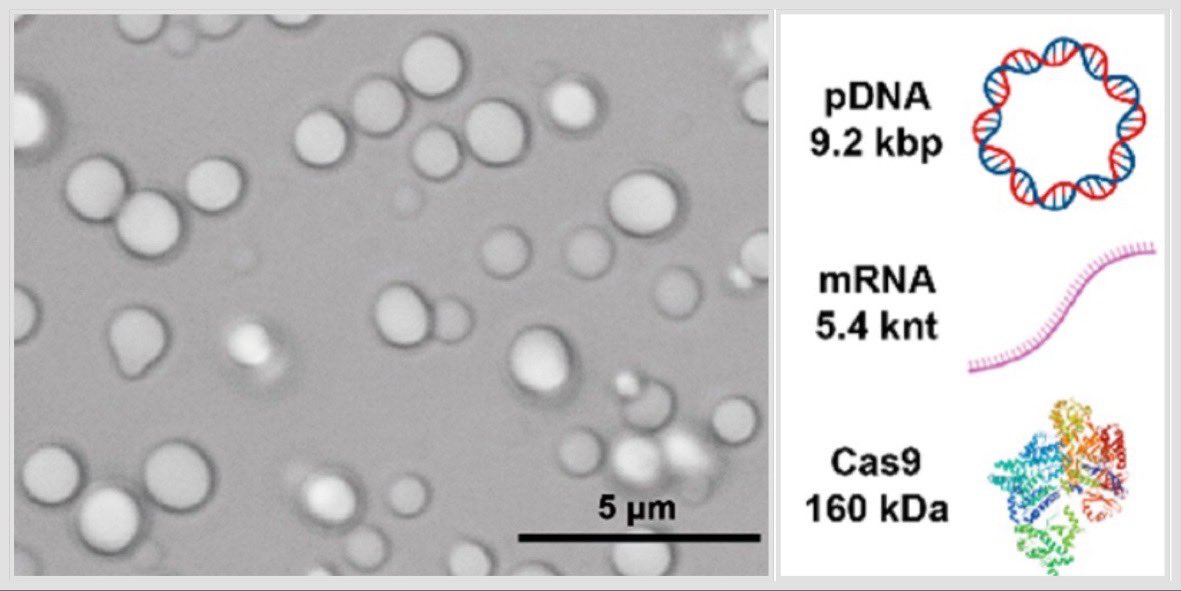
A single peptide delivers DNA, mRNA, or CRISPR Cas9 ribonucleoprotein better than lipofectamine 2k, 3k, CRISPRMax. More efficient gene editing.
https://t.co/Ow2D92dySo
Nice collab with @BbmlNtu!
LLPS meets CRISPR/Cas 9 gene editing. In our latest paper in @acsnano, we show how peptide-based coacervates can easily deliver inside cells CRISPR/Cas9 modalities, including the challenging RNP complex. #llps#biocondensates#CRISPR#coacervates
https://t.co/OxRHDi6lok