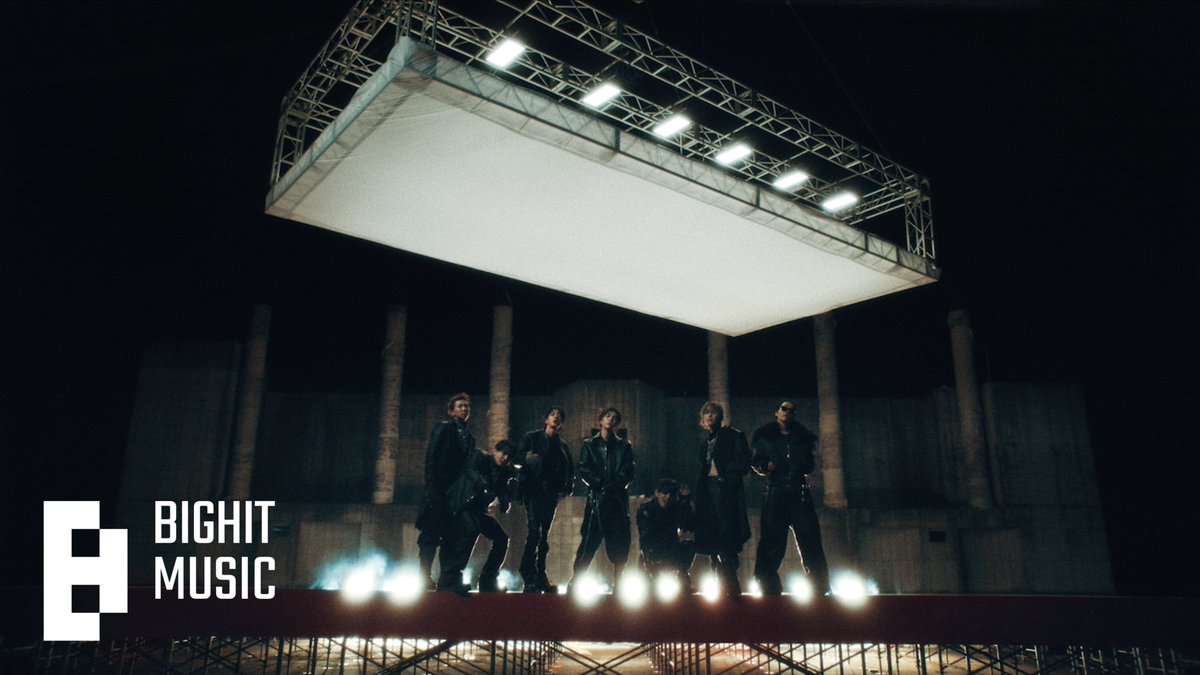
The most important imagery of the entire MV. They bout to be a problem 😎!
Soooo, nobody asked me, but here ya go 🤓! My take on this specific imagery.
Pavement is flat. Roots are alive. Pavement suggests a clean road people can walk on and forget (K-pop industry vs BTS impact). Roots suggest something buried, tangled, difficult, and necessary. So to me, the visual is saying:
What people now walk on came from work; BTS had to grow underground first.
Fame is the visible tree. The struggle, history, language, identity, rejection, discipline, and artistry are the roots nobody wanted to look at until the tree got too big to ignore.
The microphone, being the “tree,” is the sharpest part. My pookie 🥰 is basically saying the voice did this. Not corporate acceptance. Not permission. Not fitting neatly into somebody else’s mold. Their music, their words, their performance, their sound, that is what rooted them into the ground and spread outward. And that lines up with how ARMY use “BTS paved the way”: not as “nobody existed before them,” but as shorthand for BTS breaking global barriers in a way that changed what became possible after them.
The setting matters too. It’s cold, brutalist, concrete, industrial. Nothing about it looks soft or welcoming. Then you have these bright white roots spreading across that hard surface like life forcing itself into a place that was never built for it. That feels very BTS to me. The framing of ARIRANG is basically about reclaiming “K,” redefining it from the standpoint of artists treated as outsiders in a Western-centered music industry, and it specifically reads “Hooligan” as BTS’s journey challenging that space.
And then there’s the crowd behind him: black-clad, masked, anonymous, almost militarized. I don’t read them as simple backup dancers. I read them as the machine. It could be the industry. It could be the public. It could be critics, copycats, gatekeepers, or all the faceless pressure that comes with becoming a symbol. They move as a group, but he is the one visibly attached to the source. That source is not glamorous. Its roots.
Also, the roots are white, not dark. That choice feels deliberate. White can read as exposed nerve, bone, truth, spirit, or even purity of intent. So instead of roots being hidden in the soil, they are dragged out where everyone can see them. Almost like: you wanted the spectacle, but here’s the wiring too. Here’s what fed the legend. Here’s the cost.
The title “Hooligan” makes this even nastier in a good way. A hooligan is somebody unruly, disruptive, too loud, too much, not “proper.” The song is described as comparing BTS’s journey to a hooligan and notes the tension between seducing the public and attacking the stage aggressively. So this image reads like a refusal to be polite, digestible, or sanitized. It says:
You called us disruptive; fine, then watch what disruption grows into.
So to me, when RM stands there connected to the mic like that, it reads like a statement:
This didn’t happen by accident. This was built from the music. From the message.
from the years of being doubted and still making the ground move.
Basically? He’s saying if you’re walking comfortably now, maybe thank the roots.
Everybody loves standing in the shade now, but nobody likes admitting who planted the tree.
Biiiiiiisssssssshhhhhhhhh!!
POOKIE TALK YO SHIT 😎! Ha-ha-ha-ha-ha-ha-ha-ha-ha-ha-ha-ha-ha-ha, hooligan 🥷!
#BTS_HOOLIGAN
Yoongi telling us the real meaning behind the name SUGA after 13 years and saying that shooting guard was what he just used caused it was annoying to explain... MIN YOONGI HOW LONG DID YOU PLAN TO GATEKEEP THIS INFO
Why? Do I look like a fan of an artist whose album ARIRANG made K-pop history by securing No.1 on the Billboard 200 for two consecutive weeks, outperforming releases such as BULLY by Kanye West and HADES by Melanie Martinez?
Yes. I am indeed a fan of BTS- also known as ARMY.