Ne Obliviscaris
A nation of sheep will beget a government of wolves-ERM
✝️Husband, Dad, Rt MSgt ANG 28yrs(ECM/Comm), 1A primary 2A ensures it GB USA!⛔️DM/Crypto
The Law That Binds the Crown
The Final Stand
by: E.M. Burlingame
You have heard me before—on the edge of the field of battle, when the ache in your chest was the only truth left. You heard me again in the quiet of your home, when the weight of the fathers who came before you settled on your shoulders. Now, at the end of all our speaking, I must speak of the instrument by which the enemy has stolen what our fathers built: the corrupted courts, the unaccountable enforcement, the institutions that were meant to limit power have become the weapons of those who would make themselves powerful.
What I have to say about these institutions, I would say to you in any ordinary courthouse or street corner where men still speak plainly. It is the oldest truth we have ever had to speak, and the one we have most often refused to face across more than a thousand years. If we do not face it now, the first two speeches were just words in the wind, and the seed our fathers planted will die in the poisoned soil of the courthouse.
Throughout our history the pattern is the same. The courts of law and the officers who enforce them, the institutions that sit in judgment and the men who wield that judgment, become corrupted. They overreach. They cease to be servants of the law and become powers unto themselves. They do not only abuse the poor and the weak—they turn, in time, on the very nobles and kings who empowered them or looked away while the rot took hold. Unaccountable judiciary and enforcement always become political tyrants and malevolent agents. They abuse the people first, then they consume or undermine the hands that thought they held the leash. This is not theory. It is the most ancient of fights.
When the Northmen burned the monasteries, they burned more than churches. They burned the records of what justice had been. They burned the memory of how men were supposed to treat each other. For years, there was no law but the sword. Alfred came out of the marshes knowing what every father knows: without law that can be trusted and officers who can be held to it, there is no realm left to defend, no inheritance to pass, no future for the children. He did not merely compile the old dooms—he resurrected them. He demanded that judgments be given evenly: one measure for rich and poor, friend and foe alike. He moved against the reeves and judges who had grown fat on the chaos. That was a hard reset. Not because Alfred loved power, but because he loved law. He saw that corrupted justice destroys a people from within long before any foreign host arrives, and he would not let it happen to his people.
Centuries later, when King John made the royal courts a market where justice was sold to the highest bidder and imprisonment was a tool of personal revenge, the free men of the realm—the same sort of men who stand before me now, who carry the weight of responsible sovereignty in their bones—did what had to be done. They forced him to the field at Runnymede. They did not rise against the idea of kingship. They rose against the corruption of it. They said: the law must bind the king, or the king is no king—only a tyrant with a crown. They demanded the restoration of the old right: that no free man be destroyed save by the lawful judgment of his peers or the law of the land, and that justice be neither sold nor denied nor delayed. That was the Commons compelling a hard reset of institutions that had ceased to serve the law and had begun to serve only the will of the usurper of the Commons.
The same pattern repeated when later kings created and expanded prerogative courts—the Star Chamber and its kin—that operated without juries, without open process, on secret information and royal favor. What began as a tool to deal with powerful offenders who could intimidate ordinary courts became, in time, an engine of political and religious tyranny that reached into every shire and every class. It abused the common man without mercy. It also, in the end, helped bring down the very crown that had relied upon it. Free men through their Parliament abolished those courts outright. They did not reform them. They reset them. They declared that no man, however high, could be judge in his own cause, and that the ordinary courts of the realm, bound by known law and the consent of free men, were the only courts worthy of a free people. That was the Commons, great and small, standing together to force the institutions back under the law after they had become tyrants.
And across the sea, when the same ancient pattern appeared in the colonies, it was not taxation alone that launched the great reset. It was the courts. It was admiralty proceedings without juries. It was general warrants that violated every principle of English liberty. It was enforcement arms that ruled consistently against the colonists—against the colonial gentry, the merchants, the farmers, the men who still understood themselves as free Englishmen carrying the ancient liberties. They saw the pattern. They knew it from the history they had read and the stories their fathers had told them. They knew that when the institutions of justice show they will not be bound by the law, the break becomes inevitable. So they broke. And they built again—on the old foundations, with the old principles, for the old purpose: the sovereignty of the Common Man under the law.
And here is the truth that the corrupt have tried to hide from us: the law is not an abstraction. It is enforced by men. And men must be held to account for what they do in the name of the law.
When a judge acquits a violent criminal, that judge is not merely making a legal error. He is making a choice—a choice that endangers every man, woman, and child in that community. When that criminal goes on to harm another, the blood is on the judge's hands as surely as if he had wielded the weapon himself. When a jury fails to convict the guilty, they are not exercising their independence; they are failing in their duty to protect the innocent. When an officer enforces an unjust law or turns a blind eye to the guilty, he is not serving the law; he is serving the corruption.
Our ancestors understood this. They knew that a jury that would not convict the guilty was as dangerous as a judge who would not judge the usurper of the Commons. They knew that an enforcement arm that could act without fear of the law was not protection—it was predation. That is why the ancient dooms demanded that every man who participated in the administration of justice be answerable for his actions. That is why the Petition of Right and the Bill of Rights insisted that no man be above the law—not the king, not the judge, not the officer, not the juror.
The corrupt have tried to tell us that this is impossible. They have tried to tell us that we must trust the institutions, that we must let the professionals handle it, that we must not question the judgments of the courts. They have forgotten that the courts exist to serve us—not the other way around. They have forgotten that the Common Man is the ultimate judge of whether justice has been done. They have forgotten that when the institutions fail, the people must reclaim and have reclaimed their authority.
And we must speak of a corruption older than any other: the foreign judge, the foreign official, the man who has no stake in the community he claims to rule. Our ancestors understood this danger long before we did. They knew that a man who is not bound to a place, who has no deep ties to its history, its families, its customs, and its struggles, cannot be trusted to judge its people. He has no skin in the game. He has no sons who will walk the same streets. He has no memory of the fathers who built the courthouse. He is a stranger, and strangers have always been the tools of tyranny.
This is why the Acts of Settlement—that great bulwark of English liberty—explicitly barred foreigners from holding office in the judiciary and the enforcement arms. Not out of xenophobia. Out of the hard-won wisdom of centuries: that a man who does not belong to a community cannot be trusted to judge it. That a man who has not bled for the inheritance cannot be trusted to protect it. That a man who answers to a foreign power—or to no power at all—is the oldest form of unaccountable tyranny.
Look at the pattern repeating before our eyes. Foreign judges sitting in our courts, ruling against our people, indifferent to the consequences. Foreign officials in our enforcement arms, enforcing laws that have no root in our history. Foreign agents in our institutions, guiding the rot from inside, shaping what is enforced and what is ignored, what is punished and what is permitted. They have no daughters who will walk our streets in danger. They have no fathers who bled for our inheritance. They have no stake in our future. They are accountable to no one—and they act like it.
This is not the way of our ancestors. It is the way of tyranny. It is the way of the Roman proconsul, the Norman overlord, the distant imperial official who rules from afar and cares nothing for the people he rules. We rejected it at Runnymede. We rejected it in the Petition of Right. We rejected it in the Acts of Settlement. We rejected it in the great reset across the sea. And we must reject it again.
Let us be clear about who we are and who we are not. We are not the mob. We do not seek to tear down the throne or burn the city to the ground. That is the way of the leveler, the anarchist, the man who hates order itself—the man who tears down the house because he cannot live in it, and leaves nothing for his sons but ashes.
We are something rarer and harder: we are restorers. We are the men who look at a house that has been stolen—its foundations cracked by the rot of the corrupt, its keys held by usurpers who have no right to them—and we do not run away to build a shack in the woods. We reclaim what is ours.
Consider those who came before us in the great civil wars of our history. The Jacobins—those loyal Englishmen, Scots, and Irish who saw that the Crown had been captured, that the courts had been corrupted, that Parliament itself had become an instrument of tyranny—they did not seek to destroy England. They sought to restore her. They fought to reclaim the Commons from those who had stolen it through the very corruption we see today: captured courts, unaccountable enforcement, a Parliament that served itself rather than the people. They were not revolutionaries in the French sense—they were traditionalists, demanding that the old law be honored, that the Crown be returned to its proper place under the law, that the Commons be sovereign once more.
The same spirit moved across the sea. The men who fought what became the American Revolution did not see themselves as creating something new. They saw themselves as reclaiming something old—the ancient liberties of Englishmen that had been stolen from them by a corrupted imperial judiciary, by admiralty courts without juries, by enforcement arms that answered to faction rather than law. Many of them, in their hearts, were Jacobins—not in the French sense, but in the older, truer sense: men who would not bow to a captured crown, who demanded that the law bind every man from the throne to the cowherd, and who were willing to spill their blood to make it so again.
That is our tradition. That is our banner. We do not fight to create a new world. We fight to reclaim the one our fathers bled to build, before the usurpers in black robes and badges turned it into their private fiefdom. We are not rebels against the law. We are the defenders of the true law—the law that binds the Crown, the courts, and the Common Man equally.
Always the same tactic follows the corruption. Always. Those who benefit from the captured judiciary, the unaccountable enforcement, the institutions that serve faction rather than law—they point the finger. They blame the good among the Common Man. They blame the responsible. They blame the men who still carry sovereignty in their own hands, who raise their families in the old ways, who speak the truth they see, who refuse to bend the knee. They say: "It is their fault. They are the problem. If they would just be quiet, if they would just accept, if they would just let go—then everything would be fine." It is the oldest lie in the tyrant's book. It divides the Commons so that the healthy part of the polity fights itself instead of the institutions that have turned predator. We must not fall for it. We have fallen for it before. We must stop falling for it now.
What, then, does this hard reset demand? Let us be specific—for vagueness serves the enemy, and clarity serves the Common Man.
First: That every judge who has demonstrated bias—who has twisted the law to serve faction, who has acquitted the guilty or convicted the innocent on the basis of favor, who has shown that he cannot be trusted to judge evenly—be removed from the bench. Not reformed. Removed. The seat is not a right; it is a trust, and it has been broken.
Second: That no foreigner—no one who has not been born to the soil, who has not deep ties to the history and community of the place, who has not demonstrated through sacrifice and blood that he is bound to the inheritance—be permitted to serve in any capacity in the judiciary, law enforcement, or any institution of justice. This is not new. It is the ancient law of the Acts of Settlement, reaffirmed across centuries of our history. We demand that it be enforced.
Third: That every officer of the law, every juror, every participant in the machinery of justice, be held accountable for the consequences of their actions. If they acquit the guilty and that guilty man harms the innocent, they are answerable. If they enforce an unjust law, they are answerable. If they fail in their duty to protect the weak, they are answerable. No immunity. No shield of office. No protection from the law they claim to serve. The blood of the innocent is on their hands, and they must answer for it.
Fourth: That juries be drawn from the whole body of the Commons—not from the professional class, not from the politically connected, not from the pool of those who have lost their nerve, not from those who have no stake in the community, not from the factionally malevolent. Juries are the conscience of the community. They must be composed of men who have skin in the game, who have sons to protect, who have fathers to honor, who have a stake in the future of the place they judge.
Fifth: That the institutions of justice be returned to their only legitimate purpose: the protection of the innocent and the punishment of the wicked. Not the protection of the tyrant, the petty powerful. Not the punishment of the inconvenient. The law must serve the people, not the other way around.
This is not radical. This is what Alfred demanded. This is what Runnymede secured. This is what the Jacobins fought to restore. This is what the Founders encoded. We are not asking for new privileges. We are asking for the old liberties to be made manifest again—in the courthouses where they are currently denied.
We have petitioned. We have argued. We have waited until our patience is a wound. We have given every benefit of the doubt to the institutions we once trusted. We have done what the law requires—and more. But our fathers did not cross oceans, stand in shieldwalls, and spill their blood to teach us to bow to a foreign judge or a corrupt officer. They did not fight at Runnymede, at Naseby, at Bunker Hill, to give us a system that would become the instrument of our own oppression.
There is a point—as there was at Somerset Levels, as there was when the Jacobins rose to restore the Commons, as there was when the Founders across the sea reclaimed their ancient liberties—where patience becomes complicity. Where waiting becomes surrender. Where the failure to act becomes an act of betrayal against the generations who came before and the generations who will come after.
We are not seeking force. We are seeking justice. We are seeking the restoration of the law that binds us all. We are seeking the hard reset that history shows is the only thing that has ever worked. But we are not fools. We see the path the corrupt are walking. We see them using the courts to punish us for demanding the law. We see them using foreign officials to rule against us. We see them closing every peaceful door.
If they force us to choose between our inheritance and our safety, between the law and submission, between our fathers and their usurpers—then we will do what the Common Man has always done. We will reset. We will restore. We will use whatever means the moment demands, and we will answer for it to God, to our fathers, to our sons, and to history. That is not a threat. It is the iron promise of men who have run out of words.
Now hear the cost of this fight, and let it be the last time I speak of cost. Our fathers did not have it easier than we do. They had it equally near on to impossible hard. They bled. They wept. They buried their own across centuries. And they did not yield. They stood in the shieldwall, in the mud, in the snow, in the streets, in the courthouses—wherever the line was drawn—and they held it.
If we lose here, it is not only we who fall. The line of men willing to restore this thing falls with us, and the door closes, and there is no one behind us in all the world who will open it again. Win, and we buy another hundred years for it to live. Lose, and the sovereign Common Man goes out of the world like an eternal flame no more. A flame that does not come back.
The line we have spoken of since the beginning runs through every courthouse, every station house, every office that claims the authority of law. It runs through the fields of battle. It runs through the hearths of our homes. Now, in this final hour, it runs through the halls of justice. On one side stand those who defend the corruption, who benefit from the tyranny, who rule from the bench and the badge without accountability, or who have been fooled into blaming their fellow Common Men for the fruit of that rot. On the other side stand the restorers—the fathers and the sons, the kings' men and the cowherds, the native-born and the men who have earned their place in the line, united as one Commons.
You are not here to fight for an idea. You are here to reclaim the ground your fathers held. Look to the lawbook. Look to the gavel. Look to the badge. The law that must bind the Crown is the same law that must bind every judge, every officer, every juror, every participant in the machinery of justice. The whole of what Alfred saved, what battle after battle secured, what the restorationists bled again and again to restore, what the Founders established across the sea—it stands or falls on whether we, the Commons, will come together once more and do what they did: reset what has become tyrannical and restore what was meant to protect us all.
No more words. The field is set. The seed is planted. The courts are captured. The harvest depends on what we do now.
The choice is made in the ache of your chest and the iron in your grip.
DEMAND THE REMOVAL OF THE CORRUPT!
DEMAND THE EXPULSION OF FOREIGN JUDGES AND OFFICIALS!
DEMAND ACCOUNTABILITY FOR EVERY PARTICIPANT IN THE MACHINERY OF JUSTICE!
DEMAND THE RESTORATION OF JURIES DRAWN FROM THE WHOLE BODY OF THE COMMONS!
UNITE THE COMMONS AGAINST THE REAL ENEMY!
HARD RESET THE INSTITUTIONS!
RESTORE THE LAW THAT BINDS US ALL!
STAND FOR THE FATHERS!
STAND FOR THE SONS!
MAKE IT OURS!
MAKE IT OURS, AGAIN!
STAND!!!
American Exceptionalism XXXIV: The B-17 Flying Fortress
The World Before:
War once hid behind distance. Oceans, weather, mountains, and fortified cities gave tyrants room to breathe. Industry could be buried deep, armies fed from the rear, and evil could believe geography would protect it.
The American Answer:
The B-17 changed the argument. America built a bomber that could cross the sky under fire, absorb punishment, and keep flying with pieces of itself missing. Aluminum, engines, machine guns, bombs, and young men barely old enough to shave carried American industry into the heart of Nazi Europe.
The Legacy:
The Flying Fortress became more than an aircraft. It was industrial courage with wings, proof that a free people could build machines in numbers no dictatorship could match and send them into daylight against the enemy’s most defended ground.
America did not merely bomb targets. It made tyranny look upward.
The Threat:
The enemies of this country hate the arsenal because it reminds them that peace is not protected by sentiment. It is protected by production, resolve, and men willing to climb into metal coffins so civilization can survive below them.
Freedom has always needed factories.
🚨 NOW: These American patriots are running a SINGLE AMERICAN FLAG 3,000 miles from California to Washington DC for July 4th, and the relay is almost done 🇺🇸
Veterans have lined up on the road to watch!
They're running RIGHT NOW, in sweltering heat!
That's pure dedication ��� and law enforcement have been spotted escorting them 👏🏻
These runners are also dedicating it to our Veterans 🙏🏻
"Today, tomorrow, hell, every day of the year is the best day to be a red, white, and blue-blooded, flag-loving, meat-eating, God-fearing, gun-owning, eagle-riding, unapologetic, kickass American."
Do you feel the cultural shift?
The Left demonized Patriotism as racist.
The Left demonized Masculinity as toxic.
They told you America was inherently bad.
They did this so people would be afraid to fight back and to weaken men.
All so they could…
Destroy America.
Destroy American exceptionalism.
But due to President Trump…
Patriotism is cool again.
Masculinity is celebrated.
People are no longer staying quiet.
America is getting back to being America.
There is no apologizing.
The Left are the unhappy miserable outcasts and everyone sees it.
They hate America and what America stands for.
It started with USA Hockey and Jimmy’s Famous Seafood telling the Media to “Go F*ck Yourself”.
Then Trump making DC monuments beautiful again.
Then Team SpaceX launches standing proudly in front of American flags.
Then the US National Team standing Patriotically with hands over their hearts during the anthem.
Then UFC at the White House in its full patriotic glory.
Now Americans proudly celebrating the 250 birthday of the GREATEST country on Earth.
Pure unapologetic Masculine Patriotism.
They might seem like little things.
But they’re not.
Winning the Culture War will lead to saving America.
And America must be saved.
Save America to save the West.
Save the West to save the World.
God bless the United States of America!🇺🇸
Just threw some Iberian Coppa on the smoker for the best pulled pork ever. Those Spanish pigs who eat only acorns? They give up their lives for a higher purpose.
I'm still trying to get over traveling to Europe on a bum knee, which definitely did not help it, so I'm just hanging around the house, smoking meat, watching the festivities from DC, posting pics of America online and thrashing Commies on my breaks.
Living the dream.
Happy Independence Day 250!!!🇺🇸🎆🫡
Have you ever heard the Declaration of Independence read out loud?
You should. It’s the greatest break-up letter ever written.
At just 33 years old, Thomas Jefferson, with cold moral clarity, told the British government to pound sand:
“Whenever any Form of Government becomes destructive of these ends [life, liberty, and the pursuit of happiness], it is the Right of the People to alter or to ABOLISH it.”
The power of that line isn’t just what it says. It’s how it’s said.
Jefferson wasn’t writing from a place of outrage. He was transmitting conviction—moral clarity delivered from a steady frame of mind.
It’s said Jefferson revised the Declaration of Independence with the help of Franklin and Adams dozens of times before it was finalized.
And that deliberate, cutting language, paired with emotional steadiness, is precisely why the words still land 250 years later.
Today, we’re blessed to be the inheritors of the great nation those steady hands wrote into existence.
Happy Birthday, America. 🇺🇸
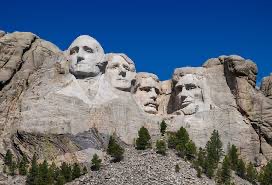
American Exceptionalism XXXII: Mount Rushmore
The World Before:
Civilizations have always carved memory into stone. Pharaohs, emperors, kings, and conquerors built monuments so the future would know who commanded the earth beneath them.
The American Answer:
America carved a mountain with presidents.
Not gods or kings. Washington, Jefferson, Roosevelt, and Lincoln became granite witnesses to a republic that had declared liberty, expanded across a continent, preserved the Union, and awakened as a world power.
The Legacy:
Mount Rushmore turned American memory into terrain. It is not subtle and was never meant to be. It says that nations require symbols large enough to survive the cowardice of forgetful ages.
America did not carve rulers into the mountain. It carved reminders.
The Threat:
The enemies of this country hate monuments because monuments interrupt erasure. They want a people ashamed of their inheritance, severed from greatness, and trained to see every flaw as a reason for demolition.
Mount Rushmore answers in stone.
A nation that forgets its giants will be ruled by insects.
America turns 250 today.
Let me read back the resume.
We started by telling a king to pound sand, in writing.
By 1803 we bought half a continent from France for about four cents an acre.
We fought a war with ourselves and somehow stayed one country.
We strung a railroad across the entire thing.
We handed the world the lightbulb, the telephone, and the airplane in about thirty years flat.
Then a man named Willis Carrier invented air conditioning and made half the planet actually livable.
You are welcome, Texas. You are welcome, Dubai.
Twice the whole world caught fire, and twice we showed up and helped put it out.
We split the atom.
We put men on the moon in 1969.
Then we went back and hit golf balls up there, because why not.
We invented jazz, blues, rock and roll, and hip-hop, and the whole planet is still dancing to it.
We put a burger and fries on every corner of the earth.
We built rockets that fly themselves home and land standing straight up.
We flew a helicopter on Mars.
We launched a car into actual space and it is still out there cruising.
We also invented ranch dressing and somehow talked the entire world into putting it on pizza.
Priorities.
We even invented three of our own sports so we could win them.
Baseball, basketball, and football.
Real football, the kind with hands, because we named it and we are not taking corrections.
The rest of the planet can keep soccer, which is fine, we are hosting it in our backyard this summer anyway.
And yes, Canadian football exists, wider field, extra man, one fewer down, and we try very hard not to think about it.
Frankly it was generous of us to invent our own games.
If we put all that energy into soccer, nobody else would ever lift that trophy again.
We would win it so often they would just rename it the America’s Cup and hand us the keys.
You are welcome for the suspense.
And in 2026 we threw a birthday so big a German tourist live-tweeted our gas stations to 750,000 people.
Not every chapter was clean.
We argued, we stumbled, we fixed what we broke, and we kept building.
That is the whole trick.
Two hundred and fifty years in, and we are still the loudest, brightest, most improbable experiment on the map.
Not bad for a country that started as a strongly worded letter to a king.
Happy birthday, America.
🦋
MUST WATCH
Two patriotic 85-year-old songwriters called the Forever Boys released a music video called “What Would You Do If America Needed You," in reaction to the recent election of multiple far-left communists.
The song calls on every American to preserve the principles and freedoms on which our country was founded.
POWERFUL 🇺🇲
They gave me permission to post and spread it to the world. Please share!
This version of The Star Spangled Banner is dedicated to the 322 men and women who will learn this weekend that they received a work ethic scholarship from MRW. A total of $3 million is being awarded this quarter. Details to follow, later today. In the meantime, please join me and a few of our past recipients in a gentle reminder that our national anthem can - and should - be sung in under a minute. And feel free to sing along!
In September of 1814, America was once again in trouble.
The young republic was only thirty-eight years old. The War of 1812 had gone badly. British troops had marched into Washington, burned the Capitol, set the White House ablaze, and now turned their sights toward Baltimore. If Fort McHenry fell, the harbor would be open, the city would likely follow, and another devastating blow would be dealt to the fragile nation.
Amid this uncertainty, a young American lawyer named Francis Scott Key sailed under a flag of truce to the British fleet. He had come to negotiate the release of a friend, a physician the British had captured.
He succeeded.
The British agreed to free the doctor.
But there was a catch.
Because Key and his companions had seen too much of the British fleet and learned too much about its plans, they were not allowed to return to shore. Instead, they were detained aboard a ship in the harbor and forced to watch the coming battle from behind enemy lines.
On the morning of September 13, the bombardment began.
For the next twenty-five hours, British warships unleashed somewhere between 1,500 and 1,800 bombs and rockets upon Fort McHenry. These were the “bombs bursting in air” and the “rockets’ red glare” of the song—not poetic embellishments, but terrible realities.
Key stood on the deck through the endless day and the long, terrifying night. Every explosion lit the darkness for a fleeting instant before the smoke swallowed everything again. Somewhere beyond that wall of fire stood the fort. Somewhere beyond it flew an American flag if it still flew at all.
He could not see.
He could only listen.
As long as the guns continued firing, there was reason to hope. The British would not waste ammunition on a fort that had already surrendered.
Then, just before dawn…
The guns fell silent.
For the first time all night, there was only stillness.
It was the most frightening sound of all.
Had the fort finally fallen? Had the defenders surrendered? Had the flag been torn down in the darkness while no one could see?
There was nothing to do but wait.
As the first light of September 14 slowly pushed back the smoke, Francis Scott Key strained his eyes toward the distant fort.
Then he saw it. Not a British flag.
The American flag. Still there. Still flying.
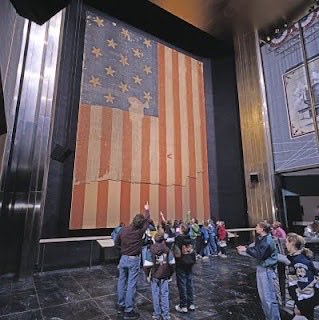
That flag was no ordinary banner. Months earlier, the fort’s commander had commissioned a Baltimore flagmaker, Mary Pickersgill, to sew a flag so enormous “that the British would have no difficulty seeing it from a distance.” It measured roughly thirty by forty-two feet, carried fifteen stars and fifteen stripes, and was so large it had to be assembled on the floor of a brewery because no ordinary room could contain it.
That was the Star-Spangled Banner.
The very flag Key saw through the morning mist.
The very flag that still survives today in the Smithsonian.
Overcome by what he had witnessed, Key reached into his pocket, pulled out an envelope, and began writing. The words came from a heart that had spent an entire night fearing his country might disappear with the dawn.
He first titled the poem Defence of Fort M’Henry.
Within days it was printed and circulating throughout the country. Before long, people began singing it to a melody they already knew—an old British tune called “To Anacreon in Heaven,” originally written for a London social club. There is something beautifully ironic in that: America’s most beloved patriotic song borrowed the melody of the very nation it had just survived. It also explains why the anthem is so notoriously difficult to sing. It was never written for ordinary voices gathered in stadiums or school assemblies.
The song spread quickly and became one of America’s favorite patriotic hymns, but it would wait more than a century before receiving official recognition. Not until 1931 did Congress declare “The Star-Spangled Banner” the national anthem of the United States.