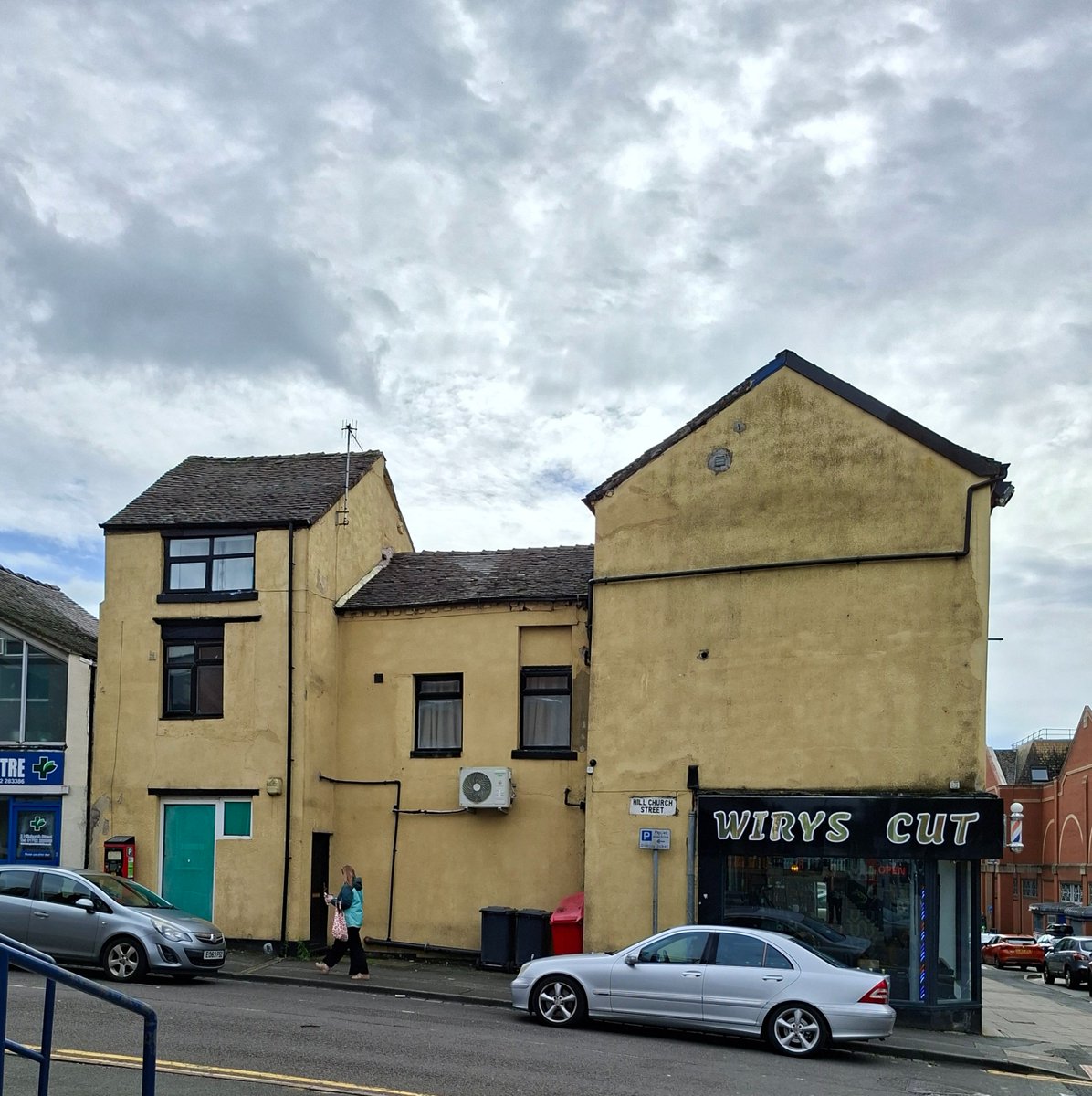
Old houses on the corner of Hill Church Street (formerly Church Street) and Town Road (formerly High Street) in Hanley, Staffordshire. If you think they look nothing special, you should see most of the nearby buildings.
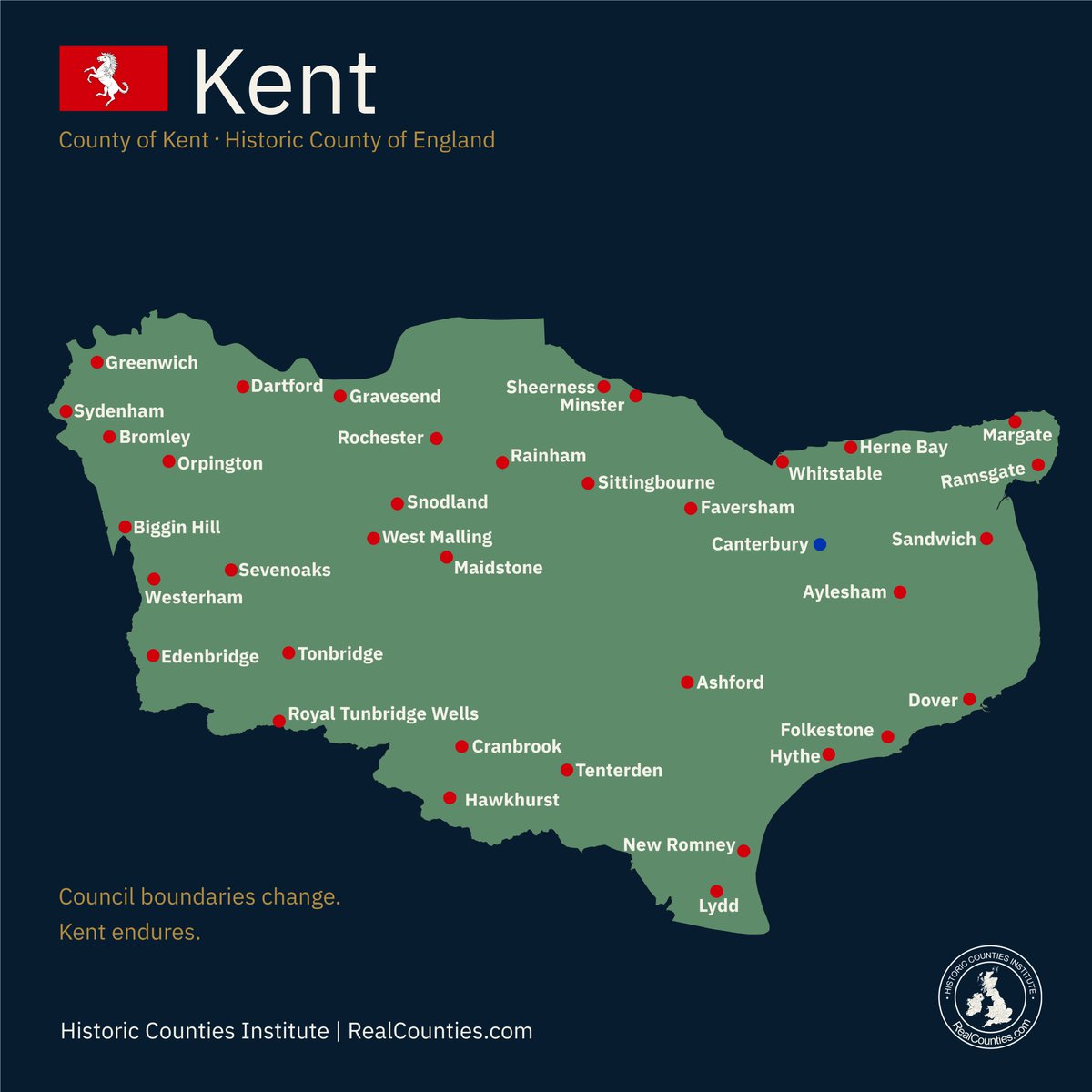
Greenwich is a London borough, but that doesn't mean it’s ceased to be part of a geographic county.
Greenwich is still geographically in Kent.
Inclusion in Greater London in 1965 changed Greenwich’s local-government arrangements, not its county geography.
Being part of London and belonging to a historic county aren't mutually exclusive. Both are true today!
Roof angels with musical instruments
Late-15th / early-16th century angels at Bitchfield, Lincolnshire. The first plays a trumpet, the second holds a scroll, the third plays panpipes, the fourth holds something now broken off, the fifth plays a lute, the sixth a crown of thorns
Swap: Town Hall, Arundel, given by 12th Duke of Norfolk in exchange for north part of the High Street taken into the Castle grounds. Built in knapped flint with galleting, 1833-36 to design of Robert Abraham. Listed Grade II.
Effigy of Elizabeth de Montfort, Baroness Montagu (d.1354), Oxford Cathedral.
She was the mother of eleven, including the 1st Earl of Salisbury. She endowed St Frideswide’s Priory with the land now known as Christ Church Meadow.
Much of the original paint remains on the effigy.
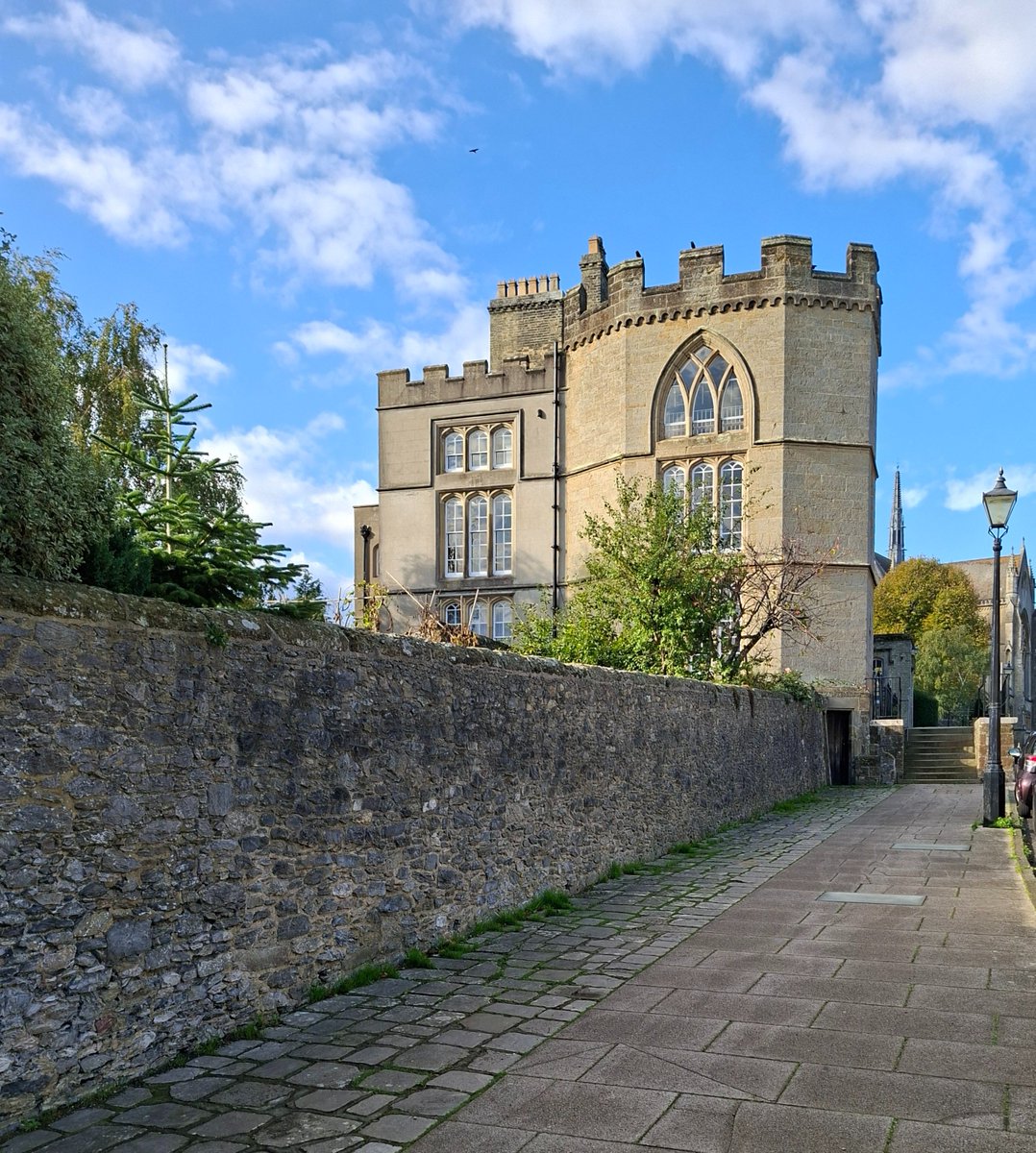
Gothic octagonal tower before 1823 at the end of old Vicarage, now divided into houses, designed by Arundel estate architect, on the ridge where the town is built. Listed Grade II.
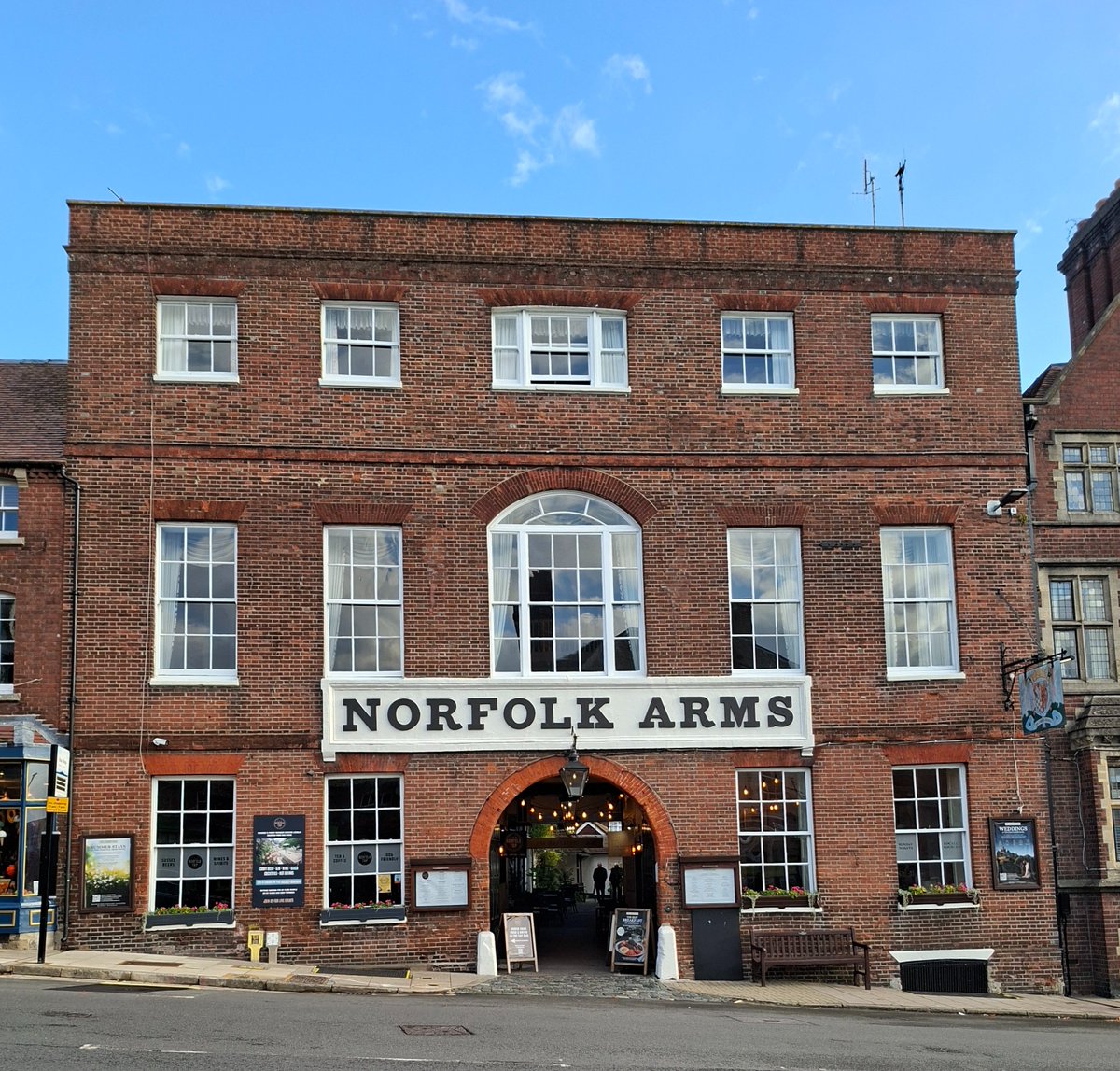
The outsize name board in early 19th-century slab-serif or "Egyptian" lettering distinguishes the coaching inn built in Arundel High Street by the Duke of Norfolk in 1785. The room above the arch could hold 150 at dinner. Listed Grade II*.
18th October is the feast of St Luke the Evangelist who is here depicted in the initial 'Q'(uoniam) of his gospel.
Cambridge, Corpus Christi College, MS 004; The Dover Bible, Volume II.; 12th century; f.193v @ParkerLibCCCC@CorpusCambridge
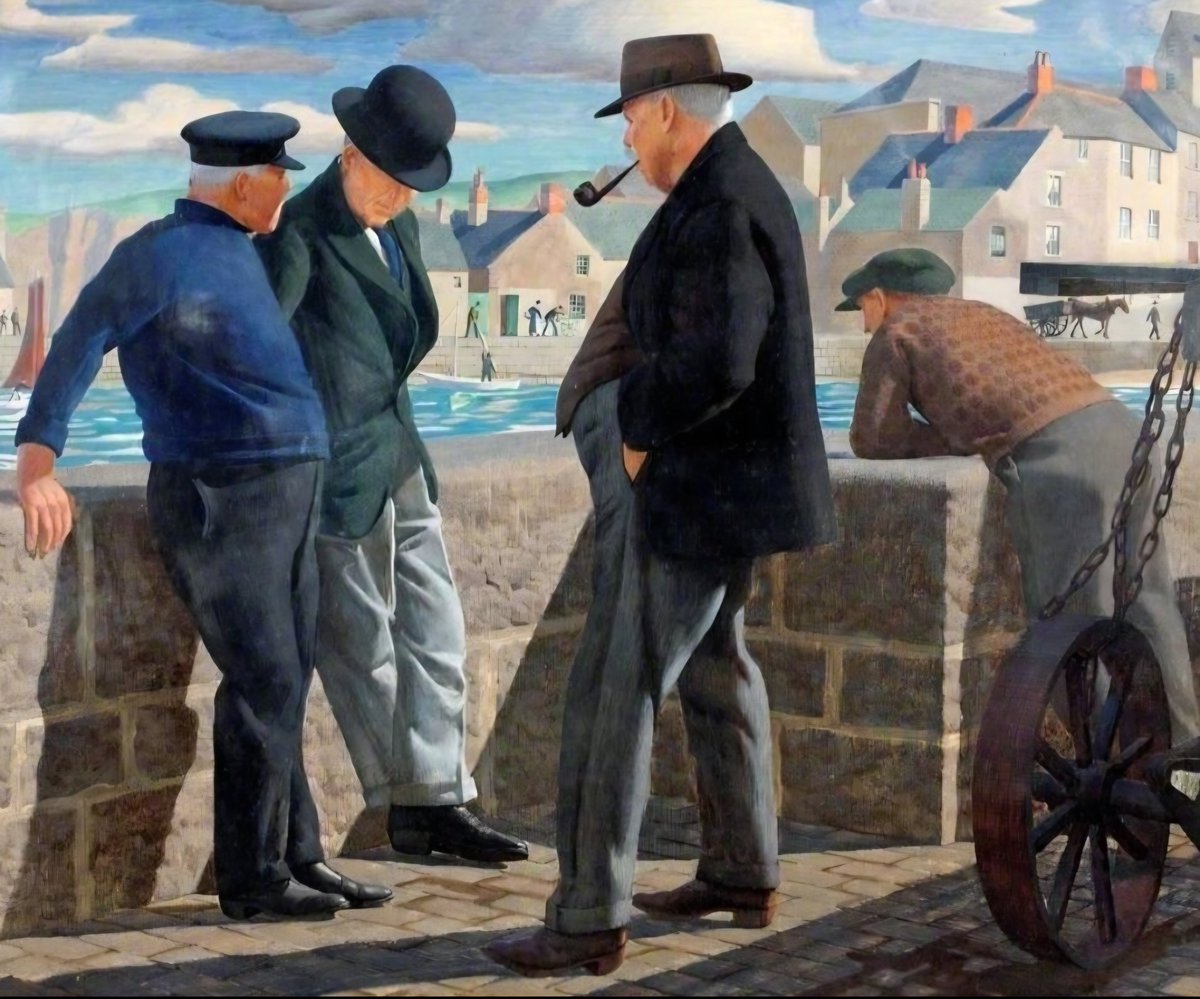
In the wake of the far-reaching loss of WW1, pictures which had an emphasis on continuity and nostalgia had enormous appeal in Britain during the inter-war years. The clarity of definition in James Walker Tucker's 'An Idle Chat,' (1936) is down to his use of egg tempera.
Donington-on-Bain church. The most interesting feature is a brass tablet from 1638 to the "learned prudent" rector Thomas Kent, which calls him "Both Chrysosthomer and Polycarpe in one"
2/2 Here's the whole church, by Darbyshire & Smith, 1900 with an adjacent hall and rooms, 1904 and substantial rectory. Salford's Barracks Estate may not be the most salubrious in the world, but you'd like to think this splendid building had a future.
St John, Hanley, Staffordshire, on the old High Street. Disused but listed Grade II*. Use as a mosque prevented by pre-existing legal covenant. Cast iron castellations and gallery inside supported on slender cast-iron columns. Now hemmed in by blank shopping-centre walls.
"In a gentle way you can shake the world," says the decaying hoarding of the office block still To Let after 10 years in the old High Street, now called Town Road, in Hanley, Staffordshire. A meshing fence protects pedestrians from falling debris. A defibrillator stands ready.
Visitors' book
Old books in churches are rare. This one, from 1891, is at Yaxley, Suffolk and is still in use. Edward Cobb's 1st visit was with his wife, Emma Frances. He was born in Yaxley & was 35. Thomas Wells, a hat and cap manufacturer, was 49. J. Farrow says he's a postman
Arthur Conan Doyle, the creator of Sherlock Holmes, was wandering the streets of Indianapolis on this day in 1894.
He climbed to the top of the Soldiers' and Sailors' Monument, gave a lecture on literary life, and had dinner with James Whitcomb Riley.