@Liam_Holman99 Does this work in reverse? If their families did want division as a result would you urge us to listen to them then? Or is this not really about what they want?
I suspect it is just maintaining immigration as a topic we aren’t allowed to debate. Is that fair?
You have every right to know what your government is doing, and they have no right to know what you are doing.
That is why they are called public servants and we are called private citizens.
Instead, the relationship has been inverted. The state hides behind secrecy, classified files, and redactions while demanding total visibility into your finances, communications, movement, and behavior.
A society where the rulers live in privacy while the population lives under surveillance is the very definition of tyranny.
🚨 Anthropic just showed a 24-minute workshop on how to actually do prompts for Claude.
Taught by the people who built it.
Free. No registration. No paywall.
I've seen $300 courses that don't cover what they teach in the first 8 minutes.
Watch it and bookmark it now.
This isn’t an attack on Clive. From what I’ve seen of him on TV, he seems like a really genuine bloke who cares deeply about this country.
He starts with one stat. 80% of Finns would defend Finland if attacked, whilst only 33% of Brits would defend Britain. He's right that this gap matters. I also think he's right about why it exists. The British have lost faith because this country has stopped working for them. That isn't sentiment, it is the rational response to forty years of watching the state take more and deliver less.
Where I disagree is what to do about it.
Lewis's answer is to rebuild a state that builds, invests, and owns essentials again. A productive state, public housing, public energy, public transport. He thinks the constraint is capacity, not money, and that bond markets would reward credible productive investment.
I think he's getting the order wrong, and also missing the point on why people have lost faith.
The Finnish state didn't earn 80% support by announcing a plan to. It earned it by delivering, year after year, for decades. Affordable energy, available housing, functioning services, and institutions you could trust. And for the most part, their politicians behaved as if they answered to someone, which you can see in the 18-point difference between Finland and the UK in the Corruption Perceptions Index. The 80% in Finland is the consequence of decades of delivery, not the cause of it.
The British state cannot claim that authority. It has to earn it back. The British people are consistently bombarded by resets, new plans, and promises of change. When in reality, all they want is competence and consistency in delivery. Britain doesn't need an endless stream of creative ideas in government, it just needs competent people doing the basics well.
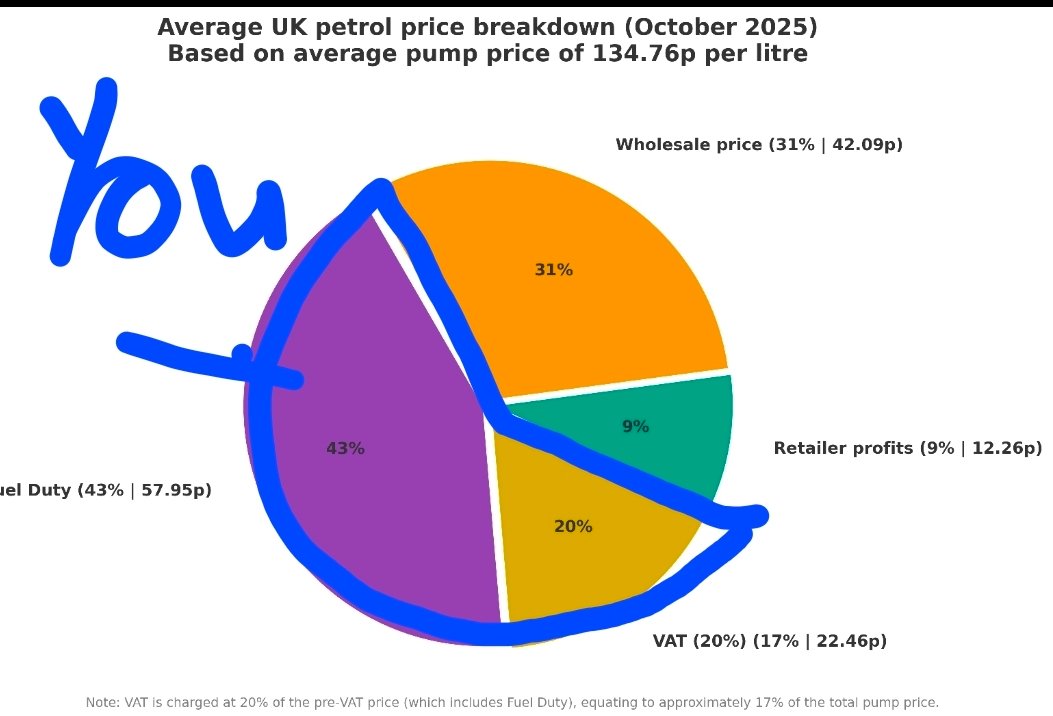
We now have the highest tax burden since the Second World War. And the bigger the take has become, the worse things have got. That isn't a coincidence, it is a system actively failing the people it is taking from. The state has quietly made modest, normal life expensive and called it policy. Filling the car. Parking in town. Having a drink. People say it costs £100 just to leave the house now, and they're right. Most of that cost isn't the private sector. It is tax, duty, council fees, and the endless levies the state has imposed on everything we do. Making life exorbitantly expensive, whilst the services it funds get visibly worse every year. That is the grinding reality for the average person.
Virtually everything you do in the UK is now a taxable event. When that happens, things stop happening. People don't invest, expand, hire, or take risks. They simply don't bother... and they even stop leaving the house.
So before we ask whether the state should do more, it is worth asking why it is delivering so little for so much.
The state is currently running 213 major projects worth almost £1 trillion. By its own assessment, only 14% are rated as highly likely to be delivered successfully. That figure was 48% a decade ago. The value of projects classified as unachievable or at major risk has doubled to £198 billion in a single year. Two thirds of the portfolio has no robust plan to evaluate whether the projects even work.
Below that sits a layer of local failure the country can no longer measure. Over half of council chief executives believe their council will be effectively bankrupt within five years. Most haven't published audited accounts in years. The National Audit Office has refused to sign off the Whole of Government Accounts for two years running because so much of it is unaudited estimates. The country is being managed on guesswork.
This isn't acceptable. And more of it won't help.
Then underneath all of this sits something cultural. There is no skin in the game inside the state. It is always someone else's money. Nobody really cares about waste. Nobody is punished for failure. The political class is largely made up of the people who couldn't do anything else, who have never built, run or risked anything. Most Nordic countries get the opposite. They have built political systems that punish cronyism. Ours rewards it. Then we wonder why our politics produces nothing of consequence.
Outside the state, and I'd argue this is a consequence of state failure too, we have built a culture that treats success with suspicion. We blame, we resent, we tax, we regulate. The successful are spoken about as if they probably stole what they have. So they stop trying. Or they leave. And when you spend your life paying for a country that feels like it is out to get you, you don't tend to bring your best to it either.
It is also worth looking at what kind of choices this state makes when it does have the opportunity to invest. Norway found oil and built a sovereign wealth fund now worth over £1.5 trillion. Britain found oil and spent it. One country invested for the next generation. The other consumed the windfall and is now demanding the next generation pay for what was already used up. That isn't an institutional accident. It is a political choice this state made, and would likely make again.
This is the state Lewis wants to entrust with the Bee Network model at national scale. The state that spent 88p of every housing pound subsidising landlords rather than building homes. The state that, on his own analysis, would rather compensate for markets it broke than fix them at source.
He says the real constraint is capacity, not money. In some ways he's right. But adding to the remit of a state that has lost its capacity will not restore it. It will stretch thinner what is already stretched too thin.
He preempts the bond market objection by arguing markets reward credible productive investment. He may be right. But I am not arguing we cannot afford this, although that is an argument to have. I am arguing the British state cannot deliver it. It isn't competent enough. That holds whether the borrowing is cheap or not.
The Bee Network is his strongest counter-example. One transport network under one strong mayor is encouraging. It is not proof the central state can replicate that at scale across every sector. Plenty of regional projects in the same portfolio are also failing.
If we want to get to 80%, here is what I think that actually looks like...
This isn't an argument for shrinking the state, although I think out of necessity, it will need to. It is an argument for credibility. Before government earns the right to take on new ambitions, it has to demonstrate it can deliver on the ones it already has. Defence. Law and order. Roads. Justice. Borders. The basic functions every government, of every size, is judged on. Until those work visibly and consistently, every conversation about expansion is fantasy. People will not trust a state with new things when it cannot deliver the old ones.
It is also an argument about the relationship between the British public and the state. National resilience isn't only about what the state delivers. It is about what individuals, families and communities are able to do for themselves. Real resilience is built from the bottom up. It needs local economies left to grow rather than endlessly extracted from. It needs families that aren't taxed to the edge. It needs communities the state has not crowded out. We have spent decades hollowing all of that out. Asking the state to do more of what hollowed it out will not bring any of it back.
Until this happens, asking the British public to fund and trust further state expansion is asking them to give more to a system that has already failed them at scale. Having only 33% of people willing to fight for their country isn't a problem the state can solve by doing more. It is a verdict on what it has done so far.
A country that cannot command the confidence of its people cannot defend itself. Lewis is right about that too. But you don't restore that confidence by promising new things. You restore it by delivering on the old ones. And by trusting the people of this country to build the rest themselves.
Hello Julia, sans aucune ironie, c'est top que tu prennes le temps de te renseigner. Mais le problème quand on lit Marx aujourd'hui, c'est qu'on prend pour acquis sa prémisse de départ, alors qu'elle a été démontée scientifiquement il y a plus de 150 ans.
Toute la pensée de Marx repose sur la théorie de la valeur-travail. L'idée que la valeur d'un bien vient de la quantité de travail nécessaire pour le produire. Si tu acceptes cette prémisse, alors oui, tout son raisonnement tient. Le capitaliste "vole" la plus-value du travailleur, l'exploitation est mathématique, la révolution est inévitable.
Sauf qu'en 1871, trois économistes (Menger en Autriche, Jevons en Angleterre, Walras en Suisse) découvrent indépendamment la même chose : la valeur n'est pas objective, elle est subjective et marginale.
Un verre d'eau dans le désert vaut une fortune. Le même verre à côté d'une rivière ne vaut rien. Le travail incorporé est identique. Donc le travail ne détermine pas la valeur. C'est le consommateur qui valorise un bien selon son utilité marginale dans un contexte donné.
Exemple concret : tu peux passer 1000 heures à tricoter un pull moche que personne ne veut. Selon Marx, ce pull a énormément de valeur (beaucoup de travail incorporé). Selon la réalité, il ne vaut rien. Parce que personne n'en veut.
À l'inverse, Bernard Arnault crée des milliards de valeur non pas parce qu'il "exploite" mais parce qu'il a su anticiper et organiser des désirs humains à grande échelle. La valeur est créée par la coordination, pas extraite par le vol.
Cette découverte (la révolution marginaliste) a invalidé tout l'édifice marxiste. Pas pour des raisons idéologiques, pour des raisons scientifiques. C'est pour ça que plus aucun département d'économie sérieux au monde n'enseigne Marx comme un cadre d'analyse valide. On l'enseigne en histoire de la pensée.
Maintenant, le truc important. Si ton intention en lisant Marx c'est d'aider les pauvres (c'est une intention noble), alors tu vas être surprise par ce qui suit.
Regarde les chiffres de la Banque mondiale. En 1820, 90% de l'humanité vivait dans l'extrême pauvreté. Aujourd'hui, moins de 9%. Cette chute historique ne s'est PAS produite dans les pays qui ont appliqué Marx. Elle s'est produite dans les pays qui ont libéralisé leur économie.
Chine post-1978, Vietnam post-1986, Inde post-1991, Pologne post-1989. À chaque fois qu'un pays libéralise, des centaines de millions de gens sortent de la pauvreté en une génération. À chaque fois qu'un pays applique Marx (URSS, Cambodge, Corée du Nord, Venezuela), c'est la famine et les goulags.
Ce n'est pas une opinion, c'est l'expérience la plus massive jamais menée en sciences sociales. Plusieurs milliards de cobayes humains, sur un siècle.
Donc paradoxalement, si tu aimes vraiment les pauvres, la position la plus cohérente n'est pas d'être marxiste. C'est d'être pour la liberté économique. Parce que c'est empiriquement la seule chose qui a jamais sorti massivement les gens de la misère.
Pour creuser, je te recommande trois lectures qui vont changer ta vision :
"La Loi" de Frédéric Bastiat (court, lumineux, gratuit en ligne)
"La Route de la Servitude" de Hayek
"Économie en une leçon" de Henry Hazlitt
Bonne lecture, et vraiment chapeau de chercher à comprendre plutôt que de rester dans tes certitudes. C'est rare.
If you believe free speech is for you but not your political opponents, you're illiberal.
If no contrary evidence could change your beliefs, you're a fundamentalist.
If you believe the state should punish those with contrary views, you're a totalitarian.
If you believe political opponents should be punished with violence or death, you're a terrorist.
Labour Loves the Countryside. It Just Hates the People Who Run It.
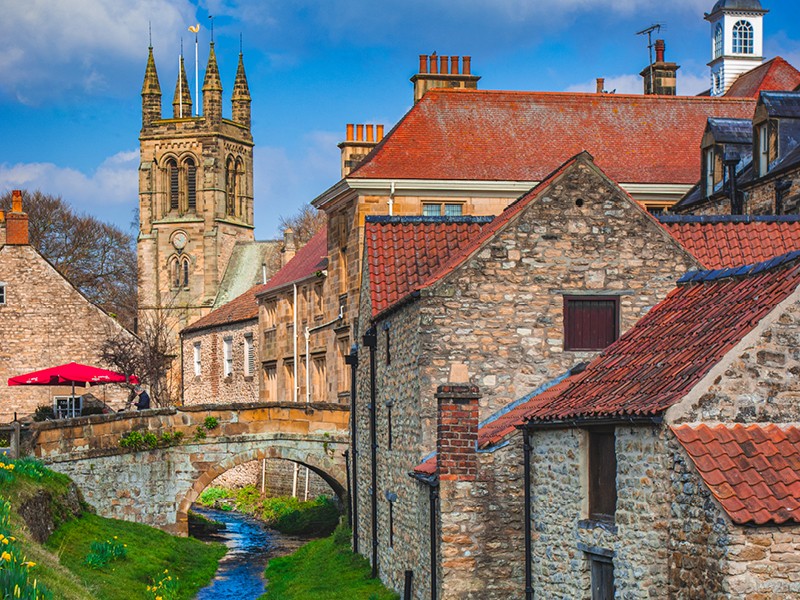
A woman walks into a tailor's shop in Helmsley, North Yorkshire. She loves the heather hills, she says. The wooded dales. The purple moorland stretching to the horizon. What she cannot stand is the shooting that takes place on the Glorious Twelfth.
Jeremy Shaw, the tailor, has heard this before. He considers whether to explain that the heather she travelled three hours to admire exists because of the grouse moor she despises. The gamekeepers who manage the land, suppress the bracken, and keep the moorland in the condition that makes it worth visiting. The cake, in other words, was baked by the baker she came to castigate. What is worrying is that the government shares her confusion.
On March 18, Labour published its Land Use Framework. Half a million acres earmarked for solar panels. Nine percent of farmland committed to rewilding. And buried on page 45, a proposal to license game bird shooting, potentially restricting pheasant and partridge releases onto estates. The trail hunting ban came first. Licensing comes next. Each measure arrives with its own rationale. Together they form a programme.
Licensing does not prohibit. Bureaucracy does not ban. Smaller shoots simply cannot absorb compliance costs, fold quietly, and nobody in Whitehall answers for the consequence. A Natural England case near Helmsley shows the method. A longstanding partridge shoot was barred from releasing birds until after the season had already started. Shoot days cancelled. Revenue gone. Natural England's hands formally clean.
Helmsley bucks every trend in British retail. Four pubs in the town square. A Michelin-starred inn nearby. A tailor forty years in business in what a mentor once called a dying trade. Seventy-five percent of Shaw's revenue is shooting-related. The Pheasant hotel runs at sixty percent shooting occupancy through winter. The deli sells local cheese to Norwegian and German sportsmen. Shooting contributes £3.3 billion annually to the UK economy and supports nearly 147,000 jobs. Pull the shooting thread and the weave comes apart.
One Helmsley pub changed hands a few years ago. The new owners decided they wanted nothing to do with shoot trade. They lost heavily, then went back to the estates cap in hand. The market delivered the verdict that policy is not yet ready to impose openly. Licensing achieves the same result without anyone having to take responsibility.
The conservation argument collapses under scrutiny. Grouse moor owners have restored 217,000 acres of upland heath in the past 25 years. The almost-extinct curlew is four times more likely to fledge on a managed grouse moor than on unmanaged moorland. The landscape that Whitehall has identified as the problem is the reason the landscape exists in the form they claim to value.
When asked what economic trade-offs it had actually modelled, the government was vague. Officials said they recognised shooting's cultural importance and would work with industry toward a sustainable relationship. Starmer has been invited to visit Helmsley and see how the economy functions. He has not replied.
He should go. He should meet the gamekeeper loading double guns through winter to keep the household solvent. The beaters earning seventy pounds a day. The tailor measuring 24 keepers for tweed suits stitched with Essex lining and Yorkshire zips.
What rural Britain is being offered instead is a licensing regime that will first eliminate smaller shoots, then larger ones, then the hotels and tailors and pubs, until the moorland reverts to bracken and the towns that shooting sustained join the dying high streets that apparently only the countryside had managed to avoid.
The heather on the North York Moors, Jeremy Shaw at Carters Country Wear, and the market town of Helmsley. All three exist because of shooting. Labour's Land Use Framework puts all three at risk.
Nick Timothy and Nigel Farage are right, and Sadiq Khan and Keir Starmer are wrong.
Small groups of people, of whatever religion, praying in public places is fine. And as a Christian country we should allow a special privilege for churches to lead services in our national spaces, like the Palm Sunday celebration that happens in Trafalgar Square.
What we don't want is mass ritual observances intended to claim the civic realm for another religion, or assert the domination of another culture over our own Christian traditions.
What happens in our national spaces is not neutral. People use Trafalgar Square, for celebrations and demonstrations, to make a point about the kind of country they want us to be. The Palm Sunday pageant reminds us of who we are - not as individuals (many or most of us don't identify as Christians at all) but as a national community, with the roots of our institutions in the ground of the Bible and our most solemn communal moments, from coronations to funerals, mediated through the liturgies of the Church.
A mass Adhan held there, or in any town square, is making a different point: that Britain is not a Christian country, and that - inshallah - one day it shall be Muslim. This is unacceptable to the British public and indeed incompatible with our constitution.
As ever with these debates, the issue is partly one of kind and partly one of degree. There is an issue with Islam itself as a religion which in most interpretations does not admit of pluralism or freedom of conscience, and therefore is inherently aggrandising, including over territory. But with a bit of confidence and a bit of toleration we could handle that - if it were not for the issue of degree.
It is the scale of Islam in Britain, and the ambition of its leaders for greater scale, that makes the problem. The numbers of people who assembled for the adhan in Trafalgar Square, clearly and openly claiming the territory for a faith with no connection (indeed, with strong doctrinal disagreement) with the model of Western liberal democracy that Britain has developed and exported to the world - that is the problem. The numbers, whether everyone there understood it this way or not (and I suspect many did), convey an explicit threat to the foundations of our country.
Being relaxed about other people's religion is a good thing, a very British thing. I don't mind modern druids dancing around Stonehenge in my constituency (arguably, though the historicity is tenuous, they have a claim to the place). I don't mind small groups of Hindus or Buddhists or Muslims demonstrating the reality of Britain's religious toleration by worshiping in Trafalgar Square.
But let's not kid ourselves about this adhan, or pretend that we're just seeing another harmless expression of Britain's religious diversity. We are seeing an abuse of liberalism, led by people who are not themselves liberal; or - let us imagine they are acting in good faith - who are themselves deceived about what they are doing.
It should not happen again. And it would be good to hear the Church of England say so.
I’m a jewish Londoner. I am worried that, if I send my kids to a jewish school or to a synagogue playgroup, they might get killed by a jihadists or attacked by Muslim antisemites. When I lived in a heavily Islamic area of East London I saw swastikas with messages about ‘zios’ drawn on walls on more than one occasion, preachers at local mosques raged against ‘infidels’, and girls from the school down the road (along with hundreds of other ‘Brits’) fled the UK to join ISIS - yes, ISIS - as it was massacring tens of thousands of Yazidis, beheading journalists and bombing infidels.
Down the road from my parents house, Muslim men drove around in a pick up truck flying the Palestine flag and screaming ‘fuck the Jews, rape their daughters’ over loudspeaker.
I always liked growing up in a diverse city, and of course by no means are all Muslims responsible for this stuff. But these are sectarian Islamic problems, of the sort that are in evidence across vast swathes of the Muslim world. They are not ‘enriching’, nor are they something to ‘celebrate.’ In fact they are massively amping up divisions.
You and your colleagues’ efforts to stifle discussion of these, or any related, issues are morally bankrupt, driven either by cowardice or something more sinister.
I think having an "old style"woman talking about misogyny - implying that misogynists target female people because they're female - now has the status of "dogwhistle terfy". At some point you have to admit that a movement that problematises feminism so much is just anti-feminist
What a coincidence that yesterday they voted to abolish hereditary peers.
Stuffing the seats with Labour peers will make their authoritarian legislation so much easier to approve 🔥
This from @Geoffrey_Cox was titanic - a truly beautiful speech.
He outshone those sat opposite. They could only watch. And nervously laugh.
This should be seen by every new MP to understand what they do, & every new barrister to understand what we do.