📣📢JUST PUBLISHED!!📢📣
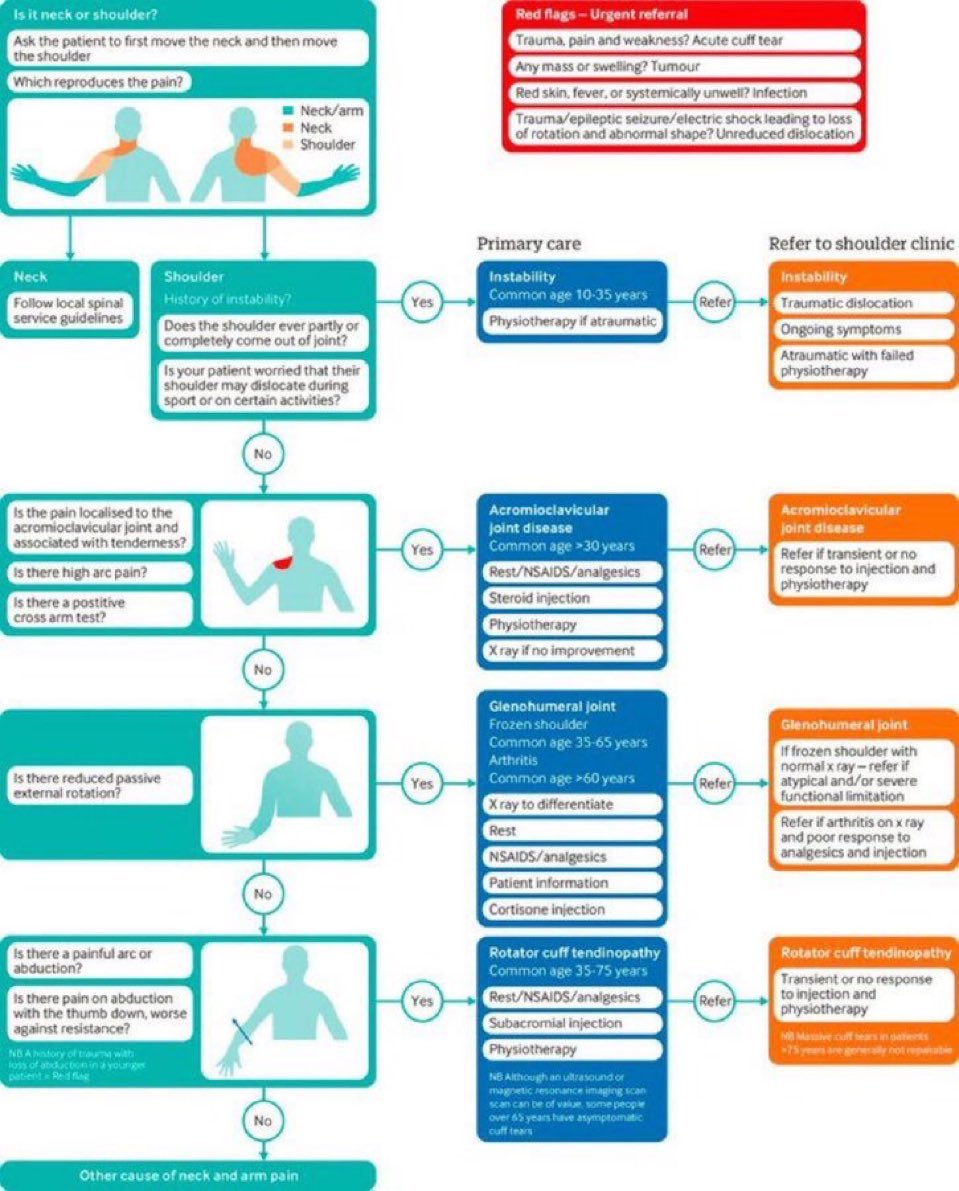
Altered Sensory Processing in People Attending Specialist Orthopaedic Consultation for Management of Persistent Shoulder Pain: An Observational Cross-Sectional Study
https://t.co/f6RJ3LNiVs
Muscle cramps👇
▶️painful, sudden, involuntary muscle contractions
▶️often part of the spectrum of normal physiology
▶️exercise induced, idiopathic or symptomatic
▶️generally self-limiting
▶️can be associated with a wide range of causes👇
#muscle#cramp
https://t.co/YEbd0fT0kK
🚨 Have you read this popular #CriticalReview? 🙋♂️
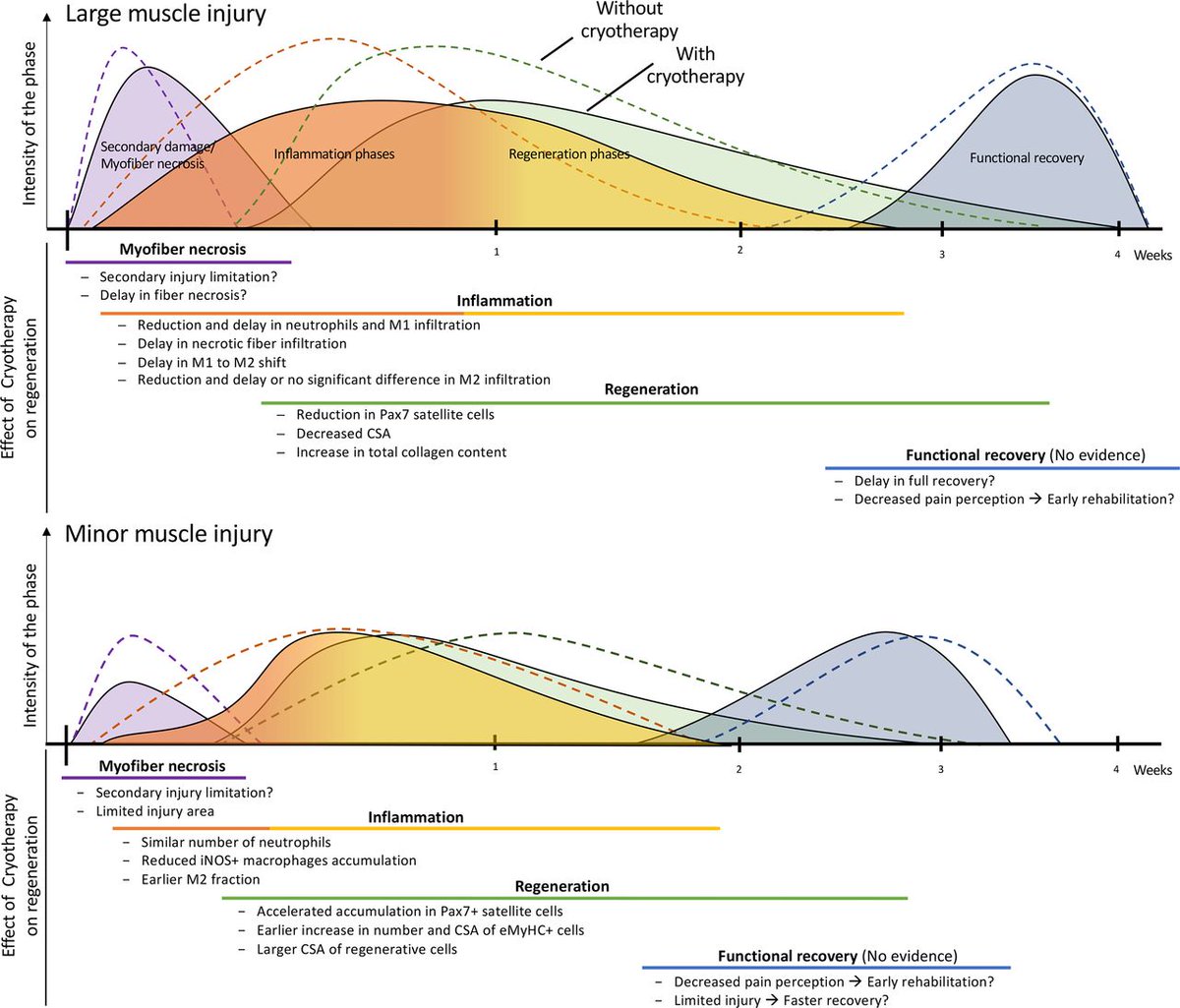
❄️ Cryotherapy for treating soft tissue injuries in sport medicine 💪
See the #TakeHomeMessages ⬇️
Paper 👉
🚨 #NEW BJSM Blog
Is it possible to prevent running-related injuries? 🏃♀️
The blog summarises a recently published paper 📄
👉 KEY bite-sized knowledge
👉 Can training actually prevent overuse injuries, compared to stretching?
READ HERE 👉 https://t.co/54WsS6FpTD
A small tweak to maximise quadriceps muscle growth during leg extensions!
Study by Larsen et al(2024) compared the effects of performing leg extension exercises at two different hip angles (40° vs 90°) on muscle growth in untrained men over 10 weeksThe researchers found that doing leg extensions with a 40° hip angle (leaning back slightly) led to greater muscle growth in the rectus femoris muscle compared to the 90° hip angle (sitting upright). However, there was no difference in muscle growth for the vastus lateralis muscle between the two hip angles. The study suggests that using a more reclined position during leg extensions may be beneficial for overall quadriceps muscle growth, particularly for the rectus femoris.
Key Findings: Performing leg extensions at a 40° hip angle (slightly reclined) led to greater rectus femoris muscle growth compared to the traditional 90° (upright)
Implications:
-Consider incorporating reclined leg extensions for overall quad development.
-The traditional upright position remains effective, especially if targeting the vastus lateralis.
These findings, highlight the importance of exercise variation and body positioning in resistance training programs.
#ExerciseScience #StrengthTraining #FitnessResearch #MuscleGrowth
A recent study by Evans et al(2024) introduces the ALPHA alert - a new diagnostic aid for detecting Hip Dysplasia (HD) in young adults.
Key findings:
-AHD is often misdiagnosed or diagnosed late, leading to delayed treatment
-The study identified five themes of patient-reported signs and symptoms
-These themes were synthesized into the ALPHA mnemonic for clinical use
What ALPHA stands for:
A - Age (young adult onset)
L - Limp or gait abnormalities
P - Progressing pain
H - History (childhood hip issues or family history)
A - Articulation (joint hypermobility and instability)
Practical implications:
-Use ALPHA as a quick mental checklist when assessing young adults with hip pain
-Consider HD in your differential diagnosis if multiple ALPHA criteria are met
-Refer for diagnostic X-ray/specialist review, when HD is suspected for further evaluation.
This tool has the potential to significantly improve early detection and treatment of HD, potentially preventing long-term complications and improving patient outcomes.
Interested in learning more about conservative management of Hip Dysplasia in young adults!
Myself and Callum East will be presenting the current evidence-based management of Hip Dysplasia and other complex presentation of young hips, including femoral/pelvic BSI and return to running in this population.
📅 Course Date: 29 Sept, London
https://t.co/Yt7Ra4iJXI
As clinicians, we often recommend free-weight exercises over machine-based training. But should we reconsider this approach?
A recent study published in Medicine & Science in Sports & Exercise reveals surprising findings:
Key Results:
· Free-weight and machine-based training showed equal effectiveness in improving strength across various exercises.
· Both methods led to similar increases in muscle cross-sectional area (hypertrophy) in the quadriceps, pectoralis major, and rectus abdominis.
· Neither method increased joint discomfort; in fact, both slightly reduced it.
Clinical Relevance:
1. We can confidently prescribe either free-weight or machine-based exercises based on patient preference and equipment availability.
2. For patients with limited experience or those requiring more controlled movements, machine-based exercises can be an equally effective alternative.
3. The study used velocity-based training methods, which we might consider incorporating into our exercise prescriptions for more precise intensity control.
Practical Takeaways:
· Tailor exercise programs to individual needs and preferences, knowing both modalities are effective.
· Consider alternating between free-weight and machine-based exercises to provide variety and potentially enhance adherence.
· Focus on proper form and full range of motion, regardless of the chosen modality.
· Ensure adequate protein intake (>1.2 g/kg body weight) to support muscle growth and recovery.
#StrengthTraining #ExerciseScience #PhysicalTherapy #ClinicalPractice #ResearchUpdate
Is Your Heel Pain Actually Heel Fat Pad Syndrome?
While plantar fasciitis is a common culprit, heel fat pad syndrome (HFPS) is an often overlooked cause that requires different treatment.
Key features of HFPS:
-Pain localised to heel centre or margins
-Worsens with prolonged standing/walking
-More painful when barefoot on hard surfaces
-Often bilateral and present at night
-Thinning of heel fat pad visible on ultrasound
Today we celebrate #WorldPTDay. Every day, many physiotherapists contribute to health and wellbeing of the global society. We make such an important contribution!
I hope that our efforts and contributions will be more appreciated in the future. Many people do value our support, however, often physiotherapists are not sufficiently valued and supported by politicians and insurance companies.
Let’s celebrate today and I look forward to our global gathering next year in Tokyo @WorldPhysio1951 #WorldPhysio2025! #globalPT
A 48-year-old yoga teacher presents with chronic groin pain exacerbated by extension and external rotation of the hip and is worse with prolonged sitting.
What is the most likely diagnosis?
𝐈𝐭 𝐢𝐬 𝐈𝐬𝐜𝐡𝐢𝐨-𝐟𝐞𝐦𝐨𝐫𝐚𝐥 (𝐈𝐅) 𝐈𝐦𝐩𝐢𝐧𝐠𝐞𝐦𝐞𝐧𝐭.
IF Impingement, can be mis-diagnosed as FAI syndrome or Proximal Hamstrings Tendinopathy.
Ischiofemoral impingement (IFI) has a distinct presentation that differs from FAI Syndrome. Here are the typical characteristics of ischiofemoral impingement:
𝐏𝐚𝐢𝐧 𝐥𝐨𝐜𝐚𝐭𝐢𝐨𝐧:
-Primary symptom is pain in the buttock or posterior hip area
-However, in some patients the primary location of pain is the groin (which can mislead as intr-articular pathology)
-Unlike FAI, IF is not aggravated with hip flexion and internal rotation activities.
-More common in middle-aged to elderly women (usually in 40+ women)
Aggravating factors:
-Pain worsens with extension, adduction, and external rotation of the hip
-Activities like walking, running, or climbing stairs can exacerbate symptoms
-Long stride length often increases pain
-Difficulty sitting for prolonged periods, especially on hard surfaces
Associated conditions:
-May be associated with hip osteoarthritis
-Can occur after total hip arthroplasty in some cases
Understanding these differences is crucial for accurate diagnosis and appropriate management of hip-related pain syndromes.
Interested in learning more on complex hip and groin presentation?
Myself and Callum @cje.sportsphysio will be presenting the current evidence-based management of advanced hip and groin pathologies.
📅 Course Date: 29 Sept, London
Link: https://t.co/Yt7Ra4jhNg
We are all about #ARRS this week! Check out today's refreshed summary of the scheme as a whole, or learn more about the individual roles available (and what they can offer) via our huge library of resources here ➡️
https://t.co/r9a44smuuy
#PrimaryCare#ARRS
During my student placement at the ICB, I have been conducting a scoping review into the challenges AHP's face in being educators! Please take a look at the infographic we created to help inform current & future AHP Educators. https://t.co/pZ7qGVJLhU