The saying "The Muslim is the one from whose tongue and hand the people are safe" is a well-known hadith in Islam, meaning that a true Muslim is one who does not harm others with their words or actions. It highlights the importance of protecting others from harm caused by oneself, both verbally and physically.
This hadith emphasizes several key aspects of Islamic teachings:
Safety and Security:
A core principle of Islam is the safety and security of all individuals, and this hadith underscores the Muslim's responsibility to contribute to that safety.
Restraint of the Tongue:
The tongue is a powerful tool, and this hadith stresses the importance of using it for good and avoiding harmful speech, such as backbiting, slander, or insults.
Non-Violence:
Muslims are encouraged to be peaceful and avoid harming others physically. This hadith is a reminder of that principle.
Treatment of Others:
The hadith emphasizes the need to treat others with respect, kindness, and consideration, ensuring their well-being and safety.
Character and Conduct:
This hadith is a reflection of the Prophet Muhammad's teachings on good character and conduct, emphasizing the importance of ethical behaviour in all aspects of life.
In essence, the hadith serves as a reminder that a true Muslim strives to create a safe and peaceful environment for everyone through their words and actions.
Thank you for reading.
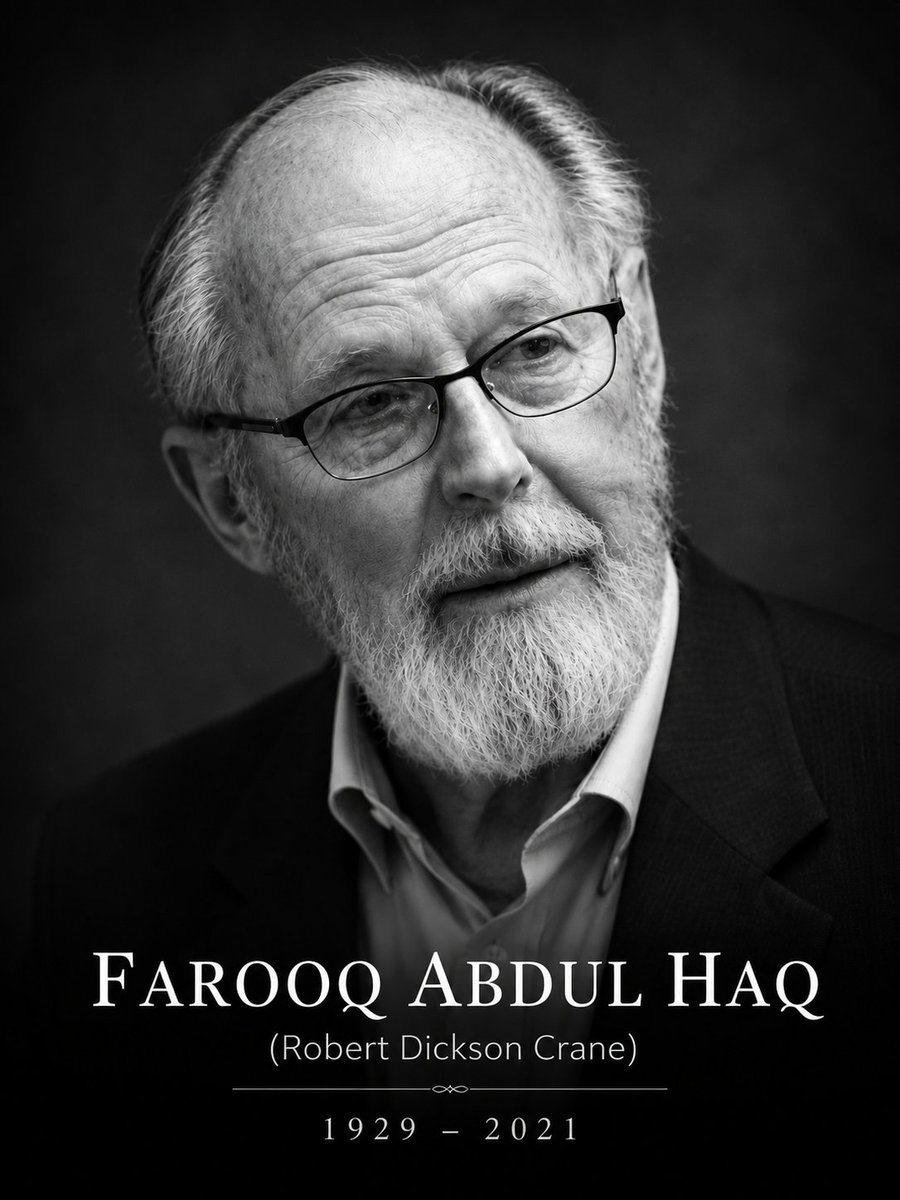
Most people have never heard of Robert Dickson Crane.
Yet he was a Harvard-trained lawyer, a foreign policy strategist, a National Security Council official, and an adviser within Richard Nixon's circle.
Later, he became a Muslim scholar known as Farooq Abdul Haq. 🧵
Most people have never heard of Robert Dickson Crane.
Yet he was a Harvard-trained lawyer, a foreign policy strategist, a National Security Council official, and an adviser within Richard Nixon's circle.
Later, he became a Muslim scholar known as Farooq Abdul Haq. 🧵
Whether one agrees with all of his conclusions or not, his life stands as a remarkable example of intellectual courage, curiosity, and the willingness to follow evidence and conviction wherever they lead.