Another nice chart from today's @OBR_UK Fiscal Risks report.
Difference between assuming inflation and earnings uprating of income tax thresholds is £190bn (!) - in today's terms - by 2075. Just one example of how uncertain long-run forecasts like this are.
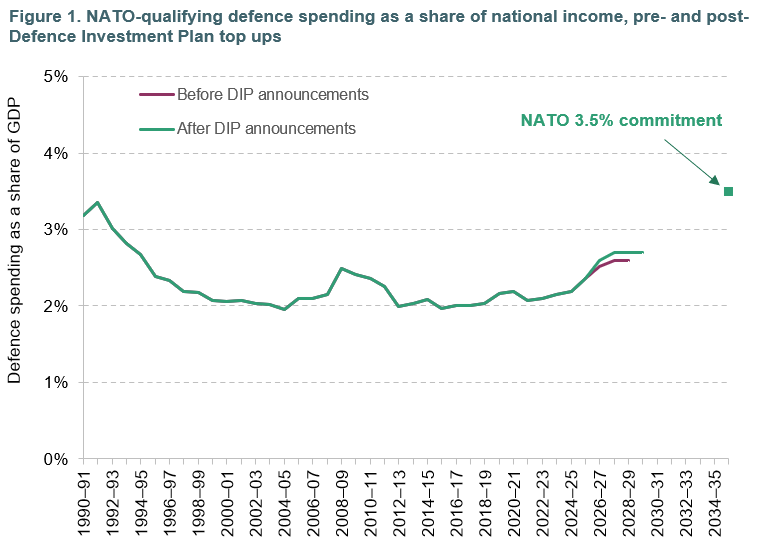
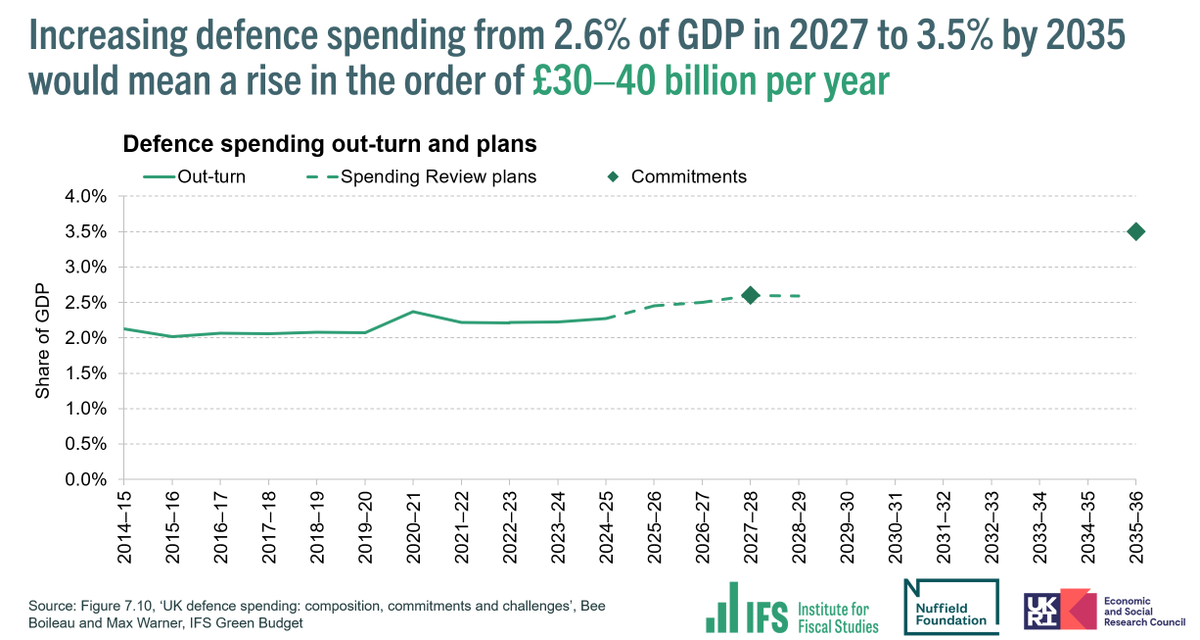
Two key things about yesterday's defence announcement: the scale of the top ups was relatively small, increasing defence spending by about 0.1% of GDP each year; the challenge ahead remains large if defence spending is to hit 3.5% of GDP by 2035.
On the Defence Investment Plan top-ups: the political turmoil surrounding top-ups averaging <£4bn/year feels like a small taste of what's in store over the next decade if we want to hit the 3.5% NATO commitment - which would require (much!) more defence money
3. Zooming out, we've still got a long way to go if the govt still wants to get to 3.5% of GDP by 2035 - current plans only get us about a third of the way there relative to 23-24. Getting to 3.5% could cost an additional £25bn each year in today's terms relative to these plans
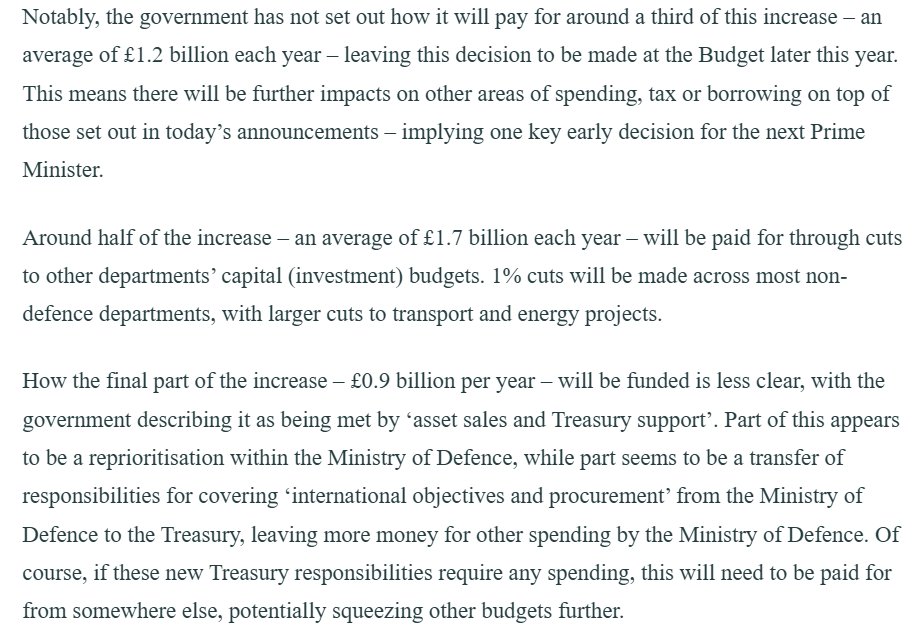
Just one of the many challenges for the new PM - who will also need to decide how a substantial share of the top ups announced today will actually be funded
How is the government paying for the £3.8 bn per year increase in defence spending?
We've been crunching the numbers here @TheIFS this afternoon (especially @MaxWarnerIFS and @beeboileau)
As Max says here, any growth benefits of higher defence spending depend on how it's funded. Rumours this week suggested the govt was considering funding top ups by cutting other investment. This would weaken any case that higher defence spending is an 'engine for growth'
Will higher defence spending increase UK economic growth? Listen to @MaxWarnerIFS's summary of the potential growth impacts at Treasury Select Committee last week (@HoCcommitteesUK).
Lots of discussion in recent weeks about how to fund the (much-delayed!) Defence Investment Plan. While this is important, it is only the first step in the longer-term and much larger defence spending increase this government has committed to. A short thread:
The planned increase would mean spending ~£30-40bn *per year* more than we currently do. This is not a trivial sum: finding it for defence would require real choices elsewhere. The apparent challenges surrounding the DIP seem like just a small taste of what’s to come
The constant rumours around marginally different top ups to defence spending alongside the Defence Investment Plan over the last few months have been frustrating. As Max sets out, the DIP is just one part of the govt's overall plan to increase defence spending and capabilities
I don’t think we should over-focus on the DIP. It’s a good example of the challenges of increasing defence spending given the UK’s fiscal situation. But the govt’s broader commitments for defence spending are much larger and go beyond the next four years
Months-long wrangling about whether a top up might be, say, £15bn or £18bn over the next four years (a difference of less than £1bn a year) risks distracting from the broader point - that the govt has committed to increase defence spending significantly over the next decade
New @theIFS work on effects of Help to Buy out today
One key finding (at odds with previous work & based on improved methods): in early 2010s it was INCOME rather than DEPOSIT constraints that were most binding
https://t.co/7iha50UEqV
@levell_peter@beeboileau
NEW: ‘Help to Buy’ schemes mainly increased affordability for higher earners living in cheap areas, with limited impact on social mobility
🧵 @beeboileau, @lucas_conwell and @levell_peter’s new research examines the impact of Help to Buy on housing affordability: [THREAD]
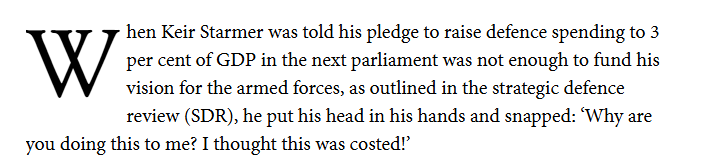
It is a weird situation where the govt accepted recommendations from a defence review asked to operate ‘within the context of a transition to 2.5% of GDP’, then were near-immediately told the transition to 2.5% of GDP was nowhere near enough to fund the recommendations…
Today we updated our @TheIFS spending tool with 2024-25 data! Do have a play around with it if you're having a quiet Friday afternoon - it lets you produce some nice breakdowns of different types of spending, across different areas and over time: https://t.co/5G0xsCT67U
NEW PODCAST: The Spring Forecast explained
@HelenMiller_IFS, @benzaranko and @beeboileau discuss the Spring Forecast. We cover rising energy prices and what the big forecast uncertainties mean for government spending plans.
🎧 Listen here: https://t.co/B7s5lZWj06
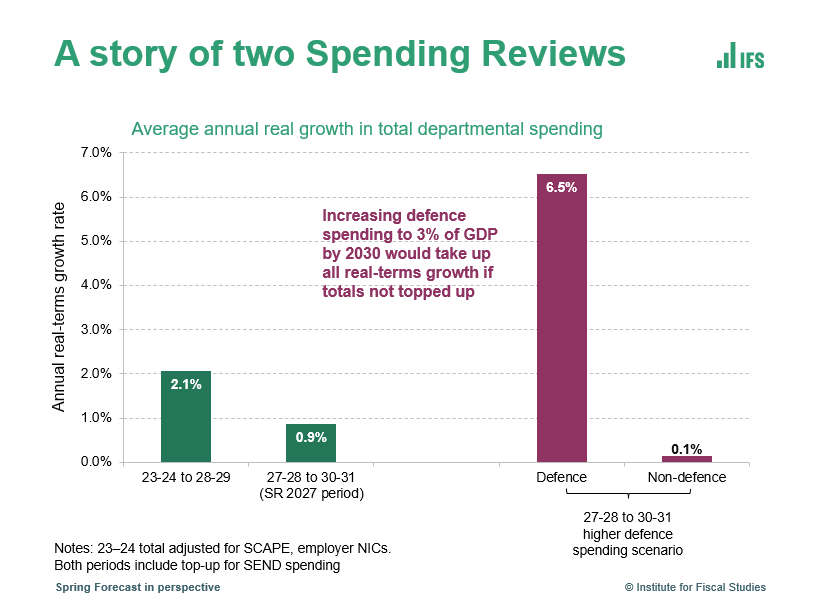
This is just one scenario but it shows the importance of the potential pressure from defence. A laundry list of other pressures over the next SR period too, from the risk SEND reform doesn't reduce spending growth by as much as expected, to high public sector pay settlements...
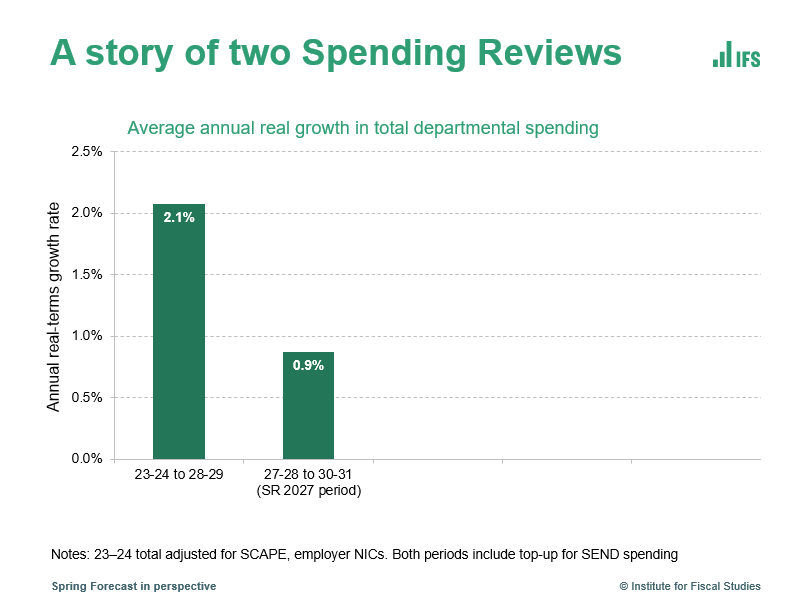
The Spring Forecast confirmed that the Spending Review next year looks tough. Plans are currently for departmental spending to grow by just 0.9% per year on average in real terms in the next Spending Review period, much slower than planned for the first part of the parliament.
Spending could be topped up through raising taxes or borrowing (though unlikely to be sustainable to borrow for a long-term increase). If instead higher defence spending were funded within existing totals, in this scenario it would take up all real-terms growth over the SR period


![TheIFS's tweet photo. NEW: ‘Help to Buy’ schemes mainly increased affordability for higher earners living in cheap areas, with limited impact on social mobility
🧵 @beeboileau, @lucas_conwell and @levell_peter’s new research examines the impact of Help to Buy on housing affordability: [THREAD] https://t.co/rmGP71PS8i](https://pbs.twimg.com/media/HF7jNqnXYAAzsvk.jpg)