WEANING TIP: Delay other stressful events—such as vaccinations—to avoid compounding the stress of weaning calves. Two-stage weaning reduces calf stress even further by first preventing suckling while still allowing full contact with the dam.
https://t.co/xjo8368RKa
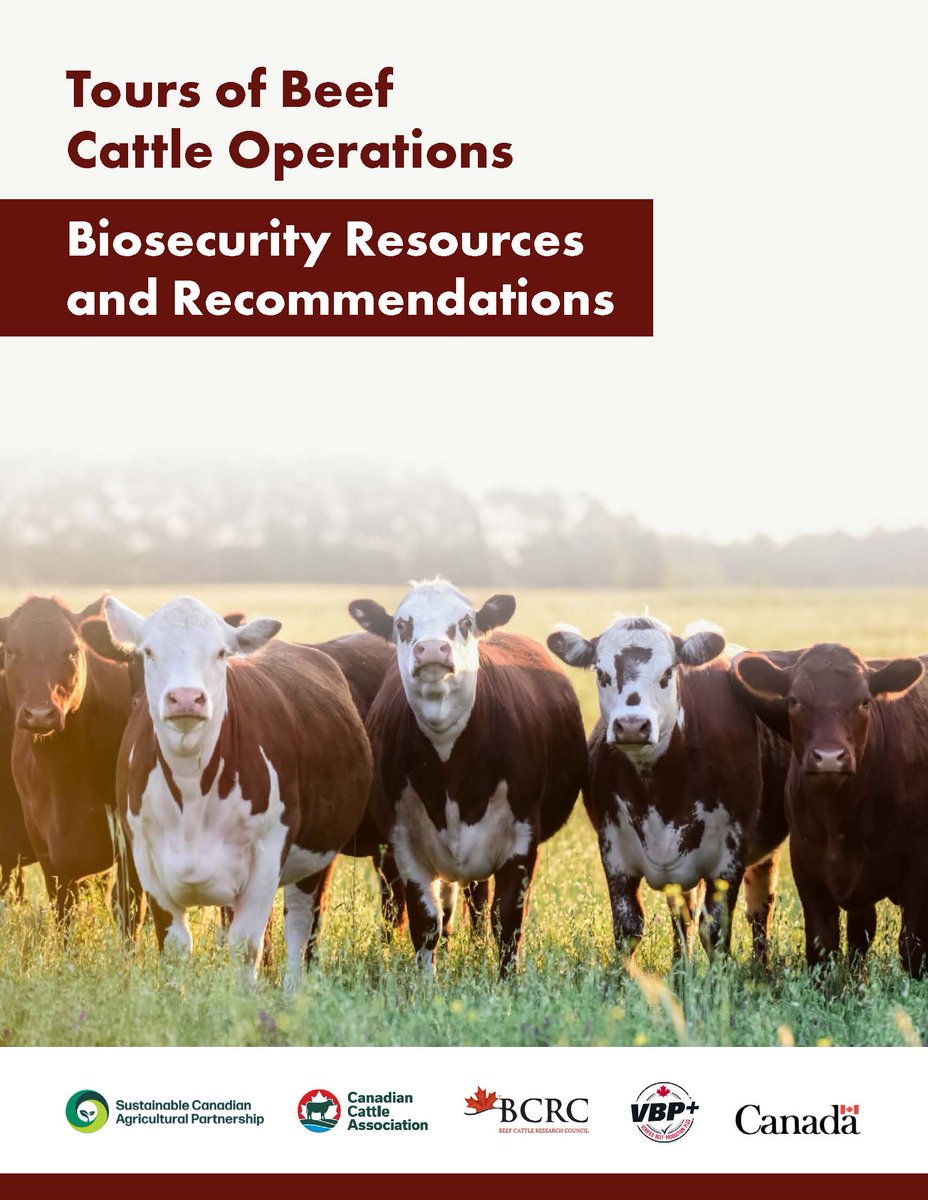
Farm tours are a great way to showcase your operation. However, more boots on the ground mean more opportunity for disease to move between animals and operations.
Check out our NEW guide for tours of beef cattle operations at:
https://t.co/I49fHnQfKy
#DYK that weaning calves from their dams can cause stress?
Stress from weaning weakens their immune system, leaving them more susceptible to infections such as bovine respiratory disease (BRD).
Learn more about low-stress weaning options at @BeefResearch#SaskAg
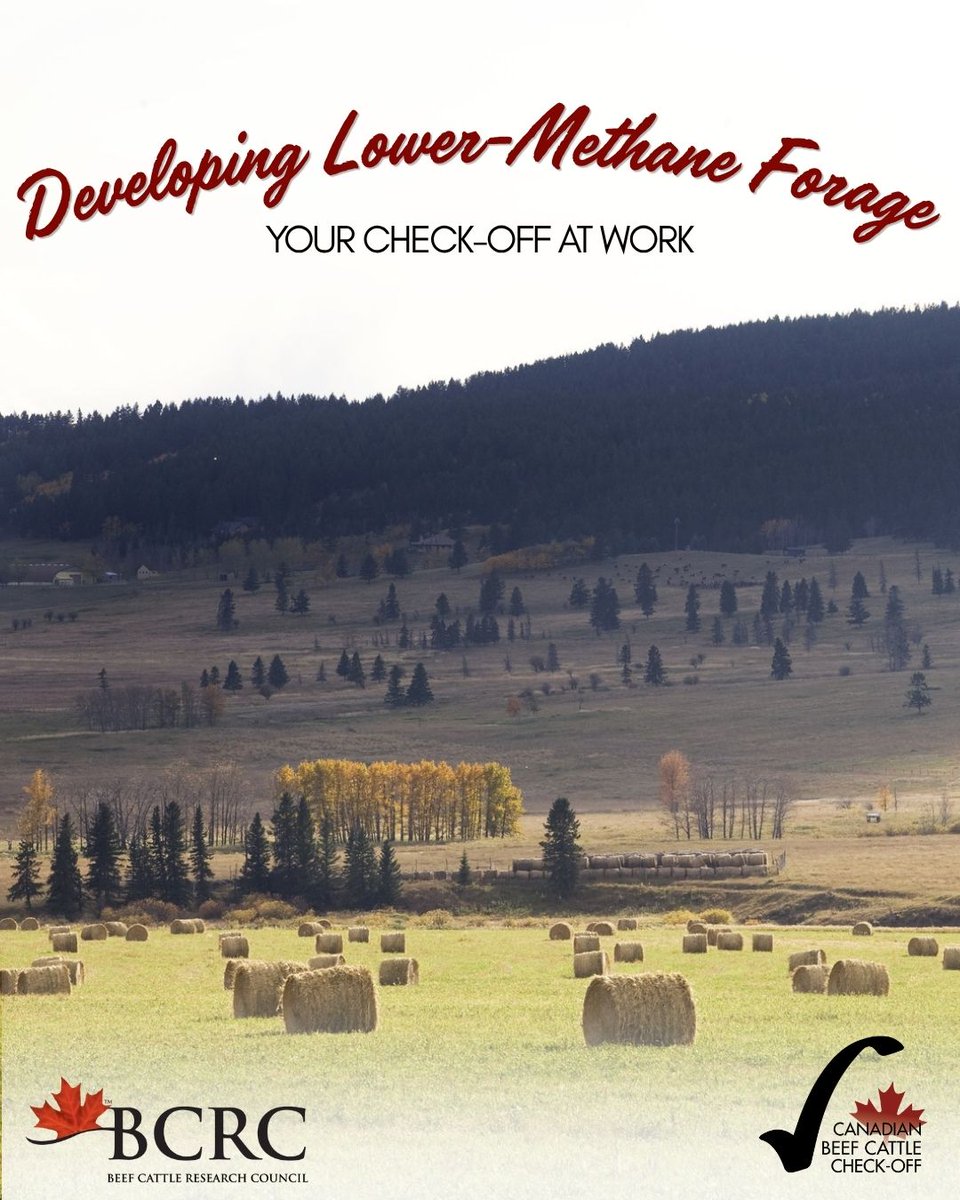
@BeefResearch funded research advanced high-lipid sainfoin & alfalfa varieties that could reduce feed intake, maintain feed efficiency & lower methane emissions.
An average $0.66 from every $2.50 check-off went to @BeefResearch in 2025/26. Those dollars helped leverage another $4.97M in research funding plus $89K in-kind.
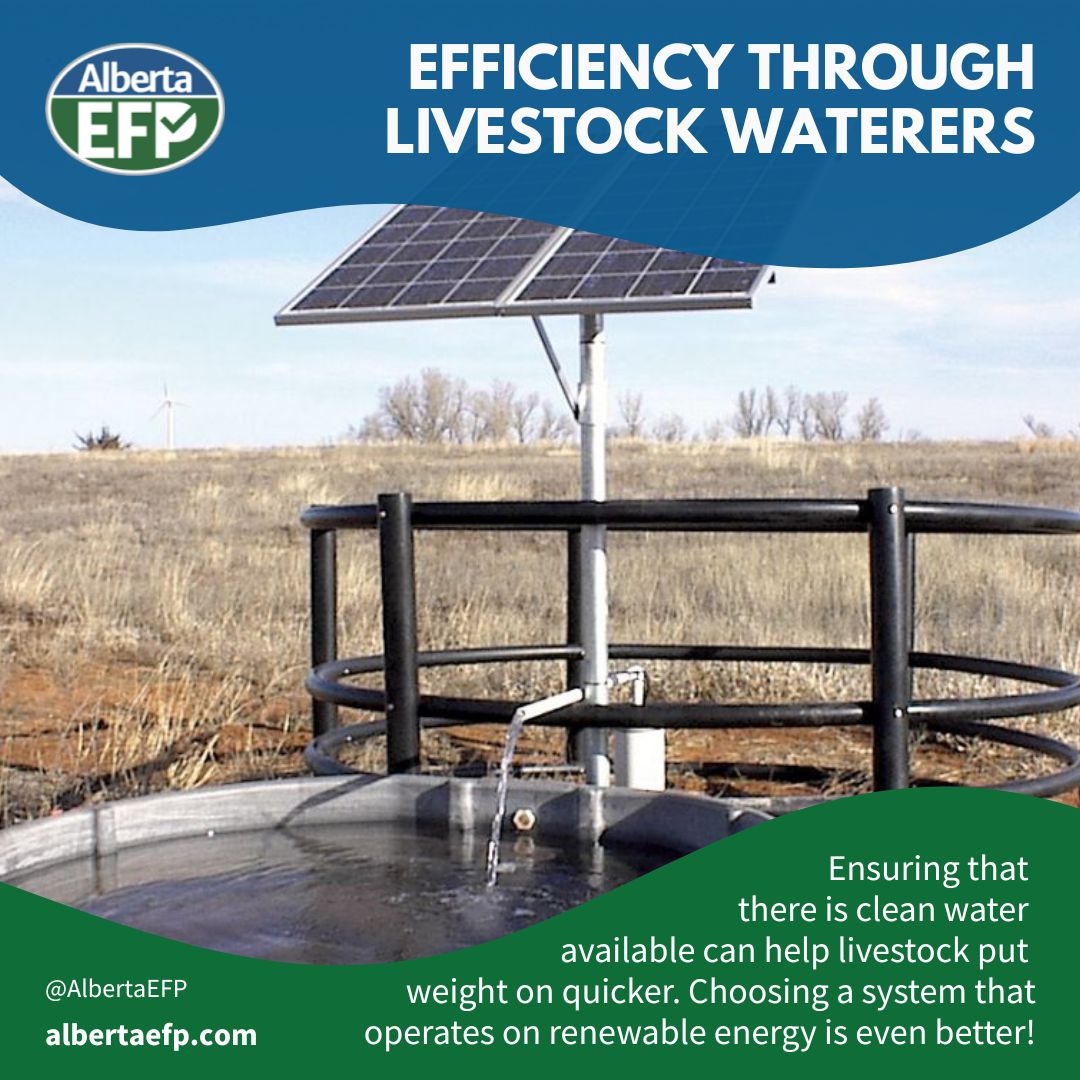
The investment into watering systems can help save time and energy in protections against negative impacts. And they don't cost anything to run! Check out more using the Beef Cattle Research Council's Water Calculator: https://t.co/VyzJTr9oKn @BeefResearch
Herd record-keeping has led to real decisions and results for PEI beef producers Jennie and Stephen Mutch.
Find more key takeaways from their operation in this new genetics case study:
https://t.co/GT1K0i1fU8
The BCRC's proof-of-concept projects are designed to test new technologies, practices and research ideas on a small scale before investing in larger projects.
Episode 141 of the Canadian Beef Cattle Podcast highlights three proof-of-concept projects:
https://t.co/z3mCGoi6MS
📣 𝐖𝐄𝐁𝐈𝐍𝐀𝐑 𝐀𝐍𝐍𝐎𝐔𝐍𝐂𝐄𝐌𝐄𝐍𝐓!
Register now for the BCRC’s 2027 webinar series. Topics include the value of genetic tools to inform breeding and selection decisions, herd vaccination and mineral nutrition.
Learn more and register today!
https://t.co/uIkKJF1EOv
Read or listen to episode 139 of the Canadian Beef Cattle Podcast, which explores how foreign materials and toxins can unintentionally enter cattle feed, stock water and pastures, even on well-managed operations.
https://t.co/74A13z8F36
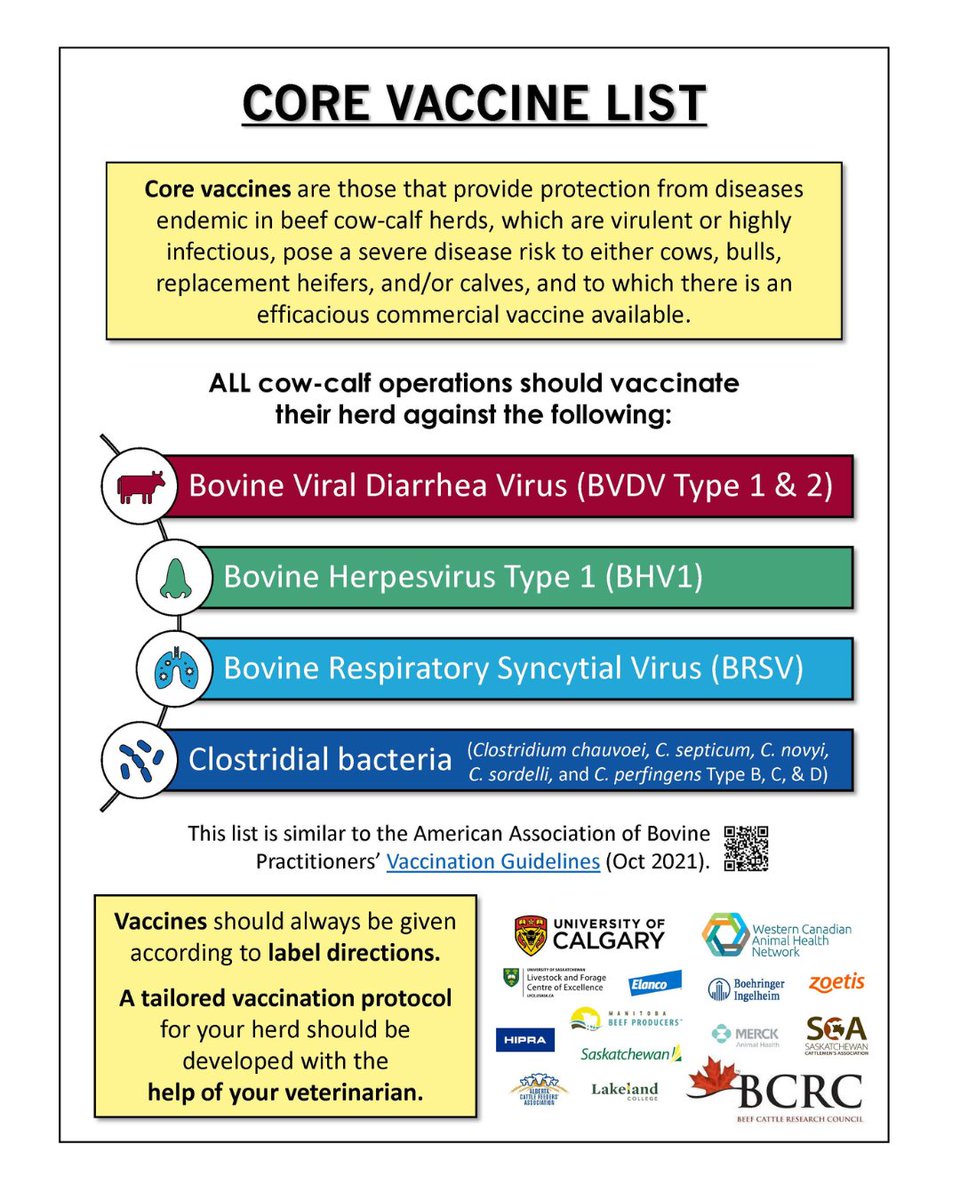
Cattle vaccines stimulate immunity to a bacteria or virus that causes disease. While a tailored herd vaccination protocol should be developed with help of your vet, the following are "core vaccines" all cow-calf operations should consider. Learn more:
https://t.co/LKC2ZOx0hQ
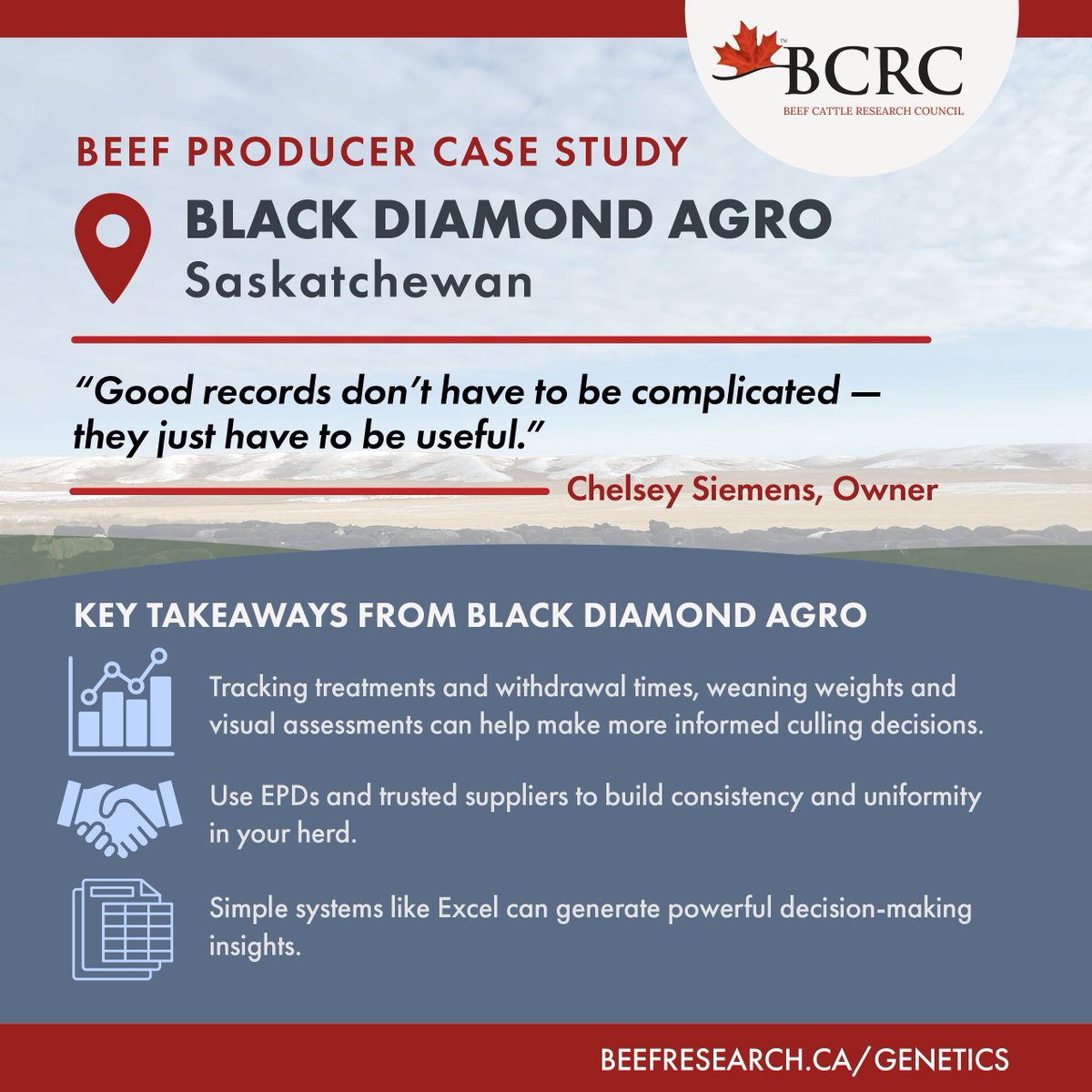
Consistency in data collection can drive real progress over time.
Read the full case study from Saskatchewan beef operation, Black Diamond Agro, which uses genetics record-keeping to help make decisions and reach their cattle breeding goals.
https://t.co/U9ZyyjLyCE
Understanding info on a mineral tag and how the nutrients fit within a herd’s nutrition program can help you make more informed supplementation decisions & maximize the value of mineral investments. Here are 5 key things to look for on your mineral label:
https://t.co/X1cVFsB0yi
📰Read or 🎧listen to episode 135 of the Canadian Beef Cattle Podcast, where we discuss common sources of foreign material in hides and meat, why foreign material contamination matters and what beef producers can do to reduce the risks on their operations.
https://t.co/DFHg6UHmHB
Meet the Canadian beef industry mentors who are sharing knowledge, networks and on-the-ground perspectives with early-career researchers, providing valuable insight about the challenges and opportunities facing Canada's beef industry.
https://t.co/UJlnwNLg0a
The BCRC and @Maritime_Beef welcome Agriculture and Agri-Food Canada’s recent decision to breed the cow herd at the Nappan Research Farm prior to its sale this fall, following concerns raised by both groups.
Read the full statement: https://t.co/qGUO0BN1H8
Congratulations to Dr. Bart Lardner, recipient of the 2026 Canadian Beef Industry Award for Outstanding Research and Innovation during the Canadian Beef Industry Conference in Winnipeg.
NEWS RELEASE:
https://t.co/nknQSbeSf8
@CDNBeefConf@DrBart_Beef
Niznik Ranch, a fourth-generation family beef operation in southern Alberta, utilizes clear breeding goals and disciplined selection to drive genetic progress and shape a herd that thrives under their management conditions. Read their genetics case study:
https://t.co/v3xMIZfjcB
Listen to Ep. 131 of the Canadian Beef Cattle Podcast where we explore performance and economic benefits of growth implants and address labour requirements, animal health, implant procedures and other factors that often influence adoption decisions.
https://t.co/lq9DX5hMRj