Fan of the Vancouver Canucks, Philadelphia Eagles, BC Lions, The Beatles, Rush, Queensryche, west coast living, pop culture, guitars, 1951 Mercurys & Dr Pepper
People lined Interstate 70 and highways across #Colorado on Monday to honor fallen firefighter pilot Nicholas Dale as his body was transported from Montrose to Denver International Airport before returning home to Canada. Dale, a contract firefighting pilot from Sooke, British Columbia, #Canada was killed earlier this month while battling the Gold Mountain Fire near Ouray #US .
If we had a nickel for every time Anthony Rizzo's caught a Cubs home run in the bleachers, we'd have two nickels.
Which isn't a lot, but it's weird that it happened twice!
"Just put the fires out!"
Ever seen a boreal wildfire? I have. I used to fight them.
When fire behaviour becomes extreme, you're not getting close to them.
The radiant heat from a crown fire is face-melting from hundreds of metres away.
All attempts at direct attack will fail, because dropping water on it becomes akin to trying to spit on a campfire...it evaporates before it even hits the flames.
Additionally, reduced visibility, high winds, and turbulence makes aerial attack hazardous.
As a wildland firefighter, I've been extracted off of wildfires twice as our fires blew up, both times having our gear burned over. We returned to find firehoses and metal melted into the ash.
I've seen fireballs launched hundreds of feet high, and fires intense enough to produce lightning, influencing the weather around them. I've seen wildfires grow to the size of a major city in a short period of time.
So no, we can't just put the fire out.
Not being able to stop such a natural process is a truly humbling feeling.
On September 11, 2001, when U.S. airspace was suddenly shut down, dozens of aircraft crossing the Atlantic had nowhere to go.
One of the places that opened its doors was Gander, a small town in Newfoundland, Canada.
Gander International Airport received 38 diverted planes carrying nearly 7,000 passengers and crew.
For a town of around 10,000 people, it was an enormous challenge. But instead of panic, the people of Gander responded with kindness.
Schools, churches, community halls, and homes became shelters. Locals brought food, clothes, blankets, medicine, phones, and comfort.
Strangers were treated like family. Even animals traveling in cargo were cared for.
What happened in Gander became one of the most powerful stories of humanity after 9/11. In a moment of fear and tragedy, a small Canadian town reminded the world that compassion can still rise higher than hate.
Canada UPSETS USA and makes history winning their first gold medal at the FIBA U18 AmeriCup.
USA had won the last seven tournaments until now.
What a moment 🇨🇦
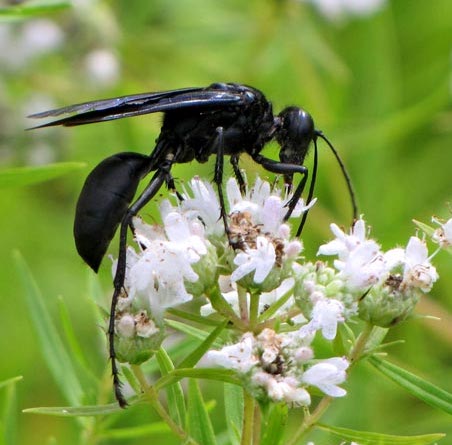
There are about 18,000 species of wasps in North America. Roughly 20 of them can hurt you.
The wasps people fear are all from one family: Vespidae. They make up less than 1% of wasp species on the continent. They build the visible nests, they defend them aggressively, and they're the ones you remember from a bad encounter.
The other 99% live solitary lives and ignore humans entirely. Many can't sting at all. Many more have stingers but never use them on people because they don't have a nest to defend.
What they do instead is hunt other insects. A single mud dauber stocks her nest with paralyzed spiders, including widows and recluses. A braconid wasp lays eggs in tomato hornworms. An ichneumon wasp parasitizes wood-boring beetles that kill ash trees. A cuckoo wasp infiltrates the nests of other wasps and bees. Some species control aphids; others control caterpillars, beetle grubs, or flies.
Most agricultural pest insects in North America are controlled, in part, by parasitic wasps that almost no human ever sees. There are over 25,000 species of ichneumon wasps alone, and they keep entire orders of insects in check.
The five or so wasp species that ruin a picnic in late August are real. The 17,995 species that are running the pest control infrastructure of an entire continent get almost none.