Que buen mensaje de Bad Bunny para Colombia:
“Quieren quitarme el río, y también la playa, quieren el gato mío, y que los pobres se vayan.
Hay que alzar la bandera en una cantina, que no quiero que a Colombia le pase lo de Argentina”
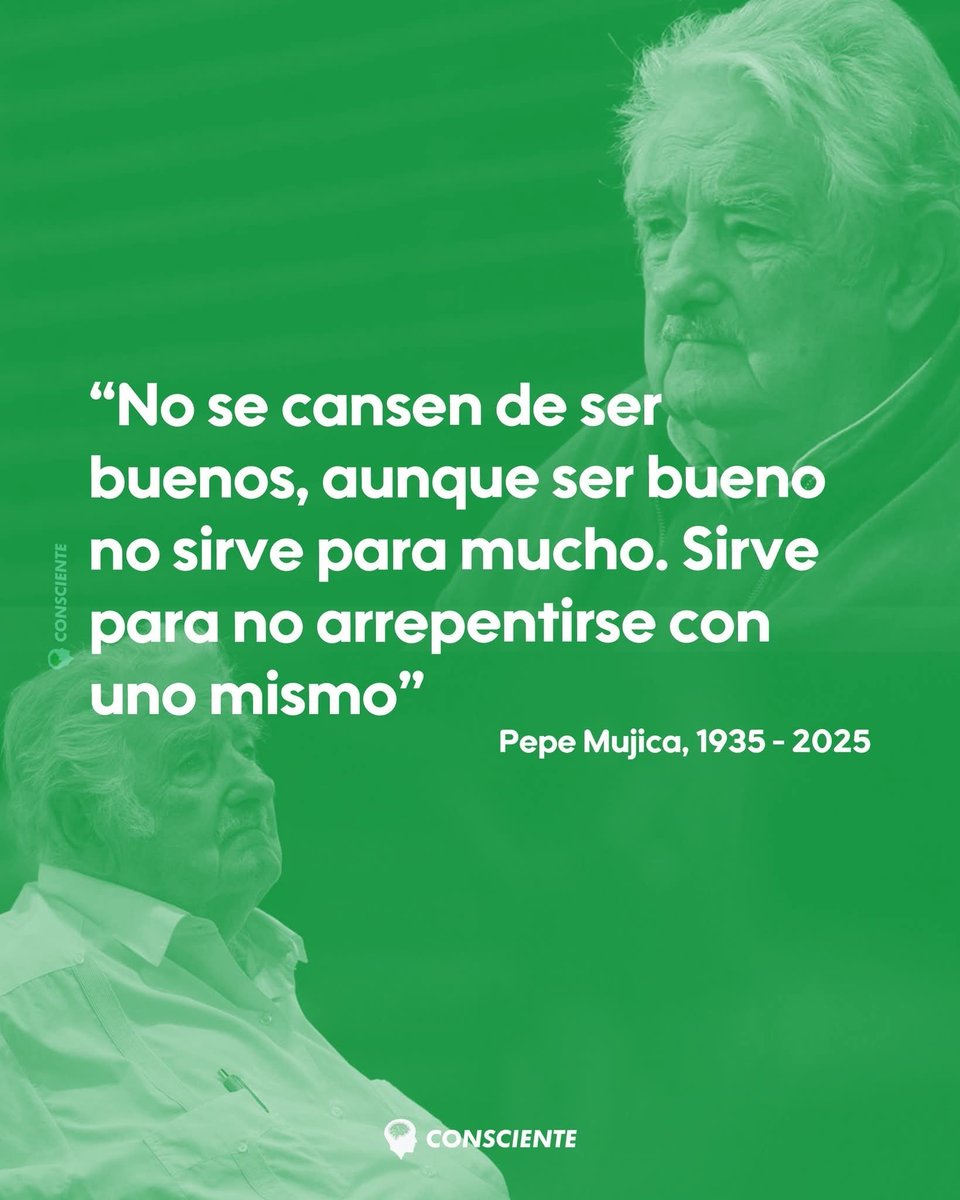
"Yo sigo creyendo en la utopía, porque el día que dejemos de creer que el mundo puede ser un lugar más justo, ganaron los peores"
Carlos "Indio" Solari 🇦🇷🔥
La última carta del Indio
Hay un ruido de platos vacíos en la Argentina.
Un sonido áspero.
Como ascensores cayendo dentro de hospitales apagados.
Como tizas partidas sobre pizarrones gastados en escuelas que ya no llegan a fin de mes.
Y mientras desde arriba venden épica financiera con sonrisa televisiva, abajo la realidad mastica gente.
Los jubilados cuentan monedas como si fueran balas sobrevivientes de una guerra perdida.
Les licuaron la vida despacito.
Primero los remedios.
Después la comida.
Después la dignidad de tener que elegir entre calefacción o un paquete de arroz.
Y todavía aparecen predicadores del ajuste diciendo que el sufrimiento “era necesario”.
Como si el hambre fuese una materia universitaria.
Como si ver ancianos revolviendo descuentos fuera parte del equilibrio fiscal.
Los laburantes tampoco llegan.
El sueldo dura menos que un semáforo en verde.
El consumo se desplomó porque ya no se compra: se sobrevive.
La heladera parece un teatro abandonado después del saqueo.
Y en las calles hay persianas bajas como párpados cansados.
Construcciones detenidas.
Fábricas respirando por tubos.
Comercios vacíos donde antes había ruido de monedas y olor a pan caliente.
La recesión avanza como hollín pegado detrás de las paredes.
Silenciosa.
Espesa.
Entrando en las casas mientras algunos influencers del mercado festejan numeritos como si la economía fuera un videojuego sin cadáveres.
También le metieron motosierra a la educación y a la salud.
Universidades asfixiadas.
Hospitales universitarios peleando por insumos básicos.
Docentes agotados enseñando entre ruinas presupuestarias y techos que lloran goteras.
Pero en la televisión hablan de libertad.
Siempre libertad.
Aunque millones estén cada vez más presos del miedo, de las deudas, de la angustia de perder el trabajo.
Y entonces aparece el gran truco del circo:
hacerte creer que la crueldad es valentía.
Que insultar es gobernar.
Que destruir es sincerarse.
Que el ajuste sobre los cuerpos cansados del pueblo es una especie de purificación divina.
Hay fanáticos aplaudiendo el incendio mientras el humo les entra por debajo de la puerta.
Gente defendiendo verdugos porque aprendieron a odiar más de lo que aprendieron a pensar.
Y lo más oscuro no es el personaje delirante que grita desde el escenario.
Lo verdaderamente oscuro es una sociedad agotada, partida, furiosa…
que empezó a normalizar que le rompan el alma a los más débiles mientras le llaman “cambio” al derrumbe.
La Argentina no se está quedando sin plata solamente.
Se está quedando sin alma.
Sin paciencia.
Sin futuro.
Y cuidado…
porque cuando un pueblo ya no siente el dolor del otro,
el monstruo deja de gobernar desde arriba.
Empieza a vivir adentro de todos.
INDIO
El pueblo albanés lleva 4 días manifestándose masivamente contra la venta de una isla a la hija de Trump y contra el gobierno títere.
La música es hermosísima
El vídeo no deja lugar a dudas. La Ertzaintza carga de forma injustificada y desproporcionada. La pregunta obvia es: ¿Qué hace toda esa policía ahí para recibir a unos pocos activistas ? La respuesta es igual de obvia: hay orden de evitar que se manifiesten contra Israel.
María Bellizzi tiene 101 años y es la persona de mayor edad en Uruguay que todavía busca a un familiar desaparecido en la dictadura.
Desde hace casi medio siglo convive con la misma pregunta: qué pasó con su hijo Andrés Humberto Bellizzi Bellizzi.
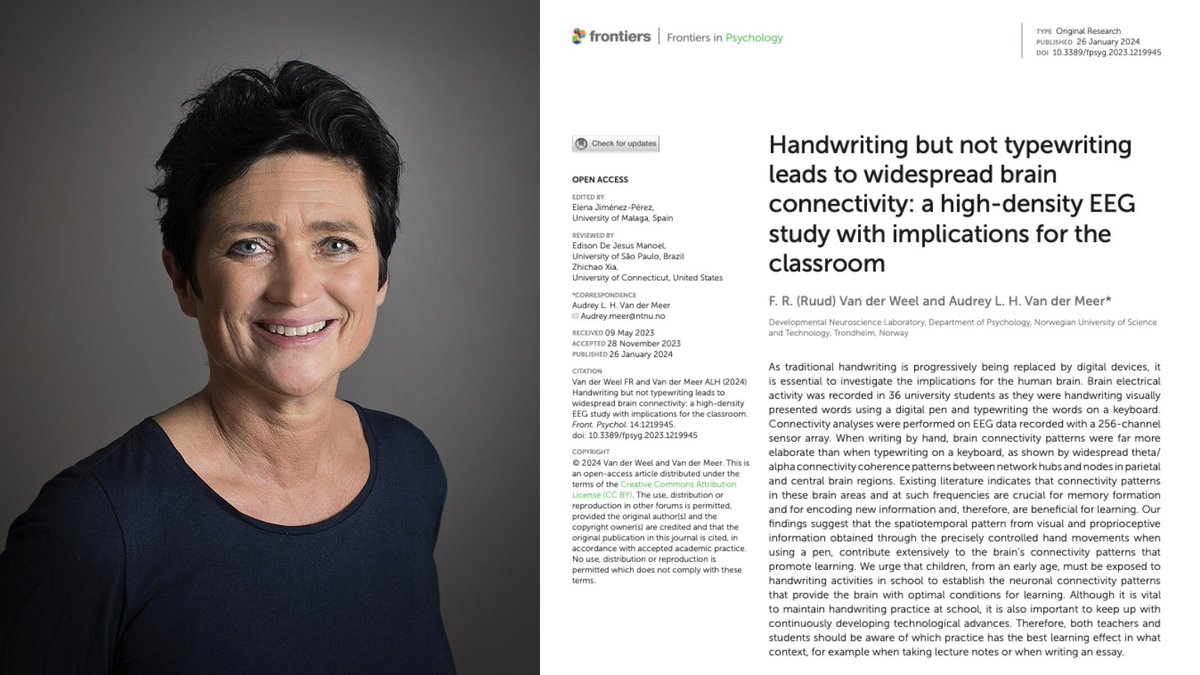
A Norwegian neuroscientist spent 20 years proving that the act of writing by hand changes the human brain in ways typing physically cannot, and almost nobody outside her field has read the paper.
Her name is Audrey van der Meer.
She runs a brain research lab in Trondheim, and the paper that closed the argument was published in 2024 in a journal called Frontiers in Psychology. The finding is brutal enough that it should have changed every classroom on Earth.
The experiment was simple. She recruited 36 university students and put each one in a cap with 256 sensors pressed against their scalp to record brain activity. Words flashed on a screen one at a time.
Sometimes the students wrote the word by hand on a touchscreen using a digital pen, and sometimes they typed the same word on a keyboard. Every neural response was recorded for the full five seconds the word stayed on screen.
Then her team looked at the part of the data most researchers had ignored for years, which is how different parts of the brain were communicating with each other during the task.
When the students wrote by hand, the brain lit up everywhere at once.
The regions responsible for memory, sensory integration, and the encoding of new information were all firing together in a coordinated pattern that spread across the entire cortex. The whole network was awake and connected.
When the same students typed the same word, that pattern collapsed almost completely.
Most of the brain went quiet, and the connections between regions that had been alive seconds earlier were nowhere to be found on the EEG.
Same word, same brain, same person, and two completely different neurological events.
The reason turned out to be something nobody had really paid attention to before her work. Writing by hand is not one motion but a sequence of thousands of tiny micro-movements coordinated with your eyes in real time, where each letter is a different shape that requires the brain to solve a slightly different spatial problem.
Your fingers, wrist, vision, and the parts of your brain that track position in space are all working together to produce one letter, then the next, then the next.
Typing throws all of that away. Every key on a keyboard requires the exact same finger motion regardless of which letter you are pressing, which means the brain has almost nothing to integrate and almost no problem to solve.
Van der Meer said it plainly in her interviews.
Pressing the same key with the same finger over and over does not stimulate the brain in any meaningful way, and she pointed out something that should scare every parent who handed their kid an iPad.
Children who learn to read and write on tablets often cannot tell letters like b and d apart, because they have never physically felt with their bodies what it takes to actually produce those letters on a page.
A decade before her, two researchers at Princeton ran the same fight using a completely different method and ended up at the same answer. Pam Mueller and Daniel Oppenheimer tested 327 students across three experiments, where half took notes on laptops with the internet disabled and half took notes by hand, before testing everyone on what they actually understood from the lectures they had watched.
The handwriting group won by a wide margin on every question that required real understanding rather than surface recall.
The reason was hiding in the transcripts of what the two groups had actually written down.
The laptop students typed almost word for word, capturing more total content but processing almost none of it as they went, while the handwriting students physically could not write fast enough to transcribe a lecture in real time, which forced them to listen carefully, decide what actually mattered, and put it in their own words on the page.
That single act of choosing what to keep was the learning itself, and the keyboard had quietly skipped the choosing and skipped the learning along with it.
Two studies. Two countries. Same answer.
Handwriting makes the brain work. Typing lets it coast.
Every note you have ever typed instead of written went into your brain through a thinner pipe. Every meeting, every book highlight, every idea you captured on your phone instead of on paper was processed at half depth.
You did not forget those things because your memory is bad. You forgot them because typing never woke the part of the brain that would have made them stick.
The fix is the thing your grandmother already knew.
Pick up a pen. Write the thing down. The slower road is the faster one.
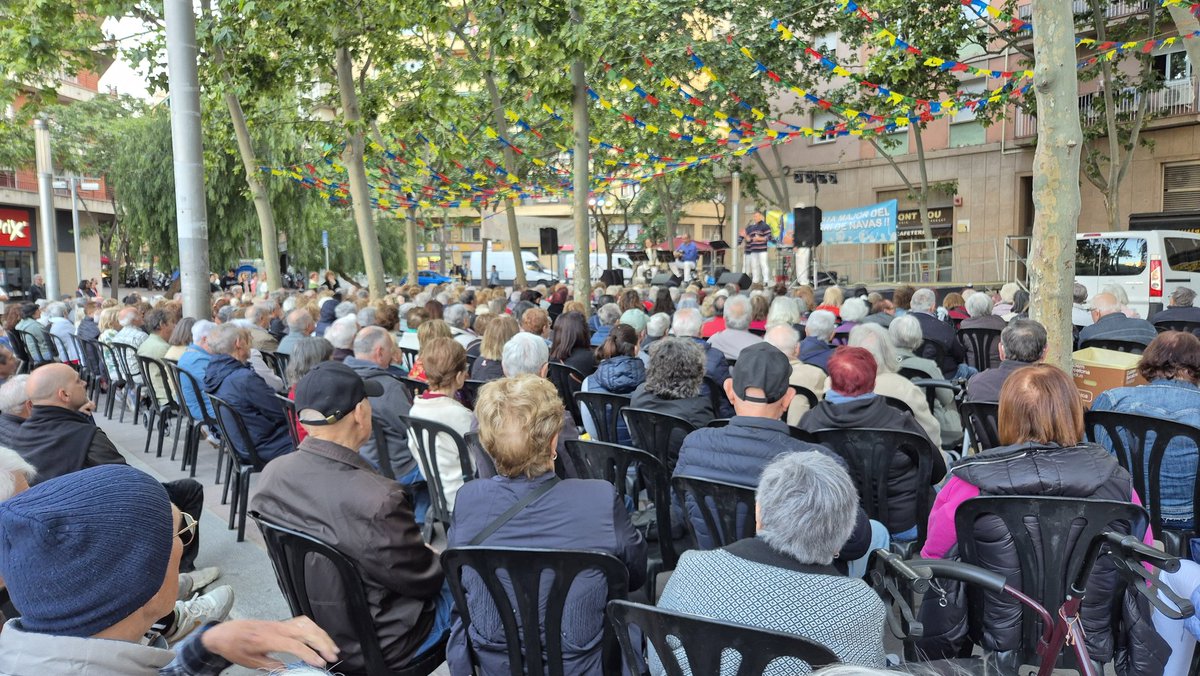
Quin vespre a la Plaça Ferran Reyes! Hem gaudit de la cantada d'havaneres del Grup Mar Brava i d'un bon ron cremat dins la Festa Major de Torrent de la Guineu/Navas. Gràcies a tothom que ho heu fet possible. La cultura popular omple els nostres barris. Èxit total!
Que la pastanaga per encular-se els pressupostos sigui el Tren Orbital tal com tenim les Rodalies és com a mínim un acudit de molt mal gust. Un insult a tots els catalans que pateixen cada dia unes rodalies tercermundistes.
Sorpresa! Arribats a Montcada per una “causa aliena” han decidit no parar a TorreBaró, Fabra i Puig, la Sagrera, Arc de Triomf. Ens desvien fins a Passeig de Gràcia!Estació on no hi va ningú perquè no és R4! I s’han empassat el tren orbital!😂😂😂 Rodamerdes, Rodalies
Ayuso no solo tiene un lío cultural, tiene un posible lío legal. El viaje a México sigue sin aparecer en el portal de transparencia y las explicaciones rozan la ilegalidad.
EL PRESIDENTE DE IRÁN 🇮🇷 , MASOUD PEZESHKIAN, ES MÉDICO Y CIRUJANO CARDÍACO!
Este es el video conmovedor que está rompiendo internet, muestra al presidente de Irán en quirófano, salvando vidas como cirujano de corazón, caminando por los pasillos del hospital y, al mismo tiempo, al lado de su pueblo en tiempos de paz y de guerra.
Pezeshkian es un médico de verdad, se formó antes de la revolución, atendió heridos en la guerra Irán-Irak, se especializó en cirugía cardíaca y nunca dejó de servir. Perdió a su esposa y un hijo en un accidente, crió solo a sus hijos y ahora, como presidente, sigue demostrando que la vocación no tiene horario. Cuenta con gran popularidad, Sale a caminar por la calle y la gente lo quiere muchísimo, le piden fotos y lo abrazan, esto se incremente ahora tras la reciente guerra.
Rufián advierte de una posible mayoría de PP y "ultraderecha" con 200 diputados que, según él, buscaría medidas como las de Trump en EEUU y alerta de un riesgo para medios y RTV públicas en Cataluña: "Me parece increíble que la gente no esté aterrada" https://t.co/COcJqtkxJL